
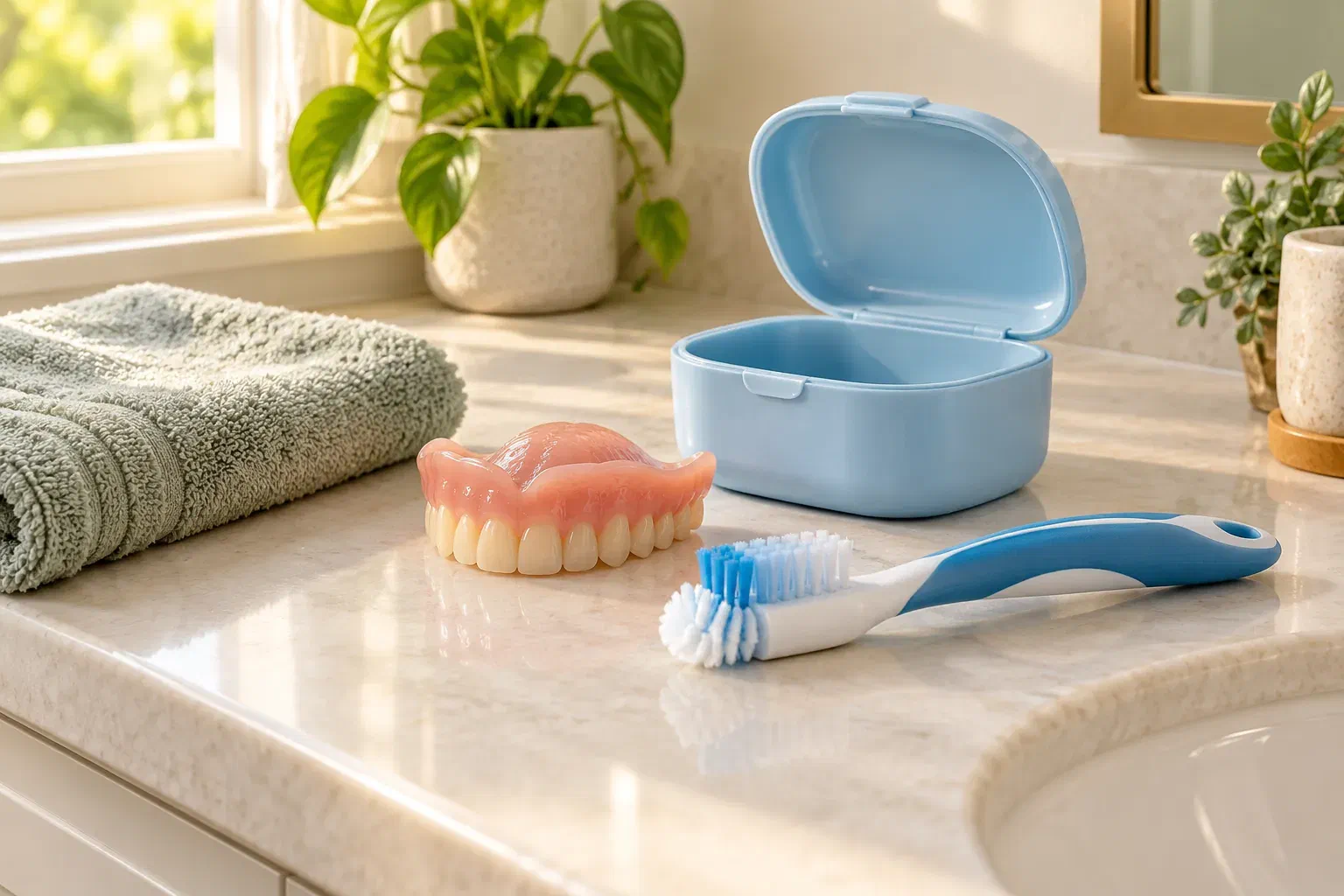
A denture-care routine should protect two things: the appliance and the mouth wearing it. Cleaning the teeth on the denture is only one part. The fitting surface, gums, tongue, and any remaining natural teeth also need attention, while safe handling helps prevent an accidental drop from becoming an urgent repair.
Caring for dentures in Milton can be made simpler with a routine that suits your appliance and your ability. The instructions for a metal partial denture, a soft-lined appliance, and an immediate denture after extractions may differ. Start with the guidance provided by the treating professional, then use the questions below to make sure the everyday details are clear.
Know which appliance and materials you have
Before buying cleaning products, ask what your denture is made from and whether it has features that need special care. Metal clasps, attachment components, and lining materials can affect which cleaners and handling methods are appropriate. A product suitable for one appliance may not be the right choice for another.
The Canadian Dental Association’s denture information describes daily cleaning and cautions about materials and soaking. Ask the clinician to write down any restrictions relevant to your own denture. This is especially useful if someone else purchases supplies for you.
Keep that information with the appliance’s other records. If the denture is repaired or relined, ask whether the care instructions change. Do not assume that a routine used successfully for years remains suitable after a new material or component has been added.
Set up a safe place to clean
Dentures can be damaged if they fall onto a hard sink or floor. Prepare the space before removing the appliance. A folded towel beneath your hands provides a softer landing if your grip slips, and a clear counter reduces the chance of knocking the denture into another object.
The CDA recommends protecting against drops during handling. Avoid squeezing the appliance tightly or gripping delicate components while scrubbing. Ask the team to demonstrate a stable way to hold your particular denture if it feels awkward in your hands.
Good lighting and a comfortable position matter too. If standing at the sink is tiring, ask about a routine that can be done seated with suitable supplies. A careful routine should not depend on balancing over a basin when pain, weakness, or dizziness makes that position difficult.
Clean the denture outside your mouth
Remove the appliance for cleaning so that you can reach its surfaces. Follow the recommended brushing method, using the appropriate brush and non-abrasive product. Pay attention to the surfaces that contact the mouth and areas around clasps or attachments, rather than only the visible teeth.
NHS Inform’s denture guidance describes brushing away debris before soaking and using suitable non-abrasive cleaning products. Rinse the appliance thoroughly before putting it back in your mouth. Cleaning solutions are intended for the appliance, not for swallowing or using as mouthwash.
Avoid scraping deposits with sharp tools. If staining or hardened material remains despite the recommended routine, ask for professional advice. More force is not automatically more effective, and an abrasive method can damage the surface you are trying to keep clean.
Choose products by suitability, not strength
Regular toothpaste can be too abrasive for denture materials, and household cleaners are not appropriate substitutes for recommended denture care. Ask which product is suitable and follow its directions for concentration and contact time. More tablets, stronger mixtures, or longer soaking do not necessarily improve the result.
If you have a partial denture with metal, confirm that any cleanser is compatible with it. If there is a soft lining, ask for the specific brushing and soaking instructions. Do not use boiling or very hot water in an attempt to sterilize the appliance; heat can distort a denture.
You do not need a crowded shelf of products. A small set of suitable supplies used consistently is easier to manage and explain at a review. Bring the packaging or a photograph if you are unsure whether a product you already own is appropriate.
Clean your mouth separately
When the denture is out, care for the oral tissues as instructed. The ADA’s denture guide recommends gentle cleaning of the gums, tongue, and roof of the mouth. Ask for a demonstration if those areas are tender or difficult to reach.
If you have natural teeth, continue brushing them with fluoride toothpaste and cleaning between them. Denture cleanser does not replace toothpaste for natural teeth. Pay particular attention to areas beside the appliance, while avoiding a technique that hurts the gums or bends a clasp.
Tell the dental team if you have difficulty distinguishing which product is for the mouth and which is for the appliance. Clearly separating supplies can help, especially when several people share a bathroom or a caregiver assists. The routine should be understandable enough to follow reliably on a tired evening as well as a good day.
Make nighttime removal and storage predictable
For routine wear, dentures are generally removed at night to give the mouth a rest, unless the treating clinician has provided different instructions. An immediate denture placed after extractions may have a special initial wearing schedule. Confirm when ordinary nighttime removal should begin rather than guessing.
The NHS denture page discusses removing dentures at night and storing them appropriately. Ask how your appliance should be kept moist and whether a particular solution is suitable. Clean the storage container as part of the routine, not only the denture itself.
Choose a consistent, safe storage location away from children and pets. Do not wrap the denture in tissue where it may be mistaken for rubbish. When travelling or staying elsewhere, bring the proper case so an unfamiliar setting does not turn a simple overnight habit into a lost appliance.
Use adhesive only as directed
If adhesive is recommended, ask how much to use, where to apply it, and how to remove it from the denture and mouth. Follow the product instructions and the advice of your dental professional. Adhesive should have a defined role rather than becoming an increasingly large daily workaround.
The FDA’s information on denture adhesives warns against excessive use and advises assessment when an appliance does not fit properly. Some products contain zinc, making adherence to directions particularly important. Do not use more than recommended because the denture is moving.
If the amount you need is increasing or adhesive no longer seems helpful, arrange a review. Describe what changed and how long it has been happening. The appliance, the tissues, or another part of the situation may need assessment; buying a stronger product does not establish the cause.
Notice fit changes before adapting around them
People often compensate for a denture that is becoming less comfortable. They chew on one side, avoid certain foods, or press the appliance into place during conversation. Those adjustments may become so familiar that they are not mentioned at the next dental visit.
Tell the clinician if the denture rocks, slips, traps food differently, or leaves a recurring sore spot. Also mention if it becomes harder to insert or remove. Describe the activity that brings on the problem rather than simply saying the fit is not good.
The mouth can change over time, and dentures may need adjustment, relining, or replacement. The CDA’s guidance on examinations as you age explains the continuing importance of checking dentures and oral tissues. A change in fit deserves assessment even when the appliance itself looks intact.
Do not repair or reshape it at home
If a denture cracks, breaks, or develops a loose tooth, stop improvising and contact the treating professional. Keep the pieces in a safe container. Explain whether the appliance can still be removed and whether there is a sharp area causing injury.
Avoid household glue, filing, heating, or bending clasps. These actions can damage the appliance or change how it fits. The NHS guidance recommends professional help for broken or poorly fitting dentures. A home repair that looks successful may still leave the mouth exposed to an unsuitable material or an uneven pressure point.
If the problem happens before an important event, explain the timing when you call. The team can advise what is possible, but urgency about appearance should not lead to an unsafe repair. Ask how the mouth should be cared for while the appliance is being assessed or repaired.
Sore areas and unusual changes need attention
Report a sore that persists, recurring bleeding, a lump, or a patch that looks unusual. Do not assume every change is simply rubbing from the denture. The clinician needs to examine the tissues and decide what is causing the problem.
Before a review, ask whether to wear the denture for a specific period so the area can be assessed. Do not force yourself to continue wearing it through severe pain without advice. If eating or drinking becomes difficult, make that clear when arranging the appointment.
People without natural teeth still need oral examinations. A denture check is not only a check of plastic and artificial teeth; it is also an opportunity to assess the mouth underneath. Keep the review schedule recommended for you rather than waiting for the appliance to break.
Help a family member without taking over unnecessarily
If you assist someone with denture care, ask what help they want and what they can comfortably do themselves. The best routine may divide tasks: one person prepares supplies while the other removes and cleans the appliance. Preserve privacy and explain each step before helping inside the mouth.
Ask the dental team to demonstrate safe removal and insertion for that person’s denture. Do not pull forcefully on a clasp or assume the appliance removes in the same direction as one you have used yourself. If the person has difficulty communicating pain, ask which changes in eating or behaviour should prompt assessment.
Keep instructions accessible to everyone involved in care. Record the correct storage method and clinician contact details. If care moves between home, hospital, and another setting, clearly identifying the storage case can reduce confusion and help the appliance stay with its owner.
Build a routine that survives busy days
Link cleaning to a predictable part of the day and keep supplies together. A short written reminder can help if the sequence is easy to forget. Replace worn cleaning tools as advised and check that the storage container remains clean and usable.
For travel, pack the case, appropriate brush, and enough suitable cleaner. Keep the clinician’s contact information available if an appliance breaks away from home. If you have a spare denture, ask whether it is still suitable to use; an old appliance is not automatically a safe backup simply because it is available.
To discuss denture comfort, cleaning, or a change in fit, contact Milton Dental Clinic at (905) 876-4488. Bring the appliance and the products you use, or photographs of their labels. That makes it easier to turn general advice into a routine that works for your mouth and your daily life.
