
Being told that a tooth needs crown lengthening can sound contradictory. If the tooth has broken down, why would a procedure involving the gums help? If the concern is appearance, why might the discussion include bone and healing before a new crown is made? The unfamiliar name can obscure the practical decision.
A crown lengthening consultation in Milton should begin with the reason the procedure is being considered. The purpose might be to expose sound tooth structure for a restoration, to change the visible proportions of certain teeth, or to assess whether another approach would be more suitable. Understanding that purpose makes the risks, timing, and alternatives easier to evaluate.
Clarify what “lengthening” means
Crown lengthening does not grow a longer tooth or attach a new piece to the root. The American Academy of Periodontology describes it as reshaping gum tissue and, when indicated, bone to expose more natural tooth structure. It may be considered for a tooth that needs restoration or for selected concerns about a gumline that covers too much of the visible teeth. AAP information on periodontal surgical procedures.
The word crown can also mean two things in the same conversation: the visible part of your natural tooth and a manufactured restoration fitted over a prepared tooth. Ask the clinician to distinguish them. A recommendation for crown lengthening does not necessarily mean you are also committing to a ceramic crown.
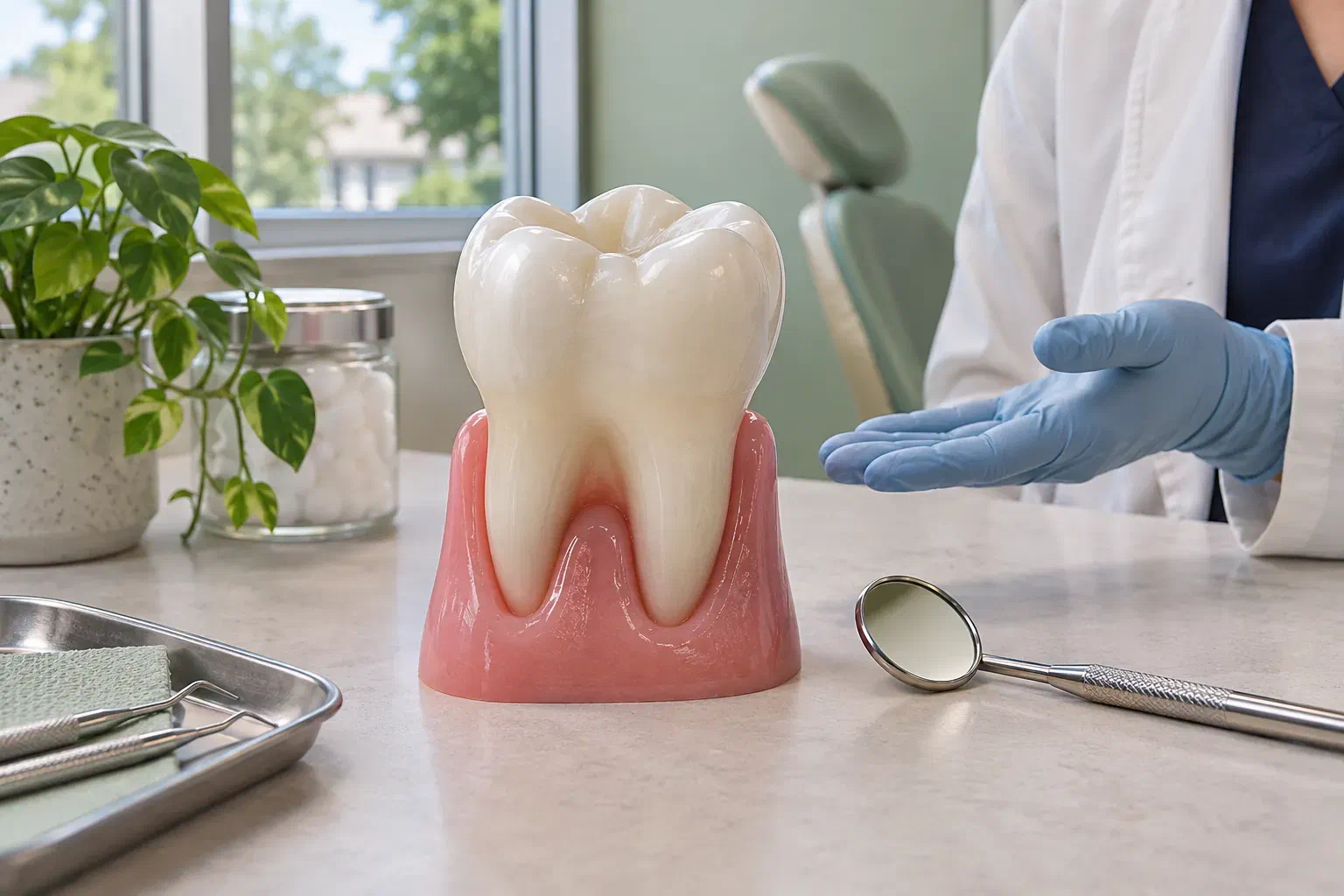
It is helpful to ask for a photograph or drawing of the area. Have the dentist point to the gum margin, the broken or decayed portion if there is one, and the tooth structure needed for the proposed restoration. A simple visual explanation can make the reason for treatment much more concrete.
A damaged tooth needs a broader prognosis
When crown lengthening is suggested to help restore a damaged tooth, the key question is not only whether more tooth can be exposed. Ask whether the whole tooth is likely to remain useful after the complete treatment plan. Root condition, remaining structure, existing restorations, bite demands, and surrounding support may affect that judgment.
You can ask, “What is the main uncertainty about keeping this tooth?” That invites a specific explanation. The uncertainty may involve the depth of damage, the condition under an old restoration, or how well the final restoration can be designed. If another examination or removal of old material is needed to answer the question, ask when that will happen.
Discuss the full sequence before making a surgical decision. A plan may include temporary protection, periodontal treatment, healing checks, and a later restoration. An estimate for only one stage can be misleading if several stages are necessary to obtain the intended result. Ask who will coordinate them and how findings at an earlier stage could change what follows.
An appearance concern deserves a different conversation
When the goal is to change a smile, describe the feature that bothers you without assuming a particular procedure is required. Perhaps some teeth look short, the gumline appears uneven, or the amount of gum visible in photographs has become a concern. Each description gives the clinician something more useful than a request to copy someone else’s smile.
Ask whether the visible appearance comes mainly from gum position, tooth shape, tooth position, lip movement, or another factor. Removing gum tissue cannot answer every concern about proportions. The consultation should explain why the proposed approach addresses the feature you have identified and which aspects of the smile it will not change.
Consider bringing an ordinary photograph in which you recognize the concern, rather than only a close-up taken with your lip pulled back. Everyday speaking and smiling can matter more to your satisfaction than an isolated dental image. Tell the clinician if you want a subtle change or if you are comfortable with the current appearance and mainly seeking information.
Ask how neighbouring teeth fit into the plan
It is natural to focus on the one tooth named in the referral. However, ask whether treatment would also affect the gumline around adjacent teeth. Find out why, what the expected visual change might be, and how the clinician will account for the overall contour. A procedure described as treatment for one tooth may still require discussion of the surrounding area.
Ask about spaces between teeth, exposed root surfaces, sensitivity, and cleaning access after healing. These are practical outcomes, not minor details. If the treated tooth is visible when you speak, you may value appearance differently from someone whose treatment is entirely at the back of the mouth.
A preview, drawing, or mock-up can support discussion, but it should not be presented as a guarantee. Ask which parts are estimates and which depend on healing. A clear explanation of uncertainty is more useful than a promise that the final gumline will precisely match a simulation.
Compare reasonable alternatives
A meaningful consent discussion includes options besides the proposed procedure. Depending on the problem, these may involve another restorative design, orthodontic input, accepting the current appearance, monitoring, or replacing a tooth that has a poor outlook. The appropriate comparison is specific to the diagnosis; there is no universal list that suits every tooth.
Ask the clinician to compare the options using the same questions. How much treatment is involved? What must heal before the next stage? What maintenance is expected? What is the main reason each option might fail or need revision? Comparing only the initial price can miss substantial differences in future care.
If you want another opinion, request copies of the relevant images and treatment summary. Explain what remains unclear so the next consultation can focus on it. Seeking clarification is especially reasonable when the decision involves several procedures or a visible change. Avoid arranging treatment before the clinicians have agreed on the intended endpoint.
When comparing preservation with replacement of a damaged tooth, include the time without a final restoration in the discussion. You may need temporary protection or a temporary replacement during either pathway. Understanding those intermediate steps helps you plan eating, speaking, and work without judging the choices only by the finished result. It also gives the team an opportunity to explain which stages are essential and which depend on later findings.
Review health information before setting a date
Bring an accurate medication list, including non-prescription products and supplements. Describe allergies, previous problems with dental treatment, tobacco or nicotine use, and relevant medical conditions. Do not stop prescribed medicines because a dental procedure has been mentioned; any change should be coordinated by the treating professionals.
If you have anxiety about injections, sounds, or seeing surgical instruments, explain the specific concern. Asking how the area will be numbed, how breaks will work, and what you may feel can make the appointment more predictable. If sedation is proposed, request separate instructions about preparation, transportation, supervision, and returning to work.
Discuss practical constraints such as caregiving, a job involving frequent speaking, or a trip that would make follow-up difficult. These do not automatically rule out treatment, but the scheduling conversation should account for them. The best date is one that leaves room for the recovery and review your clinician actually recommends.
Healing controls the restorative timetable
Avoid assuming that the final crown or cosmetic restoration will be completed immediately after surgery. Ask what the team needs to see before moving ahead and whether the timing differs for a highly visible tooth. A calendar estimate is useful, but the clinical review determines readiness.
Find out what will protect the tooth while you wait and whom to contact if a temporary restoration feels loose, sharp, or uncomfortable. Ask whether your bite or eating choices need temporary modification. Keep those instructions with your appointment information so they are easy to find if a question arises after hours.
The phased dental treatment page offers context for spreading care across stages. In a crown lengthening plan, those stages should connect to one another clearly. You should not have to guess whether to book the next dentist yourself or wait for the surgical office to send an update.
Get recovery instructions that match the procedure
Before treatment, request written advice about cleaning, eating, physical activity, stitches, and pain management. Ask which instructions apply only to the treated site and which apply to the rest of your mouth. Advice given to someone after another type of gum surgery may not match your own procedure.
Have the clinician explain the expected pattern of discomfort and which changes should prompt a call. Also confirm the daytime and after-hours contact arrangements. You should know where to seek help for persistent bleeding, worsening swelling, or pain that is not following the expected course. Difficulty breathing or swallowing requires emergency medical attention.
Do not purchase an assortment of rinses or start antibiotics in anticipation of surgery. Use only the products and medicines recommended for your situation. Ask a pharmacist or the prescribing clinician to resolve questions about interactions, duplicated ingredients, or instructions that seem unclear before you begin taking anything.
Plan for the finished tooth, not only the operation
At the later restorative appointment, ask how the final contour will support cleaning and how the bite will be checked. If the purpose was to save a damaged tooth, confirm whether the original prognosis still applies now that the area has been treated and reassessed. New findings deserve an updated discussion.
Keep copies of the agreed plan, estimates, and review dates. For anyone receiving care across more than one office in Milton, a short shared summary reduces the chance of duplicated appointments or conflicting expectations. It can simply identify the tooth, the treatment goal, the completed stage, and the decision that comes next.
A useful crown lengthening consultation leaves you able to explain why the procedure is proposed and what must happen afterward. The most important question is whether the complete plan offers a sensible outcome for your tooth, comfort, and preferences. That judgment comes from the individual examination and a clear discussion, rather than the unfamiliar name of the surgery.
