
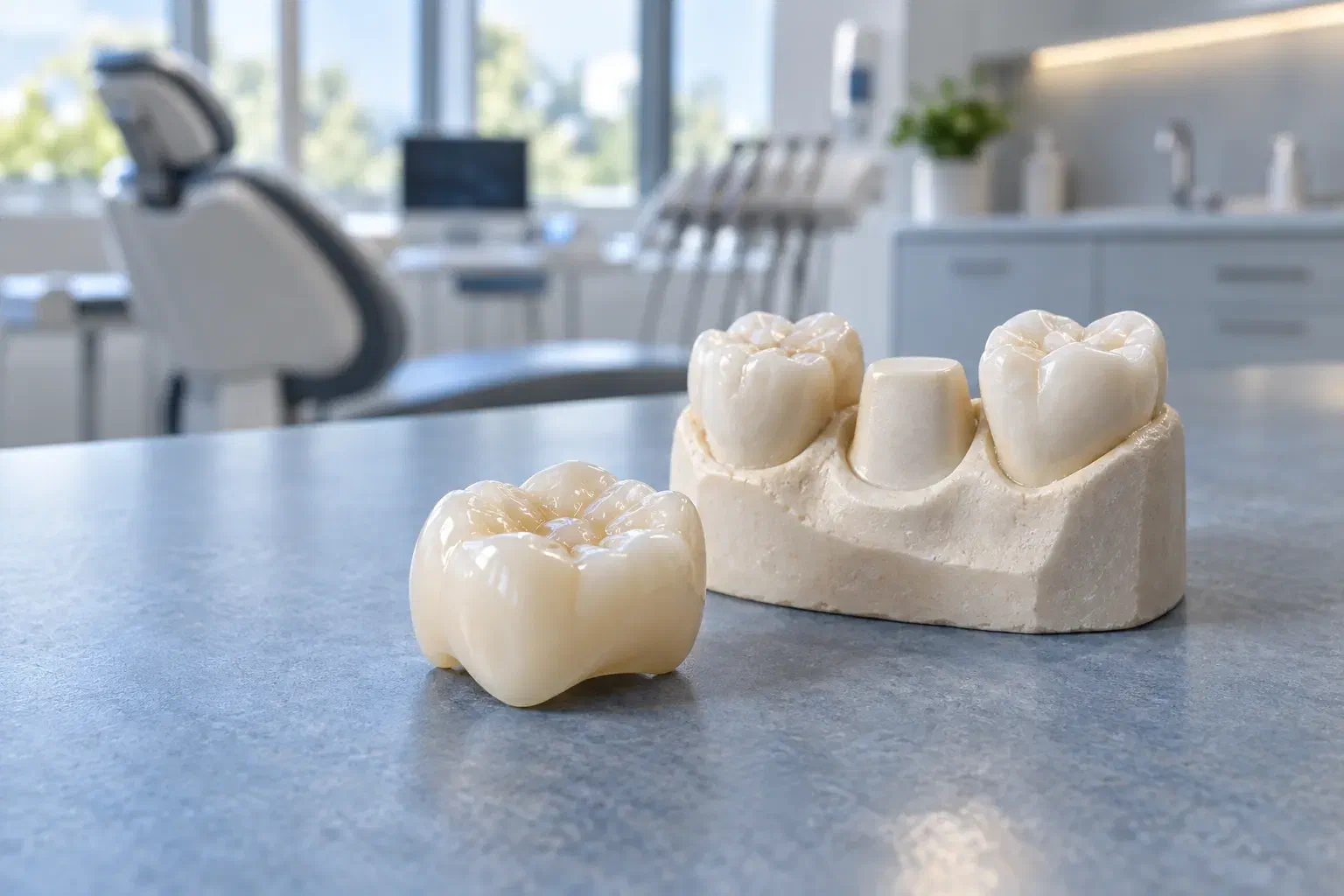
A crown recommendation often comes after a tooth has already been through a lot: a large filling, a fracture, or treatment inside the tooth. It can also arrive when you were expecting a simpler repair. Before agreeing to treatment, it helps to understand what the crown is meant to protect and why the remaining tooth needs that kind of restoration.
Dental crowns in Milton should be planned around the tooth and the person using it. A front tooth raises questions about appearance; a back tooth may raise questions about chewing and the amount of tooth left. The process also involves practical details such as temporary care, appointment timing, and follow-up. This guide follows the decisions you are likely to encounter from the first recommendation to everyday maintenance.
What a crown does
A crown is a restoration that covers a prepared tooth. It is sometimes called a cap. The Canadian Dental Association’s crown guide describes using crowns to restore the shape, strength, and appearance of damaged teeth, including selected teeth with large fillings, fractures, or previous root canal treatment.
Ask what the crown is intended to accomplish in your case. Is the main concern protecting weakened tooth structure, restoring a broken part, or improving a particular aspect of appearance? Several purposes can overlap, but you should understand the reason for treatment before comparing materials or shades.
A crown does not make the underlying tooth indestructible or eliminate the need for oral hygiene. It becomes part of a system that still includes the remaining tooth, its supporting tissues, the bite, and your daily habits. Discussing that whole picture gives you a more useful expectation than treating the crown as a permanent shield against every future problem.
Why a filling may not be the recommended option
If you expected another filling, ask the dentist to explain the difference. The amount and arrangement of remaining tooth structure can matter, not just the visible size of the missing area. A photograph or model may help the dentist show what they are trying to protect.
Ask whether there are reasonable alternatives, such as a different type of partial restoration, and what their limitations would be for this tooth. You can also ask what would happen if you postponed treatment. The explanation should distinguish an immediate concern from a longer-term risk rather than presenting every recommendation with the same urgency.
If the plan is extensive or you remain uncertain, ask for a written summary or a second opinion. Understanding the recommendation is part of making a decision. You do not need to choose solely because a crown was mentioned, and you should not dismiss it solely because the tooth currently feels comfortable.
Assessment comes before the final design
The dentist needs to evaluate whether the tooth can be restored appropriately and whether other problems need attention first. Your symptoms, existing treatment, gum condition, and bite can all be relevant. Further tests or imaging may be recommended when they would help answer a specific question.
Tell the dentist about pain, repeated breaking, food catching, or a change in the way your teeth meet. Mention previous root canal treatment and any episodes of swelling. If another office treated the tooth, records may help explain its history.
Ask whether the proposed crown is the only planned procedure. A treatment plan may include a build-up, care for surrounding tissues, or another step before the crown can be completed. The CDA notes that additional treatment can affect the number of appointments. Knowing this early prevents the final crown from being mistaken for the entire course of care.
Material choices should have a reason
Crowns can be made from different materials. The ADA’s overview of crowns describes options including metal alloys, ceramics, porcelain, and combinations. Appearance, position, function, and the dentist’s assessment influence which options are reasonable.
Ask why a material is being recommended for the specific tooth. If you have a preference about visible metal or colour, say so. If you have a known material allergy, provide that history before treatment rather than after fabrication has begun.
Avoid relying on a marketing phrase as if it settles every question. A material name alone does not tell you whether the tooth has been properly assessed, whether the restoration fits, or how it will be maintained. Ask about the advantages and compromises of the proposed option in language that relates to your priorities.
Plan appearance in relation to nearby teeth
For a visible crown, discuss shade and shape before the tooth is prepared. Explain whether you want to preserve the familiar look of the tooth or address a particular feature. Natural teeth are not all identical, so a result that fits your smile may involve more than choosing the brightest shade.
If you are considering whitening other teeth, mention that plan early. The ADA’s whitening guidance explains that natural teeth and restorations do not respond to whitening in the same way. The sequence of treatment can therefore affect how a new crown matches adjacent teeth.
Ask when you will have an opportunity to discuss the appearance and what can be changed at each stage. A photograph may help communicate a shape preference, but it should not be treated as a promise of an identical result. Your tooth, gums, and bite still determine what is appropriate.
Understand the preparation appointment
The team should explain the treatment and comfort measures before starting. Tell them about anxiety, difficulty keeping your mouth open, or a previous experience in which local anaesthetic did not provide adequate comfort. Agree on a signal to pause if needed.
The CDA describes a conventional crown process that includes preparing the tooth, recording its shape for fabrication, and protecting it with a temporary crown while the definitive restoration is made. The exact workflow can vary, so confirm the process your dentist will use rather than assuming that every office follows the same timetable or technology.
Ask what the temporary stage means for your daily routine. If you are travelling or have limited availability, raise that before treatment begins. It is easier to arrange the completion visit when the schedule is clear than to discover afterwards that you will be away when the crown is ready.
Treat a temporary crown as a temporary stage
Follow the cleaning and eating instructions given for your temporary restoration. Ask which foods to avoid, how to clean between the teeth, and whether any special technique is needed. Do not assume that instructions for a final crown automatically apply to the temporary one.
If the temporary crown feels loose, breaks, or comes off, call the office promptly for advice. Keep the piece in a safe container if you have it. Do not use household adhesive or improvise a permanent repair. Explain whether the tooth is painful and whether you can close your mouth normally.
Even if the tooth feels fine, do not simply abandon the completion appointment. The temporary restoration is part of an unfinished treatment plan. Ask the dentist how a delay could affect the tooth and arrange an appropriate next step if your circumstances change.
The fitting visit is a chance to clarify the result
At the fitting appointment, the dentist evaluates the restoration and how it relates to the tooth and bite. You may be asked to close, move your jaw, or comment on appearance. Follow the instructions carefully and report anything that feels unfamiliar or uncomfortable.
If the crown is visible, ask to discuss its appearance before the procedure is finalized. Be specific about a concern: the edge shape, how it sits beside the next tooth, or a colour difference you notice. Clear descriptions make it easier to understand whether a change is possible or whether the issue relates to another part of the smile.
Before leaving, ask whether the crown has been definitively placed and whether any further review is planned. Knowing which stage you have reached helps you follow the right instructions and understand what to report if something changes later.
Know which changes to report afterwards
Ask what sensations may occur after the appointment and what should prompt a call. A crown that seems to contact before the surrounding teeth, discomfort when chewing, or symptoms that persist or worsen deserve discussion. Do not attempt to adjust the crown yourself.
The ADA’s sensitive-teeth guide explains that sensitivity has several possible causes. A new symptom should be assessed in context rather than automatically labelled as normal adjustment. Tell the office when it started and whether it is improving, staying the same, or becoming more disruptive.
If a crown loosens or comes off later, save it if possible and contact a dentist. Avoid chewing on the affected area until you receive advice. If there is swelling, fever, or severe pain, make that clear during the call because it may change the urgency of assessment.
Care for the tooth at the crown’s edge
Daily care still matters around a crowned tooth. The ADA’s crown guidance emphasizes brushing with fluoride toothpaste, cleaning between teeth, and attending dental visits. Ask the team to show you how to clean the area comfortably, particularly if the crown is difficult to reach.
Notice changes in food trapping, gum irritation, or how floss moves around the tooth. Report them rather than forcing a tool into an uncomfortable space. If dexterity or vision makes cleaning difficult, ask for a method you can realistically manage.
Tell the dentist if you grind or clench, break restorations repeatedly, or use your teeth to open packaging. Those details may affect the advice you receive. Maintenance is more useful when it addresses your actual habits rather than ending with a general instruction to be careful.
Review the complete plan and estimate
Before starting, ask for a plan that separates the crown from any additional procedures. Confirm the expected appointments, the proposed material, and the steps that remain uncertain until the tooth is assessed or prepared. If insurance is involved, clarify what is estimated and what has actually been confirmed.
Ask how follow-up works and what the office recommends if you have a problem while away. Keep the treatment information with your dental records. There is no universal lifespan that can be promised for every crown, so future assessments should consider the restoration and the tooth supporting it.
To discuss dental crowns and the condition of a damaged tooth, contact Milton Dental Clinic at (905) 876-4488. A useful consultation should leave you knowing why the crown is recommended, what the treatment involves, and how you will care for the restored tooth once the appointments are complete.
