
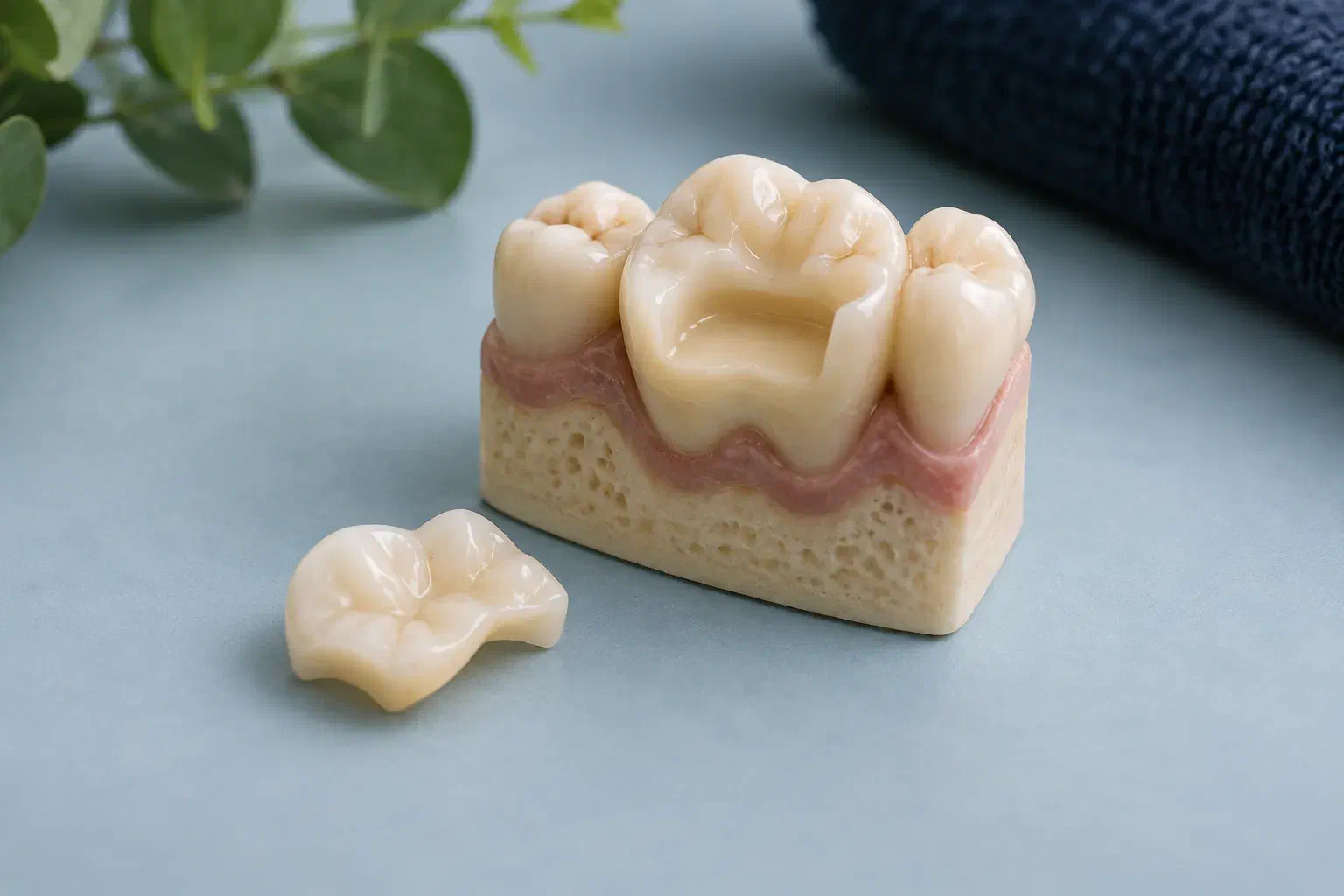
Most people are familiar with fillings and crowns. Inlays and onlays occupy a less familiar part of the restorative conversation: a tooth needs rebuilding, but the dentist is considering a restoration made separately and fitted to a defined part of the tooth. The distinction matters because the proposed work may preserve portions of the tooth while covering other areas that need support.
If dental inlays and onlays in Milton have been recommended, the useful question is what the design accomplishes for your tooth. The name alone does not tell you whether it is the best option. Understanding the remaining tooth structure, the coverage proposed, and the alternatives gives you a more meaningful basis for deciding.
Picture the chewing surface first
A back tooth is not a flat block. It has raised areas, called cusps, and lower grooves between them. Damage can affect the centre of the tooth, one of those raised areas, or several surfaces. The shape of the damage helps explain why different restoration designs exist.
An inlay generally fits within the tooth’s cusps. An onlay extends over one or more cusps. The NHS Business Services Authority’s explanation of inlays and onlays distinguishes these indirect restorations by the tooth tissue they replace and the areas they cover. Its UK funding rules do not apply to treatment in Ontario.
Ask the dentist to show the proposed coverage on an image of your tooth. Seeing which part will remain uncovered and which part will be rebuilt often makes the distinction easier than memorizing terminology.
If a drawing helps, request one showing the natural tooth and restoration in different colours. Keep it with your estimate so the design remains clear when you discuss the decision at home.
What “indirect” means in this context
A direct filling is formed in the tooth during treatment. An indirect restoration is made outside the mouth and then fitted to the prepared tooth. The University of Bristol Dental School’s patient information describes inlays and onlays as restorations constructed separately and secured onto the tooth.
The manufacturing route may involve a laboratory or a digital workflow, depending on the practice and the case. Do not assume a particular number of visits from the name alone. Ask how your restoration will be made and whether there will be an interval with a temporary restoration.
The practical difference is the sequence. The tooth must be assessed and prepared, its shape recorded, the restoration produced, and the fit checked before final placement. Understanding those stages helps you plan appointments and recognize when treatment is complete.
Compare the coverage, not a ranking of procedure names
An onlay is not automatically better than a filling because it sounds more elaborate. Nor is a crown automatically more protective simply because it covers more of the tooth. The relevant issue is which design fits the condition of the remaining structure and the forces the tooth must manage.
Ask why a direct filling would or would not be appropriate. Ask whether the recommended coverage is intended to rebuild a missing area, protect a weakened cusp, or address another specific concern. Then ask why a full crown is or is not needed.
Our guides to dental crowns and repairing an old filling provide context for those neighbouring options. The decision should still come back to this tooth, rather than treating every large filling as an automatic indication for the same procedure.
A photograph can help explain the remaining tooth
When a large filling is present, it can be difficult to imagine how much natural tooth remains beneath it. Ask whether an intraoral photograph or other available image can help explain the concern. The dentist may also describe what cannot be confirmed until the existing restoration or decay has been addressed.
That uncertainty should be part of the plan. If the tooth proves more damaged than expected, would the restoration design change? Would the clinician pause to discuss a different option? Could another appointment become necessary?
It is useful to distinguish the intended design from a guarantee that nothing will change. A clear contingency plan allows a conservative approach while acknowledging that the full structure may not be visible at the start. You should understand the decision points before agreeing to treatment.
Material choice is a functional discussion as well as an aesthetic one
Inlays and onlays can be made from different materials, including ceramics, resin-based materials, and metal alloys. The NHS guidance lists several material categories, but suitability for your tooth depends on more than the list of available products.
Tell the dentist how visible the tooth is when you smile and whether matching its appearance is important to you. Also mention clenching, grinding, previous restoration fractures, or a bite that has changed. These details belong in the design conversation even if the tooth is far back in the mouth.
Ask why the proposed material suits the available space and tooth structure. You can also ask how it would be maintained, whether small damage could be repaired, and what would happen if it eventually needed replacement. A material should be explained through its role in the plan, not simply presented as the newest option.
Prepare for the temporary interval if one is needed
If the restoration is made between appointments, ask what will protect the tooth while you wait. Clarify eating and cleaning instructions, the expected fitting date, and the contact route if the temporary material loosens. The advice should reflect the particular tooth and preparation.
Consider your calendar before starting. An upcoming trip or a period when you cannot return for care may affect scheduling. Tell the office early so the temporary stage is planned rather than accidentally extended. If travel becomes unavoidable, obtain a written summary and advice about accessing care away from home.
Avoid using comfort as the only measure of whether the temporary restoration is intact. If a piece comes away or the bite changes, call. A tooth can need attention even when it is not producing severe pain.
The fitting appointment has several jobs
At the fitting visit, the team assesses the restoration before securing it. From a patient’s perspective, this is the time to mention concerns about the feel, visible appearance, or contact with neighbouring teeth. Some aspects are judged clinically, while your observations contribute information about daily function.
Do not feel that speaking up is an inconvenience after the restoration has been made. It is better to discuss an unexpected colour or a sensation that the bite is uneven than to leave silently and hope you adapt. The dentist can explain whether the concern is expected, adjustable, or needs another solution.
Ask when normal eating can resume and whether any immediate restrictions apply. Different materials and placement techniques may have different instructions. Follow the advice for your restoration rather than a general rule remembered from a previous filling.
Judge the bite when normal sensation returns
Local anaesthetic can make it difficult to describe the way teeth meet. If the bite feels consistently different after sensation returns, let the office know. Useful descriptions include one tooth touching first, discomfort in a particular chewing movement, or a feeling that the restoration is too tall.
Avoid repeatedly clenching to “test” the new restoration. Observe what happens during ordinary gentle function and report it. If discomfort worsens, the tooth becomes painful without a trigger, or swelling develops, seek advice promptly instead of waiting for a routine check.
A follow-up call is not an accusation that treatment was done badly. It supplies information that may only become clear outside the chair. The goal is a restoration that works comfortably in your own bite, which is why those observations matter.
Keep the junction with the natural tooth clean
An inlay or onlay is part of a restored tooth, not a replacement for all its natural tissue. Daily care still needs to include the gumline and the spaces between teeth. Ask the team to demonstrate cleaning around any area that feels different from before.
If floss repeatedly catches or shreds, or food starts packing beside the restoration, report the specific location. Do not solve a persistent problem by forcing a sharper tool through the gap. The contact and surrounding tissues may need reassessment.
Continue your ordinary preventive visits at the interval advised for your overall oral health. At those visits, mention any changes in sensitivity, cleaning access, or chewing. Maintenance works best when the dentist knows how the restoration behaves between appointments, not only how it looks on examination day.
Read the estimate as a sequence of care
Ask whether the estimate includes the preparation, temporary restoration if needed, laboratory or manufacturing component, fitting, and any planned review. If an existing restoration must be removed first, ask how unexpected findings would affect the estimate.
Insurance descriptions may not use the same language you heard in the consultation. Ask the office to identify the procedure being submitted and distinguish an estimate of benefits from confirmation of payment. Clinical suitability and insurance coverage are separate questions, both of which may matter to your decision.
If you are comparing two recommendations, compare the tooth surfaces covered, material, underlying diagnosis, and included stages. Two prices are difficult to interpret if one is for a direct repair and the other includes a custom restoration and additional work.
Choose a design you understand
You do not need to become familiar with every restorative material to make an informed decision. You do need a clear explanation of what is damaged, what is being preserved, and what the proposed restoration will cover. That explanation should include reasonable alternatives and the uncertainty that remains.
To discuss an inlay or onlay recommendation, contact Milton Dental Clinic for an assessment. Bring questions about the existing filling or broken area and describe how the tooth feels when you eat. The best discussion turns an unfamiliar procedure name into a practical plan for restoring this tooth and looking after it afterwards.
