
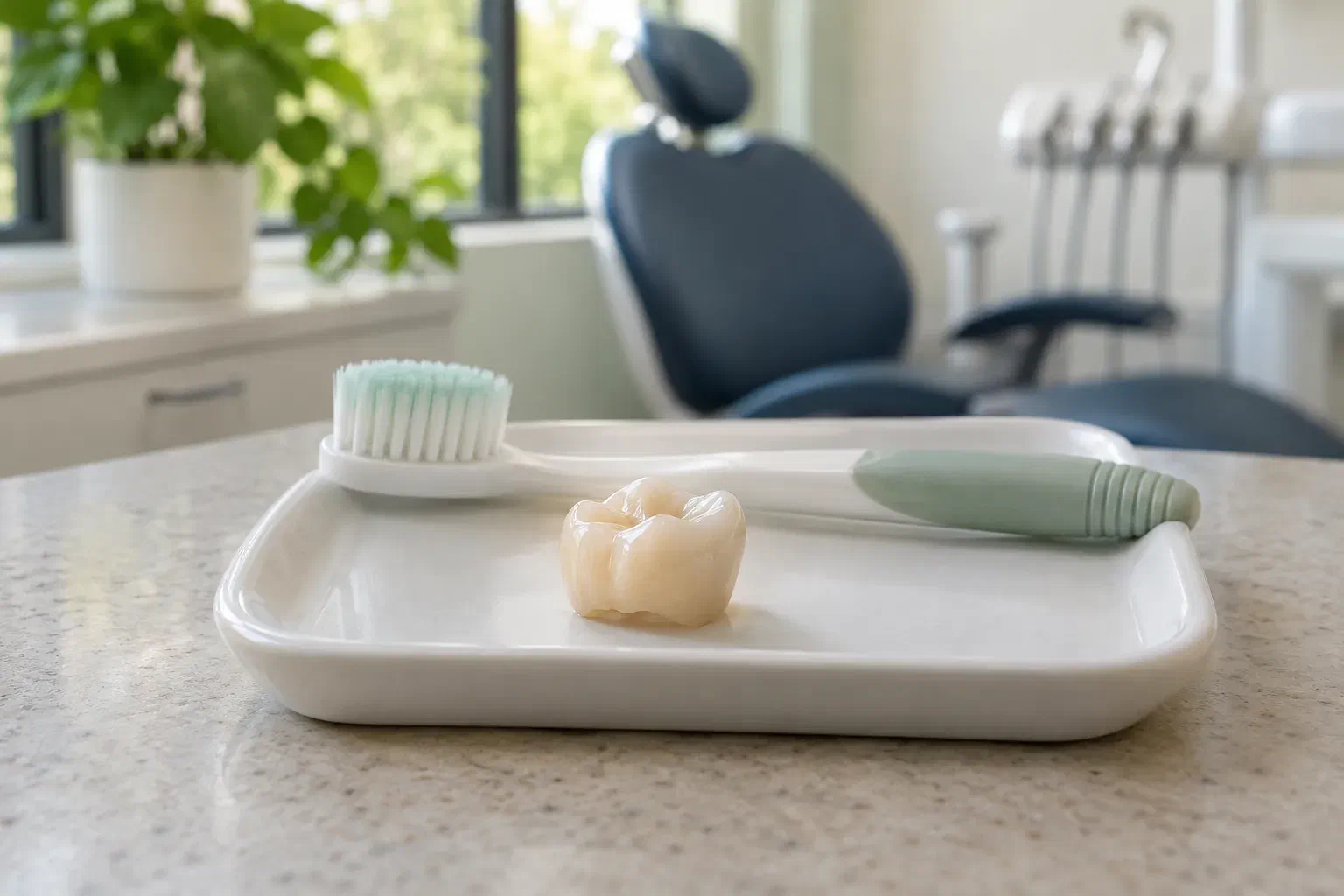
The appointment is finished, your tooth has a temporary crown, and the final fitting is still ahead. This interval can feel awkward: the tooth looks restored, but you have been told to treat it with some care. You may be wondering what to eat, how to floss, and whether a slightly unfamiliar feeling is worth a phone call.
Looking after a temporary crown in Milton is about protecting the prepared tooth and reaching the next appointment with the area in good condition. The specific instructions from your dental team come first because temporary restorations differ. A single temporary crown, several joined units, and a provisional bridge may require different cleaning methods and precautions.
Understand what you are wearing
A temporary crown protects a prepared tooth while the definitive restoration is being made or while another treatment stage is assessed. The Leeds Teaching Hospitals crown guide describes a temporary crown secured with temporary cement before the final crown is fitted. It is designed to be removable by the dental team.
Before leaving the office, confirm which tooth has the temporary and when the final appointment is scheduled. If several teeth were treated, ask whether the temporary units are connected. That detail matters when cleaning between them; a tool that passes between separate teeth may not pass through a joined restoration.
Keep the office’s written instructions. If you received several pages because other treatment occurred at the same visit, identify which instructions apply to the crown and which apply to a surgical site or another procedure.
The first meal deserves a little planning
Follow the team’s advice about when to eat after placement, especially while local anaesthetic is still active. Numb lips and cheeks can make ordinary chewing harder to judge. Do not use the first meal as a test of how much force the temporary can tolerate.
The MedlinePlus dental-crown guidance advises care with hard and sticky foods during the temporary period and describes chewing on the other side when appropriate. Your dentist can adapt those suggestions to your bite and the condition of your other teeth.
Think in terms of texture rather than creating an unnecessarily restrictive diet. A tender meal cut into manageable pieces is easier to navigate than a hard crust or chewy candy. If you have other dental problems that make chewing on the opposite side difficult, explain that to the team so the advice is realistic.
Make ordinary meals easier without neglecting nutrition
For the short temporary interval, choose foods you can manage comfortably within the instructions provided. You may prefer cooked vegetables over very hard raw pieces, or a soft sandwich filling over something that demands forceful biting. The aim is practical accommodation, not living on sugary drinks because solid food feels inconvenient.
If you are preparing lunches for work, pack something predictable rather than relying on a vending machine or whatever happens to be available. Keep water nearby and avoid repeatedly testing the crown with gum or sticky snacks. A little preparation can remove several small decisions from a busy day.
People with dietary restrictions should keep those needs in view. If you are unsure how to eat adequately because several teeth are being restored, tell the dentist. The temporary plan needs to account for your ability to eat, not only the integrity of the restoration.
Brush gently and clarify the cleaning method
A temporary crown still sits beside gums and neighbouring teeth that need cleaning. Avoid abandoning the area because you are afraid of dislodging it. Ask the dental team to demonstrate the appropriate brushing and interdental technique for your particular temporary.
For an individual temporary crown, MedlinePlus describes sliding floss out sideways rather than pulling it back up through the contact, which can lift the restoration. That advice may not apply unchanged to connected temporary units or other designs. Follow the demonstration you receive rather than forcing floss where it does not pass.
If cleaning produces repeated catching, shredding, or movement, stop forcing the tool and call for guidance. Tell the office whether the problem is at the front, back, or between joined teeth. Specific information helps them determine whether you need a technique adjustment or an examination.
A new shape can feel unfamiliar
Your tongue notices small changes in tooth contour. A temporary crown may feel different from the original tooth or from the final crown you will eventually receive. That unfamiliarity does not tell you by itself whether there is a problem.
Pay attention to what the feeling actually is. Is there a sharp edge scraping your tongue? Does the crown move? Does one tooth hit first when you close? Is the difference mainly a new contour that is comfortable during normal use? Those descriptions are more helpful than simply saying it feels strange.
Avoid constantly pushing on the temporary with your tongue or fingers to see whether it is secure. Repeated checking can become a habit without providing useful information. If you are concerned, contact the office and explain the specific change you have noticed.
A bite that feels high should be reported
Once normal sensation returns, you may notice that the temporary tooth seems to touch before the others or feels uncomfortable when chewing. Call the office for advice. Do not assume that you need to press harder until the bite settles.
Describe whether discomfort occurs only when the teeth meet or continues afterwards. Mention whether the sensation was present immediately after the appointment or began later. A clinician can decide whether an adjustment, examination, or another step is needed.
Do not file, sand, or trim the temporary yourself. Even a small alteration can affect the restoration and the tooth beneath it. If you cannot return immediately, ask what precautions to take until you can be seen rather than attempting to reshape it at home.
If the temporary crown comes off
Contact the dental office promptly and explain whether the crown is intact, broken, or missing. If you have it, keep it in a clean container and bring it to the appointment. Tell the team whether the tooth is painful and whether any other material appears to have come away with the crown.
Do not use household glue or leave an unsecured crown loose in your mouth. Avoid forcing it into place or experimenting with products before receiving professional advice. A temporary that no longer fits may need assessment rather than simply being pushed back onto the tooth.
While waiting for instructions, avoid chewing on the exposed tooth and follow the cleaning advice the office provides. The absence of pain does not make a missing temporary irrelevant. Let the team decide how quickly the area should be seen rather than waiting automatically for the original fitting date.
Lost, swallowed, or possibly inhaled material
If the crown disappears during a meal, tell the office what happened. Do not assume it was swallowed if there was coughing, choking, or breathing difficulty. Possible inhalation requires urgent medical assessment; call 911 for breathing difficulty or another medical emergency.
If you think you swallowed the crown and are breathing normally, seek prompt advice from a healthcare professional about the next step, particularly if it had a post, a sharp edge, or other attached material. Do not induce vomiting or try to retrieve it yourself.
Keep the dental team informed because they also need to address the now-unprotected tooth. A missing restoration creates two separate questions: what happened to the object and how to manage the tooth while the final restoration is pending.
Sensitivity needs context and a trend
Ask the dentist what sensations may occur after your preparation and what should prompt a call. If you notice sensitivity, record the trigger and whether it is improving, stable, or worsening. Avoid repeated exposure to very hot or cold foods simply to check whether it is still present.
Call for advice if pain becomes spontaneous, interrupts sleep, worsens, or is associated with swelling. Also report a temporary crown that is loose or a gum area that is increasingly sore. These changes deserve assessment rather than reassurance based only on the fact that the crown is temporary.
If pain medicine is needed, follow the instructions you were given and check suitability with a pharmacist or clinician when uncertain. Do not put aspirin or other medication directly against the tooth or gum, and do not use leftover antibiotics as a substitute for dental advice.
Keep the final fitting in the calendar
Temporary does not mean indefinitely serviceable. The University of Bristol’s crown information emphasizes returning for the definitive crown because most temporary crowns are not designed for long-term use. If you need to change the appointment, contact the office early and ask how the revised timing affects the interim plan.
An upcoming holiday or work trip should be discussed before it turns into a missed fitting. Keep the office’s number and treatment details available if you will be away. If the temporary needs attention elsewhere, tell the treating clinician that a final restoration is already being prepared.
If cost or scheduling is preventing you from returning, say so directly. The office needs to know that the planned sequence has changed. Quietly postponing the final visit leaves everyone working from an assumption that no longer matches your situation.
Use the temporary period to share useful feedback
The temporary can give you a chance to notice practical concerns about the planned restoration. For a visible tooth, write down questions about appearance. For a chewing tooth, note comfortable function, food trapping, or difficulty cleaning. Share that feedback before the final crown is permanently secured.
A temporary crown may differ from the definitive material and finish, so do not assume every feature predicts the final result. Instead, use specific observations to support the conversation at fitting. The dental team can explain what will change and what needs further attention.
For concerns during treatment, contact Milton Dental Clinic and identify the tooth and the date your temporary was placed. Keeping the area comfortable, clean, and protected is a shared task, and a timely call is often the simplest way to keep the next stage on track.
