
A dental examination involves more than looking for cavities. The lips, tongue, cheeks, gums, and other tissues can show changes that deserve attention. When a clinician looks and feels for unusual findings in these areas, patients may hear the term oral cancer screening. Understanding what that examination does, and what it cannot establish on its own, makes the conversation more useful.
If you are asking about oral cancer screening in Milton, you do not need to arrive knowing the name of a patch or sore. Describe what you have noticed and how long it has been there. A routine examination and the assessment of an existing symptom are related, but a new concern should be raised directly rather than saved for a distant checkup.
Screening is a starting point, not a diagnosis
Screening means looking for concerning changes before a person has recognized symptoms. An examination can identify an area that needs a closer look, but appearance alone does not confirm cancer. The National Cancer Institute’s explanation of oral-cancer screening describes the distinction between screening and diagnostic testing, including the possibility of false-positive and false-negative findings.
This means two things for patients. Being referred for further assessment does not mean that cancer has already been diagnosed. Equally, an examination that finds nothing concerning is not a guarantee that every possible problem has been excluded or that a later symptom can be ignored.
Ask the clinician what was examined and whether anything needs follow-up. A useful answer should be specific enough that you know the next step. If you have a persistent throat symptom or a concern outside the area that can be evaluated during the dental visit, ask whether medical assessment is also needed.
What happens during the examination
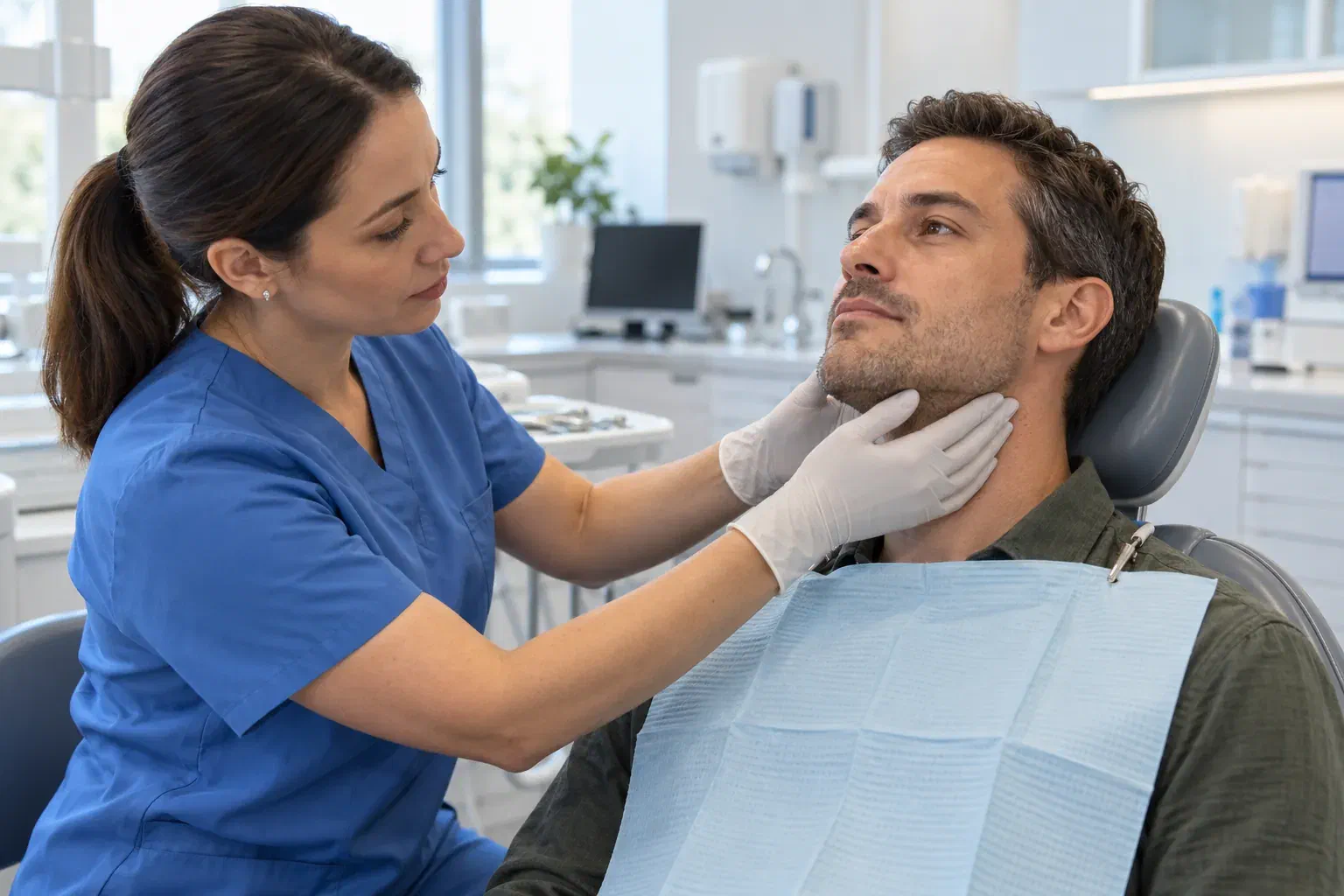
The NIDCR guide to the oral cancer examination describes checking the face, neck, lips, and mouth, including the tongue and the tissues beneath it. The clinician may gently move the lips or cheeks, ask you to move your tongue, and feel for unusual lumps or changes.
If you wear removable dentures, you may be asked to take them out so the tissues underneath can be examined. Tell the clinician if an area is tender or if opening is uncomfortable. The visit should allow enough communication for you to identify a spot that may not be obvious from a quick glance.
You can ask for the steps to be explained before they happen. This can help if you have a strong gag reflex, anxiety, limited movement, or a previous difficult experience. Agreeing on a signal for a pause makes it easier to complete an examination without feeling that you must silently tolerate discomfort.
Describe a change without trying to name it
When you notice something unusual, record where it is and approximately when it appeared. Explain whether it is growing, changing colour, bleeding, becoming painful, or affecting eating and speaking. Mention any injury or rubbing appliance around the same time, while allowing the clinician to decide whether that explains the finding.
The Canadian Cancer Society’s symptom information includes a sore that does not heal, unusual patches or lumps, persistent mouth pain, numbness, and changes involving swallowing or the voice. These symptoms can have other causes, so they warrant assessment rather than a conclusion drawn from an internet photograph.
A dated photograph may help you show how a visible area has changed, but it cannot replace an examination. Avoid repeatedly scraping, squeezing, or otherwise testing the spot. If you send a photo to a practice, use the communication method it recommends and ask whether an in-person visit is still required.
Do not let the calendar delay a concern
The NIDCR oral-cancer information advises evaluation of relevant symptoms that persist for more than two weeks. That is a reason not to keep waiting indefinitely; it is not an instruction to delay care for a suspicious, worsening, or otherwise concerning change until a particular day.
When booking, explain the symptom and its duration. A request for a routine cleaning may not communicate the same urgency as a description of a non-healing sore or a new lump. Tell the team if you are having difficulty swallowing, unexplained bleeding, or changes that are progressing.
Breathing difficulty, inability to swallow saliva, rapidly worsening swelling, or heavy uncontrolled bleeding needs emergency assessment. Do not wait for an online callback request in those circumstances. For less immediate concerns, ask the practice what to do if symptoms change before the arranged appointment.
Bring the history that helps interpret the finding
Tell the dentist about previous oral lesions, biopsies, cancer treatment, or monitoring by another clinician. Bring relevant reports if you have them, or ask how they can be obtained. A previous diagnosis is more useful than a vague recollection that an area was once described as harmless.
Update your medication and health information, including conditions or treatments that affect immunity. If you use tobacco, alcohol, areca nut, or related products, discuss them honestly. These questions are part of understanding health risks and should be handled without judgment.
Explain what has already been tried for the current problem. Include prescription products, mouth rinses, over-the-counter remedies, and changes to a denture or appliance. Knowing what happened after each step helps the clinician understand the sequence without repeating an approach that has already failed to resolve the concern.
Understand a recommendation to review or refer
After the examination, ask whether the plan is a defined recheck, a diagnostic procedure, or a referral. If an area is being reviewed after addressing a possible source of irritation, confirm the date and what should happen if it does not resolve. “Keep an eye on it” is more useful when it comes with a clear timeframe and responsibility for follow-up.
For a suspicious lesion, further diagnostic assessment should not be replaced by indefinite observation. The ADA’s oral-cancer guideline resources identify biopsy as the diagnostic standard and emphasize appropriate evaluation of concerning oral findings. Ask why a referral or biopsy is recommended in your case.
If you are referred, find out who is arranging the appointment and when you should expect contact. Keep the referring practice’s number available. If the expected call does not arrive, follow up rather than assuming that the referral was cancelled or that no news means the finding was unimportant.
What a biopsy conversation should cover
A biopsy takes tissue so it can be examined by a specialist under a microscope. The Canadian Cancer Society’s diagnosis guide explains that biopsy is used to establish whether cancer cells are present. The type of sample and procedure depend on the area being assessed.
Ask who will perform the procedure, what preparation is needed, and how discomfort will be managed. Discuss your medicines and health history before the appointment, and do not stop prescribed medication on your own. Request the aftercare instructions and an explanation of which changes should prompt a call afterward.
The result process deserves as much attention as the procedure itself. Ask when results are expected, who will explain them, and how you should make contact if the stated timeframe passes. A report may contain unfamiliar terms, so request a plain-language explanation of the finding and the plan that follows it.
Put additional tests in context
Some patients encounter advertisements for special lights, saliva tests, or other tools described as cancer screening. Ask what the proposed test adds to the conventional examination, what evidence supports its use, and whether the result would change the recommendation for further assessment.
An additional test should not be presented as a universal guarantee that cancer is absent. The National Cancer Institute notes limitations in oral-cancer screening, and the ADA’s guideline programme evaluates these adjuncts against the need for reliable diagnosis. If a lesion is concerning, ask whether a test would meaningfully assist care or merely delay the next indicated step.
You can also ask about the fee and alternatives before consenting. Understanding a test’s purpose is part of making an informed decision, especially when the same word, “screening,” is used for several different activities. The important outcome is a sensible clinical plan, not simply receiving a particular device-based examination.
Discuss risk reduction without assuming anyone is risk-free
The Government of Canada’s oral-cancer guidance identifies tobacco and alcohol as relevant risks and discusses sun protection for the lips. It also explains the link between HPV and oropharyngeal cancers and the role of HPV vaccination. Ask your healthcare provider about prevention measures appropriate to your circumstances.
If you want help stopping tobacco use, explain what you have already tried and what made it difficult. A practical conversation can focus on support you are ready to use. Someone who is not ready to change a habit still deserves a careful examination and respectful care.
Do not dismiss a persistent symptom because you have never smoked or because you feel younger than the person you associate with oral cancer. Risk factors help inform assessment; they do not replace it. Likewise, having a risk factor does not establish that a particular sore is malignant.
Leave with a clear next step
Before leaving, repeat the plan in your own words: what was found, whether further assessment is needed, and when you should return or call. Ask for written details if the conversation felt overwhelming. You may want a trusted person present for a later results appointment, particularly if you find it difficult to remember information when worried.
Continue to report new changes between appointments. A previous examination does not make a later symptom irrelevant, and wearing full dentures does not remove the need to consider the health of the mouth’s soft tissues. The right review interval should be discussed with the clinician who knows your history.
To ask about oral cancer screening in Milton or arrange assessment of a mouth change, contact Milton Dental Clinic or call (905) 876-4488. Describe the concern when booking so the team can guide the next step. The goal is timely attention, a clear explanation, and follow-through on any finding that needs more investigation.
