
Finishing active gum treatment is a meaningful milestone. The longer appointments may be over, the gums may feel more comfortable, and the daily routine may finally seem manageable. Then another appointment appears on the calendar sooner than expected. It can be frustrating if no one has explained what that visit is meant to accomplish.
Periodontal maintenance after gum treatment in Milton is the continuing part of a treatment plan for someone with a history of periodontitis. It connects what happened during active treatment with the care needed afterward. The purpose is to monitor the individual mouth, support effective home care, and respond to changes before they become harder to manage.
The end of active treatment is a change of phase
Active therapy and maintenance have different jobs. Active treatment addresses diagnosed disease through the measures selected for your condition. Maintenance follows the response over time and provides continuing preventive and therapeutic care. Feeling better is welcome, but it does not replace the need to review the tissues that previously required treatment.
The European Federation of Periodontology describes supportive care as a combination of monitoring, home-care support, management of relevant risk factors, professional plaque removal, and localized treatment when indicated. Its guideline emphasizes that patients treated for periodontitis remain susceptible to recurrence and need an individualized programme. EFP guideline on periodontal treatment and supportive care.
This distinction can make the calendar less puzzling. A maintenance visit is not simply a repeated version of your original treatment, and it is not proof that treatment failed. It is the next phase of looking after a condition whose behaviour needs to be followed rather than judged once.
Your baseline becomes a reference point
After treatment, the team needs a record against which later findings can be compared. That record may include gum measurements, bleeding observations, tooth mobility, photographs, and relevant radiographs. The most useful question is often whether a particular site is stable compared with its previous assessment.
Numbers on a gum chart can be difficult to interpret without explanation. A pocket measurement, a recession measurement, and a notation about bleeding do not mean the same thing. Have the clinician identify the areas that matter most in your case and explain what they will watch at future visits.
You do not need to memorize the entire chart. A short explanation such as which sites require extra attention and whether the overall response is improving can make the information usable. If you see more than one clinician, consistent records help them discuss the same findings instead of relying on a vague recollection that the gums were “better.”
Why the appointment interval may change
There is no single maintenance interval that fits every treated patient. The EFP’s patient-care framework describes intervals tailored to risk and periodontal condition, within a range of three to twelve months. That range is guidance for clinical planning, not permission to choose the longest interval independently. EFP supportive periodontal care framework.
If your clinician recommends more frequent visits, request the reason in plain language. Perhaps certain sites need closer observation, the home-care routine is still being adjusted, or a health factor changes the assessment. Knowing the reason makes the interval feel connected to your mouth rather than to an automatic scheduling rule.
Intervals can also be reconsidered. A useful plan identifies when the team will review the schedule and which findings would support a change. Avoid treating frequency as a reward for being a “good patient” or a punishment for a difficult month. It is a clinical decision that should reflect circumstances and evidence.
A maintenance appointment has several parts
Cleaning is visible and easy to recognize, but it is only part of the visit. Medical and dental updates, examination, periodontal evaluation, removal of deposits where indicated, and review of plaque control all contribute. The American Academy of Periodontology’s definition of maintenance includes these assessment and treatment elements under dental supervision. AAP definition of periodontal maintenance.
Tell the team about new symptoms before the appointment begins. A site that bleeds at home, a change in chewing, or a space that suddenly traps food may deserve attention even if it looks ordinary from your perspective. Mention medication changes and new health diagnoses as well.
At the end, ask what the examination found, not only whether the teeth are clean. You should understand whether the current plan continues, whether a particular site needs reassessment, or whether a dentist or periodontist should review something further. This closes the loop between the information collected and the next decision.
Home cleaning needs to fit the spaces you have now
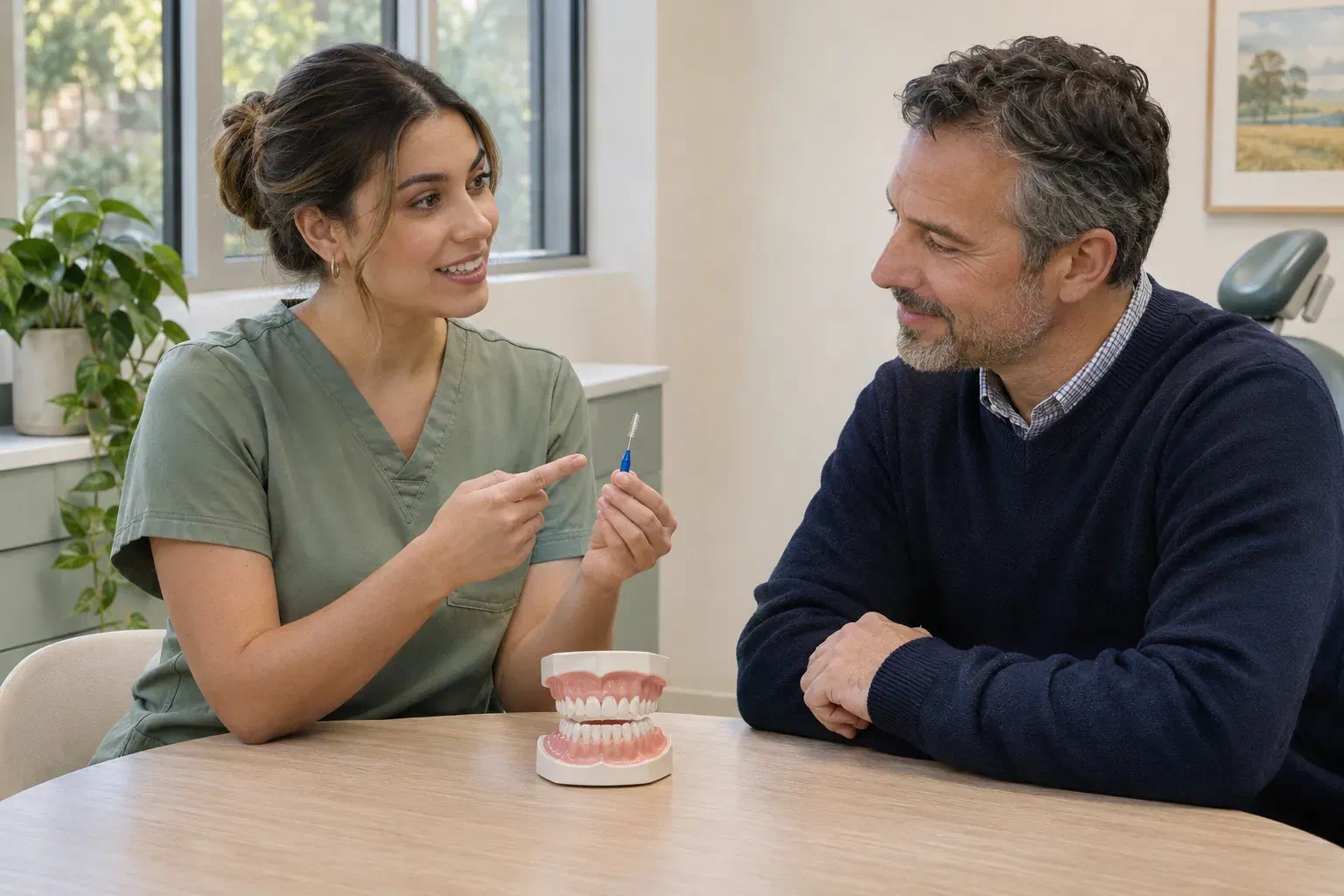
After treatment, a familiar cleaning tool may no longer feel like the best fit. Some spaces can be easier to access, while others remain awkward. Bring the tools you use so the hygienist can check their suitability and show the technique directly. A practical demonstration can resolve uncertainty that a product name alone cannot.
The Canadian Dental Association describes cleaning between teeth as part of daily care and demonstrates guiding floss around the tooth rather than simply snapping it through the contact. It also recognizes alternatives for people who have difficulty with ordinary floss. CDA flossing and brushing guidance.
The aim is a routine you can actually repeat. If arthritis, limited vision, fatigue, or a crowded schedule makes a recommendation unrealistic, explain the barrier. The team can help prioritize and adapt. An honest account of what happens on an average evening is more useful than describing a perfect routine you can maintain only occasionally.
Bleeding is information to discuss
Seeing blood can make someone avoid the very area that needs professional attention. It can also lead to aggressive scrubbing in an effort to “clean it out.” Neither reaction provides a diagnosis. Describe where the bleeding occurs, whether it happens spontaneously or during cleaning, and how long the pattern has been present.
Do not stop prescribed medicines because you think they may explain bleeding. Tell the dental team what you take and allow them to assess the situation in context. If cleaning is painful or repeatedly produces concerning bleeding, request advice about technique and whether an earlier examination is appropriate.
A sudden swollen area, pus, significant pain, or a newly loose tooth should not wait simply because a maintenance appointment is already booked several months away. Contact the office and describe the change. The maintenance calendar supports ongoing care; it does not replace timely assessment of new symptoms.
Share responsibility when two offices are involved
Some people attend both a general dental practice and a periodontal office. This can work well when the roles are clear. Confusion arises when each office assumes the other is checking a finding or when the patient receives two schedules without an explanation of how they fit together.
Keep a list of the appointments and their purposes. Clarify who performs the comprehensive dental examination, who reviews the periodontal response, and how relevant records move between the offices. Maintenance should not cause ordinary restorative needs, oral examinations, or other concerns to fall out of view.
For residents balancing travel within Milton and appointments elsewhere, coordination can also reduce unnecessary disruption. Ask whether a review requires a particular clinician and whether records can be shared before you arrive. These are logistical questions that can be settled without changing the clinical plan.
Cost conversations work best before appointments are missed
Maintenance can represent an ongoing expense, and benefit plans may not match the recommended frequency. Coverage rules and clinical recommendations answer different questions. Request an estimate and an explanation of the planned services so you can discuss reimbursement with your plan administrator using accurate information.
If cost is creating a problem, raise it before canceling several visits. The clinician needs to know about the constraint to discuss priorities and possible scheduling arrangements. Avoid assuming that replacing professional care with a new device or rinse will offer an equivalent result.
Keep copies of estimates and benefit responses, particularly if care is shared between offices. This makes it easier to identify an administrative misunderstanding without allowing it to become a long gap in care. The dental care without insurance page provides a related starting point for discussing practical access.
Make progress understandable between visits
Choose a small number of useful observations to discuss at the next appointment. Perhaps one difficult space is now easier to clean, or a recommended brush still does not reach behind a molar. These details help the hygienist refine the routine. They are more actionable than a general statement that you tried harder.
You can also ask the team to explain changes in the chart using the same sites over time. Comparing a previously troublesome area with its own earlier measurements gives context that a single number lacks. If results differ from your expectations, discuss what might explain the difference and whether the plan needs adjustment.
Avoid using home photographs or the absence of bleeding as a substitute for professional assessment. Your observations contribute to the picture, but they cannot show everything beneath the gumline. Bring them as useful information rather than a scorecard on which you must pass before attending the next visit.
A missed visit is a reason to reconnect
Life interrupts routines. Illness, caregiving, transportation difficulties, and changing finances can all create a gap. If you have missed maintenance, contact the office and explain how long it has been and whether anything has changed. You do not need to wait until your home routine is perfect before returning.
Bring an updated medication list and mention any treatment received elsewhere. The next appointment may need a broader reassessment rather than simply repeating the last cleaning. Let the team decide what information is needed to restart an appropriate plan.
The practical measure of success is a workable pattern of review and daily care, with room to respond when circumstances change. Periodontal maintenance in Milton should leave you informed about your own findings and confident about the next step. A sustainable plan is built through ongoing communication, useful comparisons, and attention to the sites that need it.
