
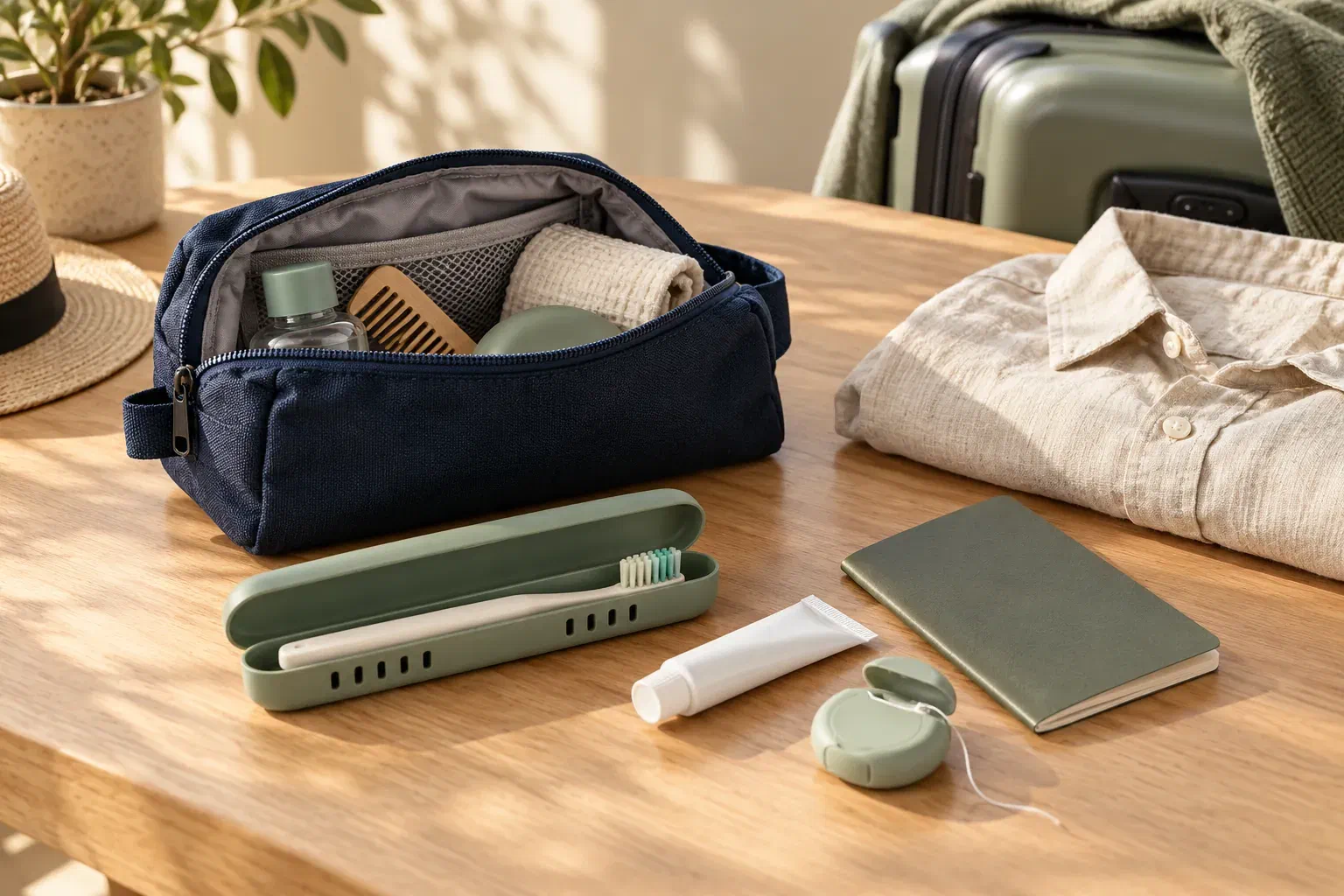
Travel changes the setting for everyday habits. You may be brushing in an unfamiliar bathroom, carrying a retainer through an airport, or trying to decide whether a toothache can wait until you return. A little preparation before departure can make these situations easier to handle, especially when the trip is long or includes places where care may be harder to arrange.
Preparing for travel with your dentist in Milton means reviewing your own circumstances rather than booking unnecessary treatment simply because a holiday is approaching. Consider current symptoms, unfinished work, the length of the trip, and any follow-up already recommended. Then organize supplies and contact information so dental care remains manageable away from home.
Bring the departure date into the conversation early
Tell the dental team when you leave, how long you will be away, and whether the itinerary includes remote locations. Mention any existing concerns at the same time. A loose restoration, recurring pain, or an appliance problem deserves a discussion before the final days of packing.
If a routine review is already due, ask whether it can be arranged before the trip with enough time to discuss findings. The American Dental Association encourages keeping dental care current before travel and retaining your dentist’s contact details while away. ADA travel tips for dental health.
Avoid assuming that a checkup guarantees a problem-free trip. It provides an assessment at that time, not a prediction of every future event. Ask what has been identified, whether anything needs follow-up, and what symptoms should prompt care while travelling. Those details are more useful than a general request to make sure nothing can possibly happen.
Review treatment that is still in progress
Tell the dentist if you have a temporary restoration, recent procedure, staged treatment, or an appliance awaiting adjustment. Ask whether the current plan fits your departure date and what would happen if another appointment became necessary. Do not assume that a temporary stage is intended to last for the whole trip.
If new treatment is recommended, discuss the anticipated appointments and recovery before choosing dates. Ask about review visits, possible adjustments, and access to help after you leave. The appropriate interval between treatment and travel depends on the procedure and your health; an online rule about waiting a fixed number of days cannot cover every situation.
Request written instructions for any active treatment. Include the name of the procedure, aftercare advice, and a way to contact the practice. If you need another clinician to assess a problem abroad, an accurate description is more helpful than trying to explain that a tooth was worked on recently without knowing what was done.
Pack a small kit you will actually use
Bring a comfortable toothbrush, fluoride toothpaste, and the items you normally use to clean between teeth. Add appliance supplies if relevant. Choose familiar products when possible so you are not learning a completely new routine while adapting to travel, and check whether you have enough for the expected duration.
Keep the essentials accessible during a long journey. A kit buried in checked luggage is less useful during an overnight delay. Check current transport rules for liquids and other items with the carrier or relevant authority, especially when you use a prescribed rinse or travel through several jurisdictions.
Use a suitable container to keep the brush separate from other belongings, then allow it to dry when you reach your accommodation. The ADA recommends protecting a toothbrush during transport and letting it air-dry once unpacked. ADA advice on travelling with a toothbrush.
If you forget something, replace it as soon as practical rather than abandoning the routine for the rest of the trip. Keep a short list of product names if you rely on a particular item. This can help you explain what you need at a shop without assuming that the same brand is sold everywhere.
Make a separate plan for appliances
Retainers, aligners, night guards, dentures, and sports mouthguards each need their own storage and cleaning instructions. Bring the correct case and the supplies recommended for that appliance. Do not use a general household cleaner or hot water simply because your usual product is unavailable.
Ask the treating team what to do if an appliance is lost, damaged, or stops fitting while you are away. For aligners, clarify any instructions about spare or previous sets before departure rather than deciding on your own which one to wear after a loss. Store the written advice with your travel information.
Choose a consistent place for the case. Hotel housekeeping, restaurant tables, and changes of accommodation create opportunities for an appliance wrapped in tissue to be discarded. A recognizable case and a quick check before leaving each location can prevent an avoidable problem without adding much work to the day.
Use safe water for mouth care
Water suitable for drinking should also guide your brushing arrangements. The Government of Canada advises using purified or bottled water for brushing where safe water is a concern. Check destination-specific advice before travelling and follow local notices during your stay. Government of Canada guidance on safe food and water abroad.
Make the arrangement before bedtime, particularly when arriving late. Keep an appropriate water supply available for the bathroom rather than discovering the issue after you have already turned on the tap. If you are camping or staying somewhere remote, include mouth care when calculating the practical water supplies you will need.
Ask a travel health professional about destination-related health precautions when needed. Dental preparation is only one part of planning for a trip, and advice about water, illness, and medicines should reflect the place you are visiting and your own health circumstances.
Keep the routine flexible enough for changing days
Time-zone changes, early departures, and late meals can disrupt habits. Choose dependable points in the day for brushing and cleaning between teeth, even if those points do not occur at your usual clock times. A routine connected to waking and preparing for sleep may be easier to remember than one tied to a particular hour.
Make water available during the day and be aware of habits that change while travelling, such as continually sipping sweet drinks on a long drive. You can enjoy food while still noticing patterns that make your normal care harder. The aim is consistency across the trip, not turning every meal into a dental calculation.
If one day goes poorly, restart the next session without trying to compensate by scrubbing harder. Keep the kit somewhere visible and easy to reach. A practical arrangement is more likely to last than a complicated travel routine that depends on every day going exactly as planned.
Know how you would obtain care away from home
Save the dental practice’s phone number with the country code and note the time difference. Also identify how to access local urgent care at your destination. Your dentist at home may provide advice, but a telephone conversation cannot replace an examination when one is needed.
If you have travel insurance, save the assistance number and ask what process applies when you need a referral or assessment. The Government of Canada advises travellers who become ill or injured to contact their insurance assistance service for help finding care where applicable. Canadian guidance on illness or injury abroad.
Check the wording of your policy rather than assuming that all dental care is covered. Ask the insurer about emergency dental benefits, exclusions, preauthorization, payment, and documentation. Travel health insurance often excludes routine or non-emergency care; the details of your own policy determine coverage. Government of Canada information on travel insurance.
Respond to symptoms rather than the return-flight date
If a tooth becomes painful, a restoration breaks, or swelling develops, seek professional advice promptly. Explain what happened, how symptoms are changing, and whether you can eat and sleep. The fact that you fly home soon does not establish that waiting is appropriate.
For major swelling, difficulty breathing or swallowing, or another medical emergency, use the local emergency service immediately. In Canada, call 911. A suspected dental abscess needs urgent dental assessment and is not something to manage indefinitely with home remedies. NHS guidance on dental abscess symptoms and urgent care.
Do not start leftover antibiotics or use household adhesive to repair a tooth or appliance. If a clinician recommends treatment abroad, ask what problem is being addressed, whether the treatment is temporary or definitive, and what follow-up will be needed. Request a written record you can bring home.
Keep useful information if treatment happens abroad
Ask for the clinician’s contact details, an explanation of the treatment, any available imaging, prescriptions, and the aftercare plan. Keep receipts and documents required by your insurer. These records can help your usual dentist understand what was done without relying entirely on your memory.
Tell the treating clinician about relevant medical conditions, medicines, and allergies. If language is a barrier, ask how accurate interpretation can be arranged. Do not sign or agree to a plan you do not understand simply because you feel pressure from the itinerary; ask for the explanation you need to make the decision.
When you return, arrange any recommended follow-up and let your dental practice know about care received while away. Mention symptoms that have improved as well as those that continue. A temporary repair may need review even if it feels comfortable by the time you are back in Milton.
Leave with a clear, realistic plan
Before departure, the useful questions are straightforward: is anything currently under treatment, what instructions apply to it, what supplies do you need, and how will you get help if something changes? You do not need a large emergency kit or preventive treatment without a clinical reason. You need information suited to your own mouth and itinerary.
To discuss travel plans with Milton Dental Clinic, call (905) 876-4488 or use the contact page. Share your departure date and any current dental concerns when booking. Planning early gives the team more opportunity to discuss assessment, treatment timing, and follow-up before you leave.
