
Preventing cavities is easier to discuss as a set of everyday habits than as a demand for perfect parenting. Families juggle school mornings, tired evenings, changing appetites, and children who do not always welcome help with a toothbrush. A useful plan has to work within those realities.
Preventing childhood cavities in Milton starts with understanding the child’s current risk and choosing routines that can be repeated. Brushing, suitable fluoride use, food and drink patterns, and dental assessment each contribute something different. No single product replaces the others. The aim is to make protective care ordinary, notice concerns early, and adjust the plan as your child grows.
Understand how a cavity develops
Tooth decay is a process that can develop when acids produced by plaque bacteria repeatedly affect the tooth surface. Sugars and starches in food and drinks contribute to that process. Saliva and fluoride help protect teeth, but repeated acid exposure can eventually lead to lasting damage.
The National Institute of Dental and Craniofacial Research explains the tooth-decay process, including the difference between early mineral loss and a cavity that has formed. This distinction matters because prevention and monitoring can be appropriate for some early changes, while an established cavity may need treatment.
Ask your dentist what they see in your child’s mouth rather than assuming that every mark means the same thing. If an area is being watched, find out what the family should do at home and when it will be reassessed. Monitoring should come with an understandable plan.
Baby teeth deserve care while they are there
It is easy to underestimate a tooth that will eventually fall out. Yet a child uses those teeth for eating and daily comfort now. A painful baby tooth can affect meals, sleep, and willingness to brush long before it is ready to be replaced naturally.
The Canadian Dental Association’s first-visit guidance recommends an assessment within six months of the first tooth appearing or by one year of age. That early visit creates an opportunity to discuss risk and home care before a child needs help for pain.
If your child is older and has not yet attended, arrange a visit without treating the delay as a reason to feel ashamed. Explain what has made attendance difficult and what concerns you have now. The useful starting point is the child’s present needs and a manageable next step.
Make brushing a shared task
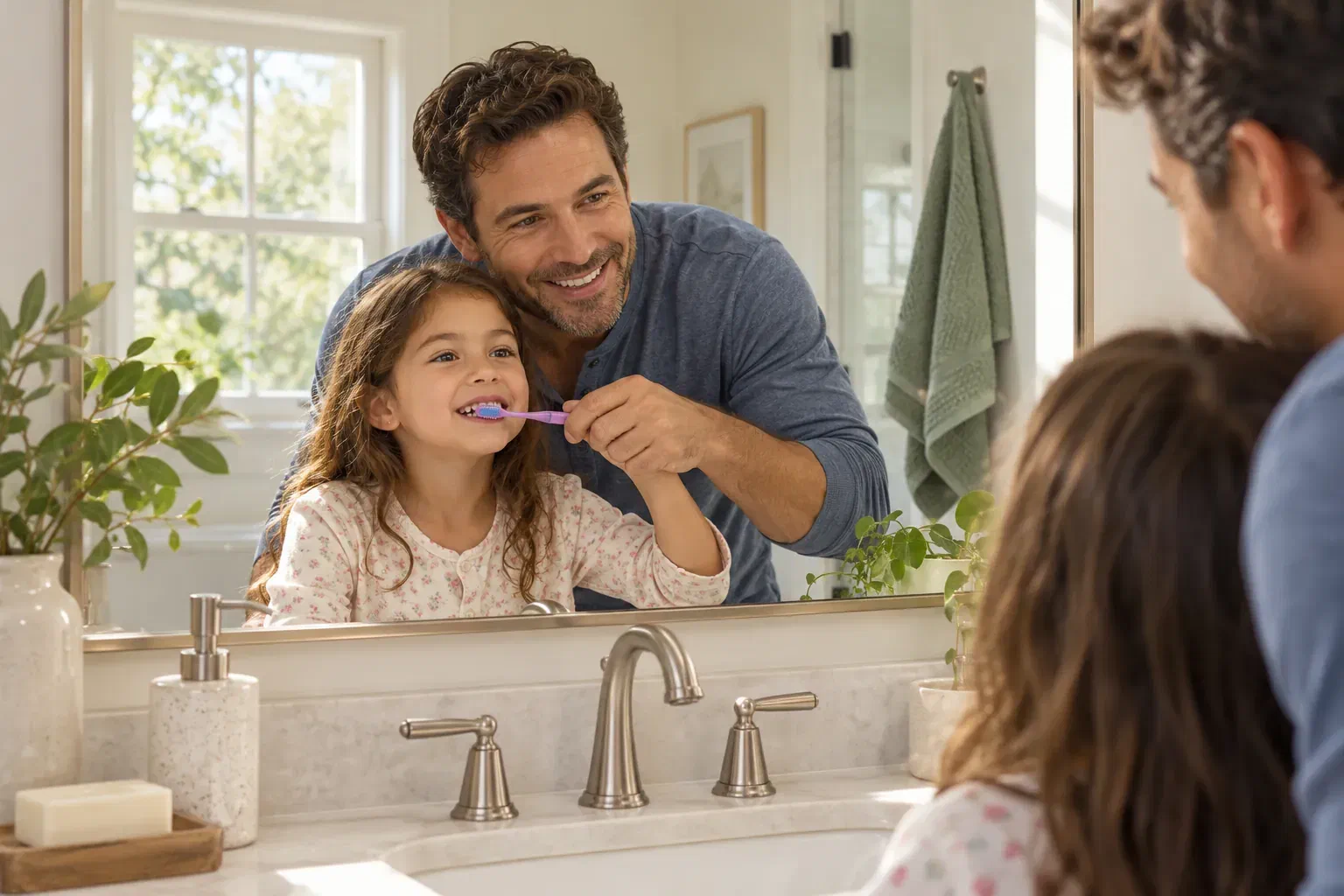
Young children need an adult’s help to clean effectively. Letting a child hold the brush can support participation, but enthusiasm does not necessarily mean they can reach every surface. Ask the dental team to demonstrate how to position yourself so you can see and gently help.
The CDA’s infant and toddler advice recommends cleaning erupted teeth twice daily and using a soft brush sized for the child’s mouth. It also emphasizes supervision and bedtime brushing. Build the routine around a predictable moment rather than waiting until the child is already exhausted.
Offer small choices that do not turn the task itself into a negotiation: which suitable brush to use, which song to play, or whether to sit or stand in a comfortable position. If brushing consistently causes distress, ask for help identifying the difficulty instead of escalating pressure or assuming the child is simply uncooperative.
Choose toothpaste advice for the child’s age
Canadian guidance for children under three links fluoride toothpaste use to individual decay risk. The CDA advises brushing with water unless a dentist or health professional recommends fluoride toothpaste; for a child at risk, a rice-grain amount may be recommended. For ages three to six, it advises a pea-sized amount with adult help and teaching the child to spit rather than swallow.
Ask the dentist to confirm the product and amount for your child. A demonstration is often clearer than a written description, especially when different caregivers handle brushing. Keep the toothpaste out of unsupervised reach and avoid allowing the child to treat it as something to eat.
Our fluoride guide for families explores these questions in more detail. The goal is appropriate, consistent use, not the largest amount of paste or the strongest product available on the shelf.
Look at the rhythm of snacks and drinks
Think about a normal weekday from breakfast to bedtime. Does your child finish a drink with a meal, or carry it around and sip throughout the afternoon? Are snacks planned, or does eating continue in small amounts for hours? These patterns can be more informative than a simple list of foods.
NIDCR’s decay guidance explains why frequent exposure to sugars and starches can repeatedly challenge teeth. Ask the dental team which changes would have the greatest practical value for your child’s routine. Water between meals may be a useful default where appropriate, while meals and snacks can remain nourishing and enjoyable.
Avoid turning food into a moral test. A prevention conversation should help a family make workable choices, not create anxiety around every birthday party or shared treat. Focus on the routine that happens most days and discuss any nutritional or medical needs before making broad restrictions.
Coordinate the routine across caregivers
Children may spend time at home, daycare, school, and relatives’ houses. A simple shared plan can prevent confusion about who brushed, which toothpaste to use, and whether bedtime care has already happened. Keep the instructions short enough that another adult can follow them easily.
If your child regularly stays in two homes, keep suitable supplies in both places when possible. Ask the dental team for written age-specific advice that can be shared. Avoid making the child responsible for explaining a clinical recommendation to every adult involved.
Mention practical barriers at the appointment. If mornings are rushed, if sensory preferences limit products, or if a caregiver has difficulty helping physically, that information matters. A routine that looks ideal on paper but is not achievable will not provide the same value as a simpler plan followed consistently.
Watch new back teeth carefully
As children grow, new teeth can appear behind the existing teeth rather than replacing a visibly loose tooth first. Parents may not immediately notice the change at the back of the mouth. Ask the dentist which teeth are newly erupted and whether the brushing approach needs adjustment.
The chewing surfaces of molars have grooves that can be difficult to clean. The CDC’s sealant information describes protective coatings used on these surfaces to help prevent cavities. Sealants may be worth discussing when suitable teeth and risk factors are present.
A sealant is one part of prevention, not permission to stop brushing or overlook other surfaces. Ask which teeth are being considered, why they are suitable, and how the sealants will be checked. Our children’s sealant guide covers that conversation separately.
Cleaning between teeth needs a demonstration
When teeth touch, a toothbrush may not clean the contact areas effectively. Ask when and how to begin cleaning between your child’s teeth. The technique and tool should fit the child’s mouth and the adult helping, rather than being chosen only because a package looks child-friendly.
Have the dental professional show you where the contacts are and how to use the recommended method gently. If the child finds it uncomfortable, explain exactly when that happens. Do not force a tool into a tight area or assume bleeding means the task should be abandoned without advice.
As children become more independent, review their technique rather than deciding responsibility solely by age. They may still need supervision or help in hard-to-reach areas. A brief check of the routine during a dental visit can reveal a small practical improvement that is easier than introducing another product.
Do not wait for pain to ask about a change
Tell the dentist about a new spot, a chipped area, food repeatedly catching, or a child avoiding one side while chewing. Children may describe discomfort indirectly or change their behaviour before they can explain a specific toothache.
If pain affects sleep or eating, arrange assessment promptly. Facial swelling, fever with dental symptoms, or a child who seems unwell should be reported urgently. Difficulty breathing or swallowing or substantial spreading swelling requires emergency medical care; call 911 for a medical emergency. The NHS dental-abscess guidance describes these warning signs.
Do not assume that a child who stops mentioning pain no longer needs assessment. Explain the whole history, including episodes that settled. The dentist can investigate the cause and help decide what is needed rather than relying on the child’s mood during one comfortable afternoon.
If a cavity is found, plan beyond the repair
A cavity can be upsetting for both parent and child. Ask what the examination shows, which treatment options are appropriate, and how the child will be supported through care. Avoid using the diagnosis as a threat about what will happen if brushing is missed.
The repair addresses the affected tooth, while prevention addresses the conditions that may lead to another problem. Ask which factors seem most relevant: cleaning access, fluoride use, frequent snacks or drinks, dry mouth, or something else identified during assessment. The answer should guide the next practical changes.
Choose a small number of clear actions and a review point. For example, the family may agree on adult-assisted bedtime brushing and a change in how a particular drink is offered. A focused plan is easier to evaluate than an ambitious list that becomes impossible to maintain after the first week.
Adapt the plan as the child grows
Risk and routines change. A toddler’s care is different from a school-age child’s, and braces, medicines, or a new schedule can introduce new challenges later. Bring those changes into the dental conversation instead of assuming that advice from several years ago still answers every question.
Ask how often your child should return and what the next visit will review. If cost, transport, or appointment timing is a barrier, raise it early so the office can explain available arrangements or appropriate sources of information. Do not assume that difficulty attending means there is no useful preventive step to take now.
For help building a child-specific prevention plan, contact Milton Dental Clinic at (905) 876-4488. Bring your questions and an honest description of the current routine. The aim is steady, practical care that protects your child’s teeth while fitting the life your family actually lives.
