
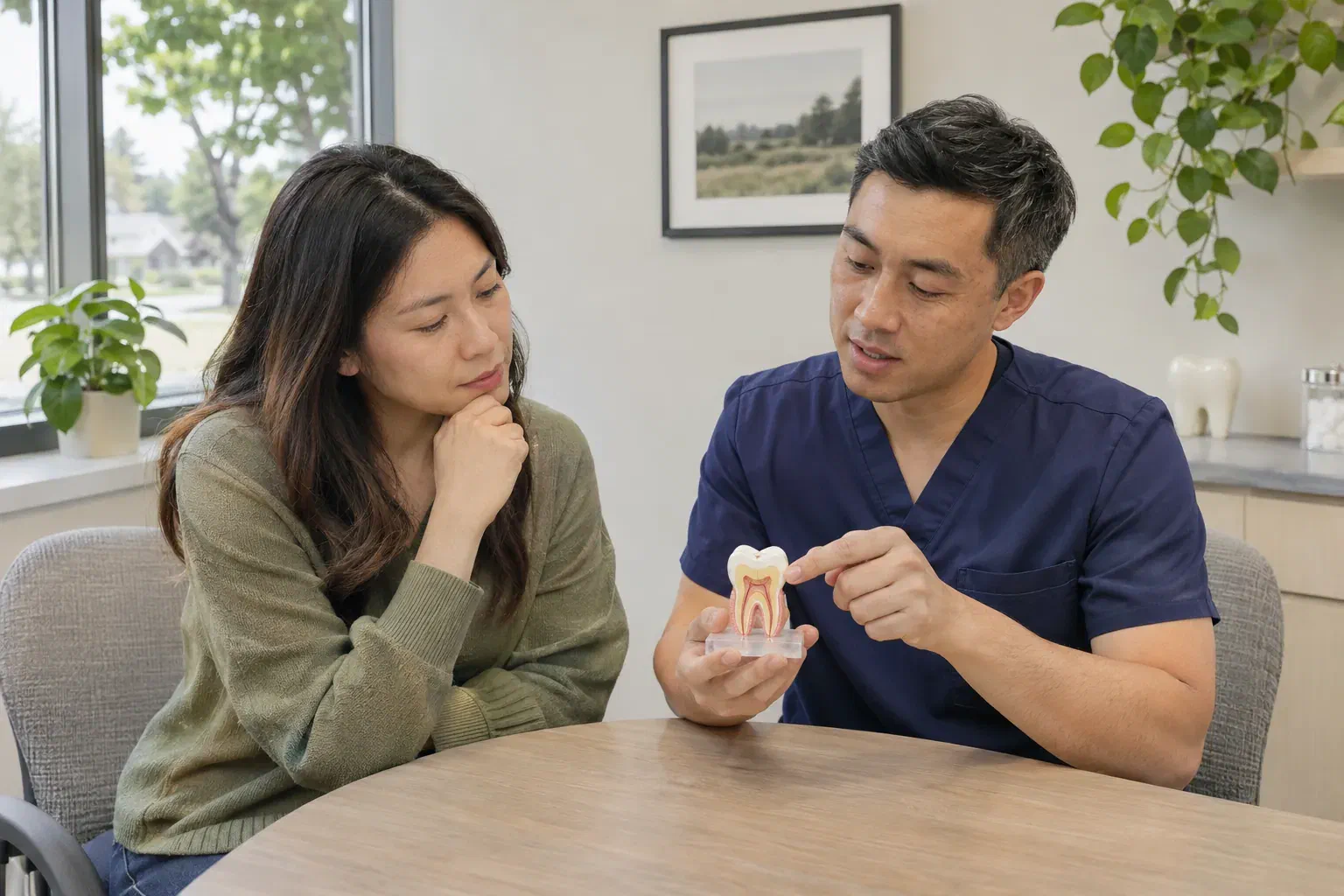
A tooth that had root canal treatment years ago can become a source of questions again. Perhaps chewing feels uncomfortable, a small swelling has appeared on the gum, or an X-ray taken during a routine visit shows an area the dentist wants to investigate. Hearing that more treatment may be needed can feel especially disappointing when you thought that chapter was finished.
Root canal retreatment in Milton begins with a fresh diagnosis. The important question is not simply whether another procedure is possible, but whether the cause of the current problem can be addressed and the tooth can remain useful afterwards. A careful discussion considers the inside of the tooth, the restoration above it, the supporting tissues, and your priorities together.
Why an old treatment can need another look
Root canal treatment changes the tissue inside a tooth, but it does not make the tooth immune to new problems. The American Association of Endodontists explains retreatment as a possible response to persistent disease or a later problem. Complex canal anatomy, contamination through a damaged restoration, new decay, and fractures are among the issues that can affect a previously treated tooth.
That list is a starting point for assessment, not a verdict on your earlier care. A problem identified today does not by itself establish when it began or why it occurred. Ask the dentist to distinguish what the records demonstrate from what remains uncertain. This is especially useful when the original procedure happened at another office or many years earlier.
Bring any details you remember about the old treatment: roughly when it happened, whether a crown followed, and whether the tooth ever became fully comfortable. A simple timeline can be more useful than trying to recall technical terms.
Separate the source of pain from the history of the tooth
It is natural to point to the tooth with the longest treatment history. Nevertheless, neighbouring teeth, the bite, and supporting tissues may need assessment too. Describe the experience before giving your own explanation: does discomfort start with chewing, continue afterwards, occur overnight, or feel difficult to locate?
Mention recent changes such as a loose crown, food trapping, or a new sensation when your teeth come together. If you have taken pain medicine, record its name and when you took it. Avoid repeatedly biting hard objects to demonstrate the problem at home. You can describe an ordinary meal that caused trouble without deliberately provoking another painful episode.
The appointment may involve examination, comparison with nearby teeth, and appropriate imaging. Ask which findings point towards the treated tooth and which findings need more investigation. A diagnosis that takes an additional visit can be preferable to making a permanent decision from an incomplete picture.
Previous images provide a useful comparison
An image is a view at one moment. Earlier radiographs can help the clinician understand whether a finding has changed and how it relates to previous treatment. If another office holds your records, arrange permission to transfer them ahead of the consultation when practical.
Do not postpone care for significant symptoms while waiting for perfect paperwork. Tell the receiving office which records exist and where they can be requested. The clinician can decide what is needed immediately and what can follow. Records support the examination; they do not replace it.
Occasionally additional imaging may be proposed. Ask what question it would answer, whether the result could change the plan, and how the benefits and radiation exposure are considered. Our article on understanding dental X-rays offers a broader explanation of those conversations without assuming every patient requires the same images.
Can the tooth be restored after retreatment?
Before focusing on the canals, ask about the tooth as a whole. If treatment addresses the internal problem, what restoration will protect the remaining structure? Is the existing crown serviceable? Is there a concern about a crack, decay, or the support around the tooth that could limit the outlook?
These questions help avoid comparing an attractive procedure with an incomplete endpoint. A tooth may be technically accessible for retreatment yet have other limitations that deserve equal attention. Ask the clinician to explain what makes retaining it reasonable and what could change that recommendation during treatment.
It can be helpful to request a plain-language prognosis rather than only a percentage. What are the main uncertainties? What findings would make the outlook less favourable? What result would count as success for this particular tooth? The answer should connect to comfort, function, healing, and the ability to maintain the restoration.
How retreatment differs from the first procedure
In a broad sense, retreatment involves reopening the tooth, removing previous canal filling material, reassessing and cleaning the internal spaces, then filling and sealing them again. Access can be more complicated when a crown or other restoration is already present. The AAE’s retreatment guide also emphasizes the need for an appropriate final restoration afterwards.
Ask how the dentist or endodontist expects to reach the canals in your case. Will the crown be retained, altered, or replaced? Could a post or other internal component affect the approach? These are not details you need to solve yourself, but they influence the plan, appointment length, and estimate.
An endodontist may be recommended when additional expertise is useful. If a referral is made, ask whether the consultation is solely diagnostic or whether treatment might begin that day. Knowing the purpose of the visit helps you arrive with the right expectations and enough time for the discussion.
Compare complete options, including their limitations
Depending on the findings, the conversation may include nonsurgical retreatment, root-end surgery, monitoring in an appropriate situation, or extraction. Not every option is suitable for every tooth. Ask why the proposed choice is preferred and what makes another choice less appropriate.
If removal is discussed, include the consequences of the space and any replacement plan in the comparison. If retention is discussed, include the restoration and follow-up. Comparing the price of extraction alone with the full cost of saving and restoring a tooth can produce a misleading picture of the actual choices.
You can also ask what happens if you need time to decide. Is the situation stable enough for a planned second opinion, or is there an urgent concern? Request a specific timeframe and instructions for changes in symptoms. An informed decision needs both an explanation of alternatives and a clear understanding of timing.
Make room for the emotional part of another procedure
Needing treatment again can bring frustration, anxiety, or worries about money already spent. These are reasonable things to raise. Explain which part is most difficult: uncertainty about the result, fear of discomfort, arranging time off, or the thought of replacing a crown.
Ask for an agreed pause signal and a description of how comfort will be assessed during the appointment. Tell the team about previous difficulty with local anaesthetic, jaw fatigue, or a strong gag reflex. A useful conversation is specific: “I need short breaks because my jaw becomes tired” gives the clinician more to work with than silently trying to tolerate discomfort.
If you prefer limited procedural detail, say so. Some patients feel calmer with explanations throughout; others want only the main milestones. Communication can be adjusted without changing the need for consent or your ability to ask questions.
Protect the temporary stage
Before leaving any treatment visit, establish whether the tooth has a temporary or final restoration. Ask what you can comfortably eat, which chewing restrictions apply, how to clean the area, and what to do if material loosens. Follow the treating clinician’s instructions because the remaining tooth structure and treatment stage differ between patients.
Keep the next appointment visible in your calendar. If scheduling or cost may delay the final restoration, discuss that before the delay develops. The office may need to reassess the interim plan rather than simply leave the tooth in a temporary stage indefinitely.
A rough edge, missing material, or change in the bite deserves a call. Do not assume that an absence of severe pain means the temporary seal is intact. Avoid household adhesives and attempts to repair a crown yourself. Describe what happened and let the office advise how quickly the tooth should be checked.
Plan the handover between offices
When an endodontist and general dentist share care, identify who is arranging each step. Who will provide the final restoration? Who will review healing? Which office should you call if discomfort returns before the next visit? Put the answers somewhere easy to find.
A written estimate should distinguish the assessment, retreatment, possible additional work, final restoration, and follow-up arrangements. Insurance authorization or an estimate is not the same as a promise of payment. If coverage matters to your decision, ask the administrator which parts are confirmed and which remain your responsibility.
Share the treatment plan with the dentist who provides your ongoing care. If you move or change offices later, retain a summary identifying the tooth and treatment dates. Future clinicians benefit from knowing what was done without having to reconstruct the entire history from memory.
Know when waiting is no longer appropriate
Contact a dentist promptly for increasing pain, swelling, discharge, or difficulty eating. If your symptoms change while awaiting a specialist appointment, tell both the referring office and the specialist rather than assuming the original appointment date still fits the situation.
Difficulty breathing or swallowing, or rapidly spreading swelling around the face or neck, requires emergency medical care. In Canada, call 911 for a medical emergency. The NHS dental-abscess guidance describes these serious warning signs; UK service numbers are not applicable in Milton.
For a non-emergency consultation, bring the tooth’s history, your symptoms, and the practical questions that matter most to you. You can contact Milton Dental Clinic to arrange an assessment and discuss whether specialist input is appropriate. The goal is a clear decision about this tooth, followed by a plan that includes treatment, restoration, and review rather than stopping when the procedure itself ends.
