
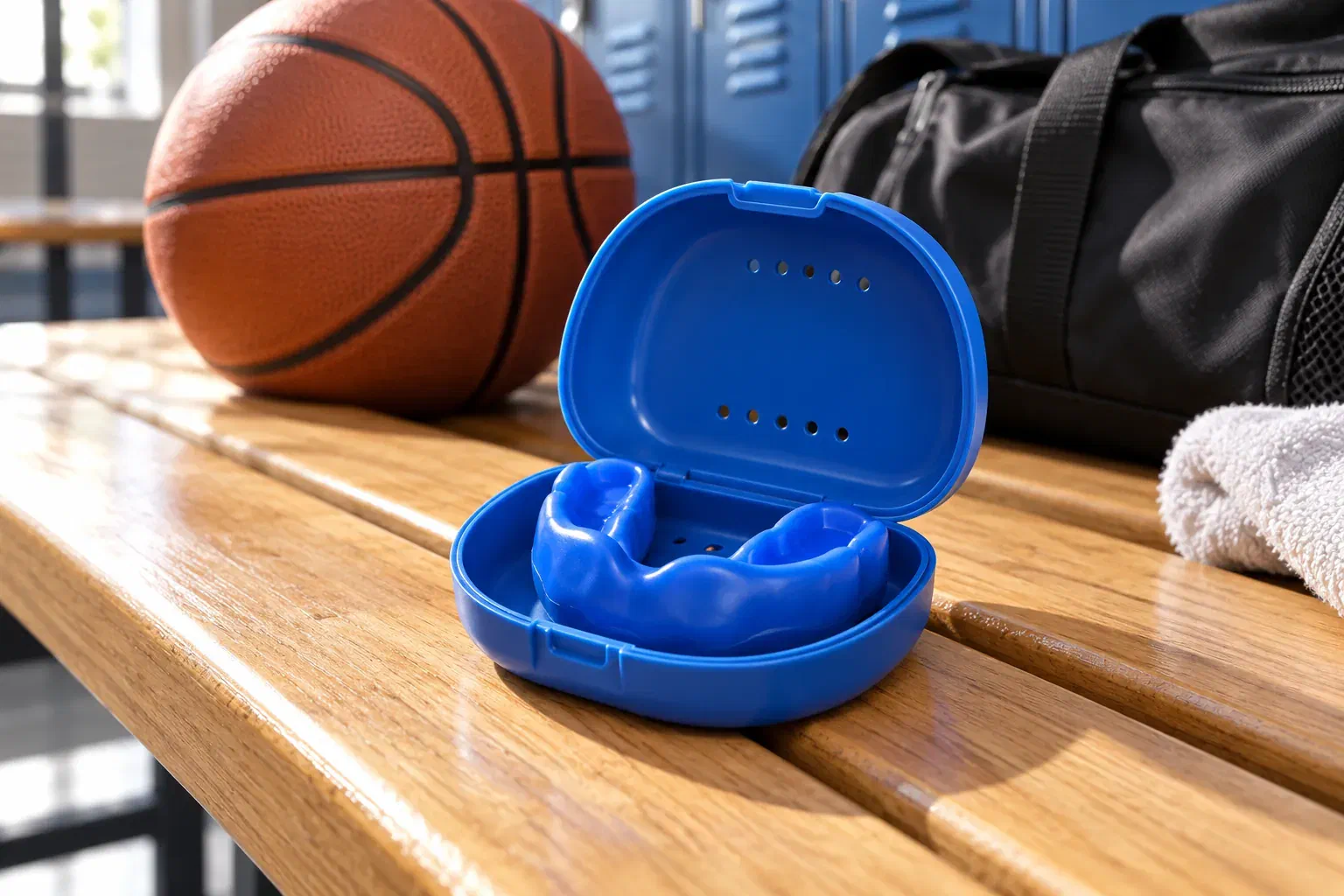
A mouthguard only helps when it is in your mouth at the moment it is needed. That makes comfort, fit, and a dependable packing routine just as relevant to the conversation as colour or price. The guard sitting in a drawer at home cannot become part of a player’s protective equipment.
Choosing sports mouthguards in Milton is an opportunity to plan before the next practice, tournament, or recreational session. Children, teenagers, and adults may all have different fitting needs. A useful discussion considers the activities you actually do, your teeth and dental appliances, and any difficulty you have had wearing a guard in the past.
Start with the activity, not only the team rule
The American Dental Association’s review of athletic mouthguards recommends a properly fitted mouthguard for activities with a meaningful risk of dental or facial injury. Contact sports are an obvious example, but falls and accidental collisions can also happen during recreational activities that are not usually described as contact sports.
Tell the dentist about your full week of activity. A child may play organized hockey, join basketball at school, and skateboard with friends. An adult may participate in an occasional league rather than a competitive programme. This gives the dentist context for advice rather than limiting the conversation to the activity printed on a registration form.
Check your own organization’s equipment requirements directly. Rules can differ between sports, age groups, and competitions, and a dental recommendation does not replace the organizer’s instructions. Ask about any colour, attachment, or other requirements before ordering a custom appliance so that the finished guard suits its intended use.
Understand what protection means
Mouthguards help cushion impacts and reduce the risk of dental and soft-tissue injuries. They do not make an athlete injury-proof. A good plan still includes the other protective equipment, supervision, and safe participation practices appropriate to the activity.
Be cautious about a product being promoted as a guaranteed way to prevent concussion. The ADA review distinguishes the clearer evidence for dental protection from mixed evidence about concussion reduction. A mouthguard should never be used as a reason to ignore a head injury or allow a symptomatic player to continue.
Ask the dental team to explain the practical goal of the recommended guard. For example, discuss which teeth and tissues it covers and whether braces or other dental work affect the design. This makes the recommendation concrete without relying on a broad promise that one piece of equipment can prevent every possible injury.
Compare the main fitting options
Custom mouthguards are made for an individual’s mouth. Mouth-formed products, often called boil-and-bite guards, are adapted according to their manufacturer’s directions. Stock guards come already shaped. The ADA’s patient guide to mouthguards describes these options and notes that fit and comfort differ.
Bring budget and timing into the discussion early. If a custom option is being considered, ask about the appointment sequence and when it would be ready. If you need an interim option, ask what is suitable for your teeth and sport. A clear conversation is more useful than assuming that the most expensive product is the only possible starting point.
For a mouth-formed product, follow that product’s instructions rather than a generic heating time found online. Parents should supervise the process for children. If the result is unstable or uncomfortable, ask for help rather than repeatedly reheating, cutting, or altering it without knowing whether those changes are permitted.
Test comfort before the first competitive game
An athlete should be able to discuss how the guard feels while breathing, speaking, and keeping it in place. If it slips around, causes gagging, rubs an area, or needs constant biting to stay put, arrange a fit review. A concern that seems small at home may become the reason the player removes it during activity.
At a fitting visit, practise inserting and removing the appliance and ask the dentist to check it. Explain the equipment you wear with it. If there are sport-specific considerations, bring the relevant instructions or ask whether any other equipment should come to the appointment.
Allow time to become familiar with the guard before the event that matters most. Make the first practice a chance to notice problems and report them. Telling a child to tolerate an uncomfortable appliance without listening may hide an issue that could have been addressed with a review or a different choice.
Braces and changing teeth need their own conversation
Children’s mouths change as teeth erupt and growth continues. Orthodontic treatment also changes tooth positions. A guard that worked last season should therefore be reassessed rather than assumed to fit simply because it can still be pushed into place.
The MouthHealthy guide advises discussing protection with the dentist or orthodontist when braces are present. Ask how the appliance accommodates the current treatment and when its fit should be checked again. Bring the sports schedule to an orthodontic review if an upcoming event could affect the timing of a new guard.
Do not treat a clear aligner or retainer as a sports mouthguard. Ask the treating clinician which appliances should be removed for the activity and how to store them safely. If a teenager has several cases in a sports bag, label the outside of each case so that the right appliance is used for the right purpose.
Build the guard into the packing routine
A simple routine helps more than a repeated last-minute reminder. Choose a specific pocket for the ventilated case and add it to the same equipment check as shoes or a helmet. Keep the case easy to identify, especially when several family members have similar bags.
For a child, decide together who is responsible for checking the guard before leaving home. Parents may initially handle the check, then gradually hand over the task as the child becomes comfortable with it. The aim is a reliable habit rather than a disagreement at the changing-room door.
If your schedule includes travel tournaments or long days away, think through where the guard goes during breaks. Avoid leaving it loose on a bench or wrapping it in disposable paper. A consistent storage place makes it less likely to disappear among food containers, uniforms, and other shared equipment.
Clean it and look at it between uses
Follow the cleaning instructions for the particular material and product. The ADA patient guide recommends routine rinsing and cleaning, a sturdy ventilated container, and protection from excessive heat. A hot vehicle or direct sunlight is not a suitable place to leave a guard between activities.
Use the cleaning step as a chance to look for tears, distortion, rough edges, or areas that have become thin. If the guard is damaged or no longer fits, arrange replacement advice rather than continuing automatically until the season ends. Bring it to regular dental visits for review.
Ask your child to show you the guard occasionally rather than only asking whether it is fine. Some players chew the appliance or keep using one they have outgrown because replacing it feels inconvenient. A calm check gives them an opportunity to explain discomfort without feeling that they have done something wrong.
Have a dental-injury plan before you need one
Keep the dental practice’s phone number with your emergency contacts, and know how to seek urgent care outside its opening hours. If you are responsible for a team, clarify who contacts a parent and who manages the immediate response. Knowing the process reduces confusion when an incident interrupts a game.
For a knocked-out permanent tooth, time matters. The American Association of Endodontists’ emergency guidance advises handling the tooth by its crown, avoiding damage to the root, keeping it moist, and obtaining immediate dental care. If safe reinsertion is not possible, milk is a suitable temporary storage option. Do not wrap the tooth dry, and do not reinsert a baby tooth.
An injured person who is unconscious, struggling to breathe, or has a serious head or facial injury needs emergency medical help first. Do not put a loose tooth in the mouth of someone who could swallow or inhale it. Explain both the injury and the person’s condition when calling for assistance so that the response addresses more than the teeth.
A suspected concussion changes the next step
The CDC’s guidance on responding to a sports-related concussion says to remove an athlete from play when concussion is suspected, keep them out that day, and obtain healthcare assessment. Return to sport should follow professional guidance, even if the athlete says they feel better after a short rest.
This matters in a dental article because an impact can affect more than one area. A tooth may look intact while the person has symptoms that need medical attention. Conversely, a dental injury still needs appropriate care even when there are no obvious signs of concussion.
Parents and coaches should be clear about who makes return-to-play decisions. A mouthguard that appears undamaged is not evidence that a collision was harmless. Keep the focus on the person and the circumstances of the injury rather than judging its seriousness only by the equipment.
Revisit protection as the season changes
At the end of a season, inspect the equipment before storing it. A guard that was uncomfortable in the final weeks will not become a better fit during the break. Make a note to arrange a review before the next activity begins, particularly after orthodontic changes or new dental work.
Adults should revisit fit too. Mention a new crown, bridge, extraction, or other change when discussing an existing guard. Ask whether the appliance can still be used safely and comfortably, and plan any replacement around the next scheduled activity rather than the morning of a game.
For advice about sports mouthguards in Milton, contact Milton Dental Clinic or call (905) 876-4488. Tell the team which activities you take part in and whether you wear braces or other appliances. The most useful outcome is protection that suits your mouth, is comfortable enough to wear, and becomes a routine part of participating.
