
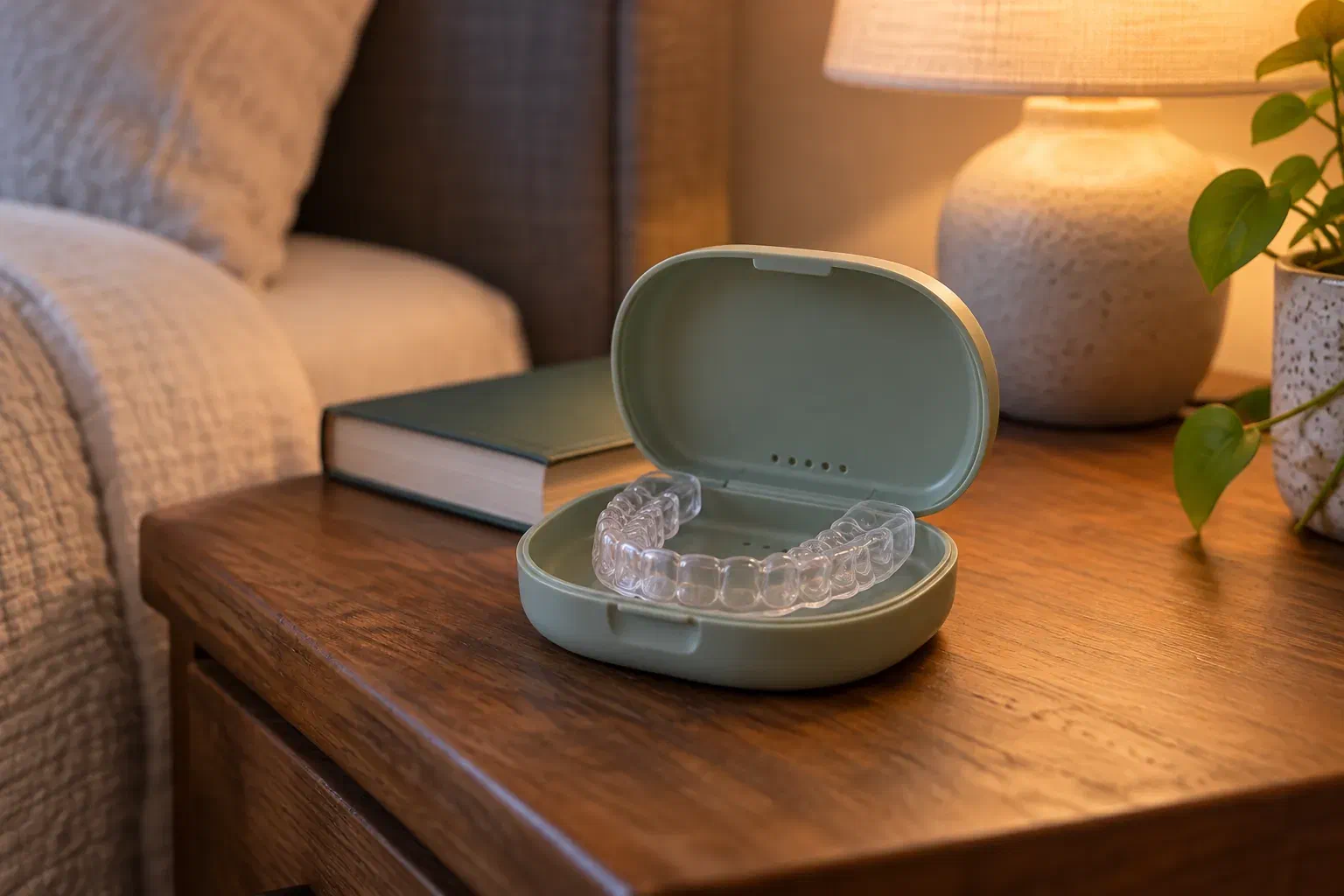
You might first hear about teeth grinding from someone who shares your bedroom. You might notice yourself holding your teeth tightly together while concentrating, or learn at a dental visit that an edge has worn down. These starting points are different, and they deserve more than the same automatic recommendation to buy a guard.
For people asking about teeth grinding and night guards in Milton, the useful first step is understanding what is happening and whether it is causing harm. An appliance may be one part of a plan, but the assessment should also consider symptoms, existing dental work, daytime habits, and relevant sleep or medical concerns. Your experience matters alongside what the dentist sees.
Grinding and clenching are not always obvious
Bruxism includes grinding or clenching the teeth and can happen while awake or asleep. The National Institute of Dental and Craniofacial Research’s bruxism guide explains that mild cases may not need treatment, while more severe activity can contribute to tooth damage, tired or painful jaw muscles, and headaches. Some people are unaware of the activity itself.
That does not mean every headache, sensitive tooth, or sore jaw proves that grinding is responsible. Describe the symptom without deciding its cause in advance. A clinician needs to distinguish a possible habit from other dental or medical problems that could require a different response.
If somebody has heard grinding, ask what they noticed and how often. Their observation is useful background rather than a diagnosis. You do not need to arrange an elaborate overnight recording before booking a visit, and an absence of audible grinding does not explain every possible clenching pattern.
Bring a short account of the pattern
Before your appointment, jot down when discomfort appears, how long it lasts, and what you were doing around that time. A morning jaw ache, discomfort after a long drive, and pain when biting on one particular tooth are different descriptions. Clear examples give the dentist a better starting point than a single label such as “TMJ.”
Include any recent changes in dental work, medicines, sleep, or general health. Bring an existing guard even if you stopped wearing it. If you have had orthodontic treatment, mention retainers and explain whether they still fit. These details allow the dentist to consider the whole situation before suggesting another appliance.
Keep the record simple enough to be useful. A few dated notes about symptoms and circumstances are usually more practical than checking your jaw every few minutes. The purpose is to communicate a pattern, not to make you feel responsible for identifying every episode of unconscious activity.
What the dental assessment needs to clarify
A dentist may examine the teeth and restorations for damage, check areas of tenderness, and ask about daytime and overnight symptoms. NIDCR describes both the health history and physical examination as parts of assessment. Additional evaluation depends on the findings; a sleep study is not automatically required for everyone who reports grinding.
Ask the dentist to show you any wear or damage and explain how it will be monitored. If photographs or previous records are available, ask whether they help establish change over time. Understanding whether a finding is recent, longstanding, or uncertain is more useful than assuming every visible mark represents a rapidly worsening problem.
If one tooth has become painful or a filling has broken, discuss that problem separately. Protecting the teeth from future wear does not repair an existing fracture or establish why a specific tooth hurts. Ask which concern needs attention first and how the proposed sequence of care addresses both the immediate problem and longer-term protection.
Give a night guard a clear purpose
A guard places an appliance between the teeth and may help protect them from the effects of grinding. It should not be presented as a guaranteed cure for the activity itself. MedlinePlus explains the goals of bruxism care as limiting damage, addressing pain, and reducing clenching where possible; different people may need different approaches.
Ask what the proposed appliance is intended to do in your case. Is the main goal protecting vulnerable tooth surfaces, monitoring wear, or addressing another identified concern? Find out what improvement would look like and which symptoms might persist even when the appliance is doing its protective job.
The word “guard” covers products with different purposes. A sports mouthguard, orthodontic retainer, and appliance prescribed for a sleep-related breathing condition are not automatically interchangeable with a grinding appliance. If you already use one of these, bring it to the discussion rather than layering devices or deciding which to stop wearing on your own.
Discuss fit, design, and follow-up before ordering
Ask why the suggested design suits your mouth and what alternatives are reasonable. You can discuss which teeth it covers, how it is retained, and how it works alongside crowns, bridges, implants, or removable dental appliances. The explanation should relate to your findings rather than simply the appearance or price of a product.
Clarify what happens at the fitting appointment. You should have an opportunity to practise inserting and removing the appliance and to ask how it is supposed to feel. Ask whether an adjustment or review visit is included, and whom to contact if it feels different after you have worn it at home.
Request a written estimate and confirm any insurance benefit before making assumptions about reimbursement. Ask what is included in the quoted fee, whether repairs are possible, and how replacement is handled. There is no need to guess a universal lifespan: the useful question is how your own guard’s condition and fit will be reviewed.
Make the first weeks easy to assess
Follow the wear instructions provided for your appliance. If it causes pain, a sore area, or a noticeable change in how your teeth meet, contact the dentist rather than forcing yourself to tolerate it. Do not heat, trim, grind, or bend the guard to make an adjustment at home.
Keep a brief note of what you experience when you start wearing it. Record whether the concern is inserting it, keeping it in place, removing it, or discomfort afterward. These details can help the practice decide whether an adjustment visit is needed and what to check when you arrive.
Take the appliance to follow-up appointments even if the teeth feel fine. Ask the dentist to review both the guard and your mouth. A heavily marked appliance is a reason for assessment, not something you must interpret yourself as proof that treatment has failed or that a new guard is immediately required.
Look at daytime habits without blaming yourself
Awake clenching may become noticeable during concentrated tasks. A reminder on a computer or phone can prompt you to notice whether the teeth are touching and allow the jaw to relax. NIDCR includes awareness and behaviour changes among the approaches that may be discussed for daytime activity.
Choose a reminder that fits a routine you already have, such as finishing a meeting or stopping for lunch. The aim is a comfortable check-in rather than another demanding task. Ask the clinician to demonstrate a relaxed resting position if you are unsure what that means for you.
Stress can be relevant, but it is not a reason to dismiss pain or tell yourself you should simply cope better. If stress management is part of the plan, choose support that you can realistically access. Discussing sleep, workload, or wellbeing should complement an examination rather than replace attention to a damaged tooth or persistent jaw symptoms.
Include sleep and medication questions
The NHS information on teeth grinding notes associations with sleep problems, some medicines, smoking, and alcohol or caffeine use. This makes a health history worthwhile, but an association does not establish the cause in an individual person. Tell the dentist about relevant changes and let the appropriate clinician review them.
Do not stop a prescribed medicine because you suspect a connection. Bring the name, dose, and approximate date it was started or changed, and discuss the concern with the prescriber. A coordinated review is more useful than changing medication and an appliance at the same time without advice.
Mention loud snoring, observed pauses in breathing, or significant daytime sleepiness to your medical clinician. Ask whether further sleep assessment is appropriate. A conventional grinding guard should not be assumed to diagnose or treat sleep apnea, and feeling that the teeth are protected does not settle a separate concern about breathing during sleep.
Give the appliance a dependable cleaning routine
Ask for cleaning instructions specific to the material you receive. Confirm the recommended brush or cleanser, water temperature, and storage method rather than borrowing directions intended for a different dental appliance. Keep the case clean and choose a consistent place for it away from pets and small children.
Pair the routine with brushing so that caring for the guard becomes part of the evening and morning sequence. If you travel, pack the case with your dental supplies and keep the practice’s contact details available. A guard forgotten in a hotel bathroom can be inconvenient, so a single designated storage place is helpful.
If the appliance develops a crack, a sharp edge, or a persistent change in fit, ask for advice. Do not use household glue or continue wearing a damaged device simply because it still stays in place. Bring it to the visit so the dentist can assess what happened and discuss the next step.
Decide when to seek earlier help
Trouble eating or opening the mouth warrants prompt dental assessment; MedlinePlus specifically advises contacting a dentist for these problems. A newly broken tooth, worsening pain, or symptoms that persist despite the agreed plan also deserve a call rather than waiting automatically for the next routine checkup.
When you contact the practice, explain the change and whether you are currently wearing an appliance. State if you can eat, drink, and open normally. This practical information helps the team understand the problem and advise on the timing of care.
To discuss teeth grinding and night guards in Milton, contact Milton Dental Clinic or call (905) 876-4488. Bring your questions and any appliance you already own. A useful plan gives you a reason for each recommendation, a way to judge progress, and a clear point at which to return for review.
