
Being told that you need a filling can sound like a small, straightforward decision. You may still want to know what is being repaired, why a particular material is suggested, and whether the result will blend with the tooth. Those are useful questions, even if you have had fillings before.
Tooth-coloured fillings in Milton are often discussed because appearance matters to patients, but colour is only part of the decision. The location and size of the repair, the remaining tooth, and the conditions in your mouth also matter. Understanding those factors helps you approach the appointment with a clearer idea of what a filling can accomplish and what it cannot promise.
First understand what needs repairing
Ask the dentist to show you the area and explain the finding. Is there a new cavity, a damaged existing filling, a chipped edge, or another concern? These situations may all involve restorative material, but they do not necessarily involve the same preparation or long-term plan.
The Canadian Dental Association’s information on fillings describes checking existing restorations and investigating decay during an examination. It also notes that some small areas may be monitored while others require treatment. The decision should follow the assessment rather than the assumption that every mark on a tooth needs drilling.
If monitoring is recommended, ask what will be reviewed and when. If a filling is recommended now, ask why waiting would be less suitable. A clear explanation makes it easier to distinguish a preventive plan from a repair that is needed because tooth structure has already been damaged.
Tooth-coloured does not name one material
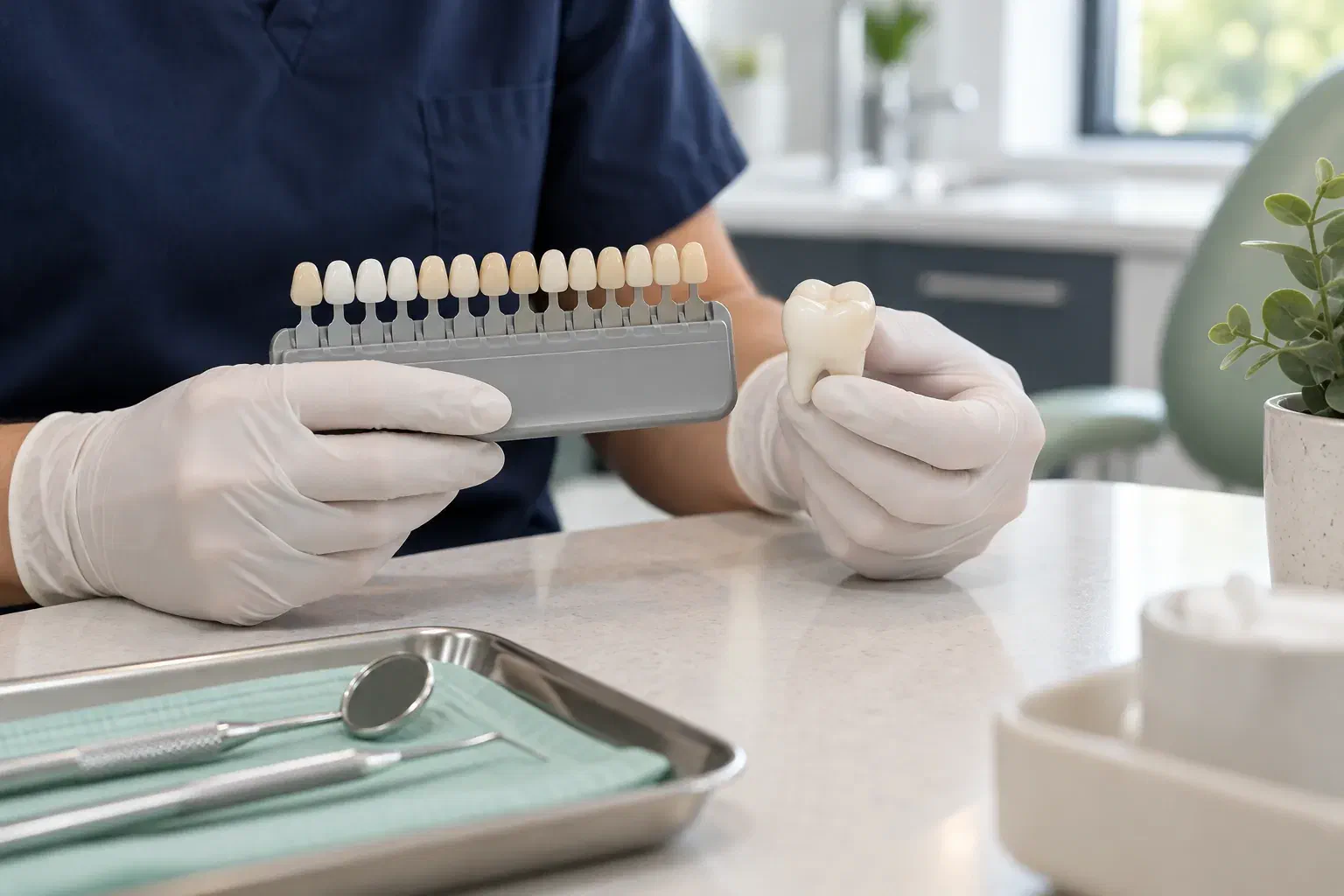
Patients often use “white filling” and “composite filling” as if they always mean the same thing. Composite is a common tooth-coloured restorative material, but other materials can also resemble natural teeth. Ask which material is being proposed rather than relying on a colour description alone.
The CDA identifies both composite and glass ionomer among tooth-coloured materials. Their uses are not identical. Your dentist can explain why a particular option fits the area being treated, including whether the restoration is intended as a definitive repair or part of a staged treatment plan.
You do not need to research every material before the visit. A more useful preparation is to decide what you want clarified: appearance, durability, the appointment process, cost, or how much of the tooth needs treatment. Tell the dentist which of these concerns matters most to you so the discussion addresses your actual decision.
Why the tooth’s location matters
A small visible repair near the front of the mouth raises different practical questions from a large repair on a back tooth used for chewing. Ask how the position of the tooth and the extent of the damage influence the recommendation. Also ask whether any existing restoration changes the available options.
The ADA’s guide to tooth-coloured fillings describes composite as useful in appropriate restorations while noting that placement requires a clean, dry working area. This helps explain why the appointment involves more than choosing a shade and adding material.
If a dentist recommends a different type of restoration, such as an onlay or crown, ask what a filling would be unable to provide in that particular tooth. The important comparison is between clinically reasonable options for your situation. It is not a contest in which one material is automatically best for every person.
Discuss appearance before treatment begins
Natural teeth have variation in shade, brightness, and translucency. Tell the dentist if the repair will be particularly visible when you smile or speak. Ask what can reasonably be matched and whether an existing restoration or tooth discolouration may influence the result.
If you are considering whitening, mention it before a visible filling is placed. The ADA’s whitening information explains that whitening affects natural teeth rather than changing tooth-coloured restorations in the same way. Planning the order of care can therefore matter when appearance is a major concern.
Avoid judging a proposed shade only against an unusually bright photograph on your phone. Lighting and image processing can alter how teeth look. Ask to discuss the result in relation to your own surrounding teeth and your expectations, rather than an image that may not represent a realistic match.
Know what happens during placement
Before treatment, the team should explain the planned procedure and comfort measures. Depending on the tooth and repair, local anaesthetic may be used. Tell the dentist about previous difficulty getting numb, anxiety about injections, or trouble keeping your mouth open.
For a composite restoration, the working area needs appropriate moisture control. The dentist prepares the tooth, places and hardens the material as required, and shapes the repair. The ADA patient guide explains why keeping the area clean and dry can make composite placement take longer than some patients expect.
Ask how to signal if you need a pause. Pressure, vibration, and unfamiliar sounds may be part of the experience, but you should communicate discomfort rather than silently trying to endure it. A brief explanation before each stage can be helpful if uncertainty is what makes treatment difficult for you.
The bite check is part of the appointment
Once a repair has been shaped, the dentist will assess how the teeth meet. Pay attention to the instructions during this stage, and describe anything that feels noticeably different. It may be hard to judge while you are numb, so ask what to do if the bite feels uneven later.
Do not try to wear down or adjust a filling yourself. If the restored tooth seems to contact first, hurts when you chew, or prevents you from closing comfortably, contact the office. Describe whether the problem occurs whenever you close or only when biting on a particular side.
This is a practical reason to keep the clinic’s contact information and aftercare instructions accessible. A filling appointment does not end the conversation about the tooth. Reporting a change allows the dentist to decide whether an adjustment, further assessment, or another step is needed.
Plan the rest of your day realistically
Ask how long the appointment is expected to take and whether any part of your mouth will remain numb afterwards. Follow the instructions about eating and drinking. Numb lips, cheeks, or tongue require care because you may not notice an accidental bite or an overly hot drink normally.
If you are booking around a work meeting, school pickup, or a meal, tell the team what your schedule involves. They can explain what is realistic for the treatment planned. Avoid assuming that an appointment described as a filling will take exactly as long as one you had years ago on a different tooth.
For children or anyone who needs assistance after treatment, ask the caregiver instructions before leaving. Find out which side was treated, what sensations to expect, and who to call with questions. Clear instructions are easier to follow when everyone involved hears the same explanation.
Sensitivity deserves a specific conversation
If the tooth was sensitive before treatment, tell the dentist how it felt and what triggered it. After treatment, ask what symptoms should improve, which changes should be reported, and when the tooth should be reassessed if it remains uncomfortable.
The ADA’s overview of sensitive teeth describes several possible causes, including decay, fractures, and worn fillings. The fact that a symptom follows a restoration does not allow you to diagnose it yourself. Persistent or worsening discomfort, especially pain with biting or pain that disrupts sleep, should be discussed with the office.
Keep the description simple: when the symptom started, whether it is getting better, and what brings it on. That information is more useful than repeatedly testing the tooth with very cold water or hard food. If swelling or other urgent symptoms develop, make that clear when you call.
Ask before replacing a sound older filling
You may dislike the appearance of an existing restoration even when it feels comfortable. It is reasonable to discuss cosmetic preferences, but ask the dentist to distinguish an appearance concern from a clinical reason for replacement. These are different reasons to consider treatment.
Find out what replacing the filling would involve, what uncertainty may be discovered beneath it, and whether repair or monitoring is an option. Ask about the effect on remaining tooth structure and the likely result. A discussion of benefits should also include the limitations of the proposed change.
If several fillings are involved, ask whether they all need attention or whether the recommendation applies to particular teeth. A written plan identifying each tooth and the reason for treatment is easier to review than a general suggestion to replace old dental work.
A repaired tooth still needs prevention
A filling repairs an area of damage; it does not make the entire tooth immune to future decay. The National Institute of Dental and Craniofacial Research’s tooth-decay guidance explains the role of fluoride, plaque control, and sugar exposure in protecting teeth. Ask which preventive steps are most relevant to the reason you needed this repair.
For example, difficulty cleaning a particular contact, frequent sipping of sweetened drinks, or dry-mouth concerns may deserve attention. You do not need to overhaul every habit at once. Choose a practical change with the dental team and make sure you understand how to carry it out.
During future checkups, the dentist can assess the restoration and surrounding tooth. No filling has a guaranteed lifetime. Report a sharp edge, a loose fragment, or a change in how food catches rather than waiting until the problem becomes painful.
Compare estimates using the same information
When discussing cost, ask which tooth and surfaces are included, which material is proposed, and whether the estimate covers only the filling or other care as well. Comparing two totals without those details may mean comparing different treatment plans.
If you have benefits, ask how an estimate will be submitted and what remains uncertain about coverage. If cost affects the timing of treatment, discuss that openly. The dentist can explain the implications of delay and help you understand the order of priorities without assuming that every item has equal urgency.
To discuss tooth-coloured fillings, contact Milton Dental Clinic at (905) 876-4488. Bring your questions about the tooth being repaired, the proposed material, and the result you hope for. A well-understood plan should leave you knowing both why the repair is recommended and how to care for the tooth afterwards.
