
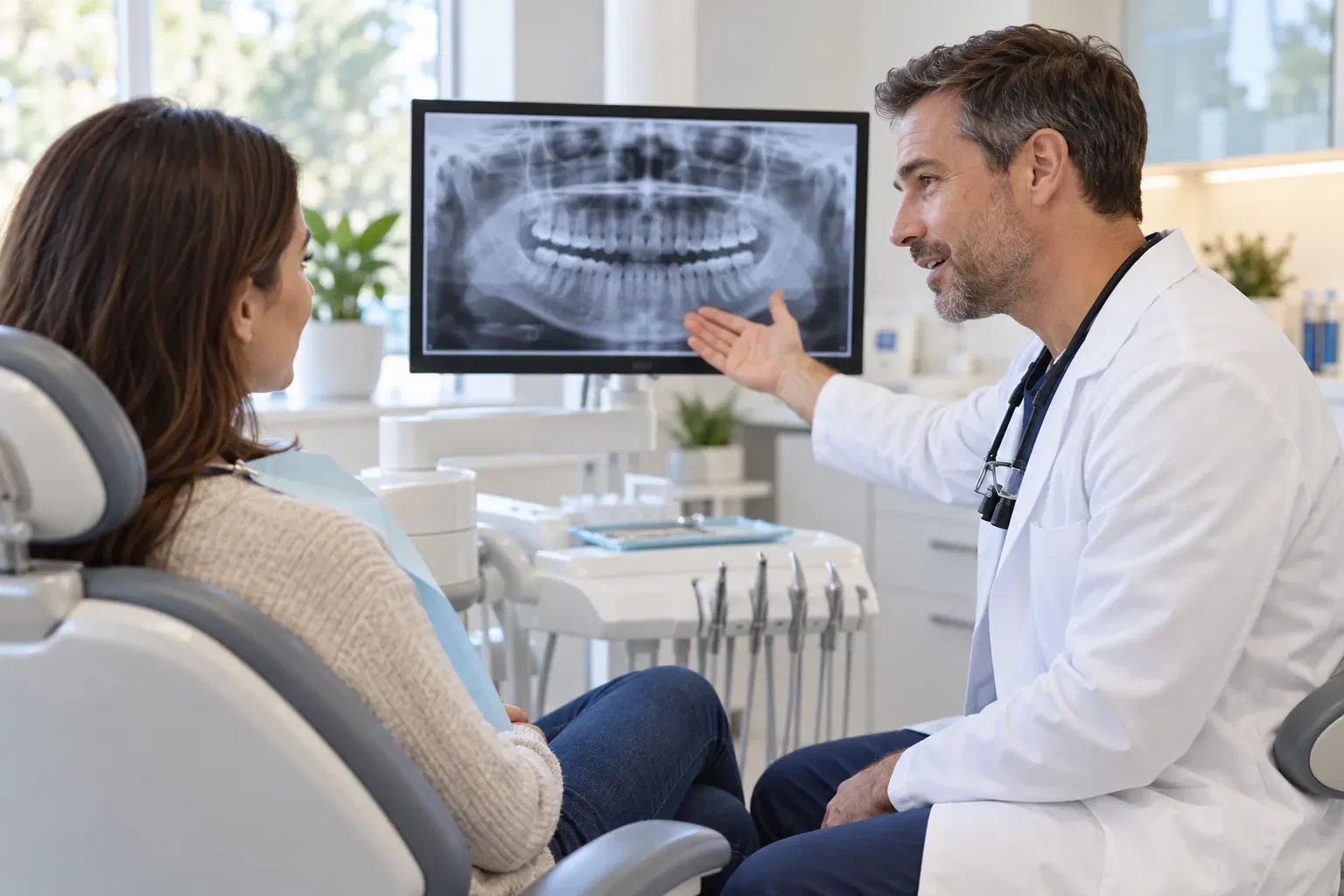
An X-ray recommendation can raise several questions at once. Why is it needed if nothing hurts? Will images from another office work? Does every checkup require a new set? You should be able to ask these questions before an image is taken and understand how the answer relates to your mouth.
For anyone arranging dental X-rays in Milton, the useful starting point is the clinical question. An image should help the dentist investigate something, plan care, or assess a change that matters. It is part of an examination and a conversation, rather than a separate test that explains everything on its own. This guide helps you prepare for that conversation without trying to turn a photograph on a screen into a diagnosis at home.
Start with the reason for the recommendation
Ask what the dentist hopes to learn. Perhaps there is an area that cannot be inspected directly, a tooth that needs closer assessment, or a treatment decision that requires more information. The explanation should be specific enough that you understand why an image would be useful now.
The American Dental Association’s patient information on X-rays explains that imaging can reveal problems not visible during a routine examination. It also describes how current health, symptoms, age, and risk influence the recommendation. A comfortable mouth does not automatically rule out a useful investigation, but neither does attending an appointment automatically mean you need images.
One helpful question is, “How would the result change what you recommend?” The answer may concern treatment, closer monitoring, or reassurance about a finding. If the explanation is unfamiliar, ask the dentist to put it in everyday language. You do not need to know the names of individual teeth or the technical terms for each image to participate in that discussion.
Bring previous images into the conversation
If you have recently changed dental offices, tell the new team where and approximately when your last images were taken. This information is useful even if you cannot remember what kind they were. Mention imaging completed by a specialist as well as by your usual dentist.
Ask the offices how records can be transferred securely and what permission is needed. Contacting them before the appointment gives staff time to arrange the transfer. A photograph of a monitor on your phone may be helpful context, but it may not provide the detail or accompanying records needed for clinical use.
Previous images sometimes answer the current question, and sometimes they do not. The relevant area may be missing, the image may no longer reflect the current situation, or a new symptom may require a different view. The ADA patient guidance discusses reviewing transferred images when deciding whether new ones are necessary. Ask what is already available before assuming that changing offices means repeating everything.
Different images answer different questions
Patients may hear terms such as bitewing, periapical, panoramic, or three-dimensional scan. These are not interchangeable names for the same picture. The area shown, the level of detail, and the purpose can differ.
You can keep the conversation practical: “Which part of my mouth will this show?” and “Why is this view suitable for the concern you found?” If several images are recommended, ask how they work together. Understanding the purpose of a group of images is more useful than judging the recommendation by the number alone.
The ADA’s professional overview of dental radiography discusses both conventional two-dimensional images and cone-beam computed tomography, which produces three-dimensional information. It emphasizes that imaging choices should follow clinical need. A more complex scan is not automatically a better choice for every patient or every question.
If a referral for imaging is suggested, ask where it will happen, who will interpret it, and how the findings will return to your dentist. Also ask whether a separate consultation is involved. Those details help you plan the visit and avoid assuming that a referral completes the treatment decision by itself.
There is no universal schedule for everyone
Two people attending on the same day may receive different imaging recommendations. Their histories, symptoms, and existing records may be different even if both describe their appointment as a checkup. A recommendation also can change over time for the same person.
The current ADA radiography guidance supports individual assessment rather than one fixed interval for all patients. Ask your dentist which features of your own history are relevant. If your risk has changed, find out what changed and whether that affects other parts of your preventive plan as well.
Avoid using a friend’s experience as the only comparison. Their dentist may have been answering a different question with different information. Instead, keep a simple record of your own appointments and where imaging was performed. This does not need to be a technical spreadsheet; approximate dates and office names are often a useful starting point when requesting records.
Discuss radiation concerns directly
It is reasonable to want the benefits and limitations explained. Ask why the proposed image is justified and how the team limits exposure while obtaining information of adequate quality. The goal is an appropriate investigation, not the largest possible collection of pictures.
The ADA’s radiography overview describes weighing diagnostic benefits against radiation exposure and using precautions to keep necessary exposure as low as reasonably achievable. That is different from saying there is no exposure or that every possible image should be taken for reassurance. The discussion should relate to the examination being proposed for you.
Tell the team about pregnancy, possible pregnancy, relevant medical concerns, and recent imaging elsewhere. Let the dentist address those details rather than deciding from an internet comparison that all imaging must either proceed or be postponed. Ask which guidance and local requirements the office follows if you have questions about the equipment or protective measures you see.
Make positioning and comfort easier to discuss
For some patients, the hardest part is not the image itself but holding a position or having a sensor inside the mouth. A strong gag reflex, jaw discomfort, limited neck movement, or a previous difficult experience is worth mentioning before the procedure starts.
Describe the specific difficulty. “I struggle to keep my mouth open for long” gives the team different information from “I felt panicky last time.” You can ask for a demonstration, a clear explanation of how long each step takes, and an agreed signal to pause. The team can explain which adjustments are practical for the image required.
If you use hearing aids, glasses, mobility supports, or a communication aid, ask whether anything needs to be adjusted and how staff can help. Do not remove devices simply because you assume that they interfere. Planning these details beforehand can make the appointment more predictable and reduce hurried instructions once you are positioned.
Helping a child understand the appointment
A child may be curious about the machine or worried about an unfamiliar object near the mouth. Ask the team how they explain the process to children. A brief, accurate description often gives parents a better way to prepare than promising that nothing unusual will happen.
Tell staff about sensory preferences, communication needs, and anything that made earlier appointments difficult. Ask whether the child can see the equipment first or practise a position before an image is attempted. The dentist can explain why imaging is being considered and what happens if the child cannot manage it that day.
Parents can also ask how previous records and the child’s stage of development affect the recommendation. The purpose is not to compare a child’s imaging schedule with an adult’s. It is to understand the question being asked for that child and how the information would influence care.
Ask to see what the dentist is explaining
When the dentist reviews an image, ask them to point out the area being discussed. Find out which tooth or region it relates to and whether they are describing a definite finding, a possibility requiring more investigation, or something to monitor.
Shades and shapes on a dental image are not a simple code that patients can reliably decode from an online example. Position, overlapping structures, and the relationship to the examination matter. The ADA notes that a diagnosis and treatment plan cannot be made from radiographs alone. An image is one part of the information the dentist considers.
If you are shown a change from an older image, ask how it affects the plan. You might want to know whether treatment is recommended now, whether an area will be reassessed, and what symptoms should prompt an earlier call. Write down the answer if several findings are discussed during the same visit.
Understand costs before the images are taken
Ask for an estimate that identifies the imaging being proposed. If there are several parts to the appointment, request an explanation of how imaging, examination, and any subsequent treatment are billed. This makes the discussion easier to follow than a single total without context.
Insurance information can be useful for planning, but ask the office to distinguish an estimate from a confirmed payment. Contact your benefits provider when you need details about your own plan. A coverage interval and a clinical recommendation answer different questions, so clarify both rather than assuming one automatically determines the other.
If cost is a concern, say so before proceeding. Ask the dentist which information is necessary for the immediate decision and what options exist for planning the rest of your care. Avoid simply leaving an investigation unfinished without discussing how that changes the advice the dentist can provide.
Leave with a clear next step
Before leaving, check whether the images have been reviewed and whether any further interpretation or referral is pending. If someone will contact you later, ask who will call and what to do if you have not heard back. Keep the office’s contact details with your appointment information.
A useful explanation should leave you knowing why the image was recommended, what it added to the examination, and what happens next. You should also know whether there is a finding to monitor and when the plan will be reconsidered. Those are practical outcomes you can take away even if the technical name of the image is soon forgotten.
To discuss an upcoming examination or request help arranging records for a visit, contact Milton Dental Clinic at (905) 876-4488. Bring your questions about previous images, comfort, and the reason for any proposed investigation. Understanding the purpose of imaging helps make the appointment a shared decision rather than an unexplained step in the routine.
