

The first-ever Canadian Oral Health Survey (COHS), conducted from November 2023 to March 2024, showed how poor oral health can impact everyday life, including eating, working, or going to school, and provided important baseline data as Canada rolled out the new Canadian Dental Care Plan (CDCP).1 In 2024, the CDCP was launched and became one of the most substantial federal investments in oral health in decades. This improved access to dental care for many individuals and families by eradicating a major financial barrier, especially for seniors and those with disabilities. As of Nov. 30, approximately 3.5 million individuals have received dental care through the CDCP program across Canada, further emphasizing the importance of a government-subsidized dental care program.2 While the program has restored smiles for Canadians from coast to coast, an important gap in oral health prevention and education still exists, which will be explored in this article.
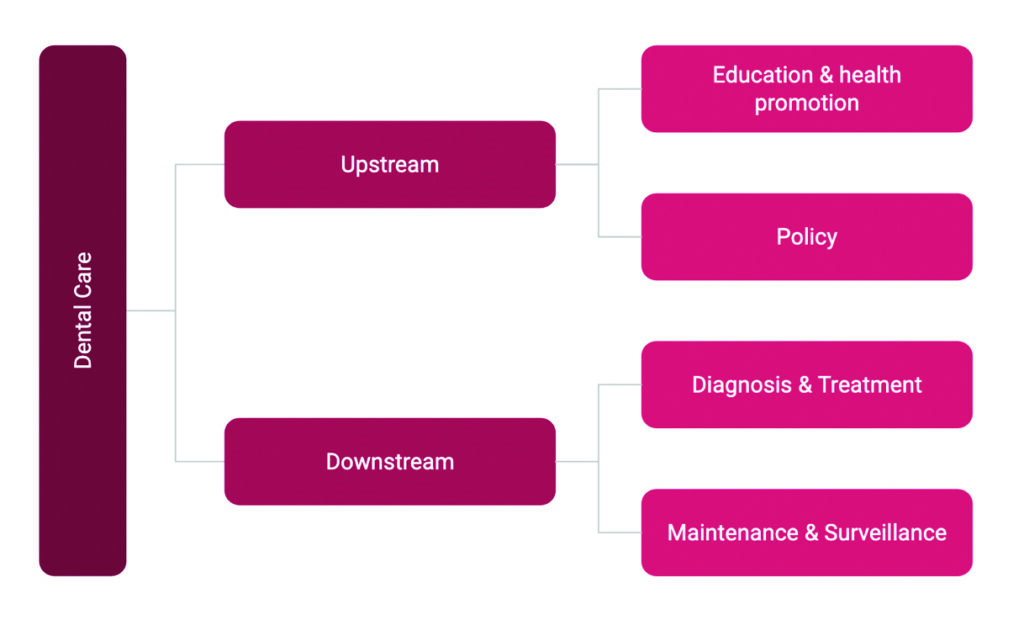
CDCP’s impact on the oral health of Canadians is undeniable; however, dental care is multifaceted. It involves prevention, diagnosis, treatment, and ongoing maintenance. The CDCP is improving access to prevention mainly through cleanings, polishing, and fluoride treatments; diagnosis through radiographic and clinical assessments; and treatment through coverage of a broad range of procedures. Its impact on long-term ongoing maintenance is still unknown as individual eligibility changes every year, and the program is only in its early years. At this time, the CDCP program is impacting Canadians’ oral health downstream, but an upstream gap still exists in patient education and health promotion (Fig. 1).
Fig. 1
In addition to the federal CDCP program, Canada delivers prevention through a mix of provincial/territorial and local programs as well. There are school-based sealant and fluoride varnish programs reducing the risk of caries among children through clinical intervention. Other examples of programs improving access to dental care include targeted public dental programs such as Healthy Smiles, Ontario Seniors Dental Care Plan, Ontario Disability Support Program, among others.3 Additionally, the community and public health initiatives deliver education and health promotion services to improve access to dental care upstream.
Oral health education and health promotion help prevent or mitigate the severity of oral disease. Community-based initiatives like the Community Smiles Project complement the dental care programs such as CDCP by addressing the non-financial barriers to dental care. Community Smiles is focused on the upstream ways to improve the community’s smiles. Oral health plays a big role in our overall well-being, yet over 1 in 4 Canadians report tooth pain or avoid certain foods because of dental problems, with seniors, people without dental insurance, and those with disabilities being most affected.4 Community Smiles Project is a group of dentists, public health professionals, and educators passionate about oral health education and improving access to dental care in Toronto. The group aims to equip the communities with knowledge and resources to care for their oral health through community outreach, oral health education, and oral disease prevention delivered in an accessible, culturally inclusive, and evidence-based way.
This winter, the group is raising awareness on dental trauma by collaborating with Milton Dental Clinic, Milton Winter Hawks, and the ROI corporation. The group’s main focus is on educating parents and coaches on dental trauma prevention and management. In collaboration with the Milton Dental Clinic, the group is able to offer subsidized custom-made mouthguards for young hockey players. While the group is regionally focused on Halton and nearby areas, they plan to expand to the rest of Ontario and eventually Canada. Additionally, on November 23rd, 2025, the group hosted a pop-up booth at the Country Heritage Holiday Experience in Milton, Ontario, to discuss oral health and raise awareness around dental trauma. This opportunity allowed visitors to learn more about the CDCP program and had the opportunity to interact with dental and public health professionals in an informal setting (Fig. 2). In addition to the in-person events, the group also raises awareness of dental topics online on their social media and shares bite-sized information on oral health which many of their followers enjoy. Our hope is to combine governmental coverage with local outreach, prevention programs, and system capacity improvements to close persistent gaps. Community Smiles is well placed to be part of the multifaceted approach to dental care by offering knowledge, human resources, and partnerships. Ultimately, this will improve the oral health of Canadians, thereby improving their overall health and quality of life.
Fig. 2

References
- Statistics Canada. Canadian Oral Health Survey (COHS), survey 5399. Ottawa (ON): Statistics Canada; 2023–2024. Available from: https://www.statcan.gc.ca/en/survey/household/5399
- Health Canada. Canadian Dental Care Plan statistics. November 30, 2025. Available from: https://www.canada.ca/en/services/benefits/dental/dental-care-plan/statistics.html
- Canadian Association of Public Health Dentistry. Government Dental Programs. CAPHD. Available from: https://caphd.ca/programs-resources/government-dental-programs/
- Statistics Canada. Self-reported oral health problems in the Canadian population living in the provinces, November 2023 to March 2024. The Daily. 2024 Oct 23; (Catalogue no. 11-001-X). Available from: www150.statcan.gc.ca