

Illustrative parent holding a baby during a first dental conversation
Children’s Dentistry

Baby’s First Dental Visit

Make your baby’s first dental visit in Milton a chance to ask, learn, and plan. Discuss new teeth, cleaning, feeding routines, and the next steps for early oral care with explanations that fit your family.

A closer look at your baby’s first visit

A small beginning with room for your questions.

The first dental visit is about more than counting teeth. It is an opportunity to look at your baby's mouth, discuss early risks, and help you care for new teeth as they appear. You can bring questions about cleaning, feeding routines, teething concerns, or something you have noticed near the gums.

The Canadian Dental Association recommends an infant dental assessment within six months of the first tooth appearing or by the first birthday, whichever comes first. You do not need to wait for a full set of teeth. If there is pain, an injury, swelling, or another concern, seek advice sooner rather than waiting for that milestone.

At Milton Dental Clinic, tell us your baby's age and any concerns when arranging the visit. Bring the details of the routine you actually use, including the products and methods you have tried. The aim is a useful conversation and an appropriate assessment, with practical next steps rather than an expectation that your baby will behave like an older child.

Arrange your baby’s first dental visit
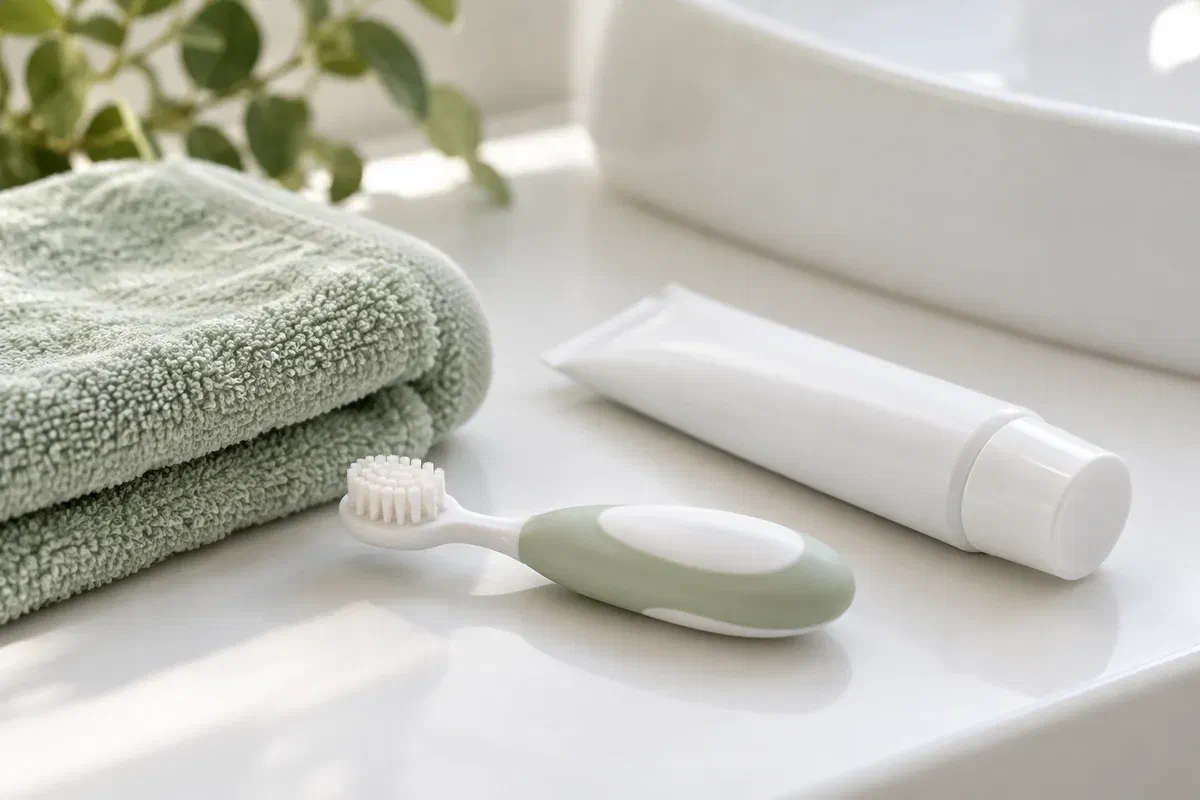
Illustrative baby toothbrush, soft washcloth, and plain toothpaste tube
Questions to bring along

Everyday details help shape early care.

Parents often have several small questions rather than one clear problem. A short list can help you remember them during an unfamiliar visit.

New teeth and changes in the mouth

Tell us which teeth have appeared and whether you have noticed a spot, chip, swelling, or area that seems uncomfortable. Describe when the change began. Do not assume every mouth symptom is teething, particularly if your baby seems unwell or feeding has changed.

Cleaning that is difficult to manage

Explain how you clean your baby's mouth and what makes it difficult. Bring the toothbrush or the name of the product if useful. Ask for a demonstration suited to the teeth present and your baby's stage rather than trying to copy an adult brushing routine.

Feeding and settling routines

Describe the usual pattern of feeds, drinks, snacks, and bedtime care without trying to present a perfect day. The conversation should identify practical oral-health measures that fit your family. Feeding concerns affecting nutrition or growth also deserve advice from the appropriate medical professional.

Mention medical conditions, medicines, allergies, or support needs when booking. If your baby is unwell before the appointment, contact the clinic to discuss the symptoms and whether the planned visit remains appropriate.

Why start early?

Build understanding while the routine is still taking shape.

An early assessment gives parents a chance to discuss prevention before an obvious problem appears. The dentist can consider the teeth and tissues, relevant history, and daily habits, then explain the care and review interval that suit the findings. The first visit is a starting point, not a guarantee against future decay.

It also gives you somewhere to bring the questions that arise as your baby grows. You should leave knowing what to clean, what to watch, and how to seek advice if something changes. A useful plan is one you understand well enough to put into practice at home.

Patient information: CDA — your child’s first dental visit

A clearer cleaning method

Seeing a technique demonstrated can answer questions that a product label cannot. Ask where to position the brush and how to reach the small teeth comfortably. If the method seems difficult, say so while there is an opportunity to discuss an alternative.

Fluoride advice for your baby

Ask whether fluoride toothpaste or another preventive measure is recommended and, if so, which product and amount to use. Bring information about current products and relevant fluoride exposure. Advice should reflect your baby's risk and current Canadian guidance rather than an adult instruction.

A plan for the next stage

As new teeth appear, cleaning access and the questions you have may change. Ask when to return and which concerns should lead to an earlier call. The plan can evolve with your child instead of relying indefinitely on instructions from a single appointment.

What the first visit may involve

Meet, discuss, look, and plan together.

The approach depends on your baby's needs and the assessment required. Ask how you can support the visit and what the clinician intends to do before the examination begins.

  1. Share the history and your main questions

    Discuss health information, feeding and cleaning routines, and any changes you have noticed. Tell the team what helps your baby settle and whether there are sensory or positioning concerns. Start with your most important question so it receives attention even if the visit becomes busy.

  2. Explain a suitable examination position

    The clinician can discuss how to look safely and comfortably at the mouth, including your role where appropriate. A baby may be held by a parent during parts of the visit. Ask for clarification about any proposed position rather than trying to arrange the examination yourself.

  3. Assess the mouth and explain the findings

    The dentist looks at the teeth and tissues that can be appropriately assessed and considers relevant risk factors. Ask what was observed and whether anything needs additional review. If your baby is unsettled, the team should explain what was completed and what remains to be assessed.

  4. Demonstrate care and arrange follow-up

    Review cleaning, suitable products, and the practical changes discussed for your family. Confirm any preventive care proposed and the reason for it. Before leaving, ask when to return, how to contact the clinic about a concern, and whether another appointment is needed for a particular finding.

After the first visit

Turn the advice into a small, repeatable routine.

An examination alone does not usually require a special recovery period. Follow any additional directions if a preventive product or other care was provided.

Practise the cleaning method shown

Use the brush, technique, and product amount recommended for your baby. Keep toothpaste out of reach and provide the adult help discussed. If the routine is repeatedly difficult or causes apparent pain, contact the team for advice rather than stopping care without a plan.

Keep feeding questions connected to the whole child

Use the practical oral-care advice discussed, and raise ongoing feeding or growth concerns with your baby's medical provider. Avoid abrupt changes based on a general website statement. The dental conversation should support an appropriate routine alongside your child's broader health needs.

Report a new concern before the next recall

A new spot, injury, swelling, or apparent dental discomfort deserves a call. Describe what has changed and when, especially if eating or sleep is affected. Do not wait for the next scheduled visit simply because the first examination was reassuring.

Choosing the right next step

A first visit can lead to prevention, further assessment, or care.

The plan depends on what is found and what can be appropriately assessed. Ask what each recommendation is intended to achieve for your baby.

When the visit is about starting care

Early assessment and preventive guidance

The focus is on examining the mouth, discussing risk, and helping you establish a suitable routine. The next review should have a clear purpose and interval. Additional preventive measures can be discussed according to the findings.

When something has changed or seems uncomfortable

A focused visit for a particular concern

An injury, a visible tooth change, or swelling may require a different assessment from a routine introduction. Describe the concern when booking. The team can discuss timing and whether the situation needs prompt dental or medical attention.

When needs extend beyond the initial appointment

Further care or a pediatric referral

A finding or support requirement may call for additional visits or a dentist with relevant pediatric expertise. Ask why that route is recommended and how the next step will be arranged. Referral should come with an explanation of the question or care need involved.

Questions about a baby’s first dental visit

You do not need to arrive with everything figured out.

Bring the practical questions about timing, preparation, and daily care. The appointment is an opportunity to learn about your baby's needs.

(905) 876-4488
Should I wait until my baby has several teeth before arranging the first dental visit?
No. Canadian guidance recommends assessment within six months of the first tooth appearing or by age one, whichever comes first. Contact the clinic to plan the visit. If you notice a concern sooner, ask for advice rather than waiting for more teeth.
What if my baby has no visible teeth by the first birthday?
Still arrange the recommended assessment and mention that no teeth are visible yet. The visit can include discussion of development, the mouth, and early care. The dentist can explain whether any further review is appropriate for your baby’s particular circumstances.
Will crying mean my baby’s first appointment has failed?
No. Babies may be unsettled in an unfamiliar setting. The team can discuss what can be assessed appropriately and whether another visit is needed. Ask what was completed and what remains, rather than judging the appointment by whether your baby stayed quiet.
Should I bring the toothpaste I am using for my baby?
The product or a clear record of its name and ingredients can help the discussion. Ask whether it is appropriate and what amount, if any, is recommended for your baby. Do not assume that a children’s label means every product suits every infant.
Is a bottle or feeding concern something I can raise at the first dental visit?
Yes. Describe the routine and any oral-health questions you have. The dentist can discuss relevant preventive care, while concerns about nutrition, growth, or swallowing may also need your baby’s medical provider. Advice should consider the whole situation rather than one habit in isolation.
What should I do if I notice a white or brown spot on a baby tooth before the first visit?
Contact the clinic and describe the change so an appropriate assessment can be arranged. A spot cannot be diagnosed reliably from colour alone. Do not scrape it or assume it will disappear when the tooth falls out; ask what review is needed.
Baby’s first dental visit in Milton

Let’s make room for those first questions.

Contact our Bronte Street practice with your baby's age and the questions you would like to discuss. We can help arrange an appropriate first assessment and explain how to prepare for the visit.

Arrange assessment by the first birthday or within six months of the first tooth, whichever comes first. Report pain, injury, or swelling sooner.

Visit Milton Dental Clinic
Unit 1, 342 Bronte St. S, Milton, ON L9T 5B7
Get directions Clinic hours
Monday–Thursday
11am–7pm
Friday–Sunday
By appointment only

How can we help?

Milton Dental Clinic

Have a question about your smile? Choose the option that works best for you.

For urgent dental concerns, please call.
Messages are reviewed during clinic hours.