Illustrative parent holding a baby during a first dental conversation
Children’s Dentistry

Baby’s First Dental Visit in Etobicoke

A longer drive with a baby takes planning. Make a first dental visit from Etobicoke worthwhile by arriving with your questions on teeth, cleaning and feeding, and leaving with a clear plan for home.

Planning a longer trip with a baby

Make the one trip count.

Travelling any distance with an infant means diaper bags, nap timing, and a little luck. So when you set out for a first dental visit, you want to come home with real answers. The appointment covers a look at your baby’s mouth, a talk about early risks, and practical help caring for teeth as they appear. It is also the place for questions on cleaning, feeding, teething, or anything you have seen near the gums.

The Canadian Dental Association recommends a first assessment by the first birthday, or earlier once a first tooth has been in place for six months. Waiting for more teeth is not necessary. For pain, swelling, an injury, or another worry, seek advice promptly, and consider whether care closer to home is the faster option.

Families coming from Etobicoke can start with a phone call to our Bronte Street practice. Share your baby’s age and anything you have noticed, and mention that you are travelling so the team can suggest a sensible time. Bring a straightforward account of the routine you use, including products and approaches you have tried. Expect a useful conversation and an assessment designed for an infant.


Plan your baby’s first visit
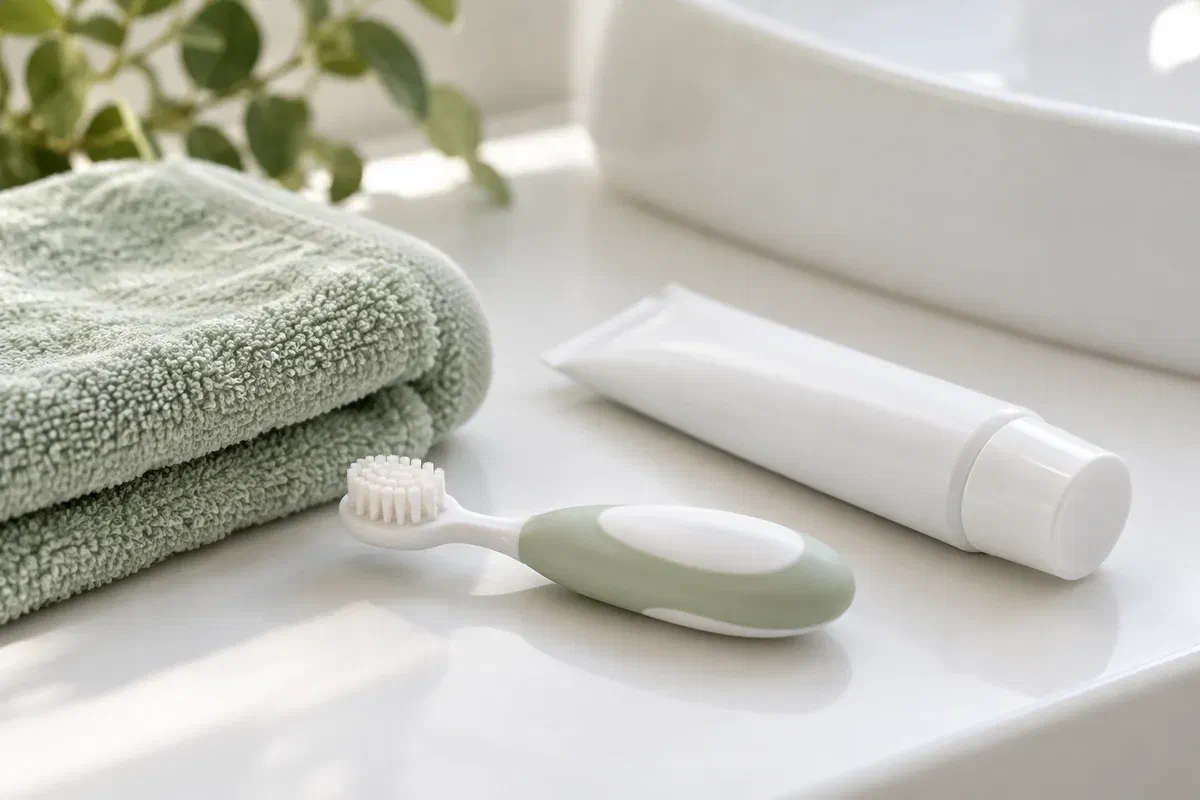
Illustrative baby toothbrush, soft washcloth, and plain toothpaste tube
Pack these questions too

Prepare a list before you leave home.

On a longer outing, it is easy to forget the very thing you meant to ask. A written list, tucked in the diaper bag, means you can cover everything in one visit.

What you have seen in the mouth

Note the teeth that are through and any spots, chips, swelling, or areas your baby seems to avoid. Write down when you first saw them. Teething does not explain every symptom, especially if your baby seems unwell or has changed how they feed.

Cleaning challenges

Describe your current method and where it gets stuck. Pack the brush or note the product name. Ask the team to demonstrate a technique for the teeth your baby has now, so you can practise it at home rather than guessing.

The feeding and bedtime routine

Explain the actual pattern of feeds, drinks, snacks, and settling, not an idealised one. That lets the dentist suggest oral-health steps that suit your family. Questions about growth or nutrition should also be taken to your baby’s doctor.

Share any medical condition, medication, allergy, or support need when you call. If your baby becomes sick before the day, phone before you set out so we can decide together whether the trip still makes sense.

Worth the drive

A clear plan you can follow from home

Prevention is the heart of a first visit. Having examined the teeth and gums and heard about your baby’s health and routine, the dentist can explain what care is sensible and how often to return. Think of it as groundwork; it is not a promise that decay will never occur.

For families further away, the bigger benefit may be confidence. You go home knowing what to clean, what to watch for, and which changes are worth a phone call before getting in the car. A plan is only valuable if you can carry it out on your own between visits.

Patient information: CDA — your child’s first dental visit

A technique you can practise alone

One clear demonstration can save a lot of trial and error. Ask how to position the brush and reach small teeth gently. If anything still feels clumsy, mention it before you leave, since you will be practising without help.

Fluoride guidance to take home

Ask whether your baby should use fluoride toothpaste or another preventive measure and, if so, which product and how much. Mention what you use now and any other fluoride sources. The recommendation should follow Canadian guidance and how likely your baby is to develop decay.

A sensible return schedule

As teeth arrive, cleaning and questions change. Ask when the next visit should be, and which concerns warrant a call before that. Try to book follow-up in a way that keeps trips well spaced and purposeful.

What happens in the room

Talk, look, show, plan

The visit follows your baby’s needs and comfort. Ask the clinician to outline what they will do and how you can help, so nothing is missed.

  1. Covering history and priorities

    You will discuss health details, feeding and cleaning, and recent changes. If car rides leave your baby cranky, or certain positions upset them, say so. Start with the question you most need answered, especially as a repeat trip is less convenient.

  2. A safe way to see the mouth

    A parent often holds the baby during part of the exam. The clinician will explain the position and your role. Ask about anything that is unclear instead of improvising.

  3. Examination and explanation

    The dentist checks the teeth and tissues that can reasonably be assessed and considers risk factors. Ask what was found and whether anything needs further review. If your baby is unsettled, ask which parts were completed, and whether the rest can wait or needs another visit.

  4. Demonstration and next steps

    Practise cleaning with guidance and talk through products and changes at home. Ask about the purpose of any preventive care. Before leaving, confirm when to return, how to reach the clinic by phone, and whether any finding needs a separate visit.

Between visits

Carry the routine on at home.

A first exam on its own normally needs no recovery. If fluoride or another product was applied, follow the short instructions given before you head home.

Keep up the method you were shown

Stick to the recommended brush, technique, and toothpaste amount, and keep toothpaste out of reach. Stay hands-on with each clean. If cleaning remains hard or seems uncomfortable, phone us for advice rather than dropping the routine.

Feeding questions belong with your doctor too

Use the oral-care advice from the visit, and raise ongoing feeding or growth concerns with your baby’s doctor. Avoid abrupt changes based on something general online. Dental advice should complement your child’s overall care.

Call first, then decide about the drive

If you notice a new spot, an injury, swelling, or apparent tooth pain, call and describe what changed and when. The team can help you decide whether to come in, wait, or seek care closer to home.

After the first visit

Planning what comes next

The next step depends on what was found and what could be assessed. Ask what each recommendation is meant to achieve and how often it would require a visit.

When the mouth looks healthy

Preventive advice and periodic review

Most first visits focus on the exam, a discussion of risk, and a practical routine. Your next review should have a purpose and a timeframe that makes sense for your family. Other preventive measures may be discussed based on the findings.

When you have noticed a change

A visit for a particular issue

Bumps, discolouration, and puffy gums are assessed differently from a routine first look. Describe it when you call, and ask whether the situation calls for care closer to home or prompt medical attention.

When more care is needed

Additional visits or a pediatric referral

Some findings or support needs lead to more appointments or a dentist with pediatric experience. Ask why the step is recommended, where that care would happen, and who arranges it, so you can plan the travel.

Practical questions

Answers for families travelling in

Here are answers on timing, planning, and care at home. The appointment is where your baby’s specific needs are discussed.

(905) 876-4488
What time of day is best for a first visit when we have a longer drive?
Many parents choose a slot after a nap and feed, so their baby is rested on arrival. Tell the team you are travelling and ask what times are available. The clinic is open Monday to Thursday, 11am to 7pm, with Friday to Sunday by appointment only.
If my baby falls asleep in the car, can the visit still go ahead?
Often a baby can be gently woken, though some take time to settle. Allow a little extra time when you arrive. The team will work with how your baby is feeling and explain what could be assessed.
Should I seek urgent care closer to home for a mouth injury?
For a serious injury, breathing or swallowing difficulty, or a baby who seems very unwell, go to the nearest urgent medical care. For other dental concerns, call to describe what happened, and the team can advise on timing.
Can I ask everything in one visit so we don’t need to come back soon?
Bring a full list and raise your top questions first. Some findings may still need follow-up, but the dentist can explain why and how often, so you can plan visits sensibly.
What should I pack for the appointment?
Bring diapers, a change of clothes, a comfort item, any snacks or feeds your baby may need, and the name of the toothpaste you use. A written list of questions also helps.
How will I know which concerns need a call between visits?
Ask the dentist at the first visit. In general, a new spot, an injury, swelling, or signs of tooth pain are worth a phone call. Describe what changed so the team can advise.
Etobicoke to Bronte Street

One visit, well planned.

Call our Bronte Street practice, tell us your baby’s age, and let us know you are coming from Etobicoke. We will help find a sensible time for a first assessment and explain how to prepare.

The first check is due by age one, or sooner once half a year has passed since tooth number one. For pain, injury, or swelling, call promptly or seek closer urgent care.

Visit Milton Dental Clinic
Unit 1, 342 Bronte St. S, Milton, ON L9T 5B7
Get directions Clinic hours
Monday–Thursday
11am–7pm
Friday–Sunday
By appointment only

Areas we serve

  • Milton
  • Oakville
  • Mississauga
  • Georgetown
  • Halton Hills
  • Acton
  • Campbellville
  • Brampton
  • Burlington
  • Puslinch
  • Rockwood
  • Erin
  • Caledon
  • Etobicoke
  • Old Milton
  • Bronte Meadows
  • Timberlea
  • Dorset Park
  • Dempsey
  • Clarke
  • Beaty
  • Coates
  • Harrison
  • Scott
  • Willmott
  • Ford
  • Bowes
  • Cobden
  • Walker
  • Mountain View
  • Milton Heights
  • Hawthorne Village
  • Valley View
  • Fallingbrook
  • Nassagaweya
  • Trafalgar
  • Esquesing
  • Nelson
  • Brookville
  • Moffat
  • Glen Williams
  • Norval
  • Limehouse
  • Stewarttown
  • Ashgrove
  • Hornby
  • Silver Creek
  • Speyside
  • Scotch Block
  • North Oakville
  • River Oaks
  • Glen Abbey
  • West Oak Trails
  • Palermo
  • Bronte Creek
  • College Park
  • Joshua Creek
  • Uptown Core
  • Preserve
  • Iroquois Ridge
  • Lisgar
  • Meadowvale
  • Meadowvale Village
  • Churchill Meadows
  • Erin Mills
  • Central Erin Mills
  • Streetsville
  • East Credit
  • Creditview
  • Heartland
  • Sheridan
  • Mount Pleasant
  • Credit Valley
  • Huttonville
  • Churchville
  • Springbrook
  • Northwest Brampton
  • Bram West
  • Fletcher's Meadow
  • Fletcher's Creek South
  • Alton Village
  • Orchard
  • Millcroft
  • Headon Forest
  • Tansley
  • Brant Hills
  • Tyandaga
  • Kilbride
  • Lowville
  • Aberfoyle
  • Morriston
  • Arkell
  • Hillsburgh
  • Freelton
  • Carlisle
  • Waterdown
  • Flamborough
  • Mountsberg

How can we help?

Milton Dental Clinic

Have a question about your smile? Choose the option that works best for you.

For urgent dental concerns, please call.
Messages are reviewed during clinic hours.