

Illustrative parent holding a baby during a first dental conversation
Children’s Dentistry

Baby’s First Dental Visit in Mississauga

Your baby has tagged along to everyone else’s checkups. Now it is their turn. Plan a first dental visit from Mississauga to cover early teeth, cleaning, feeding habits and the next steps for care.

From tag-along to patient

A turn in the chair, at last

In busy households, the youngest often spends early dental visits in a stroller while an older brother or sister gets checked. It is easy to assume the baby can wait. In fact, an infant benefits from an appointment of their own. A dentist can examine the gums and first teeth, flag early risks, and coach you on looking after each new arrival, and you get space to ask about cleaning, feeding, teething, or a mark you have spotted.

Canadian Dental Association guidance sets a clear marker: a first assessment no later than the first birthday, and sooner if six months have passed since a tooth broke through. There is no reason to hold off for more teeth. Any pain, injury, or swelling, or another concern, is worth raising straight away.

Arranging a visit from Mississauga starts with a quick call to our Bronte Street practice. Let us know your baby’s age and anything you have noticed. It helps to describe your day-to-day routine as it truly is, including products and tricks that worked or flopped. Expect a relaxed exchange and a suitable check, with no expectation that a baby will behave like a sibling of six.

Book your baby’s own first visit
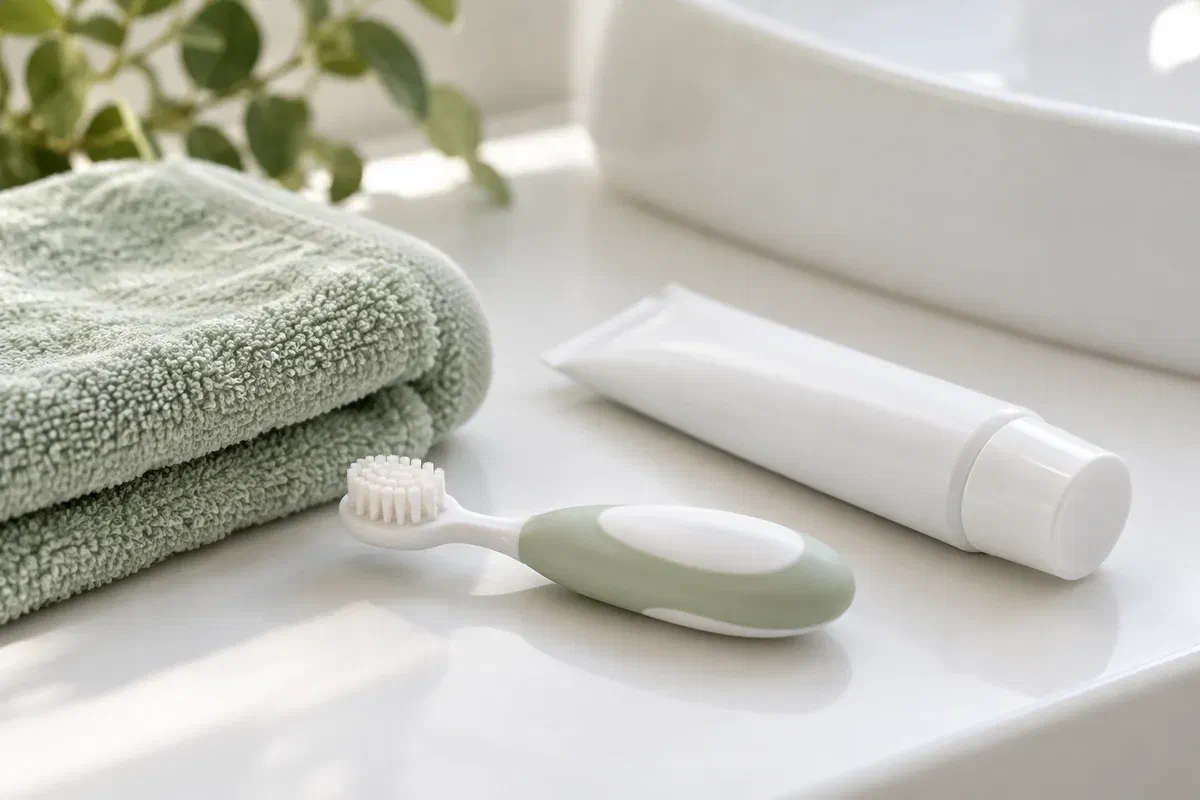
Illustrative baby toothbrush, soft washcloth, and plain toothpaste tube
What to mention

Small details, big help

Questions tend to pile up gradually rather than arrive all at once. Jotting them down beforehand means none get lost while you are managing a baby in a new place.

Teeth that have arrived and anything unusual

Count the teeth you can see and note any spot, chip, swelling, or tender patch. Mention when you first spotted it. Remember that not every symptom is teething, especially if your baby seems poorly or is feeding differently.

The brushing routine and its hiccups

Explain how cleaning happens now and what gets in the way, such as a baby who bites the brush or turns away. You can bring the brush or the product name. Ask for a demonstration matched to your baby’s stage, rather than copying how older children brush.

Feeding, snacks, and settling

Describe feeds, drinks, snacks, and how your baby falls asleep, without polishing the details. A realistic picture leads to oral-health suggestions that work in your home. Nutrition or growth concerns should also go to your baby’s doctor or another appropriate provider.

Your baby’s health history matters: share any diagnosis, regular medication, allergy, or extra support needs as you book. A fever or illness close to the day is worth a phone call, so we can decide together whether to keep the time.

Reasons not to wait

Prevention, before there’s a problem to treat

Starting early keeps the focus on prevention. After looking at teeth and soft tissues and hearing about your baby’s health and daily habits, the dentist can explain what care is advisable and how often to return. It sets a foundation, though it cannot promise your child will never have a cavity.

There is a practical upside too. Questions keep arriving as babies grow, and you will know where to take them. Leave the visit clear on what to clean, which changes to watch for, and how to get advice. Instructions are only useful when they make sense at your own bathroom sink.

Patient information: CDA — your child’s first dental visit

Brushing made visible

A quick demonstration often answers what labels and leaflets cannot. Ask how to angle the brush and how to reach small teeth gently. If you still find it tricky, say so while there is time to try something different.

Fluoride, tailored to risk

Ask the dentist whether your baby should use fluoride toothpaste or have another preventive measure, and what kind and quantity would suit. Mention what you already use and any other fluoride exposure. The answer should rest on your baby’s risk and current Canadian guidance.

A plan with a next chapter

With each new tooth, cleaning and your questions shift. Find out when to return and what should prompt an earlier call. One conversation is never the last word; expect the advice to evolve with each stage.

How it usually goes

Talk, position, look, plan

Each appointment is fitted to the baby in front of the team. You are always free to ask for the plan, and your part in it, before anyone begins.

  1. History and your top question

    You will go over health details, feeding and cleaning habits, and anything you have noticed. Mention the songs, toys, or holds that calm your little one, and anything that tends to upset them. Ask your most important question early, so it is covered even if the visit gets busy.

  2. A safe, comfortable position

    For parts of the visit, many babies are held by a parent. The clinician will explain how the mouth can be examined safely and what your role might be. If any suggestion is unclear, ask rather than trying to arrange it yourself.

  3. The examination and what it showed

    Teeth and soft tissues that can reasonably be examined will be checked, and risk factors considered. Ask what was found and whether anything needs further review. A crying baby can cut the exam short; if so, you will hear which parts were done and which still need doing.

  4. Cleaning practice and follow-up

    Review the cleaning method, suitable products, and practical changes for your household. Ask what any recommended preventive care is for. Before leaving, check when to come back, how to reach the clinic, and whether a particular finding needs a separate visit.

Afterwards

Keep it simple, keep it going.

A routine exam rarely needs any recovery time. If a preventive product was applied or other care given, follow the brief instructions provided.

Brush the way you were shown

Use the recommended brush, method, and toothpaste amount. Store toothpaste where your baby cannot reach it, and keep giving hands-on help. If brushing keeps going badly or looks painful, call for ideas rather than stopping without a plan.

Link feeding questions to overall health

Follow the oral-care advice from the visit, and bring ongoing feeding or growth concerns to your baby’s doctor. Avoid dramatic changes based on general online tips. Dental suggestions should fit with your child’s broader health care.

Phone between visits when needed

A new spot, an injury, swelling, or signs of a sore tooth all merit a call. Note the date it started and whether meals or naps have changed. Good news at the first visit is no reason to hold a new worry until the next recall.

Possible next steps

Three directions, depending on the findings

Most first visits end with a simple prevention plan, but not all. If something is recommended, you can always ask what it is for and how it helps your baby.

When the visit is a first introduction

Preventive advice and regular reviews

For a healthy-looking mouth, the visit is mostly about getting started well: an exam, a talk about risk, and a home routine you can sustain. You should know why your next review is set when it is. Extra prevention may come up if the findings suggest it.

When something looks wrong or sore

A targeted visit for one concern

If you are booking because of a bump, a discoloured tooth, or a puffy gum, tell us at the outset. That kind of visit is assessed differently from a hello-and-welcome check, and the team can say how quickly to come in or whether medical care should come first.

When needs go beyond a first visit

Additional care or a pediatric referral

Now and then, a finding or a baby’s support needs mean extra appointments or a dentist with pediatric experience. You deserve a plain explanation of why, what the referral will look at, and who is arranging it.

Things parents wonder about

Before you book, a few answers

Here are answers on timing, preparation, and home care. Your baby’s own situation is what the visit itself is for.

(905) 876-4488
Can my baby’s first visit be booked on the same day as an older sibling’s checkup?
Ask when you call. The team can look at scheduling and let you know what is possible. Back-to-back visits can save a trip, though some parents prefer separate times so the baby gets full attention.
Will seeing a sibling at the dentist help my baby feel more comfortable?
Some babies seem reassured by familiar faces and routines, while others are not bothered either way. Bring whatever helps your baby settle. The team will work with your baby’s mood on the day.
How do I clean the teeth of a baby who won’t open their mouth?
Many parents face this. Try gentle approaches and describe the struggle at the visit. The dentist can show positions and techniques suited to your baby’s age and the teeth present.
Is it normal for baby teeth to come in at different times than my older child’s?
Timing can vary between children. Mention when the first tooth appeared and which teeth are in. If there is no tooth yet by the first birthday, still book the recommended assessment so development can be discussed.
What should I do about a chipped baby tooth after a fall?
Call the clinic to describe what happened and what you see. A dental injury may need prompt assessment. If your baby has other injuries, trouble breathing, or seems very unwell, seek urgent medical care first.
What’s the best way to plan a first visit when we’re travelling from Mississauga?
Pick a time that usually suits your baby’s naps and feeds, and pack comfort items. If your baby becomes sick that day, call before leaving so the team can advise whether to keep the appointment.
Mississauga families, welcome

It’s the baby’s turn now.

A short call to our Bronte Street practice is all it takes. Tell us your baby’s age and what is on your mind, and we will find a suitable time for a first check and suggest what to bring.

Aim for a first check before the first birthday, or half a year after the first tooth if that comes earlier. Don’t wait on pain, injury, or swelling.

Visit Milton Dental Clinic
Unit 1, 342 Bronte St. S, Milton, ON L9T 5B7
Get directions Clinic hours
Monday–Thursday
11am–7pm
Friday–Sunday
By appointment only

Areas we serve

  • Milton
  • Oakville
  • Mississauga
  • Georgetown
  • Halton Hills
  • Acton
  • Campbellville
  • Brampton
  • Burlington
  • Puslinch
  • Rockwood
  • Erin
  • Caledon
  • Etobicoke
  • Old Milton
  • Bronte Meadows
  • Timberlea
  • Dorset Park
  • Dempsey
  • Clarke
  • Beaty
  • Coates
  • Harrison
  • Scott
  • Willmott
  • Ford
  • Bowes
  • Cobden
  • Walker
  • Mountain View
  • Milton Heights
  • Hawthorne Village
  • Valley View
  • Fallingbrook
  • Nassagaweya
  • Trafalgar
  • Esquesing
  • Nelson
  • Brookville
  • Moffat
  • Glen Williams
  • Norval
  • Limehouse
  • Stewarttown
  • Ashgrove
  • Hornby
  • Silver Creek
  • Speyside
  • Scotch Block
  • North Oakville
  • River Oaks
  • Glen Abbey
  • West Oak Trails
  • Palermo
  • Bronte Creek
  • College Park
  • Joshua Creek
  • Uptown Core
  • Preserve
  • Iroquois Ridge
  • Lisgar
  • Meadowvale
  • Meadowvale Village
  • Churchill Meadows
  • Erin Mills
  • Central Erin Mills
  • Streetsville
  • East Credit
  • Creditview
  • Heartland
  • Sheridan
  • Mount Pleasant
  • Credit Valley
  • Huttonville
  • Churchville
  • Springbrook
  • Northwest Brampton
  • Bram West
  • Fletcher's Meadow
  • Fletcher's Creek South
  • Alton Village
  • Orchard
  • Millcroft
  • Headon Forest
  • Tansley
  • Brant Hills
  • Tyandaga
  • Kilbride
  • Lowville
  • Aberfoyle
  • Morriston
  • Arkell
  • Hillsburgh
  • Freelton
  • Carlisle
  • Waterdown
  • Flamborough
  • Mountsberg

How can we help?

Milton Dental Clinic

Have a question about your smile? Choose the option that works best for you.

For urgent dental concerns, please call.
Messages are reviewed during clinic hours.