

Illustrative parent holding a baby during a first dental conversation
Children’s Dentistry

Baby’s First Dental Visit in Oakville

Drool, chewed fists and restless nights raise plenty of questions. Bring them to your baby’s first dental visit from Oakville and leave with clear guidance on new teeth, cleaning, feeding and what to watch.

Teething, or something more?

Fists in the mouth and a lot of questions

Your baby is chewing everything in reach, the bibs are soaked, and you are wondering whether this is normal teething or worth a closer look. That uncertainty is exactly what a first dental visit is for. You get a dentist’s view of the gums and new teeth, an honest word on early risks, and help caring for each tooth as it arrives, plus room for questions about cleaning, feeds, and anything unusual you have seen.

On timing, the Canadian Dental Association is clear: a baby should be assessed by their first birthday, or no more than six months after that first tooth shows, if that comes earlier. Waiting for a full row of teeth is unnecessary. If there is pain, an injury, swelling, or anything else that worries you, ask for advice before then.

For families in Oakville, a first visit to our Bronte Street practice starts with a phone call. Share your baby’s age and what you have noticed. Come prepared to describe your real routine, including any products and approaches you have tested. Expect a practical conversation and an assessment designed for a baby, not a child old enough to sit still.

Arrange a first visit from Oakville
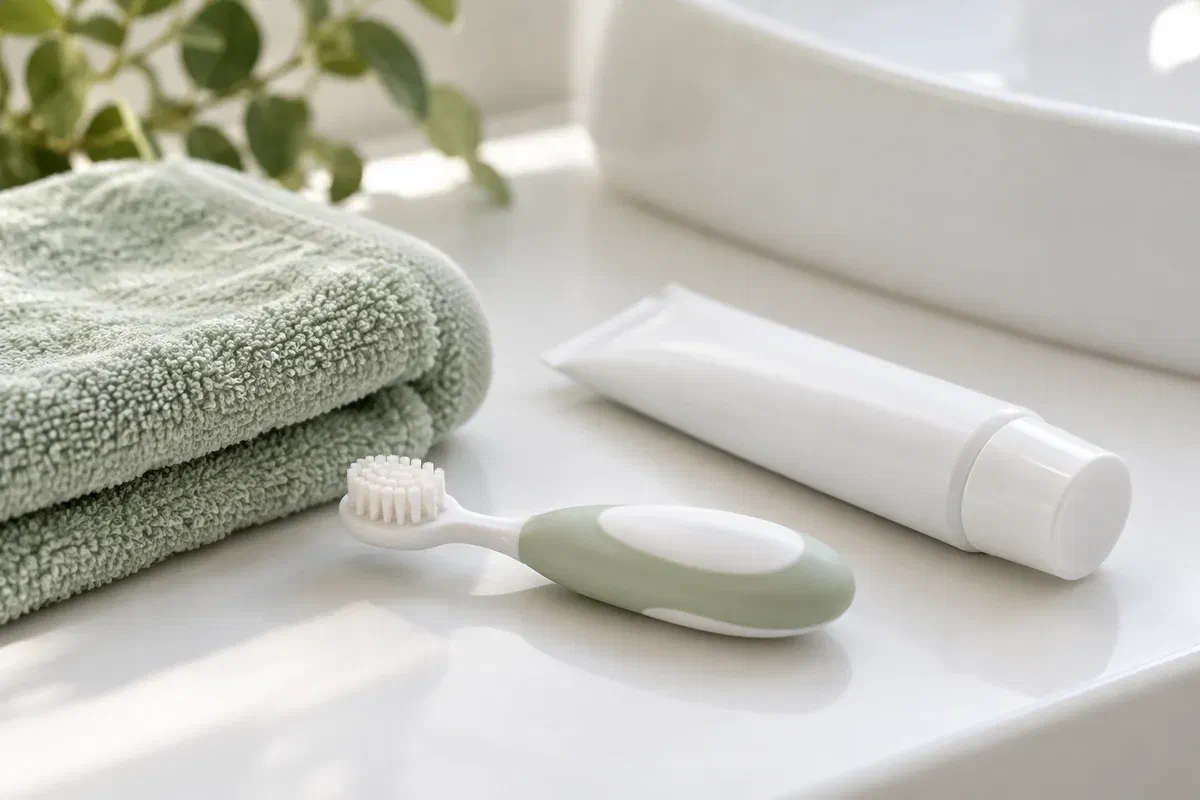
Illustrative baby toothbrush, soft washcloth, and plain toothpaste tube
Before you head in

Your observations matter more than you think.

Most parents bring a string of small questions rather than one big concern. A quick list in your phone keeps them from slipping away during a new experience.

What the gums and teeth look like

Note which teeth have come through and whether you have seen a mark, a chip, a swollen area, or a spot your baby seems to avoid. Mention when it started. Teething is easy to blame, so say if your baby also has a fever, seems unwell, or is feeding differently.

The struggle at the sink

Describe how you clean the mouth at the moment and the point where it breaks down. Bring the brush or product name if that helps. Ask to be shown an approach for your baby’s current teeth, rather than trying to scale down adult brushing.

How feeding and sleep fit together

Tell us about feeds, drinks, snacks, and night-time settling as they really happen. A candid description gives the team what it needs to suggest oral-health steps that suit you. Worries about growth or nutrition should also be raised with your baby’s doctor or another qualified provider.

Please share medical conditions, medicines, allergies, and any support needs when booking. If your baby becomes sick before the visit, phone the clinic to talk about the symptoms and whether to reschedule.

What an early start gives you

Answers now, rather than guesses later

Meeting the dentist early means talking about prevention before a problem is obvious. Gums, teeth, health history, and daily habits all feed into the dentist’s view, which then shapes the care and review timing that match what they find. Think of it as a foundation; it cannot guarantee a future without decay.

You also gain a trusted place for the questions that keep surfacing during the first years. You should walk out knowing what to clean, what to watch for, and how to get in touch if something changes. Good advice is advice you can follow at home, even on a hectic day.

Patient information: CDA — your child’s first dental visit

Brushing you can picture

Seeing a technique once often answers what a package insert never will. Ask where the brush should sit and how to reach small teeth comfortably. If it still feels tricky, speak up during the visit so you can try another approach.

A fluoride decision made together

Fluoride questions are common, and the answer depends on the baby. Tell the dentist which toothpaste you have and any other fluoride your baby may get, then ask whether it is recommended, which product, and how much. Expect advice grounded in your baby’s risk and Canadian guidance.

Guidance that keeps pace

New teeth change both access and the questions you have. Ask when to return and which signs mean calling earlier. Instructions from one appointment are a starting point, and they should be updated as your child changes.

Inside the appointment

Four parts, at your baby’s pace

No two first visits run quite alike, since each baby sets the tempo. It helps to hear the clinician’s plan, and your part in it, before anyone looks inside the mouth.

  1. Talk through health, habits, and priorities

    Expect questions about your baby’s health, how feeds and cleaning go, and anything new in the mouth. Let the team know what comforts your baby and any sensory or positioning issues. Put your most pressing question first so it is covered even if things get busy.

  2. Work out a comfortable position

    Many babies spend part of the exam on a parent’s lap, sometimes lying back so the mouth is easy to see. Your clinician will describe the safest, gentlest option and what your hands should be doing. Questions are welcome here; there is no need to work out the set-up yourself.

  3. Check the mouth and share what was seen

    Next comes a look at whichever teeth and gum areas your baby allows, along with any risk factors from the conversation. You can ask what stood out and whether a second look is needed. When a baby protests, the team should still tell you which parts were checked and which were not.

  4. Practise cleaning and plan the next visit

    This is the time to try the brushing method with guidance, talk about products, and agree on changes that fit your home. If a preventive treatment is proposed, ask why. Leave knowing your return date, how to call us between visits, and whether anything specific needs its own appointment.

Putting it into practice

A routine that fits real life

Most first examinations need no recovery at all. Where fluoride or another product was applied, the team will give you any short instructions to follow afterwards.

Repeat what was demonstrated

Brushing gets easier with practice, for you and your baby. Stick to the brush, method, and toothpaste amount you were shown, keep the tube up high, and stay hands-on. Ring us if every attempt ends in tears or seems to cause pain; there is usually another approach worth trying.

Feeding advice alongside medical care

Your dentist’s suggestions about bottles, cups, and snacks are one part of the picture. Your doctor or public health nurse remains the right contact for weight, growth, or feeding difficulties. Try not to overhaul routines because of a general tip found online.

New worries deserve a call

Phone about a fresh mark, a tumble onto the mouth, swelling, or signs a tooth hurts. Tell us when it began and whether meals or sleep are affected. A good first visit is reassuring, but it is not a reason to wait for the next recall with a new problem.

Next steps after the visit

Where the first visit may lead

Most babies leave with a prevention plan; a few need more. Whatever is suggested, it is fair to ask what it is meant to do and why it suits your baby.

When this is your starting point

Routine assessment and prevention

For most families, the visit is about a healthy start: a look at the mouth, a frank talk about risk, and a home routine you can manage. Expect a reason for the recall timing you are given, and possibly a discussion of extra prevention if the findings point that way.

When something seems off

A visit centred on a concern

Booking because of a fall, discolouration, or a swollen area is different from a first hello. Say so when you call. That lets the team judge how soon your baby should be seen and whether a doctor or urgent service is the better first stop.

When care goes beyond one appointment

More visits or a pediatric referral

Occasionally a finding, or your baby’s support needs, means further appointments or care from a dentist with pediatric training. You should hear what question that referral is meant to answer, why it is advised, and who will arrange it.

Baby dental questions

Little mouths, practical answers

These cover teething, timing, and what to expect in the room. Your baby’s own needs are discussed in detail at the visit.

(905) 876-4488
How can I tell teething discomfort from a dental problem?
Teething can bring drooling, chewing, and some fussiness, but it should not be assumed to explain fever, illness, or a clear change on a tooth. If you are unsure, describe the symptoms to the clinic or your baby’s doctor rather than guessing.
Is it fine to start brushing before the dentist has seen my baby?
Yes. Gentle cleaning should start with the very first tooth; a damp cloth or a tiny soft-bristled brush both work. Bring questions about toothpaste and technique to the first visit so the dentist can tailor the advice.
Can I ask about soothers and thumb-sucking at this visit?
Yes. Describe the habit and how often it happens. The dentist can explain what they look for as your baby grows and whether anything needs attention now or later. Advice will depend on your child’s age and the habit itself.
Will the dentist clean my baby’s teeth during the appointment?
What happens depends on the findings and what can be done comfortably. Often the focus is on examining the mouth and showing you how to clean at home. Ask what was done and whether any preventive care is recommended.
What size of toothbrush suits a baby?
A small head with soft bristles is generally suited to an infant’s mouth. Bring the one you use so the team can comment on it. The right choice depends on your baby’s age and how many teeth have come in.
We’re coming from Oakville. How can we make the trip easier on our baby?
Choose a time when your baby is usually rested and fed, and pack comfort items and a change of clothes. Call before setting out if your baby becomes unwell, so the team can advise whether to go ahead.
First visits for Oakville babies

Bring the drool, the questions, and the baby.

Give our Bronte Street team a call and tell us how old your baby is and what you hope to cover. We will set up a suitable first assessment and talk you through getting ready.

The recommended first check is by age one, or six months after the first tooth if that is sooner. Pain, injury, or swelling should be reported right away.

Visit Milton Dental Clinic
Unit 1, 342 Bronte St. S, Milton, ON L9T 5B7
Get directions Clinic hours
Monday–Thursday
11am–7pm
Friday–Sunday
By appointment only

Areas we serve

  • Milton
  • Oakville
  • Mississauga
  • Georgetown
  • Halton Hills
  • Acton
  • Campbellville
  • Brampton
  • Burlington
  • Puslinch
  • Rockwood
  • Erin
  • Caledon
  • Etobicoke
  • Old Milton
  • Bronte Meadows
  • Timberlea
  • Dorset Park
  • Dempsey
  • Clarke
  • Beaty
  • Coates
  • Harrison
  • Scott
  • Willmott
  • Ford
  • Bowes
  • Cobden
  • Walker
  • Mountain View
  • Milton Heights
  • Hawthorne Village
  • Valley View
  • Fallingbrook
  • Nassagaweya
  • Trafalgar
  • Esquesing
  • Nelson
  • Brookville
  • Moffat
  • Glen Williams
  • Norval
  • Limehouse
  • Stewarttown
  • Ashgrove
  • Hornby
  • Silver Creek
  • Speyside
  • Scotch Block
  • North Oakville
  • River Oaks
  • Glen Abbey
  • West Oak Trails
  • Palermo
  • Bronte Creek
  • College Park
  • Joshua Creek
  • Uptown Core
  • Preserve
  • Iroquois Ridge
  • Lisgar
  • Meadowvale
  • Meadowvale Village
  • Churchill Meadows
  • Erin Mills
  • Central Erin Mills
  • Streetsville
  • East Credit
  • Creditview
  • Heartland
  • Sheridan
  • Mount Pleasant
  • Credit Valley
  • Huttonville
  • Churchville
  • Springbrook
  • Northwest Brampton
  • Bram West
  • Fletcher's Meadow
  • Fletcher's Creek South
  • Alton Village
  • Orchard
  • Millcroft
  • Headon Forest
  • Tansley
  • Brant Hills
  • Tyandaga
  • Kilbride
  • Lowville
  • Aberfoyle
  • Morriston
  • Arkell
  • Hillsburgh
  • Freelton
  • Carlisle
  • Waterdown
  • Flamborough
  • Mountsberg

How can we help?

Milton Dental Clinic

Have a question about your smile? Choose the option that works best for you.

For urgent dental concerns, please call.
Messages are reviewed during clinic hours.