Illustrative parent holding a baby during a first dental conversation
Children’s Dentistry

Baby’s First Dental Visit in Old Milton

Babies see the dentist far earlier than many of us did. Families in Old Milton can use that first visit to cover new teeth, cleaning, feeding and settling habits, and what to look out for next.

Isn’t one year old too young?

Why a dentist wants to meet your baby so soon

Grandparents sometimes raise an eyebrow at the idea. A generation ago, a first check often waited until school age. Today the recommendation is much earlier, because early decay can begin on the very first teeth, and parents benefit from guidance while routines are still new. The visit is a chance to look at the mouth, talk about risks, and get practical help with cleaning, feeding, teething, or something you have spotted along the gums.

The Canadian Dental Association advises an infant assessment within six months of the first tooth, or by the first birthday, whichever arrives sooner. A mouth full of teeth is not required. If there is pain, a fall, swelling, or any other worry, ask for advice right away instead of waiting for the milestone.

Our Bronte Street practice sits a short way from Old Milton, the town’s historic downtown. When you get in touch, share your baby’s age and anything on your mind. Bring a true picture of your current routine, including the products and tricks you have tried. Expect a relaxed conversation and an assessment suited to a baby, not a test of good behaviour.


Plan an early dental visit
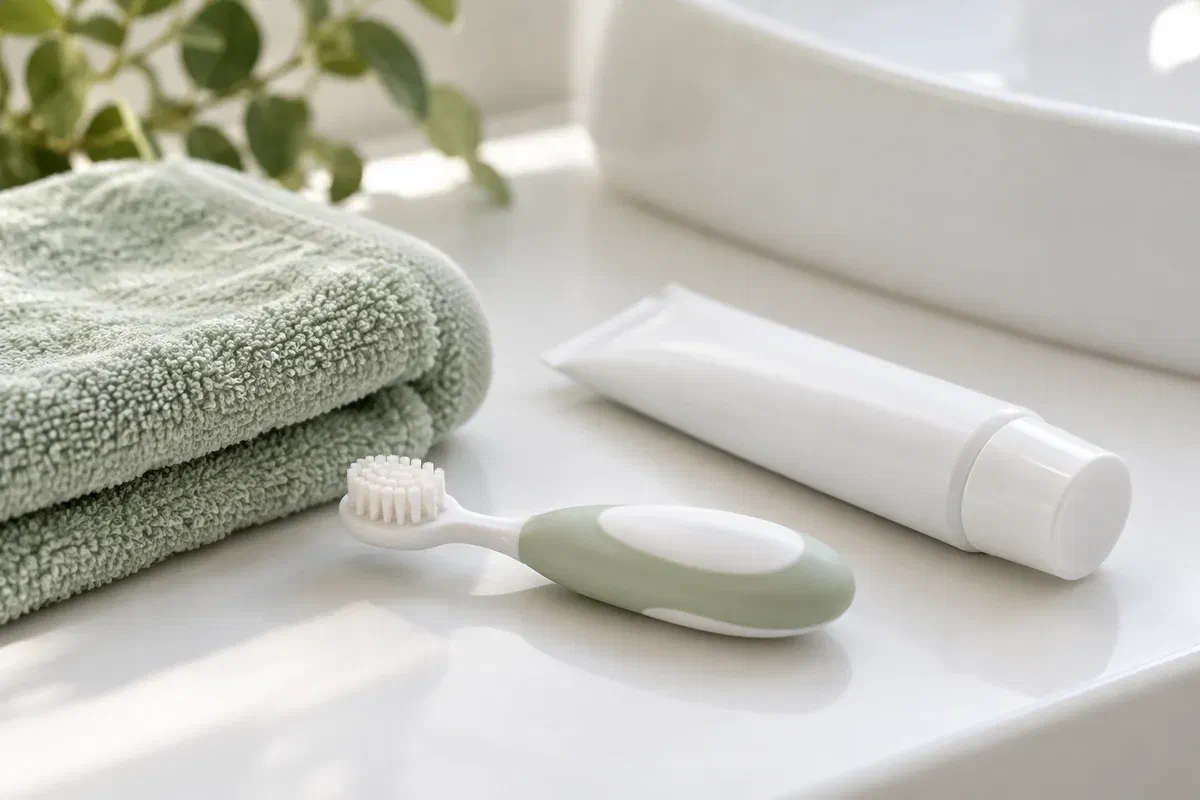
Illustrative baby toothbrush, soft washcloth, and plain toothpaste tube
Notes for the appointment

What have you been wondering about?

It is usually a handful of small questions, not a single problem. Keeping them in your phone or on a scrap of paper helps when the visit feels new.

Teeth arriving and gums changing

List the teeth that are through and anything odd: a mark, a chip, a swollen patch, or a spot your baby seems to guard. Say when it started. Teething is not the explanation for everything, especially when your baby seems sick or is feeding differently.

Cleaning that never quite works

Tell us what you do now and where it falls apart, whether that is clenched gums or a wriggling baby. Bring the brush or product name if it helps. Ask to see a technique for your baby’s current teeth instead of attempting a grown-up routine in miniature.

The daily pattern of feeding

Walk us through feeds, drinks, snacks, and the bedtime routine as they actually happen. An honest picture leads to oral-health advice that suits your home. Concerns about weight, growth, or nutrition also belong with your baby’s doctor or another appropriate professional.

When booking, mention any medical conditions, medicines, allergies, or support needs. If your baby falls ill before the appointment, call us to describe the symptoms and decide together whether to go ahead.

What has changed since our own childhoods

Prevention works best before there is anything to fix.

An early assessment shifts the focus from treatment to prevention. The dentist examines the teeth and soft tissues, considers health history and everyday habits, and suggests care and a review interval to match. It is a first step on a long road, and no single visit can rule out decay later.

You also come away with a contact for the questions that crop up month to month. By the end, you should know what to clean, what to keep watching, and how to get advice if something shifts. A plan is only worth having if it feels doable on a tired weeknight.

Patient information: CDA — your child’s first dental visit

Hands-on brushing help

A short demonstration can clear up more than any label. Ask where the bristles should go and how to reach tiny teeth gently. If the technique still feels clumsy, mention it during the visit so an alternative can be tried.

Fluoride that fits your baby

Ask whether fluoride toothpaste or another preventive option is recommended and, if so, which one and in what amount. Share what you use now and any other fluoride your baby may get. Guidance should reflect your baby’s risk and current Canadian advice, not adult habits.

A roadmap for the next months

As more teeth arrive, cleaning and your questions will change. Ask when the next visit should be and which signs mean calling sooner. The plan can adjust as your child grows, rather than relying on one set of instructions.

A walk through the visit

Conversation, a careful look, then a plan

How the visit runs depends on your baby and the assessment needed. Ask what the clinician intends to do, and how you can help, before the exam begins.

  1. Tell us about your baby

    Cover health information, feeding and cleaning habits, and anything new you have noticed. Mention what soothes your baby and any sensory or positioning sensitivities. Raise your top question first, so it gets a proper answer even if the appointment becomes hectic.

  2. Settle on a safe position

    The clinician will describe a safe, comfortable way to see inside the mouth and the role you can play. Babies are often held by a parent for part of the exam. If you are unsure about a suggested position, ask before trying to arrange it yourself.

  3. Examine and explain

    The dentist looks at whatever teeth and tissues can be appropriately checked and weighs any risk factors. Ask what they saw and whether anything needs a further look. If your baby gets upset, you should be told what was finished and what still needs assessing.

  4. Practise care and book what’s next

    Review cleaning, suitable products, and the changes discussed for your family. Confirm any preventive care suggested and its purpose. Before heading out, ask when to return, how to reach the clinic with a concern, and whether a separate visit is needed for a specific finding.

In the weeks that follow

Make the advice part of an ordinary day.

A simple examination does not usually call for any recovery. If a preventive product or other care was provided, follow the specific instructions given.

Keep practising the demonstration

Use the recommended brush, method, and amount of toothpaste. Keep the tube out of your baby’s reach and provide the hands-on help that was discussed. If cleaning repeatedly goes badly or seems painful, call us for ideas rather than stopping altogether.

See feeding as part of the bigger picture

Follow the oral-care suggestions you received, and take continuing concerns about feeding or growth to your baby’s medical provider. Resist sweeping changes based on general advice online. Dental guidance should sit comfortably with your child’s overall health.

Ring us between recalls

A new mark, a tumble, swelling, or signs of tooth discomfort are all reasons to call. Explain what changed and when, particularly if feeding or sleep has been disrupted. A good first check does not mean holding new concerns until the next scheduled visit.

After the first look

Prevention, a closer check, or more support

Recommendations follow what was found and what could be assessed comfortably. Ask what each option is meant to achieve for your baby.

When you are laying the groundwork

Prevention-focused first assessment

The emphasis is on examining the mouth, discussing risk, and building a routine that suits you. The next review should have a stated reason and timeframe. Further preventive measures may be discussed based on what the dentist finds.

When something seems wrong

An appointment for a specific worry

A knock to the mouth, a change you can see on a tooth, or swelling may need a different kind of assessment than a routine first visit. Describe it when booking. The team can advise on timing and whether prompt dental or medical help is needed.

When more care is needed

Additional visits or a pediatric referral

Certain findings or support needs may lead to further appointments or a dentist with pediatric expertise. Ask why that route is suggested and how it will be arranged. A referral should explain clearly what question or care it addresses.

Questions we hear from parents around Old Milton

Not sure what to ask? Start here.

These cover timing, getting ready, and day-to-day care. The visit itself is where your baby’s particular needs get attention.

(905) 876-4488
My mother says we never saw a dentist until kindergarten. Why is it different now?
Current Canadian guidance recommends an assessment by age one or within six months of the first tooth, whichever comes first. Decay can affect baby teeth early, and guidance on cleaning and feeding is most useful while habits are forming. It is about prevention rather than treatment.
Are baby teeth really worth the fuss if they fall out anyway?
Baby teeth help with chewing and speech and hold space for adult teeth, and some stay in place for years. Problems with them can cause discomfort. That is why early care and a check-up are recommended, even though the teeth are temporary.
What does a dentist actually check in a baby’s mouth?
Mainly the teeth that have come in, plus the gums, tongue, and other soft tissues, as far as your baby comfortably allows. They also ask about habits and history. Ask what was seen and what it means for your daily routine.
Can a grandparent bring my baby to the appointment?
Ask the clinic about consent and what information will be needed if a parent cannot attend. It helps if whoever comes knows the daily routine and your questions, and can pass on the advice. Mention the arrangement when booking.
Should I bring anything for my baby to the visit?
A favourite comfort item, a change of clothes, and whatever helps your baby settle can all be useful. Bring the name of any toothpaste you use and your list of questions. The team can tell you if anything else is needed.
What if my baby fusses through the whole appointment?
That is common in a new place. The team will explain what could be assessed and whether a follow-up makes sense. Judge the visit by what you learned and what was checked, not by how quietly your baby sat.
Near Old Milton

First teeth, first questions, first visit.

Reach out to our Bronte Street practice with your baby’s age and what you would like to cover. We can arrange a suitable first assessment and let you know how to prepare.

Book by the first birthday or within six months of the first tooth, whichever is earlier. Don’t wait to report pain, injury, or swelling.

Visit Milton Dental Clinic
Unit 1, 342 Bronte St. S, Milton, ON L9T 5B7
Get directions Clinic hours
Monday–Thursday
11am–7pm
Friday–Sunday
By appointment only

Areas we serve

  • Milton
  • Oakville
  • Mississauga
  • Georgetown
  • Halton Hills
  • Acton
  • Campbellville
  • Brampton
  • Burlington
  • Puslinch
  • Rockwood
  • Erin
  • Caledon
  • Etobicoke
  • Old Milton
  • Bronte Meadows
  • Timberlea
  • Dorset Park
  • Dempsey
  • Clarke
  • Beaty
  • Coates
  • Harrison
  • Scott
  • Willmott
  • Ford
  • Bowes
  • Cobden
  • Walker
  • Mountain View
  • Milton Heights
  • Hawthorne Village
  • Valley View
  • Fallingbrook
  • Nassagaweya
  • Trafalgar
  • Esquesing
  • Nelson
  • Brookville
  • Moffat
  • Glen Williams
  • Norval
  • Limehouse
  • Stewarttown
  • Ashgrove
  • Hornby
  • Silver Creek
  • Speyside
  • Scotch Block
  • North Oakville
  • River Oaks
  • Glen Abbey
  • West Oak Trails
  • Palermo
  • Bronte Creek
  • College Park
  • Joshua Creek
  • Uptown Core
  • Preserve
  • Iroquois Ridge
  • Lisgar
  • Meadowvale
  • Meadowvale Village
  • Churchill Meadows
  • Erin Mills
  • Central Erin Mills
  • Streetsville
  • East Credit
  • Creditview
  • Heartland
  • Sheridan
  • Mount Pleasant
  • Credit Valley
  • Huttonville
  • Churchville
  • Springbrook
  • Northwest Brampton
  • Bram West
  • Fletcher's Meadow
  • Fletcher's Creek South
  • Alton Village
  • Orchard
  • Millcroft
  • Headon Forest
  • Tansley
  • Brant Hills
  • Tyandaga
  • Kilbride
  • Lowville
  • Aberfoyle
  • Morriston
  • Arkell
  • Hillsburgh
  • Freelton
  • Carlisle
  • Waterdown
  • Flamborough
  • Mountsberg

How can we help?

Milton Dental Clinic

Have a question about your smile? Choose the option that works best for you.

For urgent dental concerns, please call.
Messages are reviewed during clinic hours.