

Illustrative parent holding a baby during a first dental conversation
Children’s Dentistry

Baby’s First Dental Visit in Rockwood

Clamped lips, a twisting head, a toothbrush flung across the room. A baby’s first dental visit for families from Rockwood turns that nightly wrestle into a method you can manage, with advice on feeding too.

The bedtime brushing battle

Two teeth, one very determined baby

You know the routine. Pyjamas on, brush in hand, and suddenly your baby’s mouth is sealed tight. Many parents quietly give up and hope for the best. A first dental visit is a good place to stop guessing. The dentist examines the mouth, explains early risks, and, just as usefully, shows you how to clean new teeth in a way your baby might tolerate. Questions about feeding, teething, or the gums are welcome too.

Canadian Dental Association guidance puts the first assessment at one year old, or earlier once six months have gone by since the first tooth appeared. There is no reason to wait for a mouthful of teeth. If something hurts, swells, or has been knocked, or if anything else worries you, call for advice sooner.

Booking from Rockwood begins with a call to our Bronte Street practice. Give your baby’s age and an honest picture of what bedtime brushing looks like right now. Mention the brushes and products you have tried. Expect a practical session aimed at a baby’s stage, with nobody expecting your little one to cooperate like a preschooler.

Get help with brushing
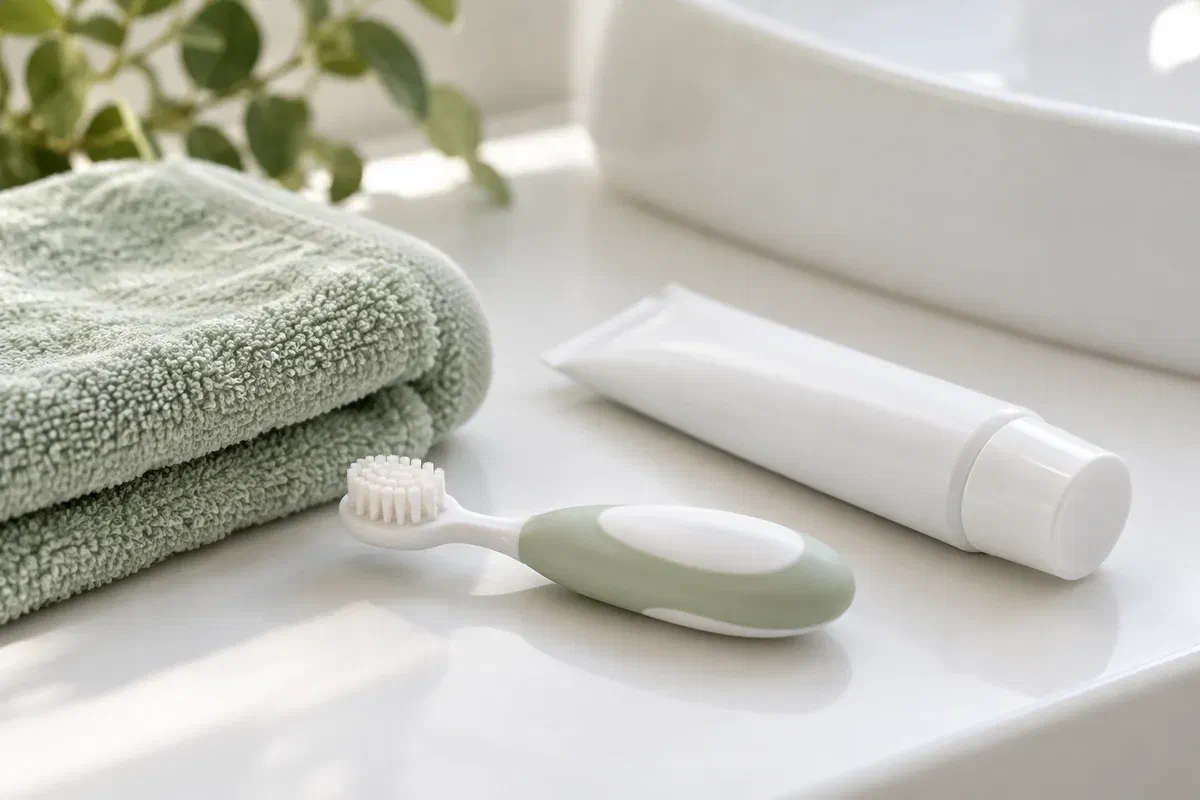
Illustrative baby toothbrush, soft washcloth, and plain toothpaste tube
Make a note of these

The details behind the struggle

Brushing troubles usually come bundled with other small questions. A short list on your phone keeps them together for the visit.

Where the teeth are, and anything odd

Note which teeth have come in and whether you have seen a mark, a chip, puffiness, or a spot your baby will not let you touch. Say roughly when it began. Resistance to brushing is not always just stubbornness; mention any illness or change in feeding.

What happens at the sink

Be specific: does your baby bite, turn, cry, or grab? What time of day do you try? Bring the brush you use. The team can suggest a hold and a technique for your baby’s teeth instead of a scaled-down adult routine.

Feeds, snacks, and falling asleep

Explain how feeds, drinks, and snacks fit around brushing, especially at night. If your baby often falls asleep feeding before you can brush, say so. A doctor is the right contact for weight or growth questions.

Tell us about your baby’s diagnoses, medicines, allergies, or extra needs when you book. A sick baby close to the appointment date is a reason to call, so we can talk about whether to go ahead or rebook.

Why it’s worth going now

Fix the routine before the habits harden.

An early visit keeps the focus on prevention. Drawing on a look at teeth and gums and what you share about health and habits, the dentist suggests care and a review interval that fit. It is a starting point; no first visit can promise a cavity-free childhood.

For families stuck in a nightly tug-of-war, the practical help may be the biggest win. You should go home with a method to try, a sense of what to watch for, and a number to call. A plan you can actually carry out at bedtime is worth more than a perfect one you cannot.

Patient information: CDA — your child’s first dental visit

A hold that keeps everyone safe

Positioning often matters as much as the brush itself. Ask the team to show a way of holding your baby that lets you see the teeth and keeps their head steady. Practise it once during the visit, and say so if it still feels awkward.

The right toothpaste, in the right amount

Ask whether your baby should use a fluoride toothpaste or another preventive measure, and which product and quantity would be suitable. Bring the tube you have. Advice should reflect how likely your baby is to develop decay and current Canadian guidance.

A routine that grows with your baby

As back teeth arrive, brushing changes again. Ask when to come back and which signs warrant a call before then. You can revisit the technique at each visit as your baby gets bigger and stronger.

During the visit

From conversation to a brushing lesson

The order adapts to your baby. Before anything starts, ask the clinician what they plan and where your hands fit in.

  1. Start with the bedtime story

    You will be asked about health, feeding, and cleaning, with room to describe the brushing battle in detail. Mention anything that calms or upsets your baby, including touch or position. Bring up your most pressing question early.

  2. Learn the exam position

    Babies are often held by a parent, sometimes lying back across laps. The clinician will explain the position and what to do with your hands, and the same hold may help at home. Ask about anything that seems unclear.

  3. A look at teeth and gums

    The dentist checks what your baby allows and thinks through any risk factors. Ask what was seen and whether anything needs follow-up. If the look was brief because of protest, ask what remains to be checked.

  4. Practise brushing together

    You may be guided through brushing your own baby’s teeth in the room. Talk through products and changes at home, and ask why any preventive care is suggested. Before leaving, confirm the next visit, how to call, and whether a finding needs its own appointment.

Tonight and beyond

Practise, adjust, repeat.

No recovery is usually needed after an infant check. If fluoride varnish was applied, the team will mention any short precautions for that day.

Try the new hold tonight

Use the position, brush, and toothpaste amount you were shown, and store the tube high up. Expect a few rough nights while you both adjust. If brushing still seems painful or impossible after a week or two, call for another idea instead of abandoning it.

Rethink the feed-to-sleep timing

If the dentist suggested brushing before the last feed or another change, try it gradually. Keep your baby’s doctor involved with anything about feeding difficulty or growth. Avoid big overhauls based on a general article online.

Report anything new

A new spot, a knock to the mouth, swelling, or what looks like tooth pain deserves a call. Explain what changed and when, especially if your baby is eating or sleeping differently. There is no need to wait for the next check.

What happens next

Usually prevention. Sometimes a little more.

Recommendations follow the findings and how much your baby let the dentist see. If you are not sure why something is suggested, ask.

For most first visits

A routine and a review

The typical outcome is a brushing method you can use, a conversation about risk, and a review date with a clear reason. If the findings point that way, other preventive measures may be offered and explained.

When a specific problem shows up

A focused appointment

A fall, a discoloured tooth, or a swollen gum is assessed differently from a routine introduction. Mention it when booking, so the team can suggest how soon to come in and whether medical care should be the first stop.

When one visit is not enough

Extra visits or a specialist opinion

Now and then, a finding or your baby’s particular needs lead to more appointments or to a dentist who concentrates on young children. You should be told why, what the next visit will look at, and how it will be set up.

Brushing questions

When your baby won’t open up

Here are answers about brushing, timing, and what the visit involves. Your baby’s own situation is discussed in person.

(905) 876-4488
Is it okay to skip brushing on nights my baby fights it?
Try not to make skipping a habit, even if a night’s clean is brief. A quick wipe or gentle brush is better than nothing. Mention the difficulty at the visit, so the team can suggest a method that is easier for both of you.
Would a finger brush or silicone brush work better?
Some parents find one style easier than another, and there is no single right answer. Bring what you have, and ask the dentist which tool suits your baby’s teeth and age, and how to use it safely.
Can I brush in the bath or at a different time of day?
Many families experiment with timing and place to find what works, and a calmer moment can make a real difference. Ask the dentist whether your idea suits your baby’s routine, particularly around the last feed before sleep, and keep toothpaste safety in mind wherever you brush.
My baby chews the brush instead of letting me brush. Does that count?
Chewing on a brush is common, but it does not usually clean the teeth properly. Let your baby hold one while you use another, and ask at the visit for techniques that keep you in control of the cleaning.
Will the dentist show me how to brush in person?
A demonstration is often part of a first visit. Ask if you can try it yourself while the team watches, so they can offer tips on angle, pressure, and hold. Seeing your own baby’s reaction in the room often makes the advice more specific than any general instruction could be.
We’re driving in from Rockwood. Is one visit enough to sort out brushing?
Often a single demonstration helps a lot, though some babies need time to adjust. Ask how to follow up by phone if problems continue, and plan the next visit around the review date the dentist suggests.
Help for Rockwood parents

Bring the brush you’ve been battling with.

When you phone our Bronte Street office, give your baby’s age and a quick account of how brushing is going. We will set up a suitable first assessment, including time to practise technique.

A first check is due at one year, or sooner if a tooth has been in for six months. Pain, injury, or swelling should be reported without delay.

Visit Milton Dental Clinic
Unit 1, 342 Bronte St. S, Milton, ON L9T 5B7
Get directions Clinic hours
Monday–Thursday
11am–7pm
Friday–Sunday
By appointment only

Areas we serve

  • Milton
  • Oakville
  • Mississauga
  • Georgetown
  • Halton Hills
  • Acton
  • Campbellville
  • Brampton
  • Burlington
  • Puslinch
  • Rockwood
  • Erin
  • Caledon
  • Etobicoke
  • Old Milton
  • Bronte Meadows
  • Timberlea
  • Dorset Park
  • Dempsey
  • Clarke
  • Beaty
  • Coates
  • Harrison
  • Scott
  • Willmott
  • Ford
  • Bowes
  • Cobden
  • Walker
  • Mountain View
  • Milton Heights
  • Hawthorne Village
  • Valley View
  • Fallingbrook
  • Nassagaweya
  • Trafalgar
  • Esquesing
  • Nelson
  • Brookville
  • Moffat
  • Glen Williams
  • Norval
  • Limehouse
  • Stewarttown
  • Ashgrove
  • Hornby
  • Silver Creek
  • Speyside
  • Scotch Block
  • North Oakville
  • River Oaks
  • Glen Abbey
  • West Oak Trails
  • Palermo
  • Bronte Creek
  • College Park
  • Joshua Creek
  • Uptown Core
  • Preserve
  • Iroquois Ridge
  • Lisgar
  • Meadowvale
  • Meadowvale Village
  • Churchill Meadows
  • Erin Mills
  • Central Erin Mills
  • Streetsville
  • East Credit
  • Creditview
  • Heartland
  • Sheridan
  • Mount Pleasant
  • Credit Valley
  • Huttonville
  • Churchville
  • Springbrook
  • Northwest Brampton
  • Bram West
  • Fletcher's Meadow
  • Fletcher's Creek South
  • Alton Village
  • Orchard
  • Millcroft
  • Headon Forest
  • Tansley
  • Brant Hills
  • Tyandaga
  • Kilbride
  • Lowville
  • Aberfoyle
  • Morriston
  • Arkell
  • Hillsburgh
  • Freelton
  • Carlisle
  • Waterdown
  • Flamborough
  • Mountsberg

How can we help?

Milton Dental Clinic

Have a question about your smile? Choose the option that works best for you.

For urgent dental concerns, please call.
Messages are reviewed during clinic hours.