

Illustrative child and parent discussing a tooth model with a dental clinician
Children’s Dentistry

Children’s Cavity Treatment

Give your child a clear explanation and an appropriate plan for tooth decay. Discuss children’s cavity treatment in Milton, including the affected tooth, comfort needs, suitable options, and prevention after care.

A closer look at children’s cavity treatment

Treat the tooth and help your child understand the visit.

Finding out that your child has decay can raise several questions at once. Is it a baby tooth or a permanent one? How much damage is present? What can be done comfortably, and how soon? Those questions are best answered through an examination and a treatment discussion focused on your child's actual tooth.

At Milton Dental Clinic, tell us about pain, eating changes, previous dental experiences, and anything that helps your child feel understood. The plan needs to consider the lesion, the tooth's condition, and your child's ability to manage the proposed visit. A cavity is not a reason to blame a child or parent; it is a reason to establish appropriate care and prevention.

Not every early decay lesion needs the same treatment, and not every cavity is suitable for a simple filling. Ask what has been diagnosed, which options are reasonable, and what the consequences of delaying care may be. The explanation should include your child in a way that fits their age and understanding.

Discuss your child’s cavity treatment
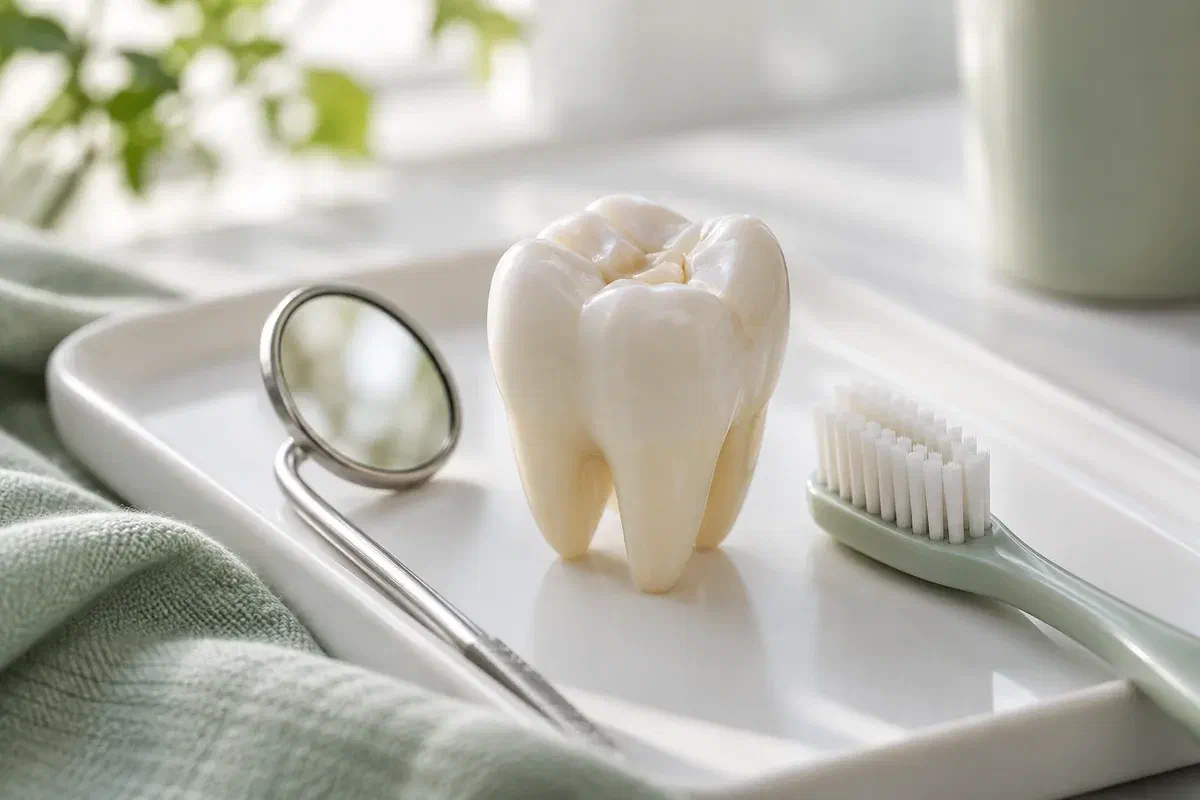
Illustrative tooth teaching model, dental mirror, and small soft toothbrush
What to tell the dental team

Symptoms and everyday changes help guide the assessment.

Children may describe discomfort differently from adults. Share both what your child says and what you have noticed, without trying to identify the affected tooth yourself.

Pain, sensitivity, or avoiding food

Mention discomfort with cold, sweet foods, or chewing, and whether your child avoids one side. Explain if pain wakes them or appears without a clear trigger. These details can affect the urgency and the questions the dentist needs to investigate.

A visible change or broken area

Describe a hole, dark area, food trap, or chipped surface and when it was first noticed. Colour alone cannot establish the depth or activity of decay. The dentist may need an examination and appropriate records to understand the extent of the problem.

Worry or difficulty with dental visits

Tell us about previous experiences, sensory concerns, communication preferences, or health needs before treatment is planned. Explain what has helped and what has been upsetting. This information supports an individualized approach rather than expecting every child to respond in the same way.

Call promptly about swelling, fever with a dental concern, severe pain, or difficulty eating. A child who appears seriously unwell or has breathing or swallowing difficulty needs urgent medical attention.

What an appropriate treatment plan aims to do

Address the damage while keeping future risk in view.

Care may aim to control an early lesion, restore damaged structure, or address a deeper problem affecting the tooth. The choice depends on the findings. Primary teeth can remain important for years, so their eventual loss does not automatically make existing decay safe to ignore.

Restoring a tooth does not by itself stop the disease process that led to decay. Prevention and follow-up remain part of care. Ask how the proposed treatment and the home routine work together, and what will be reviewed after the immediate problem has been addressed.

Patient information: AAPD — pediatric restorative dentistry

A recommendation linked to the tooth

The dentist should explain why a filling, crown, preventive approach, or another treatment is being considered. Ask about the amount of remaining structure and the expected role of the tooth. Understanding those details makes it easier to compare options meaningfully.

An appointment planned around the child

Discuss explanations, pauses, and the comfort approach before treatment starts. A child's response may influence how care is staged or where it is provided. Ask what happens if the proposed approach is not manageable rather than assuming the visit must continue unchanged.

A practical prevention conversation

Review brushing help, fluoride advice, and relevant eating or drinking patterns without turning the discussion into a list of prohibitions. Identify the changes your family can use consistently. Ask how progress will be checked, especially if several teeth are at risk.

Planning and providing care

Explain the problem, prepare the visit, and review the result.

The sequence depends on the diagnosis and the treatment selected. Some children need more than one appointment or a referral for care suited to their needs.

  1. Assess the tooth and relevant history

    The dentist reviews symptoms, examines the mouth, and discusses any imaging or other information needed. Tell the team about health conditions, medicines, allergies, and previous treatment. Ask whether the affected tooth is primary or permanent and what the findings mean.

  2. Discuss choices and comfort arrangements

    Review the proposed treatment, alternatives, likely limitations, and what may happen without care. Ask how pain control and communication will be managed. Any sedation or general-anaesthesia option requires separate assessment, consent, and confirmation of an appropriate provider and setting.

  3. Provide the agreed treatment

    The clinician explains the relevant steps in language suited to your child. The procedure may involve lesion management, a restoration, or other indicated care. If the findings or your child's needs change, the plan may need discussion before proceeding further.

  4. Explain home care and reassessment

    Confirm what was completed, whether any temporary measure was used, and what remains. Review eating, numbness, cleaning, and symptom instructions specific to the procedure. Arrange the appropriate follow-up and ask which changes should lead to an earlier call.

After cavity treatment

Help your child follow the instructions for the care received.

Aftercare varies with the procedure and any medicines used. Ask for clear directions before leaving, particularly if someone else will be caring for your child afterward.

Protect numb lips, cheeks, and tongue

If local anaesthesia was used, supervise your child and discourage biting or sucking numb tissues. Follow the team's eating and drinking advice until sensation returns as instructed. Explain the unfamiliar feeling calmly rather than letting your child repeatedly test it by chewing.

Keep the treated area clean as advised

Use the cleaning instructions given for the restoration or procedure. Continue appropriate adult help and fluoride guidance. If brushing is painful or food consistently catches at the treated tooth, contact the clinic rather than leaving the area uncleaned.

Report symptoms that do not follow the expected course

Ask what discomfort, if any, is expected and when to seek advice. Call about worsening pain, swelling, a lost restoration, or a bite that seems uncomfortable. Use medicines only as directed for your child; do not improvise an adult dose.

Patient information: AAPD — local anaesthesia and postoperative instructions

Choosing the appropriate cavity care

The lesion, tooth, and child all influence the decision.

Ask why the proposed option fits the diagnosis and what follow-up it requires. Availability and suitability should be confirmed for your child rather than assumed from a general description.

For selected lesions with a defined review plan

Prevention or non-restorative lesion management

Some lesions may be managed without a conventional filling, using suitable preventive or caries-control measures. This requires assessment and monitoring. If silver diamine fluoride is discussed, ask about permanent dark staining of treated decay, reapplication, and its limitations.

When the tooth needs a restoration

A filling or protective crown

The amount and location of damage, remaining structure, and ability to provide the restoration affect the choice. A larger lesion may need a different approach from a small cavity. Ask about the proposed material, appearance, durability, and care afterward.

When deeper disease or support needs change the plan

Pulp treatment, extraction, or referral

A tooth with a deeper problem may need more than a surface repair. The dentist can discuss whether it can be retained and what other care is appropriate. If extraction is considered, ask about the developing teeth and any need to assess space afterward.

Questions about children’s cavity treatment

Understand the recommendation before the treatment visit.

Ask about the tooth, your child's comfort, and the follow-up plan. Clear explanations can help the whole family prepare.

(905) 876-4488
Why treat decay in a baby tooth that will eventually fall out?
The tooth may still be needed for a considerable time, and untreated disease can cause pain or infection. The dentist considers its condition and expected role before recommending care. Ask why treatment, monitoring, or another option is appropriate for that specific tooth.
Does every cavity in a child need the same type of filling?
No. Lesion extent, tooth type, remaining structure, and treatment conditions affect the choice. Some early lesions may be managed differently, while larger damage may need a crown or other care. Ask which findings support the option recommended for your child.
What should I know if a liquid treatment that darkens decay is suggested?
Ask whether the product is silver diamine fluoride and why it is suitable. It can permanently darken treated decayed areas and needs a defined monitoring and reapplication plan. Discuss appearance, alternatives, and whether a restoration or further treatment will still be needed.
Will my child automatically need sedation to have a cavity treated?
No. The approach depends on the child’s needs, the procedure, and appropriate assessment. Discuss communication and comfort measures first. If sedation or general anaesthesia is considered, ask about suitability, risks, provider, setting, and preparation; availability should not be assumed.
If the painful baby tooth stops hurting, can we cancel treatment?
Contact the dentist before changing the plan. A reduction in pain does not establish that the disease has resolved. Explain the change and ask whether reassessment is needed. Keep prompt-care instructions in mind if swelling, fever, or other concerning symptoms appear.
How can I explain a cavity appointment without making promises about how it will feel?
Use simple, neutral language about the dentist helping the tooth and explaining each step. Ask the team what wording suits the planned procedure. Avoid promises that nothing will feel unusual; instead, tell your child they can communicate and ask for help or a pause.
Children’s cavity treatment in Milton

Let’s make a clear plan for your child’s tooth.

Contact our Bronte Street practice to discuss a diagnosed cavity or a change you have noticed. Mention pain, swelling, and any support needs so an appropriate assessment and treatment conversation can be arranged.

Treatment depends on examination. Significant pain, swelling, or a child who seems unwell should be reported promptly.

Visit Milton Dental Clinic
Unit 1, 342 Bronte St. S, Milton, ON L9T 5B7
Get directions Clinic hours
Monday–Thursday
11am–7pm
Friday–Sunday
By appointment only

How can we help?

Milton Dental Clinic

Have a question about your smile? Choose the option that works best for you.

For urgent dental concerns, please call.
Messages are reviewed during clinic hours.