

Illustrative child and parent discussing a tooth model with a dental clinician
Children’s Dentistry

Children’s Cavity Treatment in Brampton

When more than one child in the family has decay, or one child has several cavities, the order of treatment matters. Households from Brampton can discuss priorities, comfort, staging and a shared prevention routine that works for everyone at home.

Planning care for the whole household

More than one cavity means a plan with an order to it.

It is not unusual for siblings to have decay at the same time, since they often share snacks, drinks and bedtime routines. Nor is it rare for a single child to have more than one cavity. Either way, you will want to know which tooth comes first, how much can reasonably be done per visit, and what each child can handle.

Each tooth still needs its own assessment. Is it a primary tooth or an adult one? How far has decay progressed? Is anything urgent? Coming from Brampton, it helps to share everything up front: which child has pain, who eats differently, how earlier appointments went and what helps each one settle. The dentist can then set priorities and suggest a sensible sequence.

Some lesions can be controlled without a filling, while others need restoration or deeper care. Ask about the reasoning, the choices and the risks of putting treatment off. Children should each get an explanation that fits their age. Decay in a family is a shared health issue, not a matter of blame.

Plan care for your children
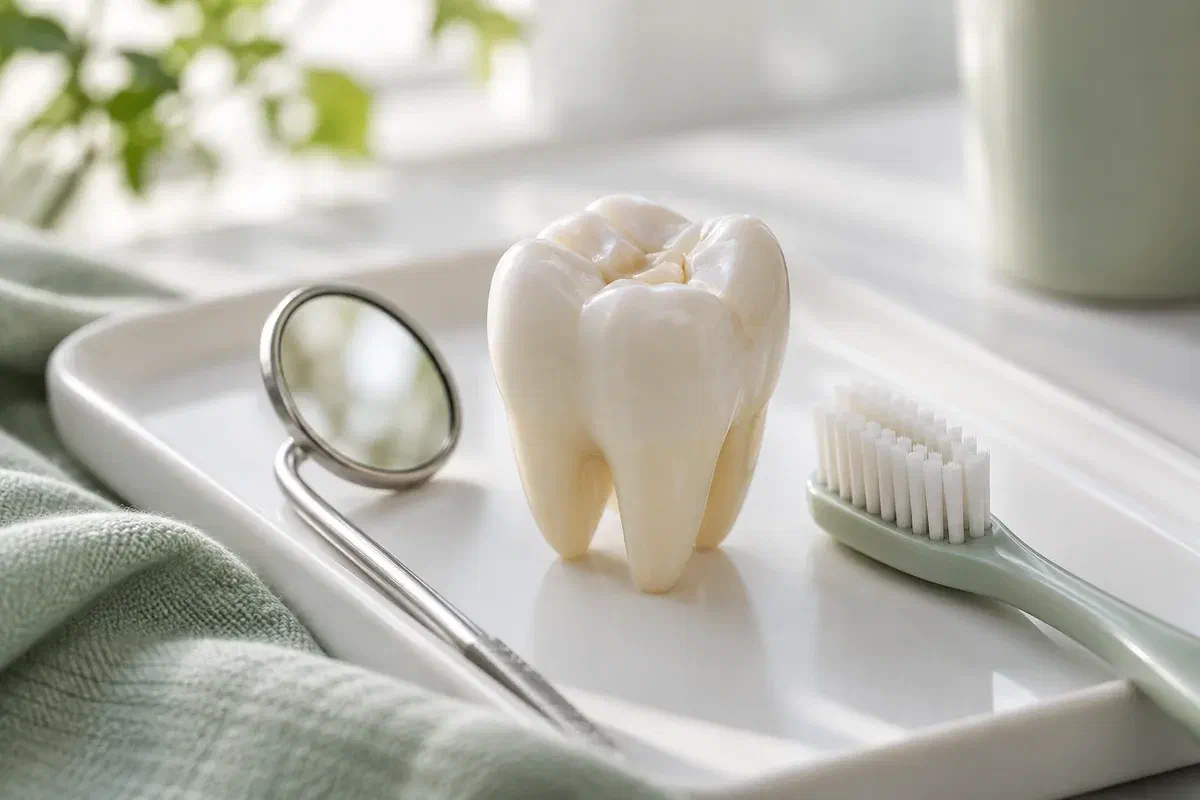
Illustrative tooth teaching model, dental mirror, and small soft toothbrush
Keeping track of each child

Separate notes for separate mouths

With more than one child, details blur quickly. Jot down what each one says and what you have noticed, and let the dentist determine which teeth are involved.

Who is complaining, and about what

Record which child reacts to cold or sweet things, avoids chewing on one side or wakes with tooth pain. Note discomfort that appears with no clear cause. That helps the dentist decide who should be seen first and what to check.

Marks, holes or chips you have seen

Write down any dark spot, small cavity, food trap or broken edge, which child it belongs to, and when it showed up. A tooth’s colour cannot show how deep decay reaches, so each child may need a proper look and possibly X-rays.

Each child’s temperament

Siblings rarely react the same way. Share past experiences, sensory needs, communication styles and health conditions for every child being treated. Mention what calms each of them. That lets the team tailor every visit individually.

Call promptly if any child has swelling, fever with tooth pain, severe discomfort or cannot eat. Trouble breathing or swallowing, or a child who looks seriously ill, needs urgent medical care.

What a good plan achieves

Urgent teeth first, prevention for everyone

Depending on what is found, care may stop an early lesion, rebuild lost structure or handle decay that has gone deeper. Baby teeth often serve for years, so leaving decay because the tooth will be lost someday is not a safe shortcut, especially when several teeth are involved.

Repairing teeth does not change the habits and conditions that led to decay. When siblings share routines, prevention works best as a household project. Ask how each child’s treatment fits with home care, and what will be reviewed once the urgent work is done.

Patient information: AAPD — pediatric restorative dentistry

Priorities you understand

Ask why one tooth is being treated before another, and why a filling, crown, preventive measure or other care is proposed. Find out how much structure remains in each. That makes the sequence feel logical rather than arbitrary.

Visits sized for each child

Agree on how much will be done per appointment, how breaks will work and what comfort measures are planned. One child may manage longer visits than another. Ask what will happen if a child needs to stop partway.

A routine the whole family shares

Talk about brushing help for younger children, fluoride guidance and the timing of snacks and drinks across the household. Choose changes everyone can follow. Ask how progress will be checked for each child, especially if risk is high.

Working through the plan

Assess, sequence, treat, review

The order of steps depends on the diagnosis and the treatment chosen for each tooth. Several appointments or a referral may be part of the plan.

  1. Examine every child involved

    The dentist reviews each child’s symptoms, looks at the teeth and explains whether X-rays are needed. Share medical history, medicines, allergies and earlier dental work. Ask which teeth are primary, which are permanent and how serious each finding is.

  2. Set the sequence

    Discuss the recommended treatment for each tooth, the alternatives, limits and what could happen if something waits. Find out how each child will be numbed and kept informed. Any sedation or general anaesthesia requires a separate assessment, consent and a suitable provider and setting.

  3. Treat one step at a time

    Your child hears what is happening in simple terms. Treatment might involve controlling a lesion, a restoration or other indicated care. If findings change or a child needs more time, the team will discuss it with you before continuing.

  4. Track progress

    After each visit, confirm what was done, what is temporary and what is still outstanding. Go over eating, numbness, cleaning and symptom advice. Book the next appointment in the sequence and know which changes mean calling sooner.

Back at home

Keeping an eye on the treated child, and the rest of the crew

Aftercare differs with the procedure and medicines used. Get instructions in hand before leaving, particularly if another adult will be supervising the evening.

Numb lips and curious siblings

After freezing, a child may bite or suck a numb lip, and brothers or sisters may want to poke at it too. Supervise, discourage chewing on the area and follow the food and drink advice until feeling comes back.

Cleaning the repaired tooth

Use the cleaning directions given for that restoration, with continued adult brushing help and fluoride as recommended. If brushing hurts or food keeps lodging at the treated tooth, call the clinic rather than leaving it.

Changes worth reporting

Ask what discomfort, if any, to expect. Contact us about worsening pain, swelling, a filling that comes out or a bite that feels uneven. Medicine should be given according to the directions for that child, not shared dosing between siblings.

Patient information: AAPD — local anaesthesia and postoperative instructions

Treatment routes

Each tooth may need something different

In one mouth, a small lesion might be monitored while another tooth needs a crown. Ask why each choice fits and what follow-up it brings, and confirm suitability rather than assuming.

For certain lesions, reviewed over time

Managing decay without a filling

Certain lesions can be held in check using preventive or caries-control measures rather than conventional restoration. Assessment and monitoring are essential. If silver diamine fluoride is discussed, ask about permanent dark staining of treated areas, reapplication and its limitations.

When lost tooth structure needs repair

Filling or crowning

The size and location of decay, the remaining tooth and the conditions for treatment shape the choice. A large lesion may need a crown instead of a filling. Ask about material, appearance, expected lifespan and how to care for it.

When decay is extensive or needs are complex

Deeper care or another setting

Decay reaching deep inside may require more than a surface repair. The dentist will discuss whether keeping the tooth is realistic and what else is appropriate. If extraction comes up, ask about the adult teeth developing underneath and spacing.

Family questions

Planning visits for more than one child

Bring your own questions as well. Clear answers make it easier to coordinate care across the household.

(905) 876-4488
Can siblings have their cavities treated on the same day?
Sometimes, depending on the care each child needs and the time available. Back-to-back visits can save a trip, but they also mean a longer appointment for you. Ask the team what arrangement makes sense.
Why do some children get cavities and their siblings do not?
Brushing habits, tooth shape, snacking patterns and other factors can differ even within a family. One child’s teeth may simply have deeper grooves. Ask the dentist about each child’s individual risk.
Which cavity should be treated first when there are several?
Usually the tooth causing pain, or the one with the deepest decay, takes priority. The dentist will explain the order based on the findings and your child’s comfort. Ask how long the full plan is expected to take.
Does a shared toothbrush cup or cutlery spread decay between kids?
Decay-related bacteria can be passed through saliva, but daily habits such as brushing, fluoride use and how often children snack matter a great deal. Ask the dentist for practical advice suited to your household.
Will my child need to be asleep to have several cavities fixed?
Not necessarily. Many children manage treatment over several visits with local freezing and good communication. If sedation or general anaesthesia is suggested, ask about suitability, risks, provider and preparation, and do not assume availability.
Can the family book a block of appointments when coming from Brampton?
Ask the front desk whether grouping visits for several children is possible. Planning a sequence ahead can reduce trips, though treatment length and the order of care depend on what the dentist finds.
Welcoming Brampton households

Make one plan for every child who needs care

Contact our Bronte Street practice about diagnosed cavities or changes you have noticed in one or more of your children. Mention pain, swelling and support needs so we can arrange suitable assessments and a clear sequence.

Each plan is based on examination. If any of your children has strong pain or swelling, or is feeling ill, tell us straight away.

Visit Milton Dental Clinic
Unit 1, 342 Bronte St. S, Milton, ON L9T 5B7
Get directions Clinic hours
Monday–Thursday
11am–7pm
Friday–Sunday
By appointment only

Areas we serve

  • Milton
  • Oakville
  • Mississauga
  • Georgetown
  • Halton Hills
  • Acton
  • Campbellville
  • Brampton
  • Burlington
  • Puslinch
  • Rockwood
  • Erin
  • Caledon
  • Etobicoke
  • Old Milton
  • Bronte Meadows
  • Timberlea
  • Dorset Park
  • Dempsey
  • Clarke
  • Beaty
  • Coates
  • Harrison
  • Scott
  • Willmott
  • Ford
  • Bowes
  • Cobden
  • Walker
  • Mountain View
  • Milton Heights
  • Hawthorne Village
  • Valley View
  • Fallingbrook
  • Nassagaweya
  • Trafalgar
  • Esquesing
  • Nelson
  • Brookville
  • Moffat
  • Glen Williams
  • Norval
  • Limehouse
  • Stewarttown
  • Ashgrove
  • Hornby
  • Silver Creek
  • Speyside
  • Scotch Block
  • North Oakville
  • River Oaks
  • Glen Abbey
  • West Oak Trails
  • Palermo
  • Bronte Creek
  • College Park
  • Joshua Creek
  • Uptown Core
  • Preserve
  • Iroquois Ridge
  • Lisgar
  • Meadowvale
  • Meadowvale Village
  • Churchill Meadows
  • Erin Mills
  • Central Erin Mills
  • Streetsville
  • East Credit
  • Creditview
  • Heartland
  • Sheridan
  • Mount Pleasant
  • Credit Valley
  • Huttonville
  • Churchville
  • Springbrook
  • Northwest Brampton
  • Bram West
  • Fletcher's Meadow
  • Fletcher's Creek South
  • Alton Village
  • Orchard
  • Millcroft
  • Headon Forest
  • Tansley
  • Brant Hills
  • Tyandaga
  • Kilbride
  • Lowville
  • Aberfoyle
  • Morriston
  • Arkell
  • Hillsburgh
  • Freelton
  • Carlisle
  • Waterdown
  • Flamborough
  • Mountsberg

How can we help?

Milton Dental Clinic

Have a question about your smile? Choose the option that works best for you.

For urgent dental concerns, please call.
Messages are reviewed during clinic hours.