

Illustrative child and parent discussing a tooth model with a dental clinician
Children’s Dentistry

Children’s Cavity Treatment in Campbellville

A child who suddenly chews only on one side at dinner may be protecting a sore tooth. For rural households around Campbellville, we can examine the tooth, explain the cavity and its treatment, and help you group visits so care fits family life.

A clue at the supper table

Your child has started chewing on one side.

Kids rarely announce a cavity. More often, a parent notices that food is being shifted to one side, an apple is left untouched or a favourite cold drink suddenly gets pushed away. Those small changes are worth taking seriously. They can mean decay, though other causes are possible, and an examination is what tells them apart.

Families in a rural hamlet such as Campbellville often prefer to make one well-planned trip into town rather than several short ones. Tell us about the eating changes, any pain, earlier dental visits and what reassures your child. The dentist can then explain whether the tooth is primary or permanent, how much decay is present and how soon care is needed.

Early lesions sometimes need no filling at all, and some cavities need more than one. Ask what was found, which choices are reasonable and what delaying might mean. Your child deserves an explanation that fits their age. A cavity is common, and it is a reason for care rather than blame.

Have the tooth checked
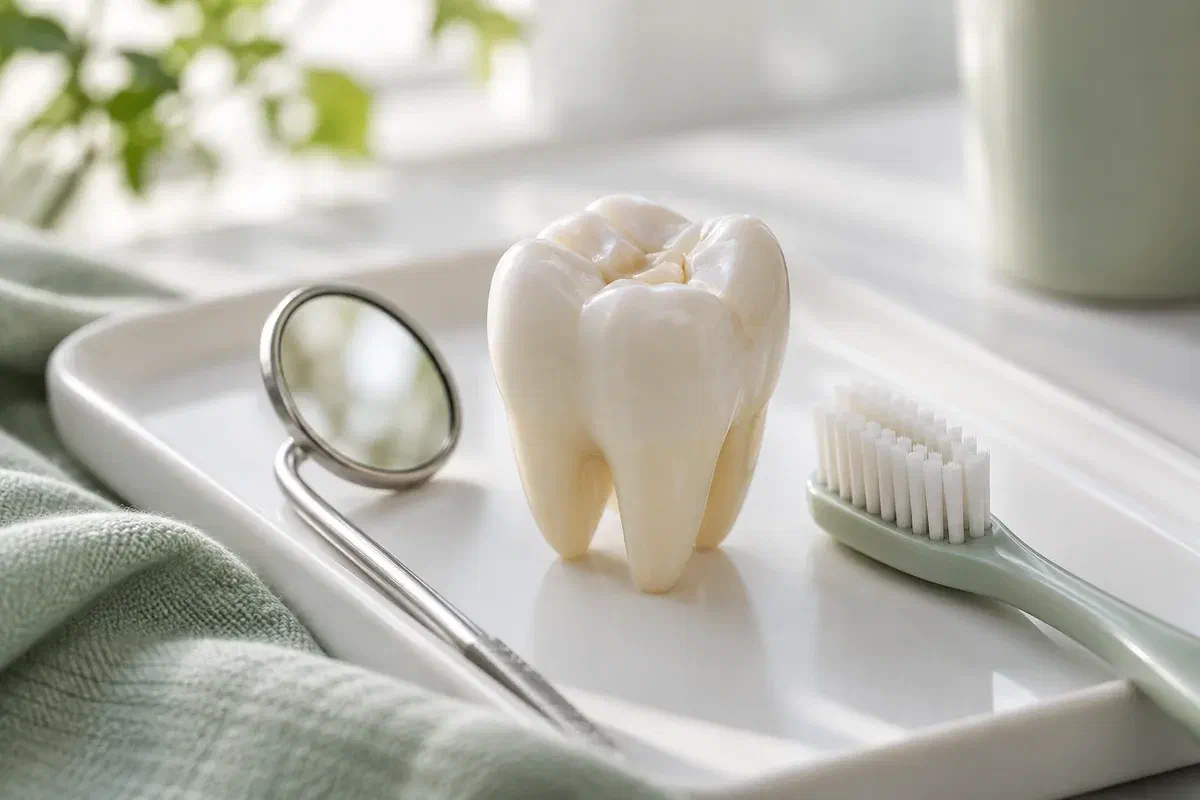
Illustrative tooth teaching model, dental mirror, and small soft toothbrush
Everyday observations

Little changes you might have spotted

Children often adapt quietly to a sore tooth. Share what you have seen and what they have said, and leave the job of finding the tooth to the dentist.

Changes in how they eat

Note one-sided chewing, avoiding hard, cold or sweet foods, or slower eating. Mention whether pain wakes your child or arrives without warning. Those habits help the dentist judge how urgent things are and where to look first.

Spots and broken edges

Tell us about any dark mark, small hole, chip or place food keeps getting caught, and roughly when you noticed it. Colour does not reveal how far decay extends. An exam, and perhaps X-rays, may be needed to know.

Comfort and communication

Let us know about earlier visits that were difficult, sensory sensitivities, how your child prefers to communicate and any medical needs. Mention what has helped. That way the approach suits your child, not a generic plan.

Call promptly about swelling, fever with tooth pain, severe pain or a child who cannot eat. If breathing or swallowing is difficult, or your child seems seriously unwell, get urgent medical care.

The point of treating it

Comfortable chewing on both sides again

Care may set out to arrest an early lesion, restore damaged structure or manage decay that has travelled deeper. The best choice depends on findings. Primary teeth are often in use for years, so a tooth that will eventually fall out still deserves attention when decay is present.

A filling fixes the hole, but the factors that caused it can remain. Prevention and follow-up continue afterward. Ask how treatment and your daily routine at home work together, and what the dentist plans to review once the immediate concern is settled.

Patient information: AAPD — pediatric restorative dentistry

Reasons linked to the tooth

Ask why the dentist recommends a filling, crown, preventive approach or something else, how much sound tooth remains and how long the tooth is expected to stay. That information makes the options genuinely comparable.

A visit paced for your child

Agree on explanations, breaks and comfort measures before treatment starts. Your child’s response may change whether care is staged or provided elsewhere. Ask what the plan is if things are not going well on the day.

Prevention that suits long rural days

Long days and irregular meals can mean more grazing on snacks and sweet drinks between chores, rides and school. Talk through brushing help, fluoride guidance and eating patterns without a list of bans, choose changes your household can keep up, and ask how progress will be checked.

What happens at the clinic

From one-sided chewing to a finished plan

The steps depend on the diagnosis and treatment you agree on. Some children need several visits, or a referral for care better suited to them.

  1. Find the cause

    The dentist reviews the eating changes and other symptoms, examines the teeth and explains whether X-rays are needed. Share health conditions, medications, allergies and previous dental work. Ask what the findings show and which tooth is involved.

  2. Plan treatment and trips

    Discuss the recommended care, alternatives, limits and what could happen if it waits. Ask about numbing, how your child can let the team know they need a break, and whether visits can be grouped with siblings. Sedation or general anaesthesia is a separate conversation with its own assessment and consent.

  3. Complete the treatment

    Your child is told what is happening in words they can follow. The work itself might be a preventive measure, a filling or crown, or something more involved if the decay is deep. If findings change or your child needs a pause, the plan is discussed before going on.

  4. Explain what comes next

    Confirm what was finished, whether anything is temporary and what remains. Go over eating, numbness, cleaning and symptom instructions. Book follow-up, ideally lined up with a routine visit, and learn which signs mean calling sooner.

Heading home

Soft supper, careful watching

Aftercare depends on what was done and any medicine used. Make sure the instructions are clear before you leave, especially if someone else will be minding your child.

Avoid nibbling numb areas

If freezing was used, your child may chew a lip or cheek without realizing. Supervise, discourage biting and follow the guidance on food and drink until sensation returns. A calm explanation of the odd feeling helps.

Keep brushing the area

Follow the cleaning instructions for the restoration, with continued adult help and fluoride as advised. If brushing is painful or food keeps catching at the treated tooth, call the clinic rather than leaving it uncleaned.

Check chewing again

Ask what discomfort is expected. If your child goes back to one-sided chewing, pain grows, swelling appears, a filling falls out or the bite feels uneven, contact us. Medicines should be given only as directed for your child.

Patient information: AAPD — local anaesthesia and postoperative instructions

Possible treatments

What the dentist may recommend

Ask how the option fits the diagnosis and what follow-up comes with it. Suitability and availability should be confirmed for your child rather than assumed.

For certain lesions, with regular review

Preventive decay management

Some lesions may be controlled with preventive or caries-control measures instead of a conventional filling, provided they are monitored. If silver diamine fluoride is offered, ask about the permanent dark stain left on treated decay, reapplication and its limits.

When the tooth needs rebuilding

Filling or crown

The size and location of damage, the remaining tooth and the conditions for placing a repair all guide the choice. A larger lesion may need a crown. Ask about the material, appearance, durability and care afterward.

When decay is advanced or needs differ

Deeper care or a referral

Decay that has gone deep may require more than a simple repair. Ask whether the tooth can be kept and what other care is suitable. If extraction is considered, ask about the developing adult teeth and whether space needs monitoring.

Questions from rural families

What parents in Nassagaweya ask

Bring these and any other questions. Answers ahead of time help you plan the trip and the day.

(905) 876-4488
Can chewing on one side be caused by something other than a cavity?
Yes. A loose baby tooth, a new tooth coming in, gum irritation or a cracked tooth can also cause it. An examination helps identify the reason. Mention how long the change has been going on.
Can several family members be seen on the same trip from Campbellville?
Ask the front desk whether back-to-back appointments are possible. Grouping visits can reduce trips, although the length of treatment depends on what the dentist finds for each child.
Should my child eat before a cavity appointment?
A light meal beforehand is usually sensible, since eating may need to wait until numbness wears off afterward. Ask the team for any specific instructions related to the planned treatment.
What happens if a cavity is left untreated in a baby molar?
Decay can grow, cause pain or lead to infection, and the tooth may need more extensive treatment later. The dentist will consider the tooth’s expected lifespan before recommending treatment or monitoring.
Is the darkening treatment for cavities the same as a filling?
No. Silver diamine fluoride, if suggested, is applied to help arrest decay and permanently darkens treated areas. It does not rebuild the tooth. Ask about monitoring, reapplication and whether a filling may still be needed.
My child seems fine now. Can we skip the follow-up?
Follow-ups check that treatment is holding up and that no new decay has formed. Ask the dentist why the review is recommended and whether it can be combined with a routine checkup to save a trip.
Serving Campbellville

Book a visit before the chewing habit sets in

Noticed a change in how your child eats, or already been told there is a cavity? Reach our Bronte Street practice. Describe any pain, swelling and support needs, and we will set up a suitable assessment and treatment conversation.

Any recommendation follows an exam. Swelling, fever or strong pain should be reported without delay.

Visit Milton Dental Clinic
Unit 1, 342 Bronte St. S, Milton, ON L9T 5B7
Get directions Clinic hours
Monday–Thursday
11am–7pm
Friday–Sunday
By appointment only

Areas we serve

  • Milton
  • Oakville
  • Mississauga
  • Georgetown
  • Halton Hills
  • Acton
  • Campbellville
  • Brampton
  • Burlington
  • Puslinch
  • Rockwood
  • Erin
  • Caledon
  • Etobicoke
  • Old Milton
  • Bronte Meadows
  • Timberlea
  • Dorset Park
  • Dempsey
  • Clarke
  • Beaty
  • Coates
  • Harrison
  • Scott
  • Willmott
  • Ford
  • Bowes
  • Cobden
  • Walker
  • Mountain View
  • Milton Heights
  • Hawthorne Village
  • Valley View
  • Fallingbrook
  • Nassagaweya
  • Trafalgar
  • Esquesing
  • Nelson
  • Brookville
  • Moffat
  • Glen Williams
  • Norval
  • Limehouse
  • Stewarttown
  • Ashgrove
  • Hornby
  • Silver Creek
  • Speyside
  • Scotch Block
  • North Oakville
  • River Oaks
  • Glen Abbey
  • West Oak Trails
  • Palermo
  • Bronte Creek
  • College Park
  • Joshua Creek
  • Uptown Core
  • Preserve
  • Iroquois Ridge
  • Lisgar
  • Meadowvale
  • Meadowvale Village
  • Churchill Meadows
  • Erin Mills
  • Central Erin Mills
  • Streetsville
  • East Credit
  • Creditview
  • Heartland
  • Sheridan
  • Mount Pleasant
  • Credit Valley
  • Huttonville
  • Churchville
  • Springbrook
  • Northwest Brampton
  • Bram West
  • Fletcher's Meadow
  • Fletcher's Creek South
  • Alton Village
  • Orchard
  • Millcroft
  • Headon Forest
  • Tansley
  • Brant Hills
  • Tyandaga
  • Kilbride
  • Lowville
  • Aberfoyle
  • Morriston
  • Arkell
  • Hillsburgh
  • Freelton
  • Carlisle
  • Waterdown
  • Flamborough
  • Mountsberg

How can we help?

Milton Dental Clinic

Have a question about your smile? Choose the option that works best for you.

For urgent dental concerns, please call.
Messages are reviewed during clinic hours.