

Illustrative child and parent discussing a tooth model with a dental clinician
Children’s Dentistry

Children’s Cavity Treatment in Etobicoke

A longer trip makes every appointment worth planning. Families travelling from Etobicoke can organize a child’s cavity care into fewer, well-prepared visits, understand the treatment options, and know when a sudden problem should be seen closer to home.

Making the most of each visit

Fewer trips, better prepared

Coming in from the west end of Toronto means a cavity appointment takes a real chunk of the day. That is a good reason to arrive with the right information, ask the important questions early and leave knowing exactly what happens next. The goal is a plan that is clear and efficient without rushing your child.

The essentials come first. Which tooth has decay, and is it a baby tooth or an adult tooth? How extensive is the damage, and does anything need treatment soon? An examination, sometimes with X-rays, answers those questions. Share notes on pain, eating, past visits and what helps your child, so the dentist can judge what is realistic to accomplish in one sitting and what might be better split.

Not every lesion is treated the same way, and not every cavity suits a simple filling. Ask about the diagnosis, the reasonable options and the effect of delay. Your child deserves an explanation at their level. A cavity calls for care and prevention, not blame.

Organize your child’s cavity care
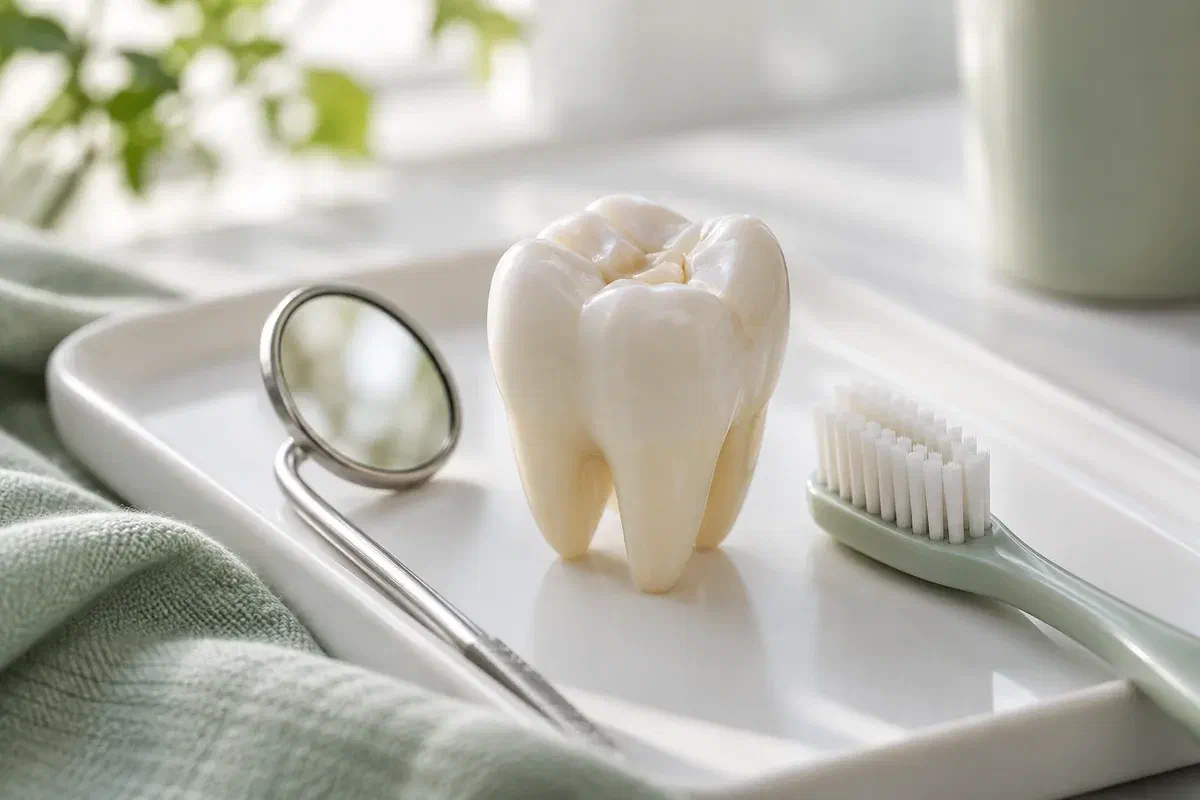
Illustrative tooth teaching model, dental mirror, and small soft toothbrush
Before you set out

Gather the details at home

Children often describe tooth problems loosely. Write down what your child says and what you have seen, so nothing is forgotten after a long drive, and leave identifying the tooth to the exam.

Patterns of discomfort

Note whether cold, sweet or chewy foods cause trouble and whether one side is avoided. Mention night-time pain or pain without an obvious trigger. Those patterns influence urgency and help the dentist decide what to look at closely.

What the tooth looks like

A dark area, hole, chipped edge or spot that traps food is worth reporting, with a rough date for when it appeared. Colour alone cannot reveal how deep decay runs, which is one reason the first visit often includes X-rays.

Your child’s comfort needs

Let the team know about hard past experiences, sensory sensitivities, communication preferences and health conditions in advance. Share what has helped. That allows the visit to be shaped around your child from the start.

Do not wait for a planned visit if your child develops swelling, fever with tooth pain, severe pain or cannot eat. For breathing or swallowing difficulty, or a child who seems seriously ill, get urgent medical care nearby.

What treatment sets out to do

Resolve the problem, then lower the odds of a repeat

Depending on findings, care may focus on stopping an early lesion, restoring lost structure or managing deeper decay. A baby tooth can stay in use for years. The fact that it will eventually fall out does not mean decay can safely be left in place.

A restoration fixes the damaged area, yet the factors that caused decay can remain. That is why prevention and follow-up are part of the plan. When the trip starts in Etobicoke, ask how home care and treatment connect, and whether reviews can be combined with routine checkups.

Patient information: AAPD — pediatric restorative dentistry

A recommendation you understand

Ask why a filling, crown, preventive care or another option is suggested for this tooth, how much sound structure remains and how long it is expected to last. Clear reasoning means you will not need another trip just to compare options.

An honest sense of pacing

Discuss explanations, breaks and comfort measures in advance. Combining treatments can save travel, but only if your child can manage it. Ask what happens if the visit needs to stop, rather than assuming everything must be completed at once.

Prevention you can maintain

Review brushing help, fluoride advice and eating and drinking habits in a practical way. Choose changes your family can sustain. Ask how progress will be checked and how often, keeping your travel in mind.

An efficient path through care

Plan the trips around the treatment

The number of visits depends on the diagnosis and the agreed treatment. Some children need more than one appointment, or a referral to another provider.

  1. Diagnose thoroughly the first time

    The dentist reviews symptoms, examines the mouth and explains any X-rays needed. Bring a list of medical conditions, medicines, allergies and previous dental work. Ask whether the tooth is primary or permanent and how serious the findings are.

  2. Decide on treatment and timing

    Talk through the recommended care, alternatives, limits and what could happen without treatment. Ask how freezing and communication will be managed, and whether care can be grouped. Sedation or general anaesthesia would need separate assessment, consent and a confirmed provider.

  3. Carry out the plan

    Each step is explained in words your child can follow. Care might involve lesion management, a restoration or other indicated treatment. If something unexpected comes up, or your child needs a pause, the plan is talked through again before going on.

  4. Leave with a clear next step

    Confirm what was completed, whether anything is temporary and what remains. Go over instructions for eating, numbness, cleaning and symptoms. Book follow-up before leaving and ask which changes would warrant a call or closer care.

On the road and at home

A long drive with a numb mouth

Aftercare depends on the procedure and any medicine used. Get written directions before you leave, especially if someone else will care for your child later.

Watch the frozen lip on the trip

Local anaesthetic can last a while, and a bored child in the car may chew a numb lip or cheek. Bring a distraction, keep watch and hold off on snacks as advised until feeling returns.

Keep cleaning as directed

Follow the brushing and cleaning advice for that restoration, along with adult help and fluoride as recommended. If the area is too sore to brush or food keeps catching there, phone the clinic rather than letting it go.

Know when to call, and when to go closer

Ask what discomfort is expected. Call about increasing pain, a lost filling or a bite that feels high. For significant swelling or a child who is unwell, nearby urgent care may be faster than travelling back. Give medicine only as directed for your child.

Patient information: AAPD — local anaesthesia and postoperative instructions

Treatment choices

Options that depend on depth and on the child

Ask why the recommendation fits the diagnosis and what follow-up comes with it. Confirm suitability and availability rather than relying on a general description.

For suitable lesions, with check-ins

Decay control and monitoring

Some lesions may be managed with preventive or caries-control measures rather than a conventional filling. That requires assessment and scheduled monitoring. If silver diamine fluoride comes up, ask about the permanent dark stain on treated decay, reapplication visits and its limits.

When structure must be rebuilt

A restoration for the tooth

The extent and position of damage, how much tooth remains and the conditions for placing a repair all guide the choice. A larger lesion may need a crown. Ask about the material, appearance, durability and any upkeep.

When deep decay or special needs change the plan

Beyond a simple repair

A tooth with deep decay may need more than a filling. Ask whether the tooth can be kept and what other care is appropriate. If extraction is discussed, find out about the developing adult teeth and whether space will need checking.

Planning questions

What travelling families tend to ask

These questions focus on organizing care efficiently. Bring any others with you, and ask the team to clarify anything.

(905) 876-4488
How can I keep the number of trips from Etobicoke to a minimum?
Ask whether the exam and simpler treatment can happen on the same day, and whether follow-ups can be combined with routine checkups. The dentist will balance efficiency against what your child can comfortably manage.
Should we bring previous X-rays from another dentist?
If your child has recent images or records from elsewhere, ask that office to send them ahead. The dentist can review them and decide whether new images are needed, which may make the first visit more productive.
What counts as a dental emergency for a child?
Facial swelling, fever with tooth pain, severe pain, a knocked-out adult tooth or a child who seems unwell generally needs prompt attention. Breathing or swallowing difficulty needs urgent medical care. Ask the team for guidance specific to your child.
Can a filling be done at the very first appointment?
Sometimes, if the diagnosis is clear, time allows and your child is comfortable. Other times it is better to plan first and treat at the next visit. Let the clinic know about your travel when booking.
Is a crown on a baby tooth very different from a filling?
A crown covers more of the tooth and is usually considered when a large amount of structure has been lost. A filling repairs a smaller area. Ask why one is recommended over the other for your child.
What should I pack for a long trip to a cavity appointment?
Bring a list of questions, your child’s medical information, a comfort item and something quiet to do in the car. Skip snacks for the ride home until numbness wears off, as the team advises.
Visiting from Etobicoke

A plan worth the trip

Contact our Bronte Street practice to discuss a diagnosed cavity or a change you have noticed. Mention pain, swelling and your travel so we can arrange an efficient assessment and treatment conversation.

Recommendations depend on examination. Urgent symptoms should be seen promptly, closer to home if that is faster.

Visit Milton Dental Clinic
Unit 1, 342 Bronte St. S, Milton, ON L9T 5B7
Get directions Clinic hours
Monday–Thursday
11am–7pm
Friday–Sunday
By appointment only

Areas we serve

  • Milton
  • Oakville
  • Mississauga
  • Georgetown
  • Halton Hills
  • Acton
  • Campbellville
  • Brampton
  • Burlington
  • Puslinch
  • Rockwood
  • Erin
  • Caledon
  • Etobicoke
  • Old Milton
  • Bronte Meadows
  • Timberlea
  • Dorset Park
  • Dempsey
  • Clarke
  • Beaty
  • Coates
  • Harrison
  • Scott
  • Willmott
  • Ford
  • Bowes
  • Cobden
  • Walker
  • Mountain View
  • Milton Heights
  • Hawthorne Village
  • Valley View
  • Fallingbrook
  • Nassagaweya
  • Trafalgar
  • Esquesing
  • Nelson
  • Brookville
  • Moffat
  • Glen Williams
  • Norval
  • Limehouse
  • Stewarttown
  • Ashgrove
  • Hornby
  • Silver Creek
  • Speyside
  • Scotch Block
  • North Oakville
  • River Oaks
  • Glen Abbey
  • West Oak Trails
  • Palermo
  • Bronte Creek
  • College Park
  • Joshua Creek
  • Uptown Core
  • Preserve
  • Iroquois Ridge
  • Lisgar
  • Meadowvale
  • Meadowvale Village
  • Churchill Meadows
  • Erin Mills
  • Central Erin Mills
  • Streetsville
  • East Credit
  • Creditview
  • Heartland
  • Sheridan
  • Mount Pleasant
  • Credit Valley
  • Huttonville
  • Churchville
  • Springbrook
  • Northwest Brampton
  • Bram West
  • Fletcher's Meadow
  • Fletcher's Creek South
  • Alton Village
  • Orchard
  • Millcroft
  • Headon Forest
  • Tansley
  • Brant Hills
  • Tyandaga
  • Kilbride
  • Lowville
  • Aberfoyle
  • Morriston
  • Arkell
  • Hillsburgh
  • Freelton
  • Carlisle
  • Waterdown
  • Flamborough
  • Mountsberg

How can we help?

Milton Dental Clinic

Have a question about your smile? Choose the option that works best for you.

For urgent dental concerns, please call.
Messages are reviewed during clinic hours.