

Illustrative child and parent discussing a tooth model with a dental clinician
Children’s Dentistry

Children’s Cavity Treatment in Mississauga

Older children often want to know exactly what is wrong with their tooth and what the dentist will do. For families from Mississauga, we explain the cavity, the realistic options and the comfort plan to parents and kids alike, then map out prevention.

When your child has questions of their own

Your child asks. We explain.

By eight or nine, plenty of kids want details. What is a cavity, exactly? Will it get bigger? Is there going to be a needle? A child who understands what is happening tends to feel more in control, so the explanation is part of the care, not an afterthought. We aim to answer in words that suit your child’s age, and to let them ask questions too.

Parents have their own list. Is the tooth a baby tooth or a permanent one, how extensive is the damage, and how soon does it need attention? Those are answered by examining the tooth itself. For a trip from western Mississauga neighbourhoods such as Meadowvale or Churchill Meadows, it is worth arriving with your concerns written down, along with notes on pain, eating, earlier visits and what helps your child stay calm.

Small lesions may be handled differently from deep ones, and a filling is not automatically the answer. Ask about the diagnosis, the reasonable choices and the consequences of waiting. Decay is a common health problem; it is a reason to act, never a reason for blame.

Start the conversation
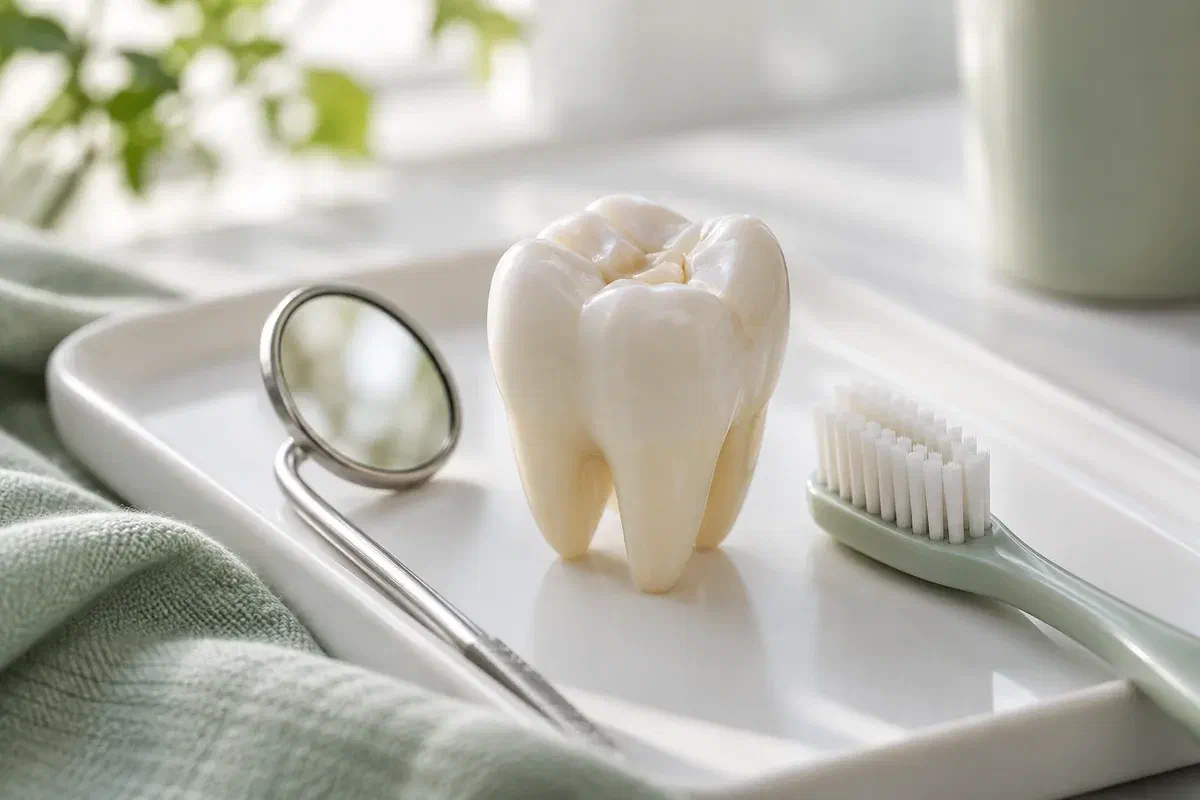
Illustrative tooth teaching model, dental mirror, and small soft toothbrush
Information to bring

Two perspectives: yours and your child’s

Ask your child to describe what they feel, then add what you have seen. Leave the question of which tooth to the dentist.

Discomfort and food choices

An older child might say a tooth “zings” with ice cream or aches after chewing. Note any side they avoid, pain at night and discomfort that starts without a trigger. That detail helps the dentist gauge urgency and focus the exam.

Something visible or broken

Your child may have felt a rough edge with their tongue, or you might see a dark patch or a gap that catches food. Say when it was first noticed. Colour does not reveal depth or activity, so an examination and suitable images may be required.

Worries, preferences and health

Tell us what your child is anxious about, any sensory sensitivities, how they prefer to be talked to and relevant medical needs. Mention what has gone well before. That allows the visit to be adjusted to the person in the chair.

Contact us without delay if there is swelling of the face or gums, fever along with dental pain, severe pain or an inability to eat. Breathing or swallowing problems, or a child who seems seriously ill, require urgent medical attention.

The bigger aim

Treat what is damaged, prevent what is next

Depending on the exam, the aim may be to arrest an early lesion, restore missing structure or address decay that has reached the inner tooth. Baby molars can remain until around the preteen years, so the fact that a tooth is temporary does not mean decay in it is harmless.

Fixing one tooth leaves the causes of decay unchanged. That is where prevention and follow-up come in. An older child can take on more of their own routine, so ask how the treatment and home habits connect, and what the dentist will review later.

Patient information: AAPD — pediatric restorative dentistry

A recommendation with reasons

Your child’s dentist should say why a filling, crown, preventive care or another option is proposed. Ask how much healthy tooth remains and what role it will play. With those answers you can compare choices sensibly.

Comfort agreed beforehand

Settle on a stop signal, how each step will be explained and which comfort measures will be used. Your child’s reaction might mean care is spread out or arranged elsewhere. Ask what the alternative is if the day does not go as planned.

Ownership of the routine

Older kids can learn to brush along the gumline, use fluoride as directed and think about how often they snack or sip sweet drinks. Choose changes that suit your family, and ask how improvements will be measured at the next visit.

Step by step

Nothing happens without an explanation first

The sequence depends on what the dentist finds and the care you agree on. More than one visit, or a referral, may be part of the plan.

  1. Understanding the problem

    Expect questions about symptoms, a careful look at the teeth and an explanation of whether X-rays are needed. Share health conditions, medications, allergies and past treatment. Your child can ask to see the tooth on a model or image.

  2. Choosing together

    The dentist outlines the recommended treatment, alternatives, limitations and what could happen if it is postponed. Ask how freezing works and how your child can signal discomfort. Sedation or general anaesthesia would require its own evaluation, consent and a confirmed provider.

  3. Treatment day

    Your child hears what is coming before it happens. Care may include managing the lesion, a restoration or another indicated procedure. If something unexpected comes up, or your child needs a different approach, the team will stop and talk it through with you.

  4. Afterward and next time

    You will learn what was finished, whether a temporary measure was placed and what remains. Instructions cover eating, numbness, cleaning and symptoms for the specific procedure. A follow-up is booked, and you will know which changes mean calling earlier.

Taking care afterward

What older kids can manage, and where you still help

Directions depend on the procedure and any medicine given. Make sure both you and your child understand them before leaving the clinic.

Leave the numb spot alone

Even older children can accidentally chew a frozen cheek or lip. Remind them, keep an eye out and follow the guidance about eating and drinking until sensation returns. Explaining why the area feels odd helps them resist poking at it.

Brush gently but thoroughly

Follow the cleaning steps for the restoration, continue adult checks of brushing and use fluoride as advised. If it hurts to brush there or food keeps catching, contact the clinic instead of skipping that part of the mouth.

Speak up about changes

Ask how much soreness, if any, to expect. Encourage your child to tell you if pain increases, the bite feels uneven, a filling comes loose or swelling appears. Give medicine only according to the directions for your child’s age and weight.

Patient information: AAPD — local anaesthesia and postoperative instructions

How the options differ

From watchful management to deeper treatment

Ask why the suggested approach fits what was diagnosed and what it involves afterward. Suitability and availability should be checked for your child rather than taken for granted.

For some early lesions, with reviews

Slowing decay without a filling

Certain lesions can be controlled using preventive or caries-control methods instead of a traditional filling, provided they are assessed and monitored. If silver diamine fluoride is suggested, ask about the lasting dark stain on treated decay, repeat applications and what it cannot fix.

For damage that needs rebuilding

Restoring lost structure

The dentist weighs how large the damage is, where it sits, how much tooth is left and how dependably a repair would hold. A big lesion may call for a crown. Ask about materials, how they look, how long they tend to last and their upkeep.

When deep decay or individual needs change course

When a repair is not enough

If decay has reached the nerve area, treatment beyond a surface repair may be discussed. The dentist can explain whether the tooth can be kept. If removal is an option, ask about the developing adult teeth and whether spacing will need monitoring.

Questions from parents and kids

Answers before you make the trip from Mississauga

Some of these come from parents and some from children themselves. Bring any others to the appointment.

(905) 876-4488
Can my child watch or learn what is happening during treatment?
Many older children like to know what each instrument does. Let the team know your child prefers detail, and they can explain steps as they go or show a model beforehand. Some children prefer fewer details, which is fine too.
Does freezing for a child’s filling involve a needle?
Local anaesthetic is usually given by injection, often after a numbing gel is placed first. Ask the dentist how they explain this to children and what your child can do if they feel worried during that step.
Why would a dentist suggest a crown for a baby tooth?
When decay is large and little healthy structure remains, a crown may protect the tooth better than a filling. The dentist considers the size of the lesion and how long the tooth needs to last. Ask what makes a crown preferable in your child’s case.
Is it possible to treat two cavities in one appointment?
Sometimes, depending on where they are, the treatment needed and how your child copes. Other times it is better to split care across visits. Ask which approach the dentist recommends for your child and why.
What happens if a painful baby tooth suddenly feels better?
Keep the appointment unless the dentist advises otherwise. Pain easing does not prove the decay has resolved. Call to explain what changed, and seek prompt advice if swelling, fever or other worrying symptoms appear.
Do sports or after-school activities need to wait after a filling?
Ask the dentist for specific advice based on the procedure. Numbness can make biting the lip or cheek more likely, so activities involving snacks or mouthguards may be easier once feeling returns.
Mississauga to Bronte Street

Bring your questions, and your child’s

Reach our Bronte Street practice about a diagnosed cavity or a change you have spotted. Let us know about pain, swelling and any support needs so we can arrange a suitable examination and planning conversation.

Advice depends on an exam. Report severe pain, swelling or a child who feels unwell right away.

Visit Milton Dental Clinic
Unit 1, 342 Bronte St. S, Milton, ON L9T 5B7
Get directions Clinic hours
Monday–Thursday
11am–7pm
Friday–Sunday
By appointment only

Areas we serve

  • Milton
  • Oakville
  • Mississauga
  • Georgetown
  • Halton Hills
  • Acton
  • Campbellville
  • Brampton
  • Burlington
  • Puslinch
  • Rockwood
  • Erin
  • Caledon
  • Etobicoke
  • Old Milton
  • Bronte Meadows
  • Timberlea
  • Dorset Park
  • Dempsey
  • Clarke
  • Beaty
  • Coates
  • Harrison
  • Scott
  • Willmott
  • Ford
  • Bowes
  • Cobden
  • Walker
  • Mountain View
  • Milton Heights
  • Hawthorne Village
  • Valley View
  • Fallingbrook
  • Nassagaweya
  • Trafalgar
  • Esquesing
  • Nelson
  • Brookville
  • Moffat
  • Glen Williams
  • Norval
  • Limehouse
  • Stewarttown
  • Ashgrove
  • Hornby
  • Silver Creek
  • Speyside
  • Scotch Block
  • North Oakville
  • River Oaks
  • Glen Abbey
  • West Oak Trails
  • Palermo
  • Bronte Creek
  • College Park
  • Joshua Creek
  • Uptown Core
  • Preserve
  • Iroquois Ridge
  • Lisgar
  • Meadowvale
  • Meadowvale Village
  • Churchill Meadows
  • Erin Mills
  • Central Erin Mills
  • Streetsville
  • East Credit
  • Creditview
  • Heartland
  • Sheridan
  • Mount Pleasant
  • Credit Valley
  • Huttonville
  • Churchville
  • Springbrook
  • Northwest Brampton
  • Bram West
  • Fletcher's Meadow
  • Fletcher's Creek South
  • Alton Village
  • Orchard
  • Millcroft
  • Headon Forest
  • Tansley
  • Brant Hills
  • Tyandaga
  • Kilbride
  • Lowville
  • Aberfoyle
  • Morriston
  • Arkell
  • Hillsburgh
  • Freelton
  • Carlisle
  • Waterdown
  • Flamborough
  • Mountsberg

How can we help?

Milton Dental Clinic

Have a question about your smile? Choose the option that works best for you.

For urgent dental concerns, please call.
Messages are reviewed during clinic hours.