

Illustrative child and parent discussing a tooth model with a dental clinician
Children’s Dentistry

Children’s Cavity Treatment in Oakville

Your child flinches at a cold drink and you wonder if it is a cavity. Families coming from Oakville can have the tooth examined, hear what is really going on, and talk through treatment, comfort and prevention in plain language.

Sensitivity, or something more?

Is that wince at lunch a cavity?

A complaint that ice water stings, a sandwich left half eaten, a hand pressed to one cheek: these are often the first signs a parent notices. They can point to decay, but they can also come from other causes. The only way to know is for a dentist to examine your child’s teeth and, where needed, take appropriate images.

If decay is found, the questions start to multiply. Which tooth is it, baby or permanent? How large is the damage? Can it be treated in a way your child will manage, and how soon? For children travelling from Oakville, it helps to raise those questions at the first visit so the plan is clear before you head home.

Tell the team what you have seen, what your child has said and how earlier dental visits went. The recommendation should fit the tooth, the extent of the lesion and your child’s comfort, and it should come with an explanation your child can understand. A cavity is a health issue to address, not a failure on anyone’s part.

Ask about your child’s tooth
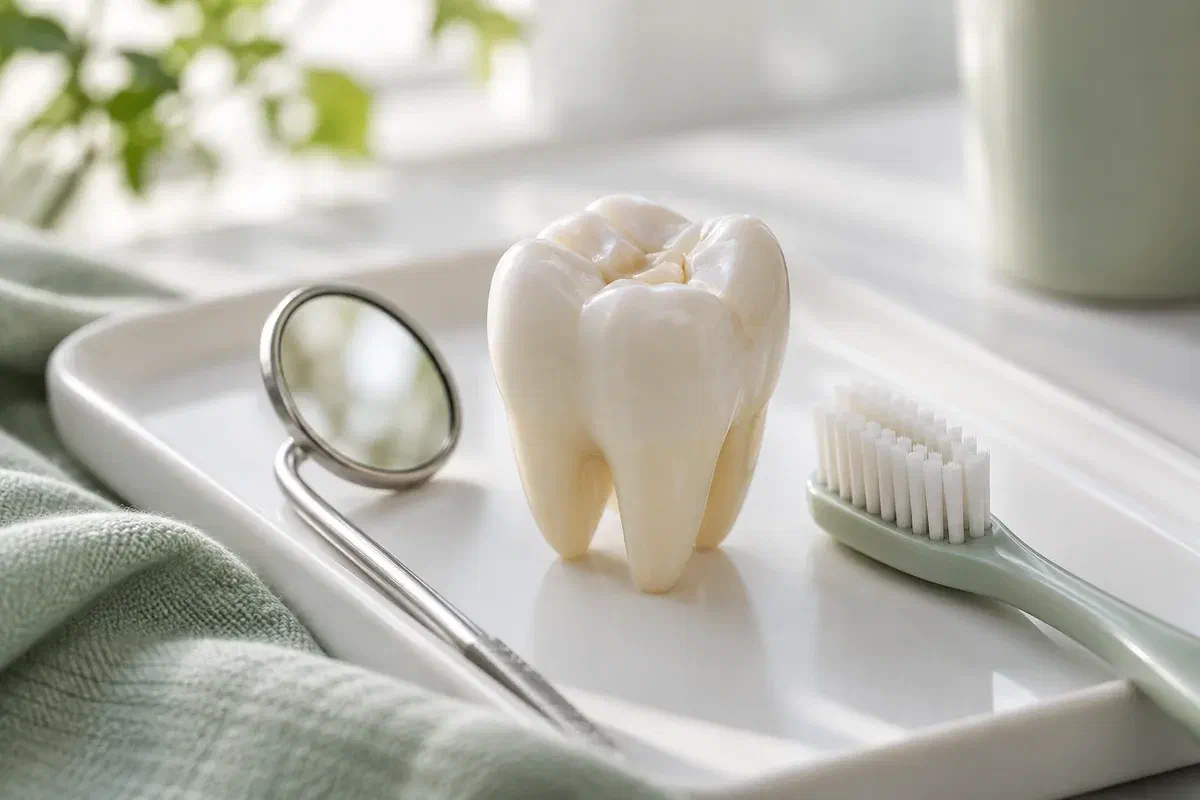
Illustrative tooth teaching model, dental mirror, and small soft toothbrush
Clues worth sharing

Small signs from everyday life

Kids often say “it feels weird” rather than “it hurts”. Report their exact words, plus anything you have observed, and let the exam determine which tooth is involved.

Reactions to cold, sugar or biting

Note whether certain drinks or foods trigger discomfort and whether your child has started chewing on one side. Mention pain that wakes them or seems to come from nowhere. That history helps the dentist judge urgency and decide what to investigate.

Spots, holes or rough edges

Describe any dark patch, pit, chipped surface or place where food keeps catching, and when you first noticed it. How a spot looks does not reveal how deep decay goes. An examination and suitable records may be needed to understand it.

Feelings about the dental chair

Let us know about difficult past visits, sensory sensitivities, how your child communicates best and any health needs. Mention what has helped them cope before. That lets the team adapt the approach rather than expecting the same response from every child.

Phone promptly if there is swelling, a fever with tooth pain, severe discomfort or difficulty eating. A child with breathing or swallowing difficulty, or who appears very ill, needs urgent medical care.

Why the plan matters

Today’s repair, tomorrow’s healthier teeth

Treatment may focus on stopping an early lesion, rebuilding lost structure or managing decay that has reached further in. What suits your child depends on the exam. Baby teeth often stay for many years, so their eventual loss is not a reason to let decay continue.

A filling repairs the damage, yet it does not remove the reasons decay began. Prevention and follow-up visits keep the problem from coming back elsewhere. Ask how the treatment and your daily routine fit together, and what the dentist will want to review afterward.

Patient information: AAPD — pediatric restorative dentistry

Reasons you can follow

Whether the advice is a filling, a crown, preventive care or another approach, ask why it fits this tooth. Find out how much structure remains and how long the tooth is expected to last. Those answers make the options easier to compare.

Comfort decided in advance

Agree on explanations, breaks and the comfort approach before treatment begins. Your child’s response may affect whether care is spread over visits or provided in another setting. Ask what happens if the plan is not working on the day.

Habits that protect other teeth

Review brushing support, fluoride guidance and the timing of snacks and drinks, without turning it into a list of rules. Settle on changes your family can manage week after week, and ask how progress will be monitored.

The treatment path

Check, decide, treat and follow up

The steps depend on what is diagnosed and the care chosen. Some children need more than one appointment, or a referral for care better matched to them.

  1. Examine and listen

    The dentist asks about symptoms, examines the teeth and explains any X-rays or other information required. Share health conditions, medicines, allergies and past dental work. Ask whether the sensitive tooth is a baby tooth or an adult one, and what the findings show.

  2. Weigh the options together

    Go over the suggested treatment, alternatives, likely limits and what might happen without care. Ask how freezing and communication will be handled. Sedation or general anaesthesia, if considered, requires separate assessment, consent and a confirmed provider and setting.

  3. Complete the planned care

    The clinician explains each step in child-friendly words. Treatment might mean managing the lesion, placing a restoration or other indicated care. Should the findings or your child’s needs change, the plan is discussed before continuing.

  4. Leave with clear directions

    Confirm what was done, whether a temporary measure was used and what is still to come. Go over eating, numbness, cleaning and symptom instructions for that procedure. Book follow-up and ask which signs should lead to an earlier call.

Getting home after treatment

A careful ride home and a quiet evening

Instructions vary with the procedure and any medicine used. Make sure you understand them before leaving, especially if another adult will be caring for your child later.

Mind the numb lip in the back seat

If local anaesthetic was used, children may bite or suck their lip, cheek or tongue on the way home. Keep an eye on them and follow the eating and drinking advice until feeling returns. Explain the tingly sensation calmly.

Keep the area clean

Follow the cleaning advice for that restoration or procedure, and keep up adult brushing help and fluoride as recommended. If brushing hurts or food keeps getting trapped at the tooth, call rather than avoiding the spot.

Know what is expected

Ask what discomfort, if any, is normal and when to call. Get in touch about worsening pain, swelling, a lost filling or a bite that feels off. Give medicine only as directed for your child, never an adult dose.

Patient information: AAPD — local anaesthesia and postoperative instructions

The choices you may hear about

Three broad routes, chosen for the tooth in question

Ask why a particular approach fits your child’s diagnosis and what follow-up it needs. Whether it is suitable and available should be confirmed rather than assumed from a summary.

For suitable lesions, with regular checks

Arresting early decay

Some lesions can be controlled without a conventional filling, using preventive or caries-control measures. That requires assessment and monitoring. If silver diamine fluoride is offered, ask about permanent dark staining of the treated area, repeat applications and its limits.

When damage needs to be restored

Filling or capping the tooth

The size and spot of the damage, the remaining structure and whether a restoration can be placed well guide this decision. A large lesion may need a crown rather than a filling. Ask about the material, appearance, lifespan and aftercare.

When the nerve or support needs alter the plan

Treating deeper problems

Decay that reaches deep into the tooth may need more than a surface repair. The dentist can explain whether the tooth can stay and what else may help. If removal is discussed, ask about the adult teeth forming beneath and spacing afterward.

Your questions, answered

Before you book from Oakville

These are common starting points. Bring your own questions too, and ask the team to explain anything unclear.

(905) 876-4488
Could my child’s sensitivity be something other than a cavity?
Yes. Sensitivity can come from several causes, including worn enamel, a chipped surface or gum irritation, as well as decay. An exam is needed to tell them apart. Note what triggers it and how long it lasts.
Can decay hide between teeth where I cannot see it?
It can. Cavities that start where teeth touch are often invisible from the outside and may only show on an X-ray. That is one reason regular exams matter even when your child has no symptoms.
What is the plan if my child will not open wide on the day?
The team can pause, try a different explanation or reschedule part of the care. Your child’s response may change how treatment is staged or where it is provided. Ask in advance what alternatives exist.
Do all cavities in children get the same treatment?
No. The size of the lesion, the tooth involved and how much structure remains all shape the choice. Some early lesions are managed without a filling, while larger damage might need a crown. Ask what supports the recommendation.
Will a filled baby tooth affect the adult tooth underneath?
Treating decay is generally intended to keep the area healthy while the adult tooth develops. Deeper infection is a bigger concern than the filling itself. Ask the dentist how the specific tooth relates to the one forming beneath it.
Is it worth arranging the visit around a school pickup from Oakville?
Many families find an after-school time works, but treatment length varies with the care planned. Ask how long the visit is expected to take and whether your child will be numb afterward, so homework and meals can be planned.
From Oakville to our clinic

Find out what that sore tooth needs

Contact our Bronte Street practice about a cavity that has been diagnosed or a symptom you have noticed. Describe what triggers the discomfort, any swelling, and what helps your child feel at ease, and we will set up an assessment and a treatment discussion.

Treatment advice depends on examination. If the tooth flares up, the cheek swells or a fever starts, let us know promptly.

Visit Milton Dental Clinic
Unit 1, 342 Bronte St. S, Milton, ON L9T 5B7
Get directions Clinic hours
Monday–Thursday
11am–7pm
Friday–Sunday
By appointment only

Areas we serve

  • Milton
  • Oakville
  • Mississauga
  • Georgetown
  • Halton Hills
  • Acton
  • Campbellville
  • Brampton
  • Burlington
  • Puslinch
  • Rockwood
  • Erin
  • Caledon
  • Etobicoke
  • Old Milton
  • Bronte Meadows
  • Timberlea
  • Dorset Park
  • Dempsey
  • Clarke
  • Beaty
  • Coates
  • Harrison
  • Scott
  • Willmott
  • Ford
  • Bowes
  • Cobden
  • Walker
  • Mountain View
  • Milton Heights
  • Hawthorne Village
  • Valley View
  • Fallingbrook
  • Nassagaweya
  • Trafalgar
  • Esquesing
  • Nelson
  • Brookville
  • Moffat
  • Glen Williams
  • Norval
  • Limehouse
  • Stewarttown
  • Ashgrove
  • Hornby
  • Silver Creek
  • Speyside
  • Scotch Block
  • North Oakville
  • River Oaks
  • Glen Abbey
  • West Oak Trails
  • Palermo
  • Bronte Creek
  • College Park
  • Joshua Creek
  • Uptown Core
  • Preserve
  • Iroquois Ridge
  • Lisgar
  • Meadowvale
  • Meadowvale Village
  • Churchill Meadows
  • Erin Mills
  • Central Erin Mills
  • Streetsville
  • East Credit
  • Creditview
  • Heartland
  • Sheridan
  • Mount Pleasant
  • Credit Valley
  • Huttonville
  • Churchville
  • Springbrook
  • Northwest Brampton
  • Bram West
  • Fletcher's Meadow
  • Fletcher's Creek South
  • Alton Village
  • Orchard
  • Millcroft
  • Headon Forest
  • Tansley
  • Brant Hills
  • Tyandaga
  • Kilbride
  • Lowville
  • Aberfoyle
  • Morriston
  • Arkell
  • Hillsburgh
  • Freelton
  • Carlisle
  • Waterdown
  • Flamborough
  • Mountsberg

How can we help?

Milton Dental Clinic

Have a question about your smile? Choose the option that works best for you.

For urgent dental concerns, please call.
Messages are reviewed during clinic hours.