

Illustrative child and parent discussing a tooth model with a dental clinician
Children’s Dentistry

Children’s Cavity Treatment in Puslinch

The toothache faded, so is the booked appointment still needed? For families in Puslinch weighing a drive against a tooth that seems settled, we explain why decay can stay active without pain and how cavity treatment and follow-up are planned.

When the pain goes quiet

A tooth that stops hurting has not necessarily healed.

It is a familiar situation. Your child complains about a sore tooth for a few days, you book an appointment, and then the complaints stop. With a drive east into Milton and a busy week, cancelling is tempting. Before you do, call the clinic. A cavity does not repair itself, and sometimes pain fades because decay has moved closer to the nerve.

What you really need to know is the same as before the pain eased: which tooth is involved, whether it is a baby tooth or an adult tooth, how deep the decay goes and how soon it should be treated. Only an exam, sometimes with X-rays, can answer that. For a household in Puslinch, sharing the full story helps: when the pain started and stopped, any eating changes, past visits and what calms your child.

Some early lesions can be managed without a filling, and others need more involved care. Ask about the diagnosis, the reasonable options and what waiting could mean. Your child should get an explanation in terms that suit their age. A cavity is not anyone’s failure, only a reason to look after the tooth.

Keep or change your appointment
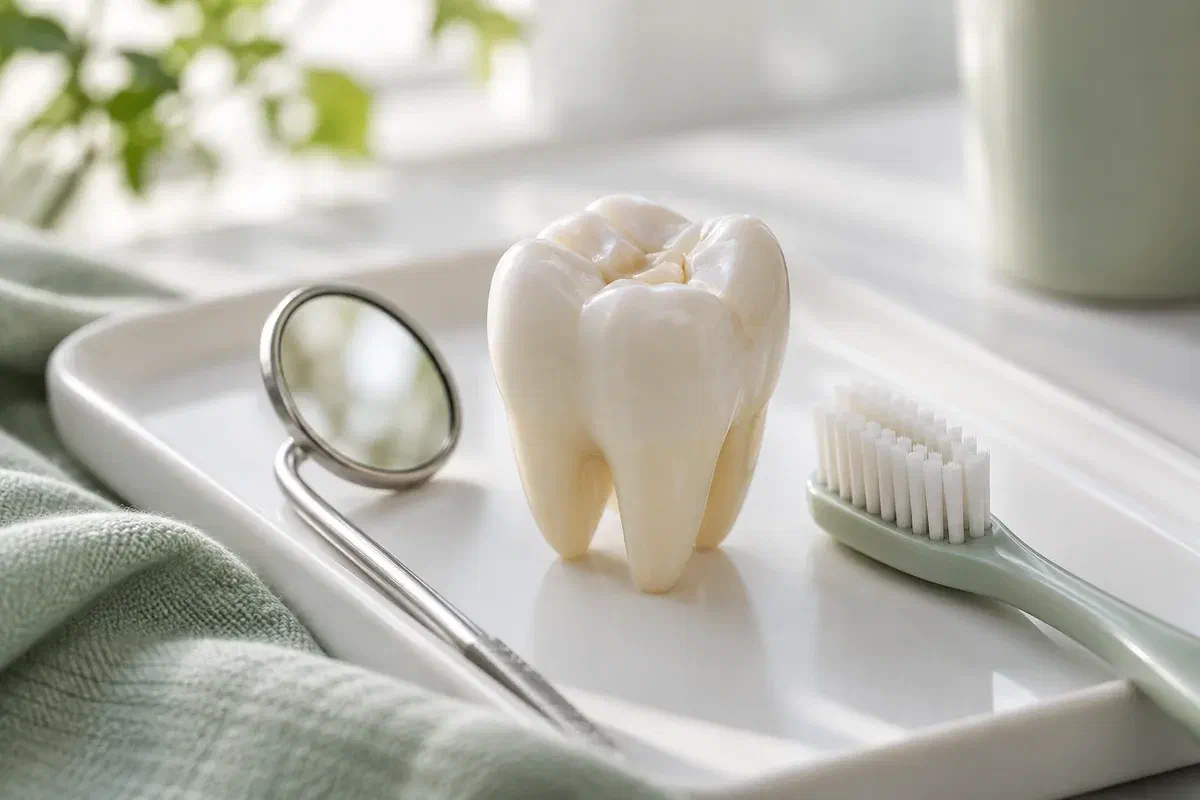
Illustrative tooth teaching model, dental mirror, and small soft toothbrush
The full timeline

Report what happened, including the quiet days

A child’s symptoms can come and go. Tell the dentist how things changed over time, and let the exam identify which tooth is affected.

When it hurt, and when it stopped

Note whether pain came with cold, sweets or chewing, whether it woke your child and when it faded. Mention any side your child still avoids. A pattern of pain that comes and goes can be important for judging what is happening inside the tooth.

Anything visible

Describe a dark spot, hole, chipped area, gum bump or place where food lodges, and when you first noticed it. The colour of a tooth cannot reveal how far decay has spread, so an exam and suitable records may be needed.

How your child copes

Tell us about earlier dental experiences, sensory sensitivities, communication preferences and health conditions. Share what has helped your child feel safe. That information lets the team plan a visit around your child rather than a standard approach.

Even if pain has eased, call promptly about swelling, a gum bump, fever with a dental concern or trouble eating. A child who has difficulty breathing or swallowing, or who appears seriously ill, needs urgent medical attention.

Why reassessment matters

Treat what is still there

Depending on findings, care may aim to halt an early lesion, rebuild damaged structure or address decay that has reached the inner tooth. Baby teeth often remain for years. A quiet tooth that will fall out eventually can still harbour decay that may cause trouble before then.

Treating the tooth does not change the conditions that led to decay. Prevention and follow-up visits are part of the plan. Ask how treatment and your home routine work together, and what the dentist will look for at the next review.

Patient information: AAPD — pediatric restorative dentistry

A recommendation tied to findings

Ask why a filling, crown, preventive approach or other care is suggested now, how much healthy tooth remains and how long the tooth should stay in place. Knowing that makes it easier to decide whether to proceed or monitor.

A visit your child can handle

Discuss explanations, breaks and comfort measures in advance. Your child’s response may mean care is split into stages or arranged in another setting. Ask what alternatives exist if the plan is not working on the day.

Prevention for the long run

Go over brushing support, fluoride guidance and eating and drinking patterns realistically. Choose changes your household can stick with between visits. Ask how the dentist will measure progress, particularly if more than one tooth is at risk.

What the visit involves

Looking beneath a quiet surface

The steps depend on the diagnosis and treatment you agree on. Some children need more than one appointment, or a referral for more suitable care.

  1. Check the tooth, even if it is calm

    The dentist reviews the history of symptoms, examines the teeth and explains whether X-rays would help. Share medical conditions, medications, allergies and previous treatment. Ask whether the tooth is primary or permanent and what the findings mean now.

  2. Discuss the options

    Review the recommended treatment, alternatives, limits and what could happen with delay. Ask how freezing and communication will work. Sedation or general anaesthesia, if raised, needs its own assessment, consent and confirmation of a suitable provider and setting.

  3. Carry out the treatment

    Each step is described in simple terms before it happens. What happens next depends on the tooth: decay control, a repair, or care aimed at a deeper problem. If something unexpected is found, or your child needs a change, the plan is discussed again.

  4. Set up the follow-up

    Confirm what was finished, whether a temporary measure is in place and what remains. Review instructions on eating, numbness, cleaning and symptoms. Book the next visit and ask which signs should lead you to call sooner.

In the days after

Keep watching, even when all seems well

Aftercare varies with the procedure and any medicines used. Ask for clear directions before you go home, particularly if someone else will be looking after your child.

Protect the frozen area

After local anaesthetic, supervise your child and discourage biting or sucking the numb lip, cheek or tongue. Follow the eating and drinking advice until sensation returns. Explain the feeling calmly so your child does not chew to test it.

Clean as instructed

Use the cleaning advice for the restoration, along with adult help and fluoride guidance. If brushing is sore or food packs in around the treated tooth, contact the clinic instead of avoiding the area.

Note what changes

Ask what discomfort, if any, is typical. Call if pain returns or increases, swelling develops, the restoration comes loose or your child’s teeth do not meet comfortably. Give medicine only as directed for your child.

Patient information: AAPD — local anaesthesia and postoperative instructions

Treatment routes

Options shaped by how deep the decay has gone

Ask why the suggested approach suits the diagnosis and what follow-up it requires. Whether it is suitable and available should be confirmed for your child.

For selected lesions, reviewed regularly

Decay control with monitoring

Some lesions can be held back with preventive or caries-control measures instead of a conventional filling, as long as they are assessed and monitored. If silver diamine fluoride is suggested, ask about the permanent dark colour on treated decay, repeat applications and its limits.

When the tooth has lost structure

Filling or crown

How much is damaged, where it is and how much sound tooth remains all guide the choice, along with treatment conditions. A larger lesion may need a crown. Ask about the material, how it looks, how long it may last and its care.

When decay has reached deeper layers

Nerve care, removal or referral

When decay approaches the nerve, a surface repair may not be enough. Ask whether the tooth can be kept and what other care is appropriate. If removal is discussed, ask about the adult teeth developing underneath and whether space will need checking.

Questions families ask us

Before you cancel that appointment

Some of these deal with symptoms that come and go. Bring any others to the visit.

(905) 876-4488
Why would a decayed tooth stop hurting on its own?
Pain can ease for several reasons, including changes inside the tooth as decay progresses. Less pain does not mean the decay has gone. The dentist needs to examine the tooth to know what is happening.
Is it safe to postpone treatment until the next checkup?
That depends on the findings. Some early lesions can be monitored, while others need treatment sooner. Ask the dentist what delay would mean for your child’s particular tooth before changing the plan.
What does a pimple on the gum above a baby tooth mean?
It can be a sign of infection linked to the tooth, even without pain. Call the clinic to describe it and arrange an exam. Seek urgent care if swelling spreads or your child becomes unwell.
Do children feel the freezing injection?
Many dentists use a numbing gel first and explain the step in child-friendly words. Children may feel pressure or a brief pinch. Ask the team how they approach this and how your child can signal.
Can a cavity in a baby tooth damage the adult tooth beneath it?
Deep decay and infection in a baby tooth can affect the area around the developing adult tooth. Ask the dentist how the specific tooth relates to the one below and why timely care is recommended.
Is it worth the drive from Puslinch for a tooth that seems fine?
Call first and describe the change. The team can advise whether the appointment should go ahead as planned. Often a reassessment is still recommended, since a quiet tooth may still have active decay.
Puslinch, west of Milton

Check on the tooth, even if it has gone quiet

Contact our Bronte Street practice about a diagnosed cavity or a tooth that hurt and then settled. Tell us how symptoms have changed and about any swelling or support needs so we can advise on next steps.

Advice depends on an examination. Swelling, a gum bump or a child who seems unwell should be reported promptly.

Visit Milton Dental Clinic
Unit 1, 342 Bronte St. S, Milton, ON L9T 5B7
Get directions Clinic hours
Monday–Thursday
11am–7pm
Friday–Sunday
By appointment only

Areas we serve

  • Milton
  • Oakville
  • Mississauga
  • Georgetown
  • Halton Hills
  • Acton
  • Campbellville
  • Brampton
  • Burlington
  • Puslinch
  • Rockwood
  • Erin
  • Caledon
  • Etobicoke
  • Old Milton
  • Bronte Meadows
  • Timberlea
  • Dorset Park
  • Dempsey
  • Clarke
  • Beaty
  • Coates
  • Harrison
  • Scott
  • Willmott
  • Ford
  • Bowes
  • Cobden
  • Walker
  • Mountain View
  • Milton Heights
  • Hawthorne Village
  • Valley View
  • Fallingbrook
  • Nassagaweya
  • Trafalgar
  • Esquesing
  • Nelson
  • Brookville
  • Moffat
  • Glen Williams
  • Norval
  • Limehouse
  • Stewarttown
  • Ashgrove
  • Hornby
  • Silver Creek
  • Speyside
  • Scotch Block
  • North Oakville
  • River Oaks
  • Glen Abbey
  • West Oak Trails
  • Palermo
  • Bronte Creek
  • College Park
  • Joshua Creek
  • Uptown Core
  • Preserve
  • Iroquois Ridge
  • Lisgar
  • Meadowvale
  • Meadowvale Village
  • Churchill Meadows
  • Erin Mills
  • Central Erin Mills
  • Streetsville
  • East Credit
  • Creditview
  • Heartland
  • Sheridan
  • Mount Pleasant
  • Credit Valley
  • Huttonville
  • Churchville
  • Springbrook
  • Northwest Brampton
  • Bram West
  • Fletcher's Meadow
  • Fletcher's Creek South
  • Alton Village
  • Orchard
  • Millcroft
  • Headon Forest
  • Tansley
  • Brant Hills
  • Tyandaga
  • Kilbride
  • Lowville
  • Aberfoyle
  • Morriston
  • Arkell
  • Hillsburgh
  • Freelton
  • Carlisle
  • Waterdown
  • Flamborough
  • Mountsberg

How can we help?

Milton Dental Clinic

Have a question about your smile? Choose the option that works best for you.

For urgent dental concerns, please call.
Messages are reviewed during clinic hours.