

Illustrative child and parent listening to a dental clinician before a checkup
Children’s Dentistry

Children’s Dental Checkups

Keep dental care connected to the way your child is growing. Children’s checkups in Milton review teeth, gums, everyday habits, and new concerns, with explanations for your child and practical guidance for you.

A closer look at children’s dental checkups

Keep up with new teeth, new habits, and new questions.

A child's mouth does not stay the same between birthdays. Baby teeth loosen, permanent teeth appear, routines change, and children gradually take on more responsibility for cleaning. A dental checkup brings those changes into a conversation about what is healthy, what needs attention, and what support is useful now.

At Milton Dental Clinic, tell us what you and your child have noticed since the last visit. A new tooth, a sensitive area, brushing difficulties, or a change in chewing can all be relevant. We also want to hear your child's questions, whether they are about a wobbly tooth or what a dental instrument does.

The examination and recommendations should reflect the findings and your child's needs. Cleaning, fluoride, sealants, or imaging may be discussed when appropriate, but they are not all automatic parts of every checkup. Ask what is planned, why it is useful, and how the next review fits your child's stage of development.

Arrange your child’s dental checkup
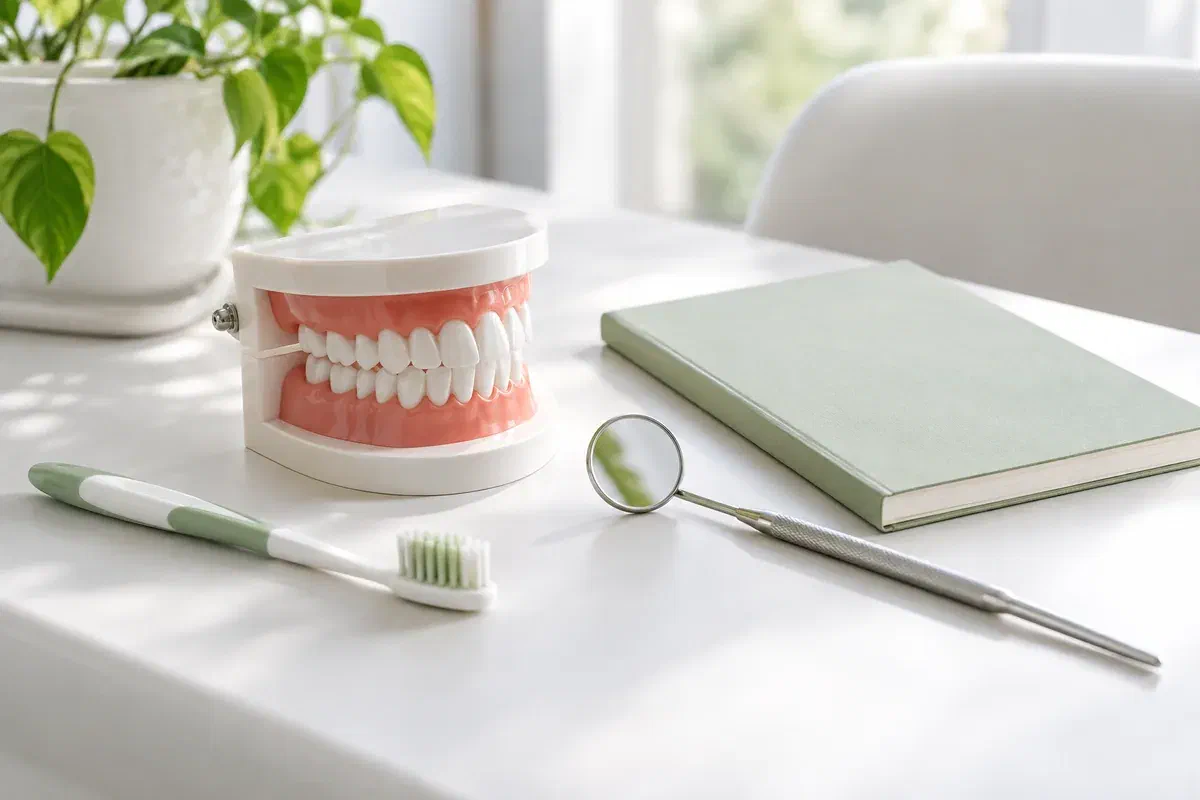
Illustrative child-sized toothbrush, dental model, mirror, and notebook
Changes to mention at a checkup

Bring your observations and let your child add theirs.

Children sometimes mention a concern only when asked in a familiar way. Share what you have noticed without expecting them to use dental terms or identify a precise tooth.

New, loose, or differently positioned teeth

Mention a permanent tooth appearing, a baby tooth that seems slow to loosen, or an area that is hard to clean. The dentist can assess the development and explain whether it needs monitoring or another discussion. Appearance alone does not establish a need for orthodontic treatment.

Pain, bleeding, or changes while eating

Tell us about sensitivity, discomfort when chewing, repeated food trapping, or bleeding with brushing. Explain when it happens and whether it is changing. These concerns may need a focused assessment rather than waiting for the next routine review.

A home routine that needs more support

Describe who helps with brushing, what is difficult, and whether new habits have changed the routine. Ask about cleaning between teeth and around new molars. The advice should fit your child's abilities instead of assuming independence based only on age.

Update the team about medicines, health changes, injuries, and support or sensory needs before the visit. If your child has pain or swelling, mention it when booking so the appointment can be planned appropriately.

What continuing checkups contribute

Give each stage of growing up an appropriate care plan.

Regular review provides an opportunity to assess current oral health, consider decay risk, and discuss development and prevention. The interval is individualized. A child with a concern being monitored or a higher risk of disease may need a different schedule from another child in the same family.

A checkup cannot guarantee that no problem will develop before the next visit. Its value includes explaining what was found and how to respond to changes. Children and parents should leave with a clear sense of the next step rather than only a date on an appointment card.

Patient information: AAPD — continuing examinations and preventive care

A chance to notice a changing pattern

Comparing relevant findings over time can help clarify whether an area remains stable or needs attention. Ask what is being monitored and what would change the recommendation. Your observations between visits are useful, particularly when a symptom does not occur during the appointment.

Guidance that grows with your child

The routine for a child losing baby teeth may differ from the routine needed once more permanent teeth have appeared. Ask for a demonstration around the areas that are difficult now. Advice should be updated when an older method no longer reaches the relevant surfaces.

More room for participation

A child can be invited to ask questions and explain what helps them feel comfortable. Small choices and clear descriptions can support the conversation without promising a particular response. Tell the team if your child needs a different communication approach or more preparation.

During a children’s checkup

Listen, examine, explain, and plan the next step.

The appointment should reflect the child's history and current needs. Ask what has been booked and which additional services, if any, will be discussed after assessment.

  1. Review changes and prepare for the examination

    Discuss symptoms, health updates, home care, and previous dental experiences. Let your child share a question where possible. The team can explain the examination in suitable language and agree how your child can signal discomfort or request a pause.

  2. Assess the teeth, gums, and development

    The dentist examines the areas relevant to your child's stage and concerns. Ask which teeth are primary or permanent and whether any finding needs review. If the examination is limited, clarify what could be assessed and how the remaining information will be obtained.

  3. Discuss indicated records and preventive care

    Imaging, cleaning, fluoride, or sealants may be considered according to the findings and risk. Ask what question an X-ray would answer or which surface a preventive measure would protect. Recommendations should have a clinical reason rather than simply follow a fixed package.

  4. Explain findings and agree follow-up

    Review any treatment needs, preventive advice, and areas to monitor. Ask about the recommended recall interval and whether a separate appointment is needed for a particular concern. Give your child a chance to ask a final question before the visit ends.

Between children’s checkups

Support the routine without expecting perfection.

An examination alone usually does not require recovery care. Follow any additional instructions for products or procedures provided during the appointment.

Keep adult help matched to ability

Discuss how much help your child still needs with brushing and cleaning between teeth. Being keen to do it alone does not always mean every surface is reached well. Ask for a practical way to share the task while supporting your child's growing confidence.

Use the specific prevention advice

Follow the recommended toothpaste amount, technique, and any additional preventive instructions. If a product is difficult to use or a routine is unrealistic, tell the team. A manageable adjustment is more useful than continuing an instruction that is repeatedly skipped.

Report symptoms rather than waiting for recall

Call about new pain, swelling, injury, or a tooth that changes noticeably. Explain when the symptom started and whether eating or sleep is affected. A previous reassuring checkup does not mean a new concern should wait until the next scheduled examination.

Choosing the next appointment

Routine review and a specific concern may need different visits.

Tell the team why you are booking so the appointment can be planned around the actual need. A checkup may identify a separate treatment or assessment step.

For routine review and prevention

A continuing dental examination

The focus is the current oral-health picture, development, and a suitable ongoing plan. Additional services are discussed when indicated. Ask what is included and whether cleaning or another procedure is being arranged separately.

When a finding needs specific attention

A focused problem or treatment appointment

Pain, decay, injury, or a damaged tooth may require care beyond the routine examination. The dentist can explain the options and timing. Ask which problem the next appointment addresses and what symptoms would require an earlier call.

When growth or support needs raise another question

A developmental or specialist review

Some findings may need ongoing observation or assessment by a clinician with relevant expertise. Ask what prompted the recommendation and what the referral is intended to establish. An early review does not automatically mean treatment must begin immediately.

Patient information: AAPD — selecting dental radiographs for children

Questions about children’s dental checkups

Make the review useful for your family.

Ask about timing, new teeth, and what belongs in the appointment. There is room for both a parent's practical questions and a child's curiosity.

(905) 876-4488
Do siblings always need dental checkups at the same interval?
No. Their teeth, development, previous problems, and risk may differ. Ask why each interval is recommended and whether a particular concern needs separate follow-up. Scheduling visits together may be convenient, but the clinical plan should still reflect each child’s needs.
Will my child need dental X-rays at every checkup?
Not automatically. The dentist considers clinical findings, history, development, and the information an image could provide. Ask why a particular X-ray is recommended and whether relevant previous images are available. The decision should be based on need rather than the appointment name alone.
Can a checkup help when a permanent tooth is appearing behind a baby tooth?
Yes. Mention the change when arranging the visit so the dentist can assess it. The appropriate response depends on the teeth and development involved. Do not try to force a baby tooth out or assume that every such pattern requires immediate extraction.
Should I promise my child that nothing will happen beyond looking at the teeth?
Avoid promising details that have not been confirmed. Ask the team what is planned and use simple, accurate language about the dentist checking the mouth and explaining next steps. Any additional proposed care should be discussed appropriately rather than introduced through a promise that cannot be kept.
What if my child does not want to answer questions during the checkup?
Let the team know how your child communicates most comfortably. A parent can provide observations while the clinician offers age-appropriate opportunities to participate. Silence does not mean the child has no concerns; a different approach or more time may help.
Does a cavity-free checkup mean my child can stop needing help with brushing?
No. One reassuring examination does not establish that every cleaning task can be managed independently. Ask about your child’s technique, access, and current stage. Continue the level of adult help recommended and review it as skills and dental development change.
Children’s dental checkups in Milton

Let’s keep care in step with your child.

Contact our Bronte Street practice to arrange a checkup and discuss changes since the last visit. Mention your child's age, any symptoms, and support needs so the appointment can be planned with useful context.

Checkup intervals are individualized. Please report new pain, swelling, or an injury when it occurs rather than waiting for a routine recall.

Visit Milton Dental Clinic
Unit 1, 342 Bronte St. S, Milton, ON L9T 5B7
Get directions Clinic hours
Monday–Thursday
11am–7pm
Friday–Sunday
By appointment only

How can we help?

Milton Dental Clinic

Have a question about your smile? Choose the option that works best for you.

For urgent dental concerns, please call.
Messages are reviewed during clinic hours.