

Illustrative child and parent listening to a dental clinician before a checkup
Children’s Dentistry

Children’s Dental Checkups in Acton

No complaints, no toothaches, nothing obviously wrong. That is often the best time for a children’s checkup, when the dentist can look at teeth, gums and growth calmly and talk about keeping things that way.

Coming down from Acton

Everything seems fine. Is a visit still worth it?

When a child eats well, sleeps well and never mentions their teeth, booking a dental appointment can feel optional. Yet early decay and gum changes are not always noticeable at home, and development keeps moving whether anyone is watching or not. A calm, symptom-free visit is often where the most useful conversations happen.

Even a quiet stretch has details worth sharing. Maybe a new tooth appeared without fuss, or your child has started rushing through brushing. Perhaps they have taken a liking to sticky snacks. Before you set off from Acton, ask your child if there is anything they want to know. Children sometimes save their questions for the dentist.

Recommendations depend on what is found and your child's stage. A cleaning, fluoride, sealants or X-rays might be raised, but a symptom-free visit does not automatically include all of them. Ask what is planned, what purpose each part serves and how the dentist chose the date for the next review.

Book a routine checkup from Acton
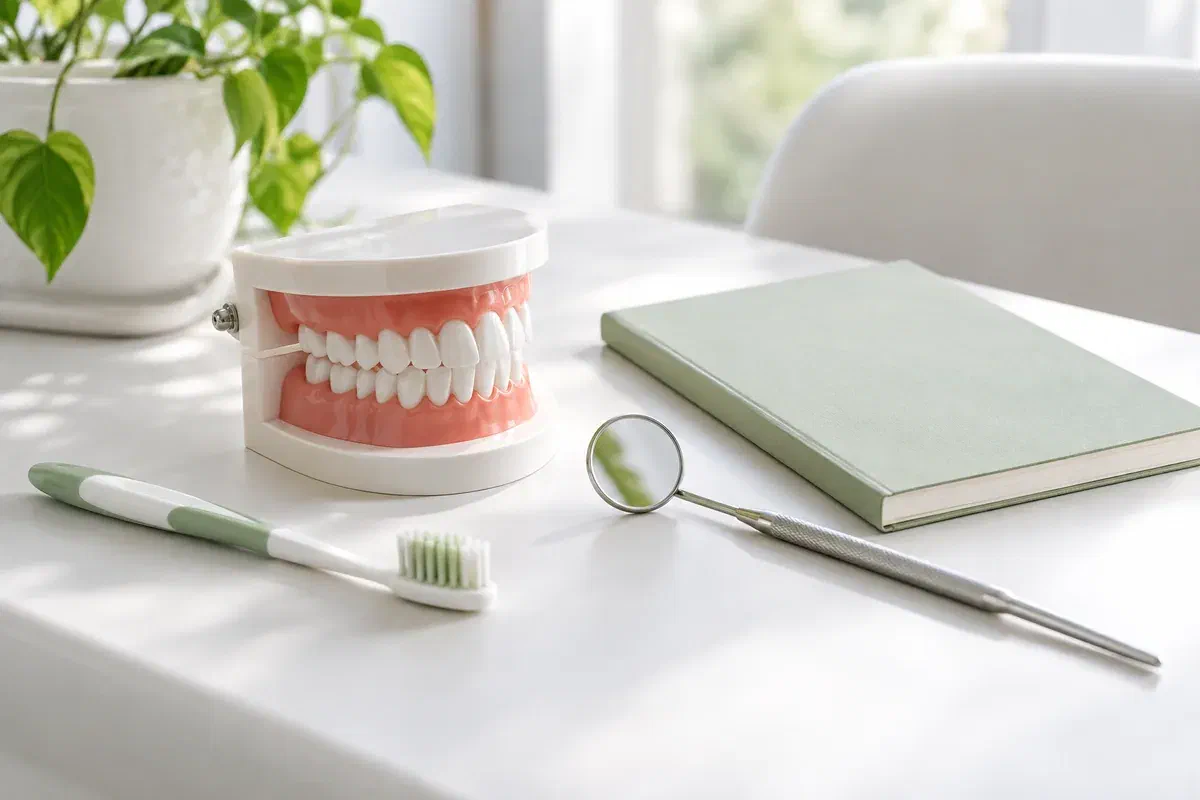
Illustrative child-sized toothbrush, dental model, mirror, and notebook
Easy things to overlook

Quiet changes still count.

Small shifts are easy to miss when nothing hurts. Think back over the last few months and mention anything, however minor it seems.

A new tooth, a late tooth, a tight spot

An adult tooth that came in quietly, a baby tooth outstaying its welcome or a corner where the brush will not fit are all relevant. The dentist can check development and explain if it only needs watching. How a tooth looks is not, on its own, a reason for orthodontic treatment.

Little signs at mealtimes or brushing

A brief wince with ice cream, chewing on one side, food that keeps catching or a pink tinge on the brush can all be worth mentioning. Note how often you have seen it. If it turns into regular discomfort, call rather than waiting for the routine visit.

Habits that have drifted

Share who brushes, how long it really takes, and whether new snacks or later bedtimes have crept in. Ask about flossing and about the back molars. Suggestions should fit what your child can manage, not a textbook routine.

Even if all seems well, let us know about medicines, health changes, injuries and sensory or support needs beforehand. If pain or swelling does develop, mention it when booking so the visit can be planned accordingly.

The quiet value of routine review

Prevention is easier to talk about before there is a problem.

A regular exam is an opportunity to look at oral health, gauge decay risk and discuss growth and prevention while nothing is urgent. The timing of the next one is individual. A child who is doing well may be seen on a different schedule from a sibling who has an area under observation.

Feeling fine today is not a promise for tomorrow, and a checkup cannot guarantee nothing will develop. What it offers is knowledge: what was seen, what to keep an eye on and how to respond if something changes. You should both leave with a clear idea of the next step.

Patient information: AAPD — continuing examinations and preventive care

A record of how things are going

Notes from one visit to the next help show whether an area is stable or starting to change. Ask what, if anything, is being watched and what would alter the advice. Your observations at home add to that record.

Fresh tips before habits harden

Brushing a mouth with gaps and loose teeth differs from brushing a full adult set. Ask the team to show you a better angle for the hard-to-reach areas. When an old method no longer cleans well, it is worth updating.

Practice for the visits ahead

A relaxed appointment lets your child get used to the setting, ask questions and say what helps them feel at ease. Clear descriptions and small choices support that, without promising how anything will feel. Tell us if your child needs a different approach.

A no-concerns appointment

What happens when nothing is wrong.

Even routine visits are shaped by your child's history. Ask what has been booked and whether any extras might be discussed once the dentist has had a look.

  1. A brief chat

    We ask about health changes, home routines, earlier visits and anything you have noticed, even if it seems trivial. Your child can share a question. The team explains the exam in friendly language and agrees on a way to ask for a pause.

  2. A careful look

    The dentist checks teeth, gums and development with your child's stage in mind. Ask which teeth are still baby teeth and whether any area needs another look. If the exam could only be partly done, find out what was covered and what comes next.

  3. Preventive options

    X-rays, a cleaning, fluoride or sealants may come up, depending on findings and risk. Ask what an image would show or which surface a sealant is meant to protect. No step should be added simply because it is a checkup.

  4. A summary and a date

    We explain what was found, share prevention advice and note anything to watch. Ask about the next interval and whether any concern needs a separate appointment. Your child can ask one more question before leaving.

Keeping it that way

Habits do the quiet work.

Routine exams usually need no aftercare. If a product was applied or a procedure done, follow the instructions you were given.

Stay a brushing partner

Ask how much hands-on help suits your child at present, including flossing. A child who has had good checkups may still miss the back teeth. The team can suggest how to share the task.

Follow through on prevention

Keep using the advised toothpaste amount, technique and any extra preventive steps. If something is hard to fit in, let us know. A small, workable change is better than advice that fades after a week.

Notice and call

If new pain, swelling, a knock to the mouth or a visible change appears, phone us. Say when it started and whether it is affecting meals or sleep. Last time's good result is no reason to wait for the next checkup.

When the visit is more than routine

Sometimes a calm checkup points somewhere else.

Tell us why you are booking so we can reserve the right appointment. A routine exam can occasionally uncover something that needs its own visit.

For review and prevention

The routine exam

It focuses on how the mouth looks now, how your child is developing and what plan makes sense. Further services are only raised when warranted. Ask what this visit covers and whether a cleaning is booked with it or separately.

If something turns up

A treatment visit

A cavity, a damaged tooth or a newly discovered problem may need care beyond the exam. The dentist will set out the choices and timing. Ask what the follow-up is for and which symptoms should bring you in earlier.

If development raises a question

A referral or growth review

Occasionally the dentist will suggest watching an area over time or getting another clinician's opinion. Ask why, and what the review is meant to answer. Being referred early does not by itself mean treatment is about to start.

Patient information: AAPD — selecting dental radiographs for children

Asked by parents in Acton

Routine visits, answered.

Questions about symptom-free checkups, snacks and timing. Your child's questions are welcome too.

(905) 876-4488
If my child has never had a cavity, why keep coming back?
Teeth and risk change as children grow, and some early problems are not visible at home. Regular review lets the dentist check development and update prevention advice. Ask how the next interval was chosen for your child.
Do sticky snacks really make a difference?
How often your child eats sugary or sticky foods is part of the decay-risk picture. Mention the snacks your child enjoys. The team can suggest practical changes without expecting a perfect diet.
Can my child’s checkup be skipped if their sibling’s was fine?
Each child’s mouth is different, so one child’s result does not apply to another. Ask about each child’s recommended interval and keep to it where you can.
My child did not mention any pain. Could there still be a problem?
It is possible. Some issues cause no symptoms early on, which is one reason regular exams are useful. If a concern is found, the dentist will explain it and the options.
What should I say if my child asks whether the dentist will “do anything”?
Explain honestly that the dentist will look, count teeth and tell you both what they see. Avoid promising that nothing else will happen. If anything more is suggested, it will be talked through first.
My child had a great checkup. Can I stop checking their brushing?
Not just yet. Ask the team which surfaces are easy to miss and how much help still makes sense. Revisit it as your child’s skills and teeth develop.
Routine checkups for Acton kids

No problem is a fine reason to come in.

Reach our Bronte Street practice to arrange a checkup, even if all seems well. Let us know your child's age, anything you have noticed and any support needs so the visit can be prepared.

Intervals are decided child by child. If pain, swelling or an injury appears, please call when it happens rather than waiting for the next scheduled visit.

Visit Milton Dental Clinic
Unit 1, 342 Bronte St. S, Milton, ON L9T 5B7
Get directions Clinic hours
Monday–Thursday
11am–7pm
Friday–Sunday
By appointment only

Areas we serve

  • Milton
  • Oakville
  • Mississauga
  • Georgetown
  • Halton Hills
  • Acton
  • Campbellville
  • Brampton
  • Burlington
  • Puslinch
  • Rockwood
  • Erin
  • Caledon
  • Etobicoke
  • Old Milton
  • Bronte Meadows
  • Timberlea
  • Dorset Park
  • Dempsey
  • Clarke
  • Beaty
  • Coates
  • Harrison
  • Scott
  • Willmott
  • Ford
  • Bowes
  • Cobden
  • Walker
  • Mountain View
  • Milton Heights
  • Hawthorne Village
  • Valley View
  • Fallingbrook
  • Nassagaweya
  • Trafalgar
  • Esquesing
  • Nelson
  • Brookville
  • Moffat
  • Glen Williams
  • Norval
  • Limehouse
  • Stewarttown
  • Ashgrove
  • Hornby
  • Silver Creek
  • Speyside
  • Scotch Block
  • North Oakville
  • River Oaks
  • Glen Abbey
  • West Oak Trails
  • Palermo
  • Bronte Creek
  • College Park
  • Joshua Creek
  • Uptown Core
  • Preserve
  • Iroquois Ridge
  • Lisgar
  • Meadowvale
  • Meadowvale Village
  • Churchill Meadows
  • Erin Mills
  • Central Erin Mills
  • Streetsville
  • East Credit
  • Creditview
  • Heartland
  • Sheridan
  • Mount Pleasant
  • Credit Valley
  • Huttonville
  • Churchville
  • Springbrook
  • Northwest Brampton
  • Bram West
  • Fletcher's Meadow
  • Fletcher's Creek South
  • Alton Village
  • Orchard
  • Millcroft
  • Headon Forest
  • Tansley
  • Brant Hills
  • Tyandaga
  • Kilbride
  • Lowville
  • Aberfoyle
  • Morriston
  • Arkell
  • Hillsburgh
  • Freelton
  • Carlisle
  • Waterdown
  • Flamborough
  • Mountsberg

How can we help?

Milton Dental Clinic

Have a question about your smile? Choose the option that works best for you.

For urgent dental concerns, please call.
Messages are reviewed during clinic hours.