

Illustrative child and parent listening to a dental clinician before a checkup
Children’s Dentistry

Children’s Dental Checkups in Caledon

Bright lights, unfamiliar sounds, someone new close to their face: for some children, the setting is the hardest part. Our children’s checkups review teeth, gums and habits while making room for sensory, communication and support needs.

Caledon children, every kind of need

When the room is the hard part.

Some children take a dental visit in stride. Others find the overhead light too bright, the suction too loud or the reclining chair unsettling. If your child has sensory sensitivities, communicates in their own way or needs more time to adjust, telling us early lets the team shape the checkup around them instead of the other way round.

Before you leave Bolton or one of the other villages, think about what usually helps at a haircut or doctor's visit. Is it headphones, a countdown, a visual schedule or a favourite object? Note any recent dental changes too: loose teeth, sore spots, food trapping or a routine that has become a struggle. Your child's questions, however they express them, are welcome.

What the dentist recommends will depend on what they can see and on your child's development. A cleaning, fluoride, sealants or X-rays may be discussed, and the order or timing can sometimes be adjusted to what your child tolerates. None of these is automatic. Ask what is planned and why, and how the next review was chosen.

Plan a supported checkup from Caledon
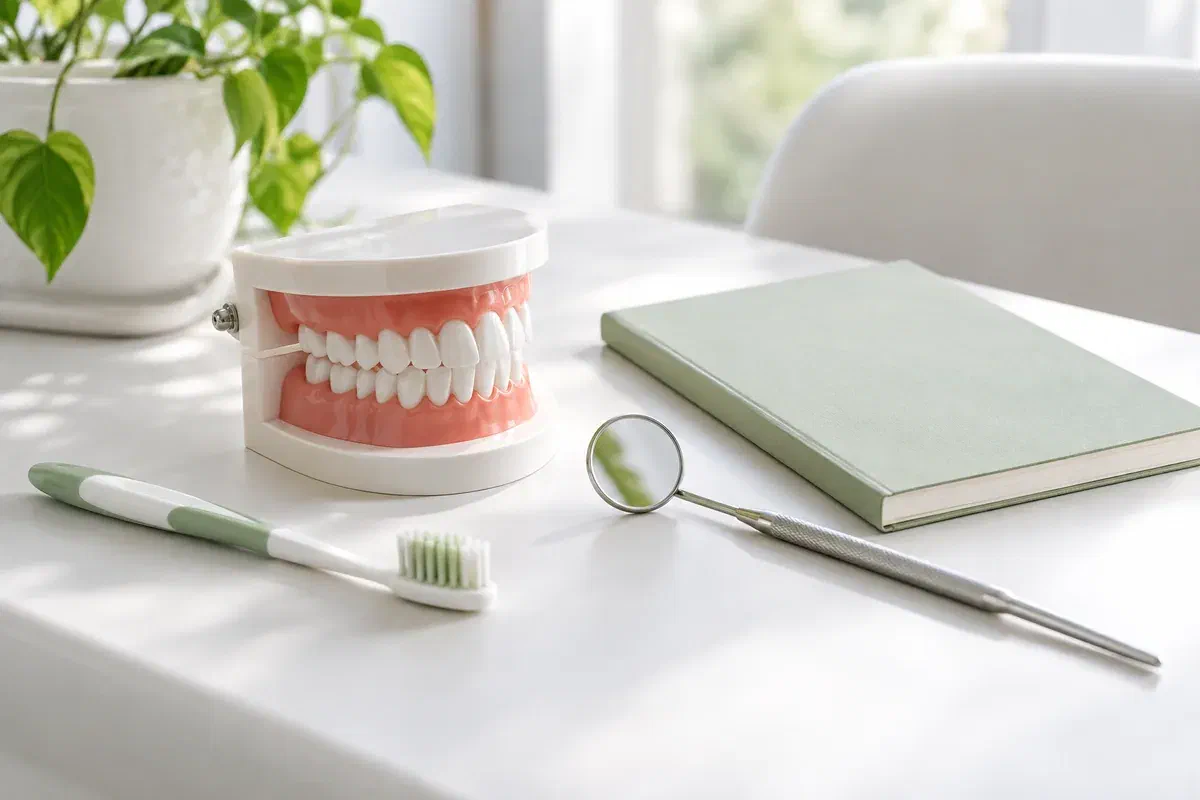
Illustrative child-sized toothbrush, dental model, mirror, and notebook
Information we would love in advance

Comfort details matter as much as tooth details.

A child who cannot easily describe pain may show it through behaviour: refusing a food, rubbing a cheek, sleeping badly. Tell us what you have observed.

Teeth that are new, loose or shifting

Mention new adult teeth, baby teeth that are staying put or areas that have become hard to clean, especially if brushing them is difficult for sensory reasons. The dentist can assess development and say whether watching is reasonable. Teeth that look uneven are not on their own evidence that orthodontics is needed.

Signs of discomfort, spoken or not

Share any sensitivity, chewing changes, food packing, bleeding gums or new behaviours that might signal oral discomfort. Note when you see it and whether it is getting more frequent. These may need a focused visit rather than waiting for the routine one.

Brushing that is hard for sensory reasons

Tell us about textures, tastes or sensations your child avoids, who brushes and what works best. Ask about alternatives for flossing and reaching new molars. Advice should fit your child's tolerances and abilities, not a standard expectation.

Before the visit, share medicines, health conditions, injuries and any sensory, communication or support needs, along with what helps. If there is pain or swelling, mention it when booking so the appointment can be arranged appropriately.

Why steady visits can help

Familiarity builds, one visit at a time.

Regular checkups allow the dentist to review oral health, think about decay risk and talk through development and prevention. For many children with support needs, the repetition itself is useful, because the setting becomes more predictable. The interval is still individual and may differ between siblings.

A checkup cannot rule out a problem appearing before the next one. Its value lies in explaining what was found and how to respond. You should leave knowing the next step, and ideally with a sense of what went well for your child this time.

Patient information: AAPD — continuing examinations and preventive care

Comparing visits over time

Findings compared from one appointment to the next help show whether an area is stable or needs action. Ask what is being tracked and what would change the plan. Your observations at home are essential, especially if your child cannot easily report symptoms.

Practical home-care adjustments

If a technique or product is not tolerated, there may be another approach. Ask the team to show you options for the areas that are hardest now. Advice should change when the old method is not working for your child.

A visit paced for your child

Your child can be offered ways to take part, from holding the mirror to choosing when to start. Clear, predictable explanations help, without promises about sensations. Let us know which communication approaches work best.

A paced appointment

Preview, examine, discuss, plan.

The checkup is built around your child's history, current needs and comfort. Ask what has been booked and which further services might be discussed after the exam.

  1. Previewing what will happen

    We review health updates, symptoms, home care and what helps your child cope. The team can show instruments before using them, explain each step in a consistent way and agree on a signal for a break.

  2. Examining at a manageable pace

    The dentist checks the teeth, gums and development relevant to your child's stage. Ask which teeth are baby teeth and which have replaced them. If only part of the exam was possible, that is useful information; ask what was seen and how to approach the rest.

  3. Talking through prevention and records

    X-rays, cleaning, fluoride or sealants may be raised, depending on findings and risk. Ask what each would add and whether timing could be adjusted to your child's comfort. Recommendations should have a clear clinical reason.

  4. Planning together

    We share findings, prevention advice and areas to watch. Ask about the next interval, whether a separate visit is needed, and what could make the next appointment easier. Your child can ask or show one last question.

At home in Caledon

Small wins count.

Most children need no recovery time after an exam. Where fluoride, sealants or a cleaning were part of the visit, the team will give you any instructions that apply.

Support brushing in the way that works

Ask how much hands-on help suits your child, including flossing. Sensory challenges can make some areas especially hard to reach. The team can suggest positions, tools or a way to split the job.

Adapt the prevention advice

Follow the recommended toothpaste amount and technique where you can. If a taste, texture or step is not tolerated, tell us rather than giving up. There may be an alternative that fits better.

Watch for changes and call

Contact us about new pain, swelling, an injury or a tooth that looks different, including changes in behaviour that might point to discomfort. Mention when it started. A good checkup last time does not mean a new concern should wait.

Planning what comes next

Some needs fit one visit; others need more.

Telling us why you are booking, and what supports your child needs, helps us plan the right appointment. A checkup may lead to a separate visit for treatment or assessment.

For prevention and routine review

Ongoing checkups

These look at oral health, development and a plan going forward. Other services are discussed if needed. Ask what each visit covers and whether a cleaning would be easier on a separate day.

When something found needs care

A treatment visit

Decay, pain, an injury or a damaged tooth may need more than a checkup. The dentist will explain options, timing and how your child's needs will be considered. Ask what the visit addresses and which symptoms mean calling earlier.

When growth or support needs raise questions

A specialist or developmental review

Some findings, or the level of support your child needs, may call for monitoring or another clinician's input. Ask what prompted the suggestion and what it aims to clarify. A referral does not automatically mean treatment must start straight away.

Patient information: AAPD — selecting dental radiographs for children

Questions from Caledon parents

Making the visit work for your child.

Answers about sensory needs, communication and pacing. Your child's questions, in any form, are welcome.

(905) 876-4488
Can my child wear headphones or sunglasses during the checkup?
In many cases, yes. Let the team know what helps your child cope with sound and light. They will work with it where it is practical and safe.
Can we visit beforehand just to see the room?
Ask when you call. A short look around or photos of the space may help some children feel prepared. The team can suggest what is possible.
My child is non-speaking. How will the dentist know if something hurts?
Tell us how your child usually shows discomfort and what signals they use. The team can agree on a way to pause. Your observations at home are especially important for spotting changes.
What if my child can only manage part of the exam?
That still provides useful information. The dentist will explain what was seen and discuss how to approach the rest, which may involve another short visit or a different plan.
Is it okay to use a visual schedule for the appointment?
Yes. Many children find it helpful to see the steps in order. Ask the team to describe the visit so you can prepare one, and keep it honest rather than promising what will not happen.
Does a good checkup mean my child can brush unsupervised?
Not necessarily. Ask which areas tend to be missed and what level of help suits your child. Review it as skills and tolerance change.
Supported checkups for Caledon kids

Tell us what helps, and we will plan around it.

Contact our Bronte Street practice to book a checkup. Share your child's age, current symptoms, and the sensory or communication supports that work best, so the visit can be prepared with care.

Checkup intervals are set individually. If pain, swelling or an injury occurs, please call at the time rather than waiting for the next routine visit.

Visit Milton Dental Clinic
Unit 1, 342 Bronte St. S, Milton, ON L9T 5B7
Get directions Clinic hours
Monday–Thursday
11am–7pm
Friday–Sunday
By appointment only

Areas we serve

  • Milton
  • Oakville
  • Mississauga
  • Georgetown
  • Halton Hills
  • Acton
  • Campbellville
  • Brampton
  • Burlington
  • Puslinch
  • Rockwood
  • Erin
  • Caledon
  • Etobicoke
  • Old Milton
  • Bronte Meadows
  • Timberlea
  • Dorset Park
  • Dempsey
  • Clarke
  • Beaty
  • Coates
  • Harrison
  • Scott
  • Willmott
  • Ford
  • Bowes
  • Cobden
  • Walker
  • Mountain View
  • Milton Heights
  • Hawthorne Village
  • Valley View
  • Fallingbrook
  • Nassagaweya
  • Trafalgar
  • Esquesing
  • Nelson
  • Brookville
  • Moffat
  • Glen Williams
  • Norval
  • Limehouse
  • Stewarttown
  • Ashgrove
  • Hornby
  • Silver Creek
  • Speyside
  • Scotch Block
  • North Oakville
  • River Oaks
  • Glen Abbey
  • West Oak Trails
  • Palermo
  • Bronte Creek
  • College Park
  • Joshua Creek
  • Uptown Core
  • Preserve
  • Iroquois Ridge
  • Lisgar
  • Meadowvale
  • Meadowvale Village
  • Churchill Meadows
  • Erin Mills
  • Central Erin Mills
  • Streetsville
  • East Credit
  • Creditview
  • Heartland
  • Sheridan
  • Mount Pleasant
  • Credit Valley
  • Huttonville
  • Churchville
  • Springbrook
  • Northwest Brampton
  • Bram West
  • Fletcher's Meadow
  • Fletcher's Creek South
  • Alton Village
  • Orchard
  • Millcroft
  • Headon Forest
  • Tansley
  • Brant Hills
  • Tyandaga
  • Kilbride
  • Lowville
  • Aberfoyle
  • Morriston
  • Arkell
  • Hillsburgh
  • Freelton
  • Carlisle
  • Waterdown
  • Flamborough
  • Mountsberg

How can we help?

Milton Dental Clinic

Have a question about your smile? Choose the option that works best for you.

For urgent dental concerns, please call.
Messages are reviewed during clinic hours.