

Illustrative child and parent listening to a dental clinician before a checkup
Children’s Dentistry

Children’s Dental Checkups in Etobicoke

A longer trip rewards a well-planned visit. Our children’s checkups review teeth, gums, home routines and new concerns, and we help you work out what can be handled together and when care closer to home makes more sense.

Making the trip from Etobicoke count

Plan once, cover more.

Coming in from the west end of Toronto, you probably want each appointment to do as much as it sensibly can. That starts before you leave home. A quick phone call to explain your child's age, any symptoms and what has changed lets the team prepare, so the time in the chair goes toward real questions rather than paperwork.

Between visits, children change a lot. A front tooth falls out, a molar comes through at the back, a child decides they no longer want help brushing. Write these down as they happen. Your child's questions belong on the list too, whether they are curious about the suction straw or worried about a wiggly tooth.

What the dentist recommends will depend on findings and your child's developmental stage. A cleaning, fluoride, sealants or X-rays may be discussed, and sometimes these can happen in the same visit. Ask in advance what is likely, and afterward ask why each step was chosen and how the next booking fits.

Arrange a checkup from Etobicoke
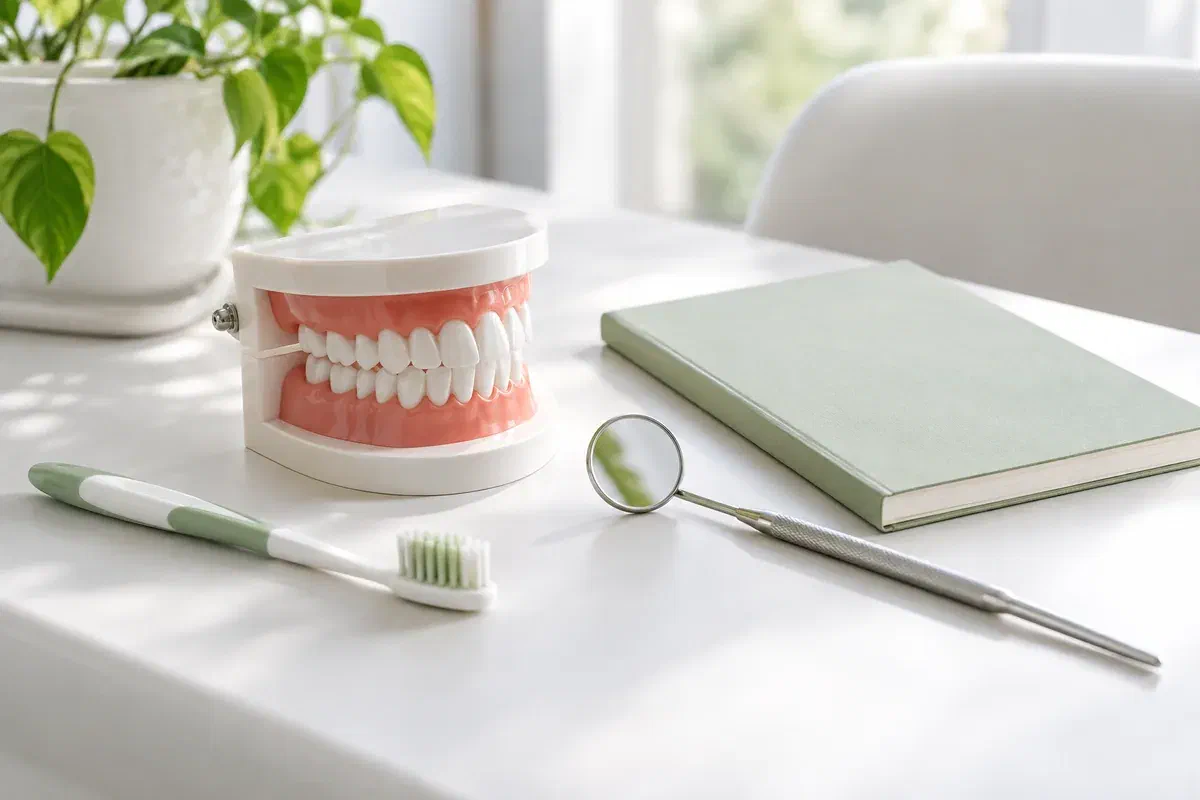
Illustrative child-sized toothbrush, dental model, mirror, and notebook
Mention these when you call

Details that help us plan a single, useful visit.

If the team knows the concern ahead of time, they can set aside suitable time. Pass on your child's description, even if it is just “it feels strange on this side.”

Teeth that are new, loose or crowded

Tell us about a permanent tooth that has appeared, a baby tooth that will not let go, or a spot too tight to brush well. The dentist can assess development and explain whether waiting and watching is reasonable. Crooked-looking teeth alone do not confirm that orthodontic treatment is needed.

Pain, bleeding or trouble eating

Describe sensitivity, sore chewing, food that keeps packing in, or bleeding gums. Note when it happens and whether it is changing. Depending on the details, a focused appointment may be better than waiting for the next routine checkup.

A routine that is not working

Share who brushes, which part is hard and what has changed at home. Ask about cleaning between teeth and around new molars. Practical advice should fit what your child can do now, not what a chart says they should manage.

Before travelling, update us on medicines, health changes, injuries and any sensory or support needs. If there is pain or swelling, tell us when booking; the team may suggest a different type of appointment.

Value of regular checkups

Steady review, fewer surprises.

Coming back on a planned schedule helps the dentist judge current oral health, decay risk and how your child is developing, and gives a regular chance to talk about prevention. The spacing is tailored. Two children in the same household may well be recalled at different times.

A checkup is not a promise that nothing will go wrong in between. Its worth lies in a clear explanation of what was found and how to respond to changes. With a longer journey, that clarity matters even more: you should know which symptoms can wait and which cannot.

Patient information: AAPD — continuing examinations and preventive care

Watching for change

Comparing findings between visits can show whether an area is stable or needs attention. Ask what is being monitored and what would change the plan. Notes from home are especially useful when a symptom flares up between appointments.

Updated home-care tips

As baby teeth give way to adult teeth, brushing needs change. Ask for a quick demonstration on the areas that are hardest at the moment. When a technique no longer reaches the right surfaces, it should be revised.

Your child as a participant

Once the car ride is over, your child may have plenty to ask, or nothing at all; either is fine, and so is telling us what helps them settle. Small choices and honest explanations support that, without promising how it will feel. Tell us if your child needs extra preparation, especially after a long car ride.

A typical appointment

Here is how the time is used.

Your child's history and present needs shape the visit. Ask before you travel what is booked and which other services might be raised after the exam.

  1. Updates and introductions

    We go over symptoms, health changes, home habits and past dental visits. Your child is welcome to ask a question. The team explains the exam in simple terms and agrees on a signal your child can use to request a pause.

  2. Teeth, gums and development

    The dentist examines what matters for your child's stage and concerns. Ask which teeth are primary and which are permanent, and whether a finding needs review. If the exam could not be completed, ask what was assessed and how to finish it, ideally at a visit that suits your travel.

  3. Records and preventive care

    X-rays, cleaning, fluoride or sealants may be considered according to findings and risk. Ask what an image would show and whether any preventive step could be done today. Every recommendation should have a reason specific to your child.

  4. Findings and follow-up

    We explain any treatment needs, prevention advice and areas to watch. Ask about the recall interval and whether a concern needs a separate trip. Your child can ask one final question before you head home.

Once you are home

Small habits, kept up.

Routine exams do not usually call for recovery care. If your child had a product or procedure applied, follow the specific instructions provided.

Keep supervising brushing

Ask how much adult help your child still benefits from, including flossing. A child who wants to go solo may still miss the back molars. The team can suggest a way to share the job while building independence.

Use the prevention plan

Follow the advised toothpaste amount, technique and any extra preventive steps. If something does not work for your household, tell us. A practical change is better than advice that gets skipped.

Know when to call and when to go closer

Phone us about new pain, a knock to the teeth or a tooth that changes. For severe pain or swelling, contact a dental professional promptly, which may mean one nearer to home. A good checkup does not mean a fresh symptom should wait.

Choosing what to book

The reason for the visit decides the appointment.

Telling us why you are coming helps us reserve the right time, which matters when travel is involved. A checkup can sometimes reveal a need for a separate treatment or assessment.

For prevention and ongoing review

Routine examination

The visit looks at overall oral health, development and the plan ahead. Further services come up when they are indicated. Ask what is included and whether a cleaning or procedure can be booked for the same trip.

When something needs fixing

Problem or treatment visit

Pain, decay, injury or a damaged tooth may need more than a routine exam. The dentist will explain options and timing. Ask what the next appointment covers and which symptoms mean calling, or seeking care closer to home, sooner.

When growth or support needs raise a question

Developmental or specialist opinion

Some findings need watching over time or review by a clinician with specific expertise. Ask what prompted the recommendation and what the referral should establish. An early review does not automatically mean treatment must start.

Patient information: AAPD — selecting dental radiographs for children

Questions from Etobicoke families

Getting the most from each visit.

Answers about planning, combining care and what to do in between. Your child's own questions are welcome.

(905) 876-4488
Can a cleaning and checkup happen in the same appointment?
Often, yes, though it depends on your child’s needs and the schedule. Ask when you book. If a separate visit is needed for a particular reason, the team will explain why.
We live farther away. When should we go to a closer clinic instead?
For severe pain, swelling or a dental injury, getting prompt care matters more than where it happens. Call us for advice if you are unsure, and seek urgent medical help for breathing or swallowing problems or spreading facial swelling.
Is it worth bringing previous X-rays from our old dentist?
It can be. Recent images may give useful background and sometimes mean a new one is not needed. Let us know where your child was seen before and ask how records can be transferred with your consent.
How do I keep my child calm after a long drive?
A snack beforehand, a short break and a familiar comfort item can all help. Tell the team if your child is tired or unsettled when you arrive, and they can adjust the pace.
My child talks a lot at home but freezes at the dentist. Is that unusual?
Not at all. Let us know how your child usually communicates, and feel free to share what you have noticed. The clinician will offer small, age-appropriate ways to join in, and a little extra time can make a difference.
Does a good checkup mean my child is ready to brush without help?
Not by itself. Ask the team about technique and which areas are being missed. Continue the level of support they suggest, and review it as your child’s skills and teeth develop.
Booking from Etobicoke

Call ahead, and we will help you plan.

Phone our Bronte Street practice to set up a checkup and talk through what has changed. Share your child's age, symptoms and support needs, and ask what can be combined so the trip is worthwhile.

Checkup timing is set individually. For new pain, swelling or an injury, get advice at the time rather than saving it for the next routine visit.

Visit Milton Dental Clinic
Unit 1, 342 Bronte St. S, Milton, ON L9T 5B7
Get directions Clinic hours
Monday–Thursday
11am–7pm
Friday–Sunday
By appointment only

Areas we serve

  • Milton
  • Oakville
  • Mississauga
  • Georgetown
  • Halton Hills
  • Acton
  • Campbellville
  • Brampton
  • Burlington
  • Puslinch
  • Rockwood
  • Erin
  • Caledon
  • Etobicoke
  • Old Milton
  • Bronte Meadows
  • Timberlea
  • Dorset Park
  • Dempsey
  • Clarke
  • Beaty
  • Coates
  • Harrison
  • Scott
  • Willmott
  • Ford
  • Bowes
  • Cobden
  • Walker
  • Mountain View
  • Milton Heights
  • Hawthorne Village
  • Valley View
  • Fallingbrook
  • Nassagaweya
  • Trafalgar
  • Esquesing
  • Nelson
  • Brookville
  • Moffat
  • Glen Williams
  • Norval
  • Limehouse
  • Stewarttown
  • Ashgrove
  • Hornby
  • Silver Creek
  • Speyside
  • Scotch Block
  • North Oakville
  • River Oaks
  • Glen Abbey
  • West Oak Trails
  • Palermo
  • Bronte Creek
  • College Park
  • Joshua Creek
  • Uptown Core
  • Preserve
  • Iroquois Ridge
  • Lisgar
  • Meadowvale
  • Meadowvale Village
  • Churchill Meadows
  • Erin Mills
  • Central Erin Mills
  • Streetsville
  • East Credit
  • Creditview
  • Heartland
  • Sheridan
  • Mount Pleasant
  • Credit Valley
  • Huttonville
  • Churchville
  • Springbrook
  • Northwest Brampton
  • Bram West
  • Fletcher's Meadow
  • Fletcher's Creek South
  • Alton Village
  • Orchard
  • Millcroft
  • Headon Forest
  • Tansley
  • Brant Hills
  • Tyandaga
  • Kilbride
  • Lowville
  • Aberfoyle
  • Morriston
  • Arkell
  • Hillsburgh
  • Freelton
  • Carlisle
  • Waterdown
  • Flamborough
  • Mountsberg

How can we help?

Milton Dental Clinic

Have a question about your smile? Choose the option that works best for you.

For urgent dental concerns, please call.
Messages are reviewed during clinic hours.