

Illustrative child and parent listening to a dental clinician before a checkup
Children’s Dentistry

Children’s Dental Checkups in Halton Hills

A checkup is not just a cleaning, and a cleaning is not always part of a checkup. Here is what a children’s dental exam looks at, from teeth and gums to everyday habits, and how extra steps are decided for your child.

Halton Hills households, one clear explanation

So what does a checkup actually include?

Ask ten parents and you may hear ten versions. At its core, a children's dental checkup is an examination and a conversation. The dentist looks at teeth, gums and how the mouth is developing, listens to what you and your child have noticed, and explains what matters now. Everything else is decided based on those findings.

From Georgetown, Acton, Glen Williams or a smaller hamlet, a little preparation helps the trip south. Think about the last few months. Which teeth have come or gone? Has anything been sore? Is brushing smooth, or a nightly standoff? Your child can bring a question of their own, big or small.

Cleaning, fluoride, sealants and X-rays are common topics, though none is bundled in by default. One child may need several; another may need none this time. If you want to know in advance what has been booked, ask, and afterward ask what each step was for and why the next visit was set when it was.

Book a checkup in Halton Hills
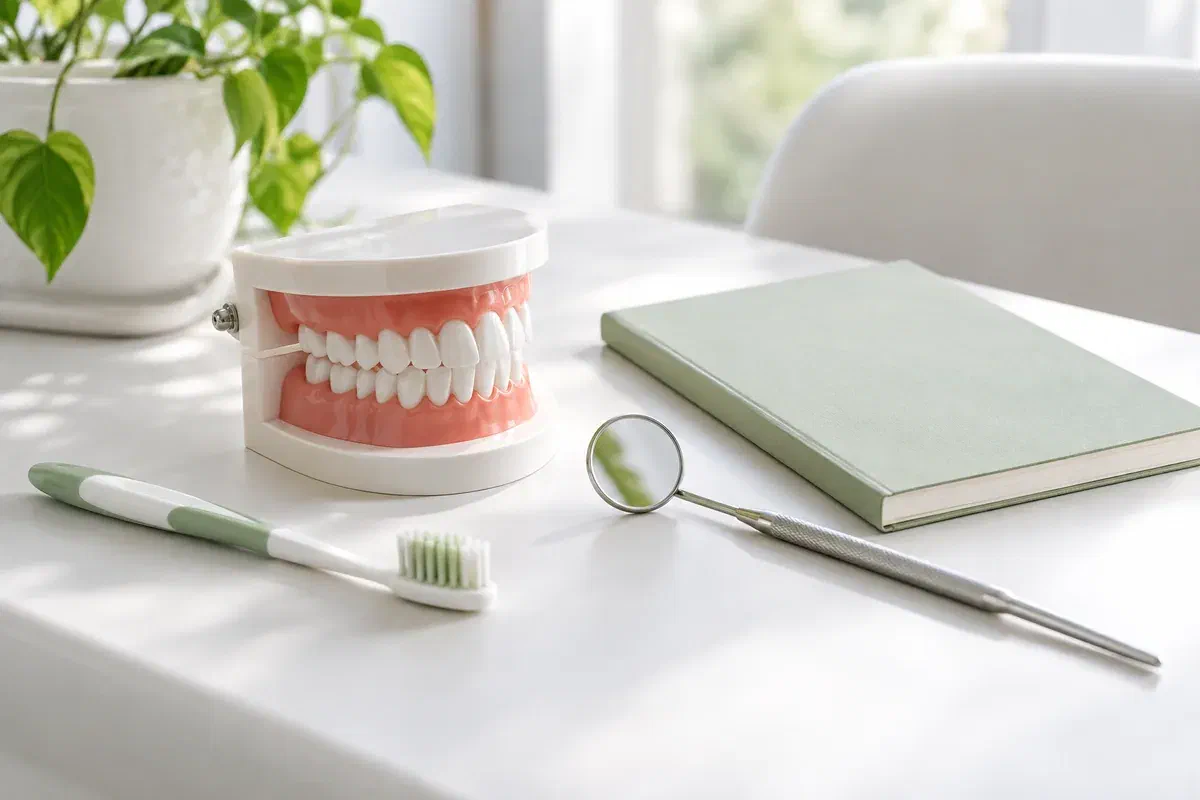
Illustrative child-sized toothbrush, dental model, mirror, and notebook
What to flag

Changes that can steer the exam.

Children describe problems in their own way. Repeat what yours said, or what you saw at the table; you do not need to know which tooth it was.

Teeth arriving, loosening or sitting oddly

Mention an adult tooth that has shown up, a baby tooth that seems stuck, or an area that has become hard to keep clean. The dentist can look at development and explain whether it simply needs observing. Appearance on its own is not evidence that orthodontics will be needed.

Sensitivity, bleeding or chewing changes

Let us know if your child flinches at cold, avoids biting on one side, gets food caught repeatedly or has gums that bleed. Note the pattern and whether it is improving. Some of these concerns justify a dedicated visit instead of waiting for routine review.

Brushing and flossing that need support

Describe who helps, which part is difficult and what has shifted in your routine. Ask about flossing and about molars that have recently erupted. Advice should suit your child's real skills rather than a guess based on age.

Please let us know about medicines, health updates, injuries and sensory or support needs ahead of the appointment. Pain or swelling should be mentioned at booking so the visit can be arranged around it.

What you get from the exam itself

Information first, procedures only if needed.

The core value of a checkup is information: how healthy the mouth is today, how likely cavities are, how development is going and what prevention fits. The gap until the next one is personal. A child with something under observation may return sooner than a sibling with nothing to watch.

An exam cannot ensure that no problem appears before the next one. It gives you an explanation of the findings and a plan for reacting to change. By the time you leave, both you and your child should know the next step in plain terms.

Patient information: AAPD — continuing examinations and preventive care

A baseline to compare against

Findings from earlier visits make it easier to see if an area is stable or changing. Ask what is being watched and what would prompt a different recommendation. Things you notice at home add to that picture, especially symptoms that come and go.

Brushing advice for right now

Techniques that work with baby teeth and gaps may not work once adult teeth fill in. Ask the team to show you how to reach today's problem spots. If a method has stopped doing its job, the advice should change.

A chance for your child to speak up

Children can be invited to ask questions and say what helps them feel at ease. Clear explanations and small choices keep them involved, without anyone promising how it will feel. Tell us if your child communicates differently or needs more time.

The four parts of the visit

Talk, examine, decide, explain.

Your child's history and current needs set the shape of the appointment. Ask what is booked and which optional services might be raised once the exam is done.

  1. Conversation

    We cover symptoms, health changes, home care and how earlier dental visits went. Your child can ask something too. The team describes the exam in suitable language and agrees on a signal for stopping or a short rest.

  2. Examination

    The dentist checks the teeth, gums and development relevant to your child's stage and concerns. Ask which teeth are baby and which are permanent, and whether anything needs further review. If the exam was only partial, clarify what was covered and how the rest will be checked.

  3. Decisions about extras

    This is where X-rays, cleaning, fluoride or sealants may be discussed, according to findings and risk. Ask what question an image would answer or which surface a sealant would cover. Each extra should have a reason rather than come as part of a set package.

  4. Explanation and next steps

    We review any treatment needs, preventive advice and things to monitor. Ask about the recall interval and whether a concern needs its own appointment. Your child gets a final chance to ask a question.

After the checkup

Nothing to recover from, plenty to practise.

An exam alone does not usually need aftercare. If a cleaning, fluoride or another product was used, follow any instructions given for it.

Keep sharing the brushing job

Ask how much hands-on help suits your child at this stage, including flossing. Enthusiasm for independence is great, but back teeth are easy to miss. The team can suggest a way to divide the task.

Stick with what was recommended

Use the suggested toothpaste amount, technique and preventive steps. If any of it does not fit your routine, tell us. A workable compromise is better than advice that is quietly abandoned.

Call about anything new

Contact us if your child has fresh pain, swelling, an injury, or a tooth that looks different. Explain when it began and whether eating or sleep has been affected. A clear exam last time is no reason to sit on a new symptom.

Three different bookings

Know which one you need before you drive in.

If you tell us the reason for your call, we can schedule a suitable visit. A checkup sometimes leads to a separate appointment for treatment or assessment.

For routine review and prevention

The checkup

It focuses on present oral health, development and an ongoing plan. Additional services are discussed when indicated. Ask what is included and whether a cleaning or other step will be booked separately.

When a specific problem is found

A treatment appointment

Pain, a cavity, an injury or a damaged tooth may require care beyond the exam. The dentist will explain options and timing. Ask what the appointment will deal with and which symptoms should prompt an earlier call.

When growth or support needs raise questions

A referral or developmental review

Some findings are better observed over time or reviewed by a clinician with relevant expertise. Ask what led to it and what it is meant to answer. An early review does not necessarily mean treatment begins right away.

Patient information: AAPD — selecting dental radiographs for children

Halton Hills parents ask

Clearing up what a checkup covers.

Questions about cleanings, sealants, X-rays and timing. Your child is welcome to ask theirs at the visit.

(905) 876-4488
Is a cleaning the same thing as a checkup?
No. A checkup is an examination and conversation with the dentist. A cleaning may be recommended alongside it, booked at the same time or separately. Ask what has been scheduled so you know what to expect.
What are sealants, and does every child get them?
Sealants are a protective coating placed on certain tooth surfaces. They are considered based on the tooth and your child’s risk, not given automatically. Ask which teeth would be covered and why.
Does my child need fluoride at the clinic if we use fluoride toothpaste?
It depends on your child’s risk and findings. The dentist may or may not suggest additional fluoride. Ask why it is or is not recommended, and keep using toothpaste as advised.
How does the dentist decide whether X-rays are needed?
By considering what can be seen, your child’s history and development, and what an image would add. Ask what a suggested X-ray is meant to show, and whether earlier images are already available.
My child’s permanent tooth is coming in behind a baby tooth. Should I wait for the checkup?
Mention it when you book so it can be looked at. The right approach depends on the teeth involved and your child’s development. Avoid trying to remove the baby tooth yourself, and call sooner if there is pain or swelling.
Can we fit the checkup around school pickups in Georgetown or Acton?
The clinic is open Monday to Thursday from 11am to 7pm, and Friday to Sunday by appointment. Ask about times that suit your schedule. If your child has symptoms, mention them so the visit is not delayed for convenience.
Checkups for Halton Hills children

Clear answers about what your child needs.

Reach our Bronte Street practice to book a checkup. Tell us your child's age, what has changed and whether there is pain or a support need, and ask what will be included so there are no surprises.

Checkup intervals are personal to each child. Please call about pain, swelling or an injury when it happens rather than waiting for the next scheduled exam.

Visit Milton Dental Clinic
Unit 1, 342 Bronte St. S, Milton, ON L9T 5B7
Get directions Clinic hours
Monday–Thursday
11am–7pm
Friday–Sunday
By appointment only

Areas we serve

  • Milton
  • Oakville
  • Mississauga
  • Georgetown
  • Halton Hills
  • Acton
  • Campbellville
  • Brampton
  • Burlington
  • Puslinch
  • Rockwood
  • Erin
  • Caledon
  • Etobicoke
  • Old Milton
  • Bronte Meadows
  • Timberlea
  • Dorset Park
  • Dempsey
  • Clarke
  • Beaty
  • Coates
  • Harrison
  • Scott
  • Willmott
  • Ford
  • Bowes
  • Cobden
  • Walker
  • Mountain View
  • Milton Heights
  • Hawthorne Village
  • Valley View
  • Fallingbrook
  • Nassagaweya
  • Trafalgar
  • Esquesing
  • Nelson
  • Brookville
  • Moffat
  • Glen Williams
  • Norval
  • Limehouse
  • Stewarttown
  • Ashgrove
  • Hornby
  • Silver Creek
  • Speyside
  • Scotch Block
  • North Oakville
  • River Oaks
  • Glen Abbey
  • West Oak Trails
  • Palermo
  • Bronte Creek
  • College Park
  • Joshua Creek
  • Uptown Core
  • Preserve
  • Iroquois Ridge
  • Lisgar
  • Meadowvale
  • Meadowvale Village
  • Churchill Meadows
  • Erin Mills
  • Central Erin Mills
  • Streetsville
  • East Credit
  • Creditview
  • Heartland
  • Sheridan
  • Mount Pleasant
  • Credit Valley
  • Huttonville
  • Churchville
  • Springbrook
  • Northwest Brampton
  • Bram West
  • Fletcher's Meadow
  • Fletcher's Creek South
  • Alton Village
  • Orchard
  • Millcroft
  • Headon Forest
  • Tansley
  • Brant Hills
  • Tyandaga
  • Kilbride
  • Lowville
  • Aberfoyle
  • Morriston
  • Arkell
  • Hillsburgh
  • Freelton
  • Carlisle
  • Waterdown
  • Flamborough
  • Mountsberg

How can we help?

Milton Dental Clinic

Have a question about your smile? Choose the option that works best for you.

For urgent dental concerns, please call.
Messages are reviewed during clinic hours.