

Illustrative child and parent listening to a dental clinician before a checkup
Children’s Dentistry

Children’s Dental Checkups in Milton

A short list of what has changed since the last visit can shape a whole appointment. Our checkups for Milton children look at teeth, gums, habits and fresh worries, and we explain things to your child as well as to you.

Checkups close to home in Milton

Start with the list on the fridge.

Many parents keep a running note between visits: the tooth that wiggled at breakfast, the side your child avoids when eating apples, the night brushing turned into an argument. A checkup turns those small observations into a conversation about what looks healthy, what deserves a closer look and what help your child needs right now.

Since you are local, it is easy to treat the visit as just another errand in a busy Milton week. Bring the details anyway: a new tooth, a tender spot, trouble reaching the back of the mouth. Your child's own questions are welcome too, including what the little mirror is for.

What happens in the chair depends on what the dentist finds and where your child is in their development. Cleaning, fluoride, sealants or X-rays may come up, though none of them is built into every visit by default. You can always ask what is planned, what it is meant to achieve and when the following review makes sense.

Book a checkup for your child
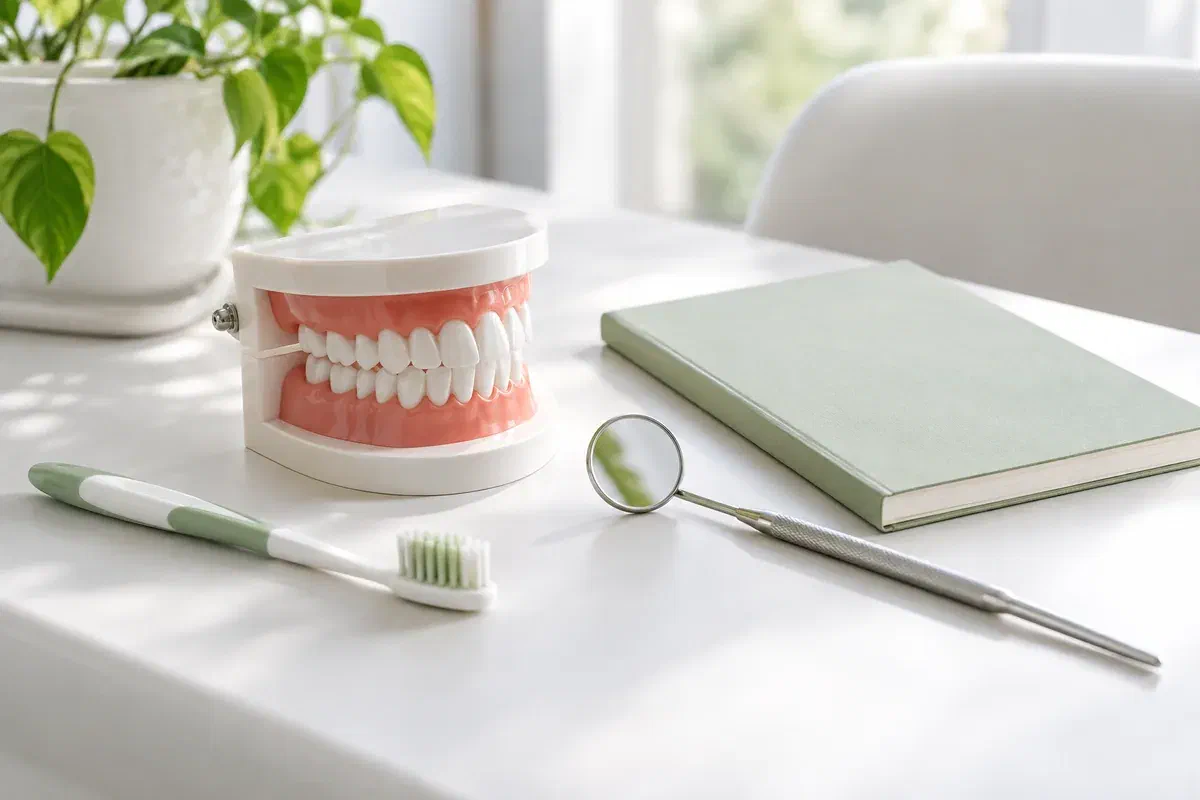
Illustrative child-sized toothbrush, dental model, mirror, and notebook
Worth writing down

Small changes your child might mention first.

Children tend to describe a problem in their own words, at odd moments. Pass along what they told you, even if they could not point to a particular tooth or name what they felt.

Teeth arriving, wobbling or sitting in a new spot

Tell us if an adult tooth has come through, a baby tooth is taking its time, or a corner of the mouth has become awkward to brush. The dentist can look at how things are developing and say whether it only needs watching. How a tooth looks on its own does not mean braces are needed.

Discomfort, bleeding or eating that has changed

Let the team know about twinges with cold drinks, soreness when biting, food that keeps getting stuck, or gums that bleed when brushed. Describe when it happens and whether it is getting better or worse. Some of these deserve their own appointment instead of waiting for the regular review.

Brushing that has become harder at home

Explain who does the brushing, which part is a struggle, and whether a new routine such as a later bedtime has shifted things. Ask how to clean between teeth and around molars that have recently come in. Good advice matches what your child can actually do, not what their age suggests.

Before the appointment, let us know about any medicines, changes in health, recent injuries, or sensory and support needs. If there is pain or swelling, say so when you book so we can plan the visit around it.

Why the routine visit matters

Each stage of childhood gets its own plan.

A regular checkup is a chance to see how the mouth is doing today, think about the risk of cavities, and talk about growth and prevention. How often your child comes in is set for them individually. One child being watched for a particular concern, or with a higher chance of decay, may be seen on a different timetable from a brother or sister.

No examination can promise that nothing will go wrong before the next one. Much of its worth lies in explaining what was seen and what to do if something changes. You and your child should walk out knowing the next step, not just holding a reminder card with a date on it.

Patient information: AAPD — continuing examinations and preventive care

Spotting a trend over time

Looking at findings from one visit to the next can show whether an area is holding steady or starting to need attention. Ask what is being kept under observation and what would alter the plan. Your notes from home help a great deal, especially when a symptom never shows up during the appointment itself.

Advice that keeps pace

A child who is losing baby teeth may need a different routine from one who has a mouth full of adult teeth. Ask the team to show you how to reach whichever spots are tricky at the moment. If an old technique has stopped working, the advice should change with it.

A bigger role for your child

Children can be encouraged to ask questions and say what helps them feel at ease. Simple choices and plain explanations can keep them involved, without anyone promising how the visit will feel. Let us know if your child needs more preparation time or a different way of communicating.

How the appointment runs

We talk first, look carefully, then plan together.

Each checkup is shaped by your child's history and what is going on now. Feel free to ask what has been scheduled and which extra services might be raised once the dentist has had a look.

  1. Catch up and get ready

    We go over symptoms, health changes, home routines and how earlier dental visits went. Your child can ask something if they would like to. The team explains what will happen in words that suit your child, and agrees on a simple signal for stopping or taking a break.

  2. Examine teeth, gums and growth

    The dentist looks at the areas that matter for your child's age and any concerns raised. You can ask which teeth are baby teeth and which are permanent, and whether anything needs another look. If only part of the exam was possible, ask what was seen and how the rest will be covered.

  3. Consider records and prevention

    X-rays, cleaning, fluoride or sealants may be suggested depending on what was found and on your child's risk. Ask what an image would tell the dentist, or which tooth surface a sealant is meant to protect. Each suggestion should have a clear clinical reason rather than come as a standard bundle.

  4. Share what we found and set the next date

    We go through any treatment needs, prevention tips and areas to keep watching. Ask how long until the next checkup and whether a particular issue needs its own appointment. Before you leave, your child gets a chance to ask one last question.

Until the next visit

Aim for steady habits, not a flawless routine.

A checkup on its own rarely calls for any recovery care. If a product or procedure was used during the visit, follow the specific instructions you were given.

Help as much as your child still needs

Talk with the team about how much hands-on help your child should have with brushing and flossing. Wanting to do it solo is not the same as reaching every surface. Ask for a way to split the job that still lets your child feel capable.

Stick with the prevention plan you were given

Use the toothpaste amount and technique you were shown, plus any extra prevention steps. If something feels awkward or the routine keeps slipping, mention it. A realistic change works better than an instruction that gets skipped most nights.

Call about new symptoms straight away

Get in touch about fresh pain, swelling, an injury or a tooth that suddenly looks different. Say when it began and whether it is affecting eating or sleep. A good result last time does not mean a new problem should sit until the next booked checkup.

Which visit to book

A routine checkup and a problem visit are not always the same booking.

Telling us the reason for the visit helps us set aside the right kind of appointment. Sometimes a checkup uncovers something that needs a separate treatment or assessment.

For regular review and prevention

An ongoing dental exam

This visit looks at the overall health of the mouth, how your child is developing, and a sensible plan going forward. Other services come up only when they are needed. Ask what the visit covers and whether a cleaning or anything else is booked on its own.

When something found needs attention

A visit for a specific problem or treatment

Pain, a cavity, an injury or a broken tooth may need more than a routine exam can offer. The dentist will explain the choices and when they make sense. Ask what the next visit will deal with and which symptoms mean you should call sooner.

When development or support needs prompt a question

A growth or specialist assessment

Some findings call for watching over time or a review by a clinician with particular experience. Ask what led to the suggestion and what the referral should help answer. An early assessment does not by itself mean treatment has to start right away.

Patient information: AAPD — selecting dental radiographs for children

Parents ask us

Questions we hear before Milton checkups.

Here are answers about bookings, comfort and what the dentist looks for. Your child's questions are just as welcome as yours.

(905) 876-4488
Can I stay in the room during my child’s checkup?
In most cases, yes. Let the team know what usually helps your child, whether that is a parent nearby or a little more independence. If there is a reason for a different arrangement during part of the visit, it will be explained to you first.
What should we bring to a first checkup with your team?
Bring a list of any medicines, notes about health conditions, and details of past dental care if your child has seen another dentist. A short list of things you have noticed at home is also useful.
My two children have different recall dates. Is that normal?
It can be. Each child’s teeth, history and risk are assessed separately, so their timing may differ. Ask why each interval was chosen. Booking them close together is fine, as long as each plan still fits that child.
Is a sealant automatically placed once the adult molars come in?
No. Sealants are considered based on the tooth, how it has come in and your child’s risk of decay. Ask which surfaces would be protected and why. The dentist will explain whether it makes sense now, later, or not at all for that tooth.
My child has gone quiet at past visits. Will that be a problem?
Not at all. Tell the team how your child prefers to communicate, and you can share what you have seen at home. The clinician will offer simple ways for your child to join in. A slower pace may also help.
We are local. Can we book outside school hours?
The clinic is open Monday to Thursday from 11am to 7pm, and Friday to Sunday by appointment only. Ask about available times when you call. If a symptom such as pain or swelling appears, mention it rather than holding out for a convenient slot.
Our Bronte Street practice

Bring the list. We will go through it together.

Call or send a request to set up your child's checkup, and tell us what has changed since the last one. Include your child's age, any symptoms and support needs so we can prepare a visit that fits.

Each child's checkup interval is set individually. If pain, swelling or an injury appears, please let us know right away instead of waiting for the next scheduled visit.

Visit Milton Dental Clinic
Unit 1, 342 Bronte St. S, Milton, ON L9T 5B7
Get directions Clinic hours
Monday–Thursday
11am–7pm
Friday–Sunday
By appointment only

Areas we serve

  • Milton
  • Oakville
  • Mississauga
  • Georgetown
  • Halton Hills
  • Acton
  • Campbellville
  • Brampton
  • Burlington
  • Puslinch
  • Rockwood
  • Erin
  • Caledon
  • Etobicoke
  • Old Milton
  • Bronte Meadows
  • Timberlea
  • Dorset Park
  • Dempsey
  • Clarke
  • Beaty
  • Coates
  • Harrison
  • Scott
  • Willmott
  • Ford
  • Bowes
  • Cobden
  • Walker
  • Mountain View
  • Milton Heights
  • Hawthorne Village
  • Valley View
  • Fallingbrook
  • Nassagaweya
  • Trafalgar
  • Esquesing
  • Nelson
  • Brookville
  • Moffat
  • Glen Williams
  • Norval
  • Limehouse
  • Stewarttown
  • Ashgrove
  • Hornby
  • Silver Creek
  • Speyside
  • Scotch Block
  • North Oakville
  • River Oaks
  • Glen Abbey
  • West Oak Trails
  • Palermo
  • Bronte Creek
  • College Park
  • Joshua Creek
  • Uptown Core
  • Preserve
  • Iroquois Ridge
  • Lisgar
  • Meadowvale
  • Meadowvale Village
  • Churchill Meadows
  • Erin Mills
  • Central Erin Mills
  • Streetsville
  • East Credit
  • Creditview
  • Heartland
  • Sheridan
  • Mount Pleasant
  • Credit Valley
  • Huttonville
  • Churchville
  • Springbrook
  • Northwest Brampton
  • Bram West
  • Fletcher's Meadow
  • Fletcher's Creek South
  • Alton Village
  • Orchard
  • Millcroft
  • Headon Forest
  • Tansley
  • Brant Hills
  • Tyandaga
  • Kilbride
  • Lowville
  • Aberfoyle
  • Morriston
  • Arkell
  • Hillsburgh
  • Freelton
  • Carlisle
  • Waterdown
  • Flamborough
  • Mountsberg

How can we help?

Milton Dental Clinic

Have a question about your smile? Choose the option that works best for you.

For urgent dental concerns, please call.
Messages are reviewed during clinic hours.