

Illustrative child and parent listening to a dental clinician before a checkup
Children’s Dentistry

Children’s Dental Checkups in Rockwood

Big new molars tend to arrive at the very back, quietly, where toothbrushes rarely reach. A children’s checkup looks at those teeth along with gums, habits and anything else that has changed, and explains what each new tooth needs.

Rockwood children, new molars

There is a new tooth at the back.

Parents tend to watch the front teeth: the gap-toothed grin, the first adult incisor. Meanwhile, large permanent molars can come through behind the baby teeth without anyone noticing, often with deep grooves that are hard to clean. A checkup is a good moment to find out what has arrived, how it looks and what it needs.

Before the trip southeast from Rockwood, have a peek with a flashlight if your child will let you, or ask whether anything feels different at the back. Note any tender gums, food catching behind the last tooth, or brushing that stops short. Your child might want to ask how many teeth they have now; it is a fair question.

The dentist's suggestions depend on findings and your child's stage of growth. Sealants for new molars, a cleaning, fluoride or X-rays may come up, but they are weighed tooth by tooth, not handed out as a set. Ask what is planned, what each step is for and why the next review is timed as it is.

Book a checkup from Rockwood
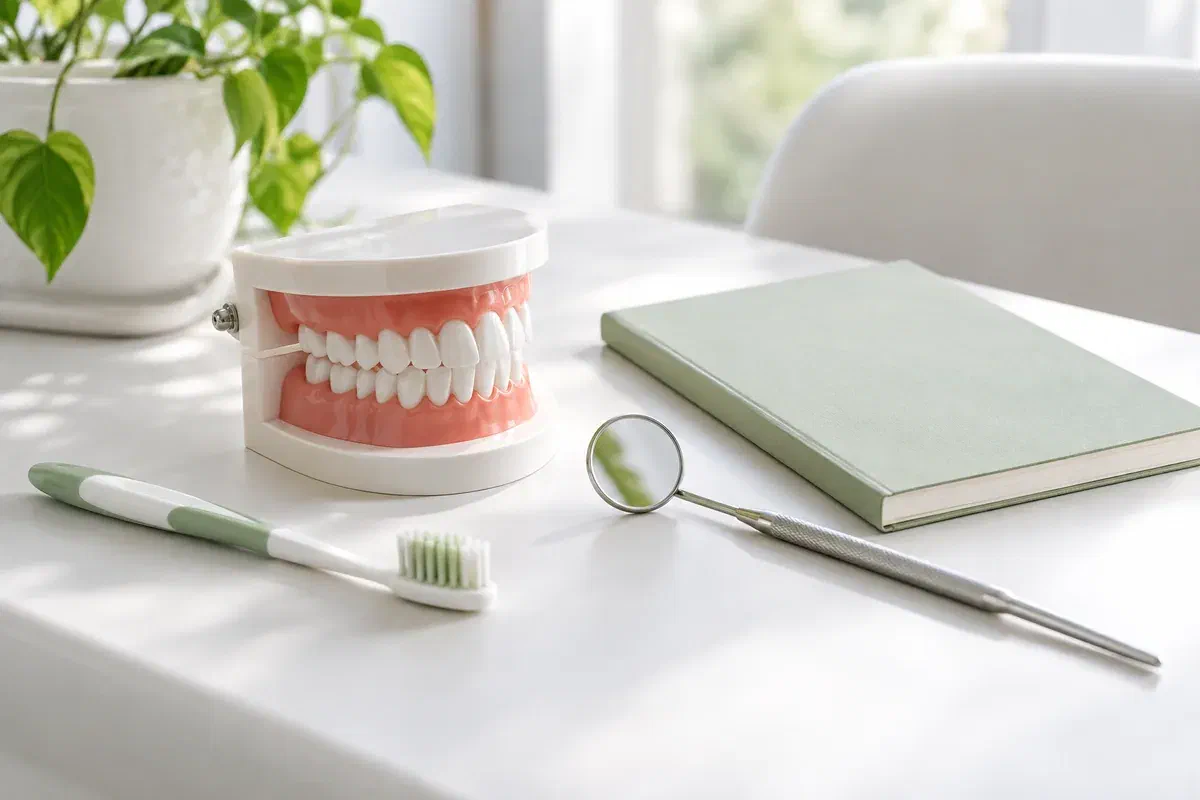
Illustrative child-sized toothbrush, dental model, mirror, and notebook
Look beyond the front teeth

Clues that often get missed.

Children rarely notice a new molar until it bothers them. If they mention the back of the mouth feeling different, pass that on, even without detail.

Molars arriving, baby teeth leaving

Tell us about new teeth at the back or front, a baby tooth that seems stuck, or an area that has become hard to keep clean. The dentist can check how development is going and whether monitoring is enough. The look of the teeth alone does not mean orthodontic treatment will be required.

Sore gums, sensitivity or chewing changes

Mention tender gums around a new tooth, twinges with cold, avoiding chewing on one side, food trapping or bleeding when brushing. Describe how often it occurs and whether it is easing. Persistent problems may need a focused visit sooner.

A brush that never reaches the back

Explain who brushes, how far back the brush actually goes and whether the routine has changed. Ask how to clean grooves and edges of newly erupted molars. Advice should fit your child's hands and patience, not a set age.

Let us know about medicines, health changes, injuries and sensory or support needs before the visit. If your child has pain or swelling, mention it at booking so we can arrange things appropriately.

Why timing around new teeth matters

New teeth, new decisions.

Regular review lets the dentist check oral health, think about decay risk and discuss growth and prevention as each new tooth arrives. The interval is set for your child. A child whose molars are just coming in, or who has a higher chance of cavities, may be seen on a different schedule from a sibling.

No exam can promise that a problem will not appear before the next. The real benefit is understanding what was found and how to respond if something changes. Try to leave with a clear next step for the new teeth, not just a date.

Patient information: AAPD — continuing examinations and preventive care

Watching a tooth settle in

Comparing what was seen at earlier visits shows whether a new tooth and its neighbours are developing as expected. Ask what is being monitored and what would change the plan. Your notes help, especially for gum soreness that comes and goes.

Cleaning tips for awkward places

Molar grooves and the edge of a partly erupted tooth need a slightly different technique. Ask the team to show you and your child how to angle the brush. If a method no longer reaches, it should be updated.

Involving your child

Your child can be encouraged to ask about their new teeth and say what keeps them comfortable. Honest descriptions and small choices help, without promises about how it will feel. Tell us if your child needs a different communication approach.

How we approach the visit

From the front teeth to the very back.

Each visit is shaped by your child's history and current needs. Ask what has been booked and which further services may be discussed after the exam.

  1. Talk about recent changes

    We ask about symptoms, health updates, brushing and past visits, and whether anything feels new at the back. Your child can ask a question. The team explains the exam simply and agrees on a signal for a break.

  2. Examine every tooth, front to back

    The dentist checks teeth, gums and development, including newly erupted molars. Ask which teeth are primary and which are permanent. If the full exam was not possible, ask what was seen and how the rest will be checked.

  3. Weigh sealants, X-rays and other prevention

    Depending on the tooth and your child's risk, sealants, fluoride, a cleaning or an X-ray may be suggested. Ask which surface a sealant would protect or what an image would show. Each suggestion should have a clear reason.

  4. Explain and look ahead

    We go over findings, prevention advice and anything to keep an eye on. Ask about the next checkup and whether a particular tooth needs its own visit. Your child can ask one last question.

Caring for the new arrivals

Reach the back, every night you can.

A routine exam on its own seldom needs any recovery care. If sealants, fluoride or another procedure were done, follow the instructions you were given.

Help with the hardest teeth

Ask how much brushing and flossing help your child still needs, particularly around the back molars. Children often stop the brush before it reaches them. The team can suggest a way to share the job.

Follow the prevention advice

Use the recommended toothpaste amount, technique and any extra steps. If a product or routine is hard to keep up, tell us. A practical change works better than advice that gets skipped.

Phone about new symptoms

Call about new pain, swelling around a new tooth, an injury or a visible change. Explain when it began and whether eating or sleep is disrupted. Last time's reassurance does not mean a new concern should sit until recall.

Next appointment options

A sealant visit, a problem visit, or simply the next checkup.

Tell us why you are booking so we can arrange the right visit. A checkup may reveal that one tooth needs a separate appointment.

For ongoing prevention and monitoring

Routine review

This visit covers oral health, development and the plan going forward. Other services come up only when indicated. Ask what is included and whether sealants or a cleaning will be scheduled separately.

When a finding needs care

Treatment for a specific tooth

Decay, pain, an injury or a damaged tooth may need care beyond the checkup. The dentist will explain the choices and timing. Ask what the next visit will address and which symptoms mean calling earlier.

When growth or support needs prompt a question

Developmental or specialist review

Some findings, such as how teeth are lining up, may need observing over time or another clinician's view. Ask what prompted the suggestion and what the review should establish. An early review does not necessarily mean treatment starts now.

Patient information: AAPD — selecting dental radiographs for children

Rockwood parents ask

All about the new molars.

Answers about back teeth, sealants and sore gums. Your child's questions are welcome.

(905) 876-4488
How can I tell if a new adult molar has come in?
Look behind the last baby tooth with a light, or ask your child whether anything feels new back there. The dentist will confirm at the checkup. Sore gums around an erupting tooth are worth mentioning.
Do new molars always need sealants?
No. Sealants are considered based on the tooth’s shape, how it has come in and your child’s decay risk. Ask which teeth are being discussed and why.
My child’s gum is sore where a molar is coming through. Should we come in early?
Mild tenderness can happen, but call if it is severe, swollen, lasting or your child seems unwell. Mention it when booking so the dentist can look at it.
Is it normal for a new molar to look discoloured or pitted?
Teeth can vary in appearance. Mention anything that looks unusual, and the dentist can assess it. Avoid assuming the worst until it has been examined.
Will the dentist take an X-ray of the back teeth?
Only if it is needed. The dentist considers findings, history and what an image would reveal. Ask what question the X-ray would answer.
My child keeps saying they brushed, but the back teeth look missed. What helps?
Brushing together or checking the back teeth afterward can help. Ask the team to demonstrate on your child’s new molars, and keep giving the level of help they recommend.
Booking from Rockwood

Let’s take a look at what has come in.

Contact our Bronte Street practice to arrange a checkup. Mention any new teeth, your child's age, any symptoms and support needs, so the visit can be planned around them.

Checkup intervals are individual. If pain, swelling or an injury appears, call at the time instead of waiting for the next scheduled visit.

Visit Milton Dental Clinic
Unit 1, 342 Bronte St. S, Milton, ON L9T 5B7
Get directions Clinic hours
Monday–Thursday
11am–7pm
Friday–Sunday
By appointment only

Areas we serve

  • Milton
  • Oakville
  • Mississauga
  • Georgetown
  • Halton Hills
  • Acton
  • Campbellville
  • Brampton
  • Burlington
  • Puslinch
  • Rockwood
  • Erin
  • Caledon
  • Etobicoke
  • Old Milton
  • Bronte Meadows
  • Timberlea
  • Dorset Park
  • Dempsey
  • Clarke
  • Beaty
  • Coates
  • Harrison
  • Scott
  • Willmott
  • Ford
  • Bowes
  • Cobden
  • Walker
  • Mountain View
  • Milton Heights
  • Hawthorne Village
  • Valley View
  • Fallingbrook
  • Nassagaweya
  • Trafalgar
  • Esquesing
  • Nelson
  • Brookville
  • Moffat
  • Glen Williams
  • Norval
  • Limehouse
  • Stewarttown
  • Ashgrove
  • Hornby
  • Silver Creek
  • Speyside
  • Scotch Block
  • North Oakville
  • River Oaks
  • Glen Abbey
  • West Oak Trails
  • Palermo
  • Bronte Creek
  • College Park
  • Joshua Creek
  • Uptown Core
  • Preserve
  • Iroquois Ridge
  • Lisgar
  • Meadowvale
  • Meadowvale Village
  • Churchill Meadows
  • Erin Mills
  • Central Erin Mills
  • Streetsville
  • East Credit
  • Creditview
  • Heartland
  • Sheridan
  • Mount Pleasant
  • Credit Valley
  • Huttonville
  • Churchville
  • Springbrook
  • Northwest Brampton
  • Bram West
  • Fletcher's Meadow
  • Fletcher's Creek South
  • Alton Village
  • Orchard
  • Millcroft
  • Headon Forest
  • Tansley
  • Brant Hills
  • Tyandaga
  • Kilbride
  • Lowville
  • Aberfoyle
  • Morriston
  • Arkell
  • Hillsburgh
  • Freelton
  • Carlisle
  • Waterdown
  • Flamborough
  • Mountsberg

How can we help?

Milton Dental Clinic

Have a question about your smile? Choose the option that works best for you.

For urgent dental concerns, please call.
Messages are reviewed during clinic hours.