

Illustrative child and parent learning about molar chewing surfaces
Children’s Dentistry

Children’s Dental Sealants in Caledon

Told the new molar isn’t ready to seal yet? Families from Caledon can learn why timing matters, how to protect a tooth that is still coming in, and what changes once it is far enough through for a coating.

Timing sealants for Caledon children

Not yet is still a plan.

Parents sometimes come away from a checkup a little puzzled: the dentist agreed a new molar could benefit from a sealant, then suggested waiting. That usually comes down to timing. A tooth that is only partway through the gum can be hard to keep dry, and a coating placed on a damp surface may not hold.

A sealant is a thin material that flows into the pits and fissures of a molar’s chewing surface and hardens, giving plaque fewer places to settle. The dentist considers how much of the tooth is showing, the condition of the groove, any early change, and your child’s overall risk of decay before deciding when, or whether, to place one.

Waiting should never mean doing nothing. A tooth that is still emerging can be harder to clean, so ask what to do in the meantime and when to come back. Remember too that a sealant protects chosen grooves only. Brushing, cleaning between teeth and fluoride remain the foundation, and no coating guarantees a cavity-free tooth.

Ask about sealant timing
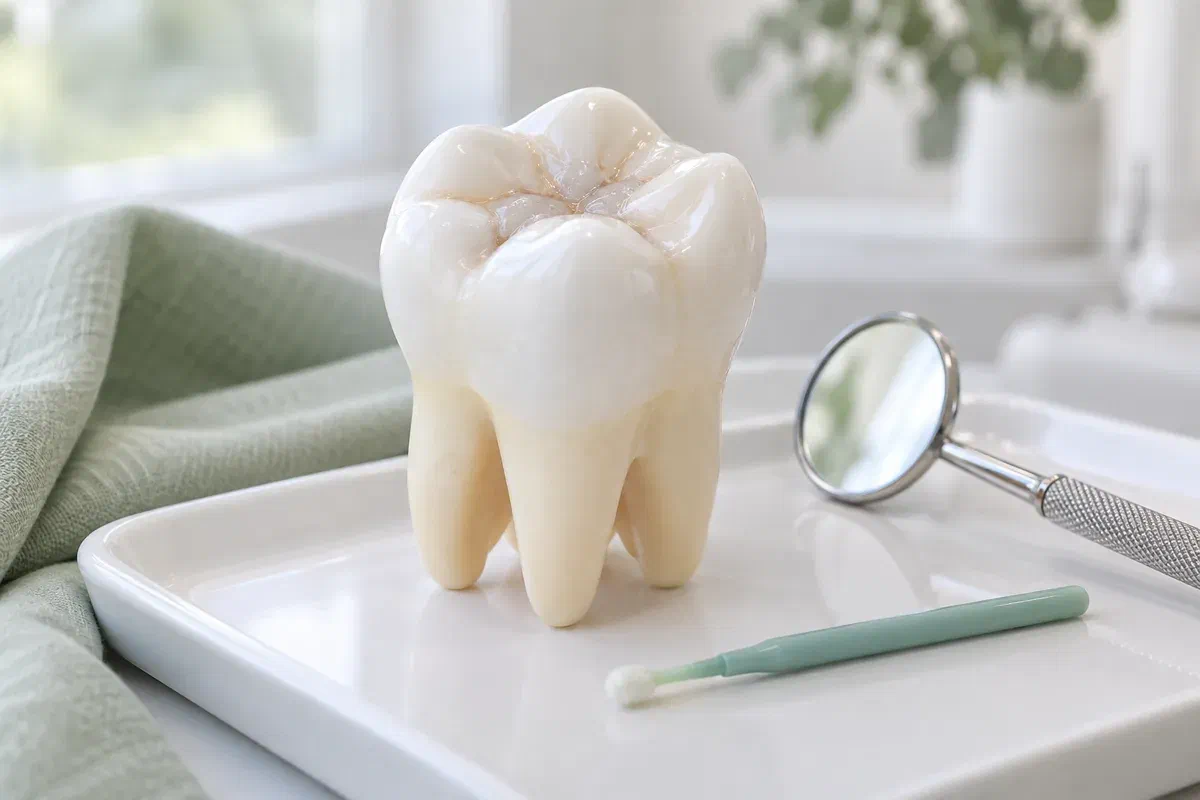
Illustrative molar teaching model, dental mirror, and sealant applicator
What families in Caledon notice

Signs a molar is on its way, or needs attention.

It isn’t your job to decide whether a groove is deep or a spot is early decay. Tell us what you see and when, and the examination can sort the rest.

Gum partly covering a new back tooth

A permanent molar often shows a little at a time, with a flap of gum still over part of it. Let us know when you spot one. We can confirm it and show how to angle the brush so plaque doesn’t build up underneath the gum edge while it finishes coming in.

Previous decay or a reluctant brusher

Past cavities and spots your child won’t let you reach can raise the stakes during the waiting period. Tell us how much help you give. The dentist can then suggest interim steps that match your child’s risk.

Sealants already on other teeth

Mention a coating that feels rough, a bite that has changed, or sealants placed elsewhere. We can check them at the same visit. Ask your child to leave edges alone, and avoid trying to smooth them at home.

If a tooth hurts, has a visible hole, or traps food, it needs examining rather than simply waiting for a sealant appointment. The dentist must rule out damage that calls for other care.

Why good timing pays off

A coating that holds is a coating that helps.

Placed on a suitable surface under the right conditions, a sealant can help keep a molar’s deepest grooves from becoming the first place decay appears. For some early lesions that haven’t broken through, a dentist may also seal the area after diagnosis and with a plan to watch it. A sealant isn’t a cover for a cavity that hasn’t been checked.

Since protection depends on the coating staying bonded, placing it when the tooth is ready gives it the best chance. Later visits look at the material and the enamel around it. Ask what the dentist will check and when a repair or new layer might be suggested.

Patient information: AAPD and ADA — pit-and-fissure sealant guideline

Part of a bigger routine

The sealant handles selected grooves; brushing, flossing and fluoride look after the rest. Ask how these fit together, especially while you’re waiting for a molar to finish erupting.

Learning to reach the new molar

A tooth at the very back, half hidden by gum, is easy to miss. The visit is a good time for your child to see it in a mirror and practise tilting the brush toward it. Keep helping at home with whatever level of support their age calls for, since the waiting period is when good habits matter most.

A clear schedule

Ask the dentist to explain why sealing is being delayed, what to watch for meanwhile and roughly when the tooth will be rechecked. Knowing the reasoning makes the wait feel less uncertain.

When the tooth is ready

What the sealant visit itself looks like.

The sequence varies with the product and the tooth. We explain it in language your child can follow and agree on a signal for a short break.

  1. Recheck eruption and the groove

    The dentist confirms that enough of the tooth is through and takes a fresh look at the groove, since things can change during the wait. You can ask whether the coating is preventive or managing a selected early change, and whether images are advised.

  2. Prepare and isolate

    The groove is cleaned and readied for the chosen material. Keeping the tooth dry is the reason timing mattered in the first place. Your child may notice air, water, suction or cotton rolls.

  3. Place the sealant

    The coating is applied into the targeted pits and fissures and hardened according to the material, sometimes with a curing light. We describe what your child may feel, while noting that the order of steps can vary.

  4. Check the bite and book the review

    We look at the surface and how the teeth meet. If your child feels the tooth is high or sore, say so. Confirm any instructions for that product and when the coating will next be examined.

During the wait and after

Brushing carries the load, before and after sealing.

If a sealant is placed, follow the instructions for that material and any other treatment done the same day. There’s no single eating rule for every sealant.

Clean around an erupting molar

Brush gently where the gum meets the new tooth, use the fluoride toothpaste amount recommended for your child, and clean between teeth as advised. After sealing, the sides and contact points still aren’t covered.

Call about tenderness or a high spot

Some gum tenderness can come with an erupting tooth. Contact the clinic if it seems significant or lasting, or if a sealed tooth feels high, sore or chipped. Avoid having your child bite through discomfort.

Keep the recheck appointment

The return visit is when the dentist decides whether the tooth is ready. Once sealed, coatings may need repair or replacement over time. Tell the team about sealants placed elsewhere.

Choices for a new molar

Seal now, protect while waiting, or treat.

The right step depends on where the molar is in its journey. More than one measure can help, provided you can say why each was chosen.

For a groove that may need a barrier

A sealant once the tooth is ready

Covers selected chewing pits once enough of the molar is through to keep it dry. The dentist can explain which tooth is a candidate and how the coating will be reviewed.

While the molar is still erupting

Fluoride and extra care in the meantime

Fluoride, careful brushing and other preventive steps may protect the tooth until it can be sealed, or may be all that is needed. Ask about products, amounts and adult help. Fluoride and sealants play different roles.

If the surface has already changed

Further assessment or a restoration

Sometimes the recheck turns up a groove that has started to break down, or another finding that a coating can’t address. In that case a filling or other treatment may come before, or instead of, any sealant. Ask the dentist to show you what changed and when the tooth will be reassessed.

Caledon parents ask

Questions about timing and waiting.

Ask about the tooth, its eruption and the follow-up plan. Answers should relate to what the dentist saw.

(905) 876-4488
How will we know when the molar is ready to seal?
The dentist checks how much of the tooth is through and whether the area can be kept dry for long enough to place the material. There’s no fixed age for this. Ask roughly when to return, and contact the clinic sooner if your child mentions pain or you notice a change in the tooth.
Is the tooth at risk while we wait?
An erupting molar can be harder to clean, so it may need extra care. The dentist can suggest brushing techniques and fluoride advice suited to your child for the interim.
Is sore gum around a new molar normal?
Mild tenderness can happen as a tooth comes through. If there is significant pain, swelling or fever, contact the clinic or seek medical advice.
Can we plan the sealant around other appointments?
Often, yes. For households spread across Caledon’s villages and rural roads, fewer trips can matter. When you book the recheck, tell the clinic about other family members who need visits, and the team can suggest how to group them sensibly.
What if the dentist finds an early change during the wait?
Depending on what is found, the plan may shift to sealing an early lesion, closer monitoring or treatment. The dentist will explain the finding and the options.
Do sealants work as well on teeth that took a long time to erupt?
A slow arrival doesn’t by itself make a sealant less useful. What matters is the condition of the surface and whether it can be kept dry at placement. The dentist will assess the tooth when it is ready and explain whether sealing still makes sense.
Sealant visits for families from Caledon

We’ll tell you when, and why.

Contact our Bronte Street practice to arrange a sealant assessment or recheck for your child. We can look at molars still coming in, review existing coatings, and explain the protection that suits each stage.

Whether and when to seal depends on the tooth and examination. Coatings need review and support, rather than replace, daily brushing and other preventive care.

Visit Milton Dental Clinic
Unit 1, 342 Bronte St. S, Milton, ON L9T 5B7
Get directions Clinic hours
Monday–Thursday
11am–7pm
Friday–Sunday
By appointment only

Areas we serve

  • Milton
  • Oakville
  • Mississauga
  • Georgetown
  • Halton Hills
  • Acton
  • Campbellville
  • Brampton
  • Burlington
  • Puslinch
  • Rockwood
  • Erin
  • Caledon
  • Etobicoke
  • Old Milton
  • Bronte Meadows
  • Timberlea
  • Dorset Park
  • Dempsey
  • Clarke
  • Beaty
  • Coates
  • Harrison
  • Scott
  • Willmott
  • Ford
  • Bowes
  • Cobden
  • Walker
  • Mountain View
  • Milton Heights
  • Hawthorne Village
  • Valley View
  • Fallingbrook
  • Nassagaweya
  • Trafalgar
  • Esquesing
  • Nelson
  • Brookville
  • Moffat
  • Glen Williams
  • Norval
  • Limehouse
  • Stewarttown
  • Ashgrove
  • Hornby
  • Silver Creek
  • Speyside
  • Scotch Block
  • North Oakville
  • River Oaks
  • Glen Abbey
  • West Oak Trails
  • Palermo
  • Bronte Creek
  • College Park
  • Joshua Creek
  • Uptown Core
  • Preserve
  • Iroquois Ridge
  • Lisgar
  • Meadowvale
  • Meadowvale Village
  • Churchill Meadows
  • Erin Mills
  • Central Erin Mills
  • Streetsville
  • East Credit
  • Creditview
  • Heartland
  • Sheridan
  • Mount Pleasant
  • Credit Valley
  • Huttonville
  • Churchville
  • Springbrook
  • Northwest Brampton
  • Bram West
  • Fletcher's Meadow
  • Fletcher's Creek South
  • Alton Village
  • Orchard
  • Millcroft
  • Headon Forest
  • Tansley
  • Brant Hills
  • Tyandaga
  • Kilbride
  • Lowville
  • Aberfoyle
  • Morriston
  • Arkell
  • Hillsburgh
  • Freelton
  • Carlisle
  • Waterdown
  • Flamborough
  • Mountsberg

How can we help?

Milton Dental Clinic

Have a question about your smile? Choose the option that works best for you.

For urgent dental concerns, please call.
Messages are reviewed during clinic hours.