

Illustrative child and parent learning about molar chewing surfaces
Children’s Dentistry

Children’s Dental Sealants in Georgetown

School, practice, homework, and now a sealant appointment? Families from Georgetown can find out what a sealant visit asks of a busy day, which grooves might qualify, and how follow-up works.

Sealants for busy Georgetown households

A short visit with a long to-do list behind it.

Most parents want two answers before booking: will my child be back at school or practice the same day, and is this really needed? The second question matters more, and it starts with the tooth itself rather than the calendar.

A sealant is a thin coating that bonds into the deep grooves of a molar’s biting surface. Once it sets, those crevices become easier to keep clean. The dentist recommends one only after checking how far the tooth has come in, the state of its surface, any early change, and your child’s overall likelihood of getting cavities.

On the practical side, sealing a healthy groove does not usually involve freezing, so many children carry on with their day. Even so, a sealant is a narrow measure. It covers chosen chewing surfaces, not the sides or the gaps between teeth, and it works with brushing and fluoride instead of replacing them.

Fit a sealant visit into your week
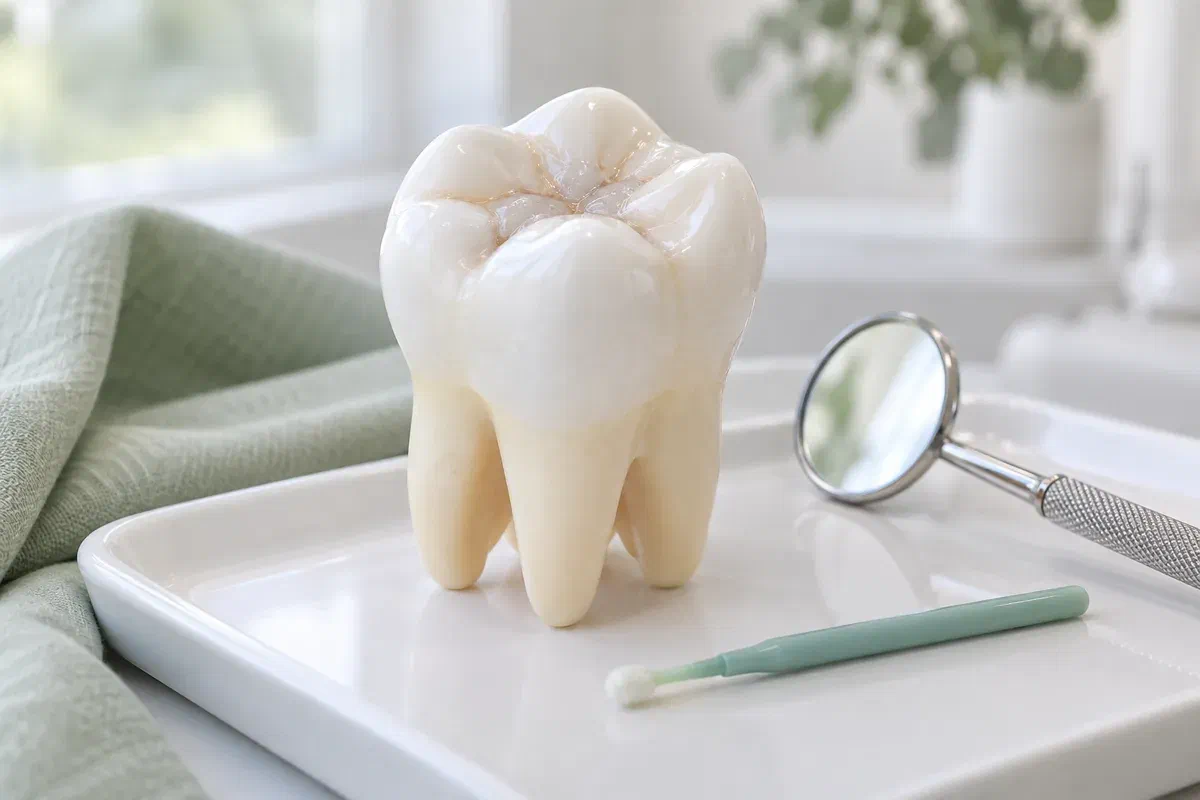
Illustrative molar teaching model, dental mirror, and sealant applicator
Worth raising at the next checkup

Small signs that can start the conversation.

You aren’t expected to judge groove depth or early decay yourself. A quick mention of what you’ve seen, even on the way out the door, gives the dentist a place to start.

A new back tooth

If your child has a molar coming in behind the baby teeth, tell us. We can confirm it’s a permanent tooth and suggest a brushing angle while the gum is still partly over it. The right time to consider sealing follows the tooth, not the school term.

Rushed brushing or past cavities

Busy mornings can shortchange the back teeth. Let us know about previous decay and any area that gets missed, plus how much help your child has. The dentist can then tie the advice to your child’s real risk.

A sealant that seems chipped

Mention a rough edge, a change in the bite, or sealants from another office. We can check whether they are still intact. Remind your child to leave it alone rather than worrying at it with a tongue, fingernail or pencil.

Pain, a visible hole, or food packing in a groove means the tooth needs a full look first. A sealant is for a suitable surface, and the dentist must rule out damage that needs another kind of care.

The payoff of a well-placed sealant

Backup for the brushing that gets rushed.

Sealants can help prevent decay in the pits and fissures of suitable molars. In some cases, a dentist may also seal over an early lesion that hasn’t broken the surface, once it has been assessed and a monitoring plan is in place. It isn’t a way to skip examining a possible cavity.

The coating only protects while it remains bonded. Review visits include a check of the sealant and the surrounding enamel. Ask what wear looks like, and whether a top-up or replacement could be needed as your child gets older.

Patient information: AAPD and ADA — pit-and-fissure sealant guideline

It supports the routine, not replaces it

Sealants cover particular grooves while brushing, cleaning between teeth and fluoride handle the rest. Ask how these fit together for your child. Even on hectic days, the home routine still has to reach every surface.

A moment to find the new molar

Kids are often surprised there’s a grown-up tooth hiding at the back. The visit can show them where it is and how to reach it. A minute of practice in the chair can make two minutes at the sink more effective.

A decision you can revisit

Nothing about a sealant recommendation should feel final or mysterious. You can ask what made this groove a candidate, what the team plans to keep an eye on, and why the molar on the other side was left alone. Each tooth’s plan should rest on its own findings, and it can change at a later visit if those findings change.

What fills the appointment time

Check it. Clean it. Coat it. Test the bite.

Every material is handled a little differently. We keep explanations simple for your child and agree on a signal they can use if they need a quick rest.

  1. Confirm the reason

    The dentist examines the groove and any early lesion and considers cavity risk. Ask whether the coating is preventive or managing an early change, and whether any images are recommended first.

  2. Prepare the surface

    The tooth is cleaned and conditioned for the chosen product. Keeping it dry is important, so your child may feel air and water and hear suction. Cotton rolls may be placed beside the tooth; we can show them first.

  3. Set the sealant

    The material goes into the selected pits and fissures and hardens in the way that product needs, sometimes under a small light. We tell your child what typically happens, while noting the sequence may vary.

  4. Finish and check

    We look at the surface and how the teeth meet. Your child should mention anything that feels high or sore. Before heading off, confirm material-specific advice and when the sealant will next be reviewed.

Back to school, back to practice

Life carries on, and so does the brushing.

Use the instructions for the material and any other treatment done that day. Sealants don’t share one universal rule about eating afterward.

Morning and evening routines stay put

Brush with the recommended fluoride toothpaste amount for your child, and keep cleaning between teeth. A sealant covers only the top grooves. Keep helping as much as your child needs, even if the tooth now feels smooth.

Let us know about a high spot

If the bite still feels off after a while, the tooth is uncomfortable, or the coating looks different, contact the clinic. Ask your child not to bite through it or tap it with hard items.

Put the review on the family calendar

A sealant may need repair or replacement over time. Mention any placed elsewhere and ask which surfaces are being tracked. Reviews matter even when nothing hurts, because kids rarely notice gradual wear.

Which preventive step fits

Different tools for different findings.

Ask what the examination showed and which recommendation answers it. Two or more measures can work together if each has a reason.

For a surface that may need a barrier

Sealing a suitable groove

Best suited to a groove that is healthy but hard to keep clean, and only as good as its placement and upkeep. Ask the dentist which molar is a candidate and what makes it one. The plan should include how the sealant will be checked.

For prevention across all surfaces

Fluoride and everyday habits

These may come with a sealant or stand alone when sealing isn’t the right step yet. Ask about products, amounts and adult help for your child. Fluoride and sealants play separate roles and are not swaps for one another.

When something else is needed

Further assessment or a filling

When decay has already broken through the enamel, a coating alone won’t do the job, and a filling or other treatment may be suggested. A molar that is only partly through may simply need more time before anything is placed. Ask what limits the current choice and when the tooth will be reviewed.

Questions from Georgetown parents

Practical answers for packed schedules.

Time is tight for most families, so here are the questions we hear at the front desk and in the chair. For anything specific, the answers should come back to your child’s own examination.

(905) 876-4488
Can my child go back to school after getting sealants?
Often, yes, since sealing a sound groove usually doesn’t involve freezing. If other treatment is done at the same visit, the advice may differ. Ask the team before you leave about any instructions for the rest of the day.
Should my child wear a mouthguard for sports after sealants?
A sealant doesn’t change the need for a mouthguard in contact sports. Ask the dentist about mouthguard options if your child plays a sport where teeth could be injured.
How long does a sealant appointment usually take?
It depends on how many teeth are involved, the material and how your child is doing. Ask when you book so you can plan around it. The team will also explain if anything else is recommended for the same visit.
Can permanent molars be sealed as soon as they appear?
Not always. If too little of the tooth is visible, it may be hard to keep dry. The dentist may suggest a return visit and give cleaning advice so the tooth is protected while you wait.
Are sealants used on baby teeth?
Sometimes. A primary molar with suitable grooves may be sealed when your child’s risk makes it worthwhile. Because baby teeth eventually fall out, the dentist also thinks about how many years that tooth still has ahead of it. Ask how that timing shaped the advice.
Does a sealant mean fewer checkups?
No. Sealants need to be reviewed, and the rest of the mouth still needs regular care. Keep the visits recommended for your child so coatings and other teeth can be checked.
Booking from Georgetown

Let’s find a time that works.

Contact our Bronte Street practice to book a sealant discussion. Appointments run Monday to Thursday, with Friday to Sunday by appointment. We can check new molars, review existing sealants, and explain prevention that suits the findings.

Whether a sealant is suitable depends on the examination. Coatings need review and work alongside daily cleaning and other preventive care.

Visit Milton Dental Clinic
Unit 1, 342 Bronte St. S, Milton, ON L9T 5B7
Get directions Clinic hours
Monday–Thursday
11am–7pm
Friday–Sunday
By appointment only

Areas we serve

  • Milton
  • Oakville
  • Mississauga
  • Georgetown
  • Halton Hills
  • Acton
  • Campbellville
  • Brampton
  • Burlington
  • Puslinch
  • Rockwood
  • Erin
  • Caledon
  • Etobicoke
  • Old Milton
  • Bronte Meadows
  • Timberlea
  • Dorset Park
  • Dempsey
  • Clarke
  • Beaty
  • Coates
  • Harrison
  • Scott
  • Willmott
  • Ford
  • Bowes
  • Cobden
  • Walker
  • Mountain View
  • Milton Heights
  • Hawthorne Village
  • Valley View
  • Fallingbrook
  • Nassagaweya
  • Trafalgar
  • Esquesing
  • Nelson
  • Brookville
  • Moffat
  • Glen Williams
  • Norval
  • Limehouse
  • Stewarttown
  • Ashgrove
  • Hornby
  • Silver Creek
  • Speyside
  • Scotch Block
  • North Oakville
  • River Oaks
  • Glen Abbey
  • West Oak Trails
  • Palermo
  • Bronte Creek
  • College Park
  • Joshua Creek
  • Uptown Core
  • Preserve
  • Iroquois Ridge
  • Lisgar
  • Meadowvale
  • Meadowvale Village
  • Churchill Meadows
  • Erin Mills
  • Central Erin Mills
  • Streetsville
  • East Credit
  • Creditview
  • Heartland
  • Sheridan
  • Mount Pleasant
  • Credit Valley
  • Huttonville
  • Churchville
  • Springbrook
  • Northwest Brampton
  • Bram West
  • Fletcher's Meadow
  • Fletcher's Creek South
  • Alton Village
  • Orchard
  • Millcroft
  • Headon Forest
  • Tansley
  • Brant Hills
  • Tyandaga
  • Kilbride
  • Lowville
  • Aberfoyle
  • Morriston
  • Arkell
  • Hillsburgh
  • Freelton
  • Carlisle
  • Waterdown
  • Flamborough
  • Mountsberg

How can we help?

Milton Dental Clinic

Have a question about your smile? Choose the option that works best for you.

For urgent dental concerns, please call.
Messages are reviewed during clinic hours.