Broken pieces of a tooth
Note roughly how much is missing and whether the tooth hurts or feels sensitive. If you find a piece and can pick it up safely, keep it in milk or water for the visit. Don’t glue it back or sand down a rough edge.


A tooth in your hand and a crying child in front of you is a frightening moment. If this happens in Brampton, find out first whether it is a baby or adult tooth, then call for advice on care, repair and follow-up.
Seeing a whole tooth fall out after a trip on the stairs or a playground collision is alarming, and the instinct is to act fast. Pause for a few seconds to look at your child first. Emergency medical care takes priority for a severe blow to the head or face, any difficulty breathing or swallowing, or bleeding that won’t stop.
Next, work out whether the tooth is a baby tooth or a permanent one, and call a dental office straight away. A knocked-out permanent tooth is one of the most urgent dental situations. A baby tooth that has come out should never be pushed back in. Phone us to check availability, and if we cannot provide urgent care, contact another emergency dental provider without delay.
Whatever happened, the care continues beyond that first visit. The dentist examines the socket, the surrounding gum and bone, nearby teeth and your child’s stage of development, then explains what is done now and what will be reviewed. Ask what follow-up is planned, even once your child is comfortable again.
The way the injury happened, when it happened and how your child feels now all guide the assessment. Try not to wiggle a sore tooth or ask your child to bite down hard to test it.
Note roughly how much is missing and whether the tooth hurts or feels sensitive. If you find a piece and can pick it up safely, keep it in milk or water for the visit. Don’t glue it back or sand down a rough edge.
Tell us if a tooth looks pushed up, pushed out or tipped, or if your child’s teeth no longer close the usual way. These injuries need prompt assessment. Never force a moved tooth back, and don’t assume a baby tooth was simply ready to fall out.
Describe lip or gum cuts, swelling, bleeding and any tooth or piece you couldn’t locate after the accident. Share other symptoms, including signs of a head injury. The clinician uses this to decide what to examine and whether your child also needs medical care.
With a knocked-out permanent tooth, get first-aid guidance and dental care right away. Hold the tooth by its crown, avoid touching the root, and keep it in milk if it can’t be replanted safely. Never give it to a young child to hold in their cheek.
A single accident can injure the tooth, the socket, the root and the pulp, and the dentist may need to consider each. Replacing or rebuilding what is visible does not show that the supporting tissues and the inside of the tooth are recovering.
Baby teeth and young permanent teeth are managed differently, and a child’s stage of development guides the plan. At the first visit, ask which tooth was injured, what the examination confirms and what remains uncertain.
Patient information: IADT and AAPD — fractures and luxations of permanent teeth
Care may include observation, repair, stabilization or another approach. Ask what each step is for. A splint holding a replanted tooth, for example, is one part of treatment rather than the full plan.
The first findings help make sense of later reviews. Mention any past injury to the same teeth. Ask what will be compared at follow-up and what kind of change would lead to more care.
Some outcomes, particularly after a knocked-out tooth, can’t be predicted at the start. Ask which signs are encouraging and which complications are being monitored. Clear guidance is worth more than a promise of no future treatment.
Timing and order depend on the injury. Call the clinic about a recent injury rather than booking a routine appointment online.
Explain when and where it happened, how the tooth came out or was hurt, what first aid you gave and whether your child has seen a doctor. Mention how the tooth was stored and any missing pieces. Bring health information and a list of medicines given.
The dentist examines the area and explains which imaging or tests may help. Neighbouring teeth may also have been affected. Ask what can be determined now and whether a test might be repeated as healing progresses.
Depending on the injury, care may involve replanting and splinting an adult tooth, a repair, pulp care, observation or something else. Let us know what helps your child feel safe. If a referral is recommended, ask why and how soon.
Check what was done, what restrictions apply and how to keep the area clean. Ask when to return and which symptoms should prompt an earlier call. Review after a knocked-out tooth may continue for quite some time.
Home instructions match the injury and treatment. A replanted, splinted adult tooth usually needs more care than a small repair.
Ask what to eat, what to skip and for how long. Keep the area clean in the way you were shown, including around any splint. If tenderness makes cleaning hard, call us for advice instead of stopping altogether.
Let the clinic know about rising pain, swelling, a gum bump, a bite that feels different, a tooth that loosens again or a change in colour. Colour alone is not a diagnosis; its meaning depends on the tooth, symptoms and examination.
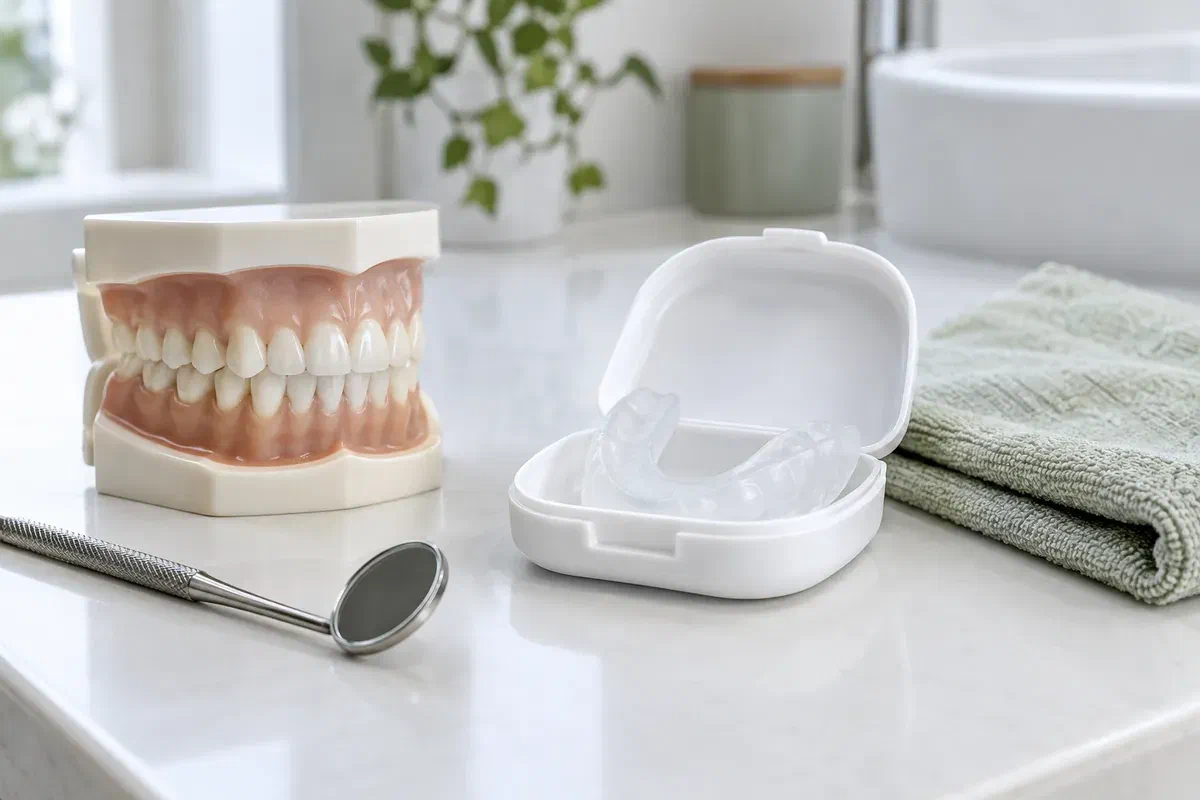
Find out when your child can return to sports and rough play, and whether a mouthguard is a good idea. An existing mouthguard may need checking after treatment. Protection cuts risk but cannot eliminate it.
Patient information: IADT — broken teeth and preserving a fragment
Keep a list of your questions for the visit. Some long-term answers only become clear as the tooth heals.
Ring our Bronte Street practice as soon as your child is settled so we can discuss availability and the next step. If an urgent injury can’t be seen here, please contact an available emergency dental provider straight away.
A knocked-out permanent tooth needs immediate care. Severe head injury, difficulty breathing or swallowing, or heavy bleeding that won’t stop requires emergency medical attention.
