

Illustrative parent and child discussing toothpaste with a dental clinician
Children’s Dentistry

Children’s Fluoride Treatment in Erin

Most of your child’s fluoride protection happens at the bathroom sink, two minutes at a time. From Erin or Hillsburgh, we can help you get the nightly routine right and decide whether a professional application adds anything.

Fluoride begins at home

The two minutes before bed

Bedtime brushing is where most children get their daily fluoride, and it is also where routines slip. A tired child, a rushed evening, a quick rinse with water afterwards: small habits change how much protection stays on the teeth. A professional application can add to that, but it builds on the nightly routine rather than replacing it.

Describe an ordinary evening for us. What paste do you use, how much goes on, who does the brushing and does your child rinse or spit? Note any earlier fillings, medicines, snacks or drinks after brushing, and whether your home in Erin uses a well or another water source. These details tell the dentist where the routine is strong and where it could improve.

None of this replaces regular exams, and fluoride can’t fix a tooth that has already decayed. If the dentist does suggest a professional application, ask which product it is, how it’s applied, how it fits with brushing that night and when the plan will be reviewed.

Get help with the nightly routine
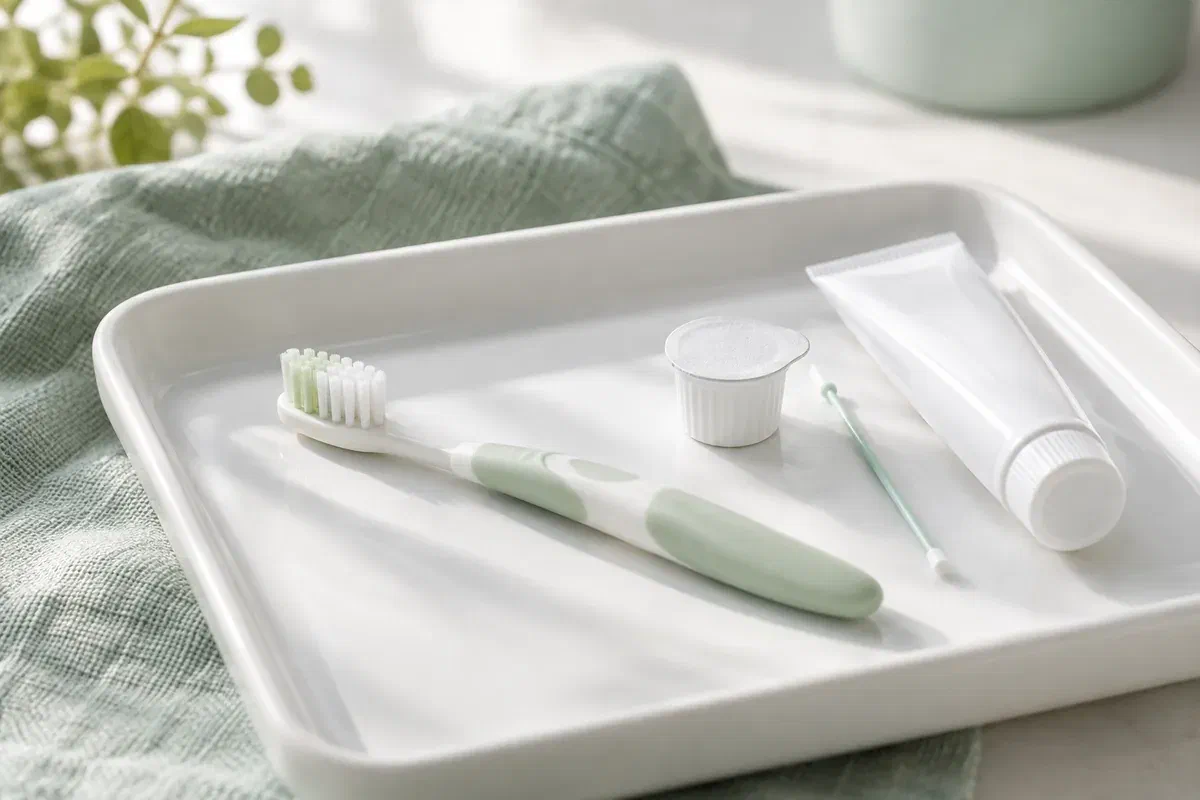
Illustrative fluoride applicator, small unit-dose cup, toothbrush, and toothpaste
Small habits, real effects

What happens at the sink matters most.

A new product won’t fix an inconsistent routine. Honest details about evenings at home let the dentist suggest changes you can actually keep.

Teeth that need extra help

Recent cavities, early spots being watched or teeth that are hard to reach all raise the stakes. Mention them so the dentist can judge whether added prevention makes sense. Past problems matter, but the advice should reflect what’s happening now.

Technique and the last rinse

Tell us how brushing goes and what happens afterwards. Spitting out the paste without a big rinse can help keep fluoride on the teeth, but young children need an adult managing the amount and the brushing. Ask the team to demonstrate if you’d like.

Snacks, drinks and other products

Milk or juice after brushing, rinses or supplements in the cabinet, and your drinking water all affect the picture. A product meant for an older child may not suit a younger one. The team can go through everything and explain what fits.

Before any professional application, mention allergies or a past reaction to dental products. Preparations contain different ingredients, so ask about the particular one being proposed.

How home and clinic fluoride work together

Daily protection, with an occasional boost

Fluoride helps enamel resist the acids that cause decay and can support remineralization of suitable early changes. Daily toothpaste provides a steady, low level, while a professional application delivers a measured dose in the clinic. Neither rebuilds missing structure. Ask what purpose a recommended application would serve for your child.

The routine at home does most of the heavy lifting. A clinic visit doesn’t guarantee your child will avoid cavities. Consistent brushing, limiting food and drinks after the evening clean, and treating any diagnosed problem are what keep the plan working between reviews.

Patient information: CDA — fluoride and prevention

A clear role for each part

Ask what the professional application adds on top of brushing, and which finding supports it. Understanding the roles makes it easier to stick with both. If advice changes later, ask what the dentist noticed.

A bedtime routine that holds up

Ask what to keep doing, what to change and whether timing matters, for example brushing as the last thing before sleep. Consistent habits do more than any one product. Keep the routine simple enough to manage on busy evenings.

Space for your questions

Taste, ingredients, swallowing and quantity are all fair topics. The clinician can explain the product and sensible alternatives. Expect enough information to make your own choice, not pressure to agree.

In the chair

A short visit, with advice to take home

The method and timing depend on the product and your child. Much of the visit may focus on adjusting home habits.

  1. Talk through the routine

    The dentist reviews the exam, earlier decay, age and how brushing goes at home. Mention swallowing concerns, medical conditions or medicines. Ask whether the advice is a professional application, a home-care change or both.

  2. Explain the preparation

    The team should describe the product, why it’s suggested, how it’s applied and the relevant precautions. Varnish, painted on in a thin layer, is one possibility. Find out what your child might taste or feel, and mention past reactions.

  3. Apply and coach

    The clinician applies the product using an amount and technique suited to your child. Along the way, the team may show you brushing angles or how much paste to use. If your child needs a pause, just say so. When the usual approach isn’t working for your child, the team can explain a reasonable adjustment or a different option.

  4. Plan tonight’s brushing

    Ask whether your child should brush tonight after the specific product, and when eating and drinking can resume. Confirm the next review, and whether another application is planned. Make sure other caregivers who handle bedtime, including a sitter or grandparent, know the instructions.

Tonight and every night

What to do at bedtime after a fluoride visit

Aftercare depends on the preparation used. Follow the treating team’s directions instead of a general waiting period you’ve read online.

Ask about this evening

Before leaving, confirm whether to brush tonight and when your child can eat and drink. Teeth may feel coated or look slightly different for a while, which is expected with some products. Call with questions instead of scrubbing it off.

The amount on the brush

Health Canada guidance calls on a professional to assess risk for children under three, with a rice-grain smear for those at risk, brushed by a parent. From three to six, a pea-sized amount is used with adult help, and children should spit rather than rinse heavily. Ask what fits your child.

Out of reach, under supervision

Adults should set the amount and store toothpaste, rinses and prescriptions where children can’t get them. Don’t add supplements or stronger products without advice. Swallowing much more than a normal brushing amount is a reason to call poison control or a medical professional without delay.

Patient information: Health Canada — fluoride and children’s toothpaste use

Ways to strengthen prevention

Where can the biggest gains come from?

Ask which options fit your child’s risk and age. A clear plan keeps prevention separate from treating a cavity that has already formed.

When the exam supports extra protection

An occasional professional application

Based on the findings, the dentist may suggest a suitable product and schedule. Ask what benefit to expect, the cautions involved and when it will be reassessed. It shouldn’t be automatic at every visit, and it works best when the evening routine is already steady.

When home habits need tightening

A better bedtime routine

Brushing last thing before sleep, using the right amount, spitting instead of rinsing and more adult help often make the biggest difference. Rinses or prescription products need clear guidance. Ask for a routine that works on your busiest evenings.

When a particular tooth needs more

Sealants or a filling

A deep groove may benefit from a sealant, and a damaged tooth may need restoring. Fluoride doesn’t replace either. Ask which finding each option targets and whether they’re designed to work together.

Home-routine questions

Brushing, rinsing and bedtime

Bring the toothpaste and your questions about evenings at home. Answers should fit your child’s overall prevention plan.

(905) 876-4488
Should my child rinse with water after brushing?
Spitting out the excess without a big rinse can help leave more fluoride on the teeth. Young children may not manage this yet, so ask the dentist what’s realistic for your child’s age and ability.
Is brushing in the morning or at night more important for fluoride?
Both matter, but the evening brush is especially valuable because saliva flow drops during sleep. Try to make it the last thing before bed, with no food or sugary drinks afterwards, unless the dentist advises otherwise.
My child falls asleep before we brush. What can we do?
Try brushing earlier in the bedtime routine, before stories or quiet time. The team can suggest practical ways to make it stick, such as keeping the brush and paste where the routine starts. Ask whether your child’s risk also supports a professional application, while remembering it doesn’t replace the nightly brush.
Can my child have a drink of milk after brushing at night?
Milk and other drinks besides water after the evening brush can raise decay risk. Ask the dentist how to handle a bedtime drink in your child’s situation, and what to do on the night of a fluoride application.
Why is my child’s professional fluoride schedule different from a friend’s?
Schedules follow each child’s risk, findings and fluoride exposure. Ask the dentist to explain the reasoning for your child, and when it will be reviewed, instead of comparing with other families. Two children of the same age can have very different needs.
How can we fit a fluoride visit into a week when we’re driving in from Erin?
Ask the team to combine the fluoride discussion with a checkup if possible, and book the next review before leaving. Bring your toothpaste and product details so everything can be covered in one trip.
Book from Erin

Bring your bedtime questions.

Call or send a booking request to our Bronte Street practice to go over your child’s fluoride needs, past cavities and evening routine. We’ll discuss whether professional care makes sense and give practical steps for brushing at home.

Products and frequency are chosen for each child. Bring the toothpaste you use and mention allergies or previous reactions before treatment.

Visit Milton Dental Clinic
Unit 1, 342 Bronte St. S, Milton, ON L9T 5B7
Get directions Clinic hours
Monday–Thursday
11am–7pm
Friday–Sunday
By appointment only

Areas we serve

  • Milton
  • Oakville
  • Mississauga
  • Georgetown
  • Halton Hills
  • Acton
  • Campbellville
  • Brampton
  • Burlington
  • Puslinch
  • Rockwood
  • Erin
  • Caledon
  • Etobicoke
  • Old Milton
  • Bronte Meadows
  • Timberlea
  • Dorset Park
  • Dempsey
  • Clarke
  • Beaty
  • Coates
  • Harrison
  • Scott
  • Willmott
  • Ford
  • Bowes
  • Cobden
  • Walker
  • Mountain View
  • Milton Heights
  • Hawthorne Village
  • Valley View
  • Fallingbrook
  • Nassagaweya
  • Trafalgar
  • Esquesing
  • Nelson
  • Brookville
  • Moffat
  • Glen Williams
  • Norval
  • Limehouse
  • Stewarttown
  • Ashgrove
  • Hornby
  • Silver Creek
  • Speyside
  • Scotch Block
  • North Oakville
  • River Oaks
  • Glen Abbey
  • West Oak Trails
  • Palermo
  • Bronte Creek
  • College Park
  • Joshua Creek
  • Uptown Core
  • Preserve
  • Iroquois Ridge
  • Lisgar
  • Meadowvale
  • Meadowvale Village
  • Churchill Meadows
  • Erin Mills
  • Central Erin Mills
  • Streetsville
  • East Credit
  • Creditview
  • Heartland
  • Sheridan
  • Mount Pleasant
  • Credit Valley
  • Huttonville
  • Churchville
  • Springbrook
  • Northwest Brampton
  • Bram West
  • Fletcher's Meadow
  • Fletcher's Creek South
  • Alton Village
  • Orchard
  • Millcroft
  • Headon Forest
  • Tansley
  • Brant Hills
  • Tyandaga
  • Kilbride
  • Lowville
  • Aberfoyle
  • Morriston
  • Arkell
  • Hillsburgh
  • Freelton
  • Carlisle
  • Waterdown
  • Flamborough
  • Mountsberg

How can we help?

Milton Dental Clinic

Have a question about your smile? Choose the option that works best for you.

For urgent dental concerns, please call.
Messages are reviewed during clinic hours.