

Illustrative child learning about a toothbrush before a cleaning appointment
Children’s Dentistry

Children’s Teeth Cleaning in Oakville

Spotted a yellow line near the gums or a dark fleck on a molar? A children’s cleaning helps sort surface buildup from things that need a closer look. Families come from Oakville for gentle cleaning, honest answers and brushing coaching.

It started with a mark on a tooth

Is it plaque, a stain, or something else?

Parents often book a first cleaning after noticing something during the bedtime routine: a fuzzy coating on the back teeth, a chalky line, a speck that won’t brush off. A cleaning visit can deal with deposits that are truly on the surface, and the team can explain what they see in terms both you and your child can follow.

If you are coming from Oakville, including the northern neighbourhoods, mention what caught your eye and when it first appeared. Tell us, too, how your child feels about new experiences, whether a tooth is sensitive, and if gagging or a difficult earlier visit is part of the story. We adapt the cleaning to those findings rather than shrinking an adult appointment.

Then there is the toothbrush at home. You can ask where your help is still needed, and your child can learn which surfaces to aim for. Professional cleaning works alongside that routine. It does not replace it, and some marks, sore spots and problems will need more than a polish.

Request your child’s cleaning
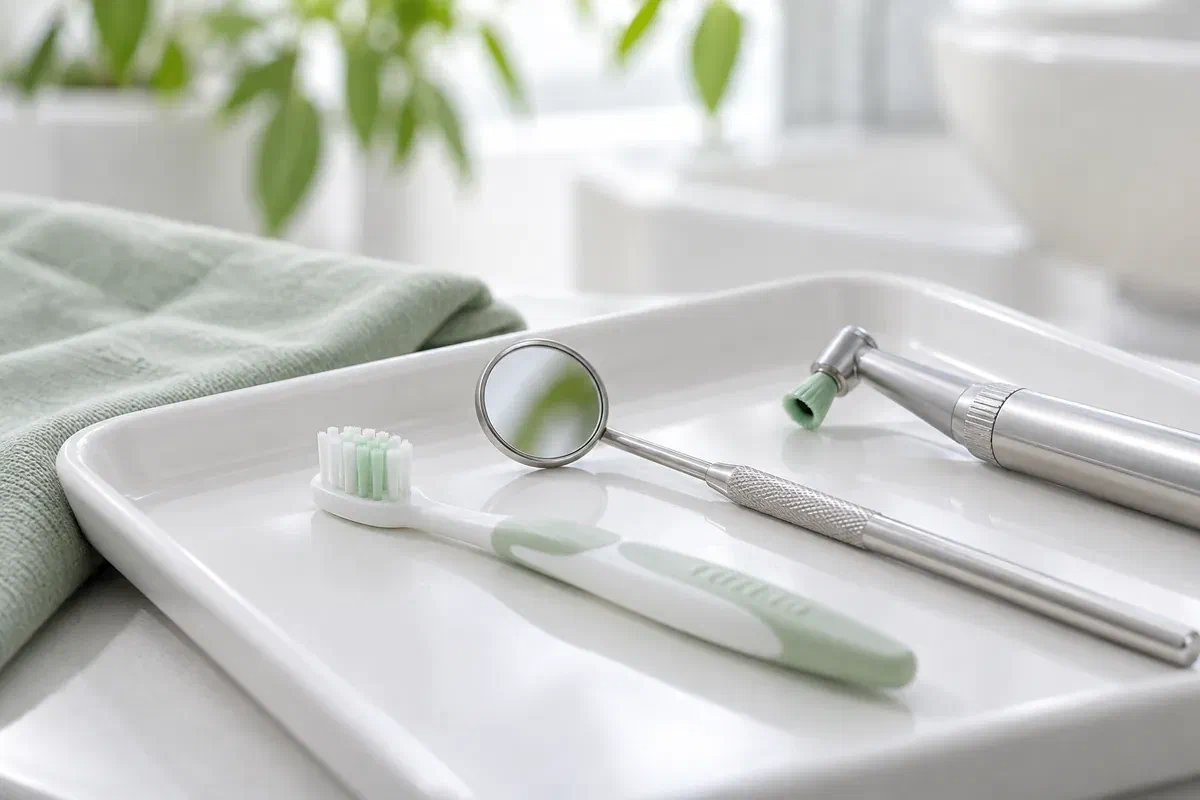
Illustrative child-sized toothbrush, dental mirror, and polishing instrument
Details that help us plan

Describe it the way you see it.

You don’t need the right words. Tell us what you noticed and resist assuming the answer is simply a better polish.

A coating, a discoloured patch, or roughness

Let us know where it is and whether it showed up recently. Some changes are surface deposits that cleaning can lift. Others come from within the tooth or have another cause, and an assessment helps tell them apart.

Bleeding gums or a tooth that’s sore to brush

Say if your child flinches at one spot, complains of sore gums, or skips a section of the mouth. Note whether chewing bothers them too. Please don’t ask them to tough out significant discomfort, because the reason may need examination.

Sensory or communication needs

Noise, water, a strong flavour or being touched can be hard for some children, and others need instructions in a particular format. Tell us what helps. We can plan pauses and explanations, without promising every child will manage the same amount at a first visit.

Please mention new pain, swelling or a recent injury when you call. That may call for an assessment first, and the team can explain which appointment is appropriate.

What a cleaning can and can’t do

A clearer view of the teeth, and of the routine.

With suitable methods, a cleaning can remove the plaque, external staining and hardened deposits the team identifies. Clean surfaces help the examination, and the visit gives you a chance to see brushing demonstrated on your own child’s teeth. Whether anything further is needed depends on the findings.

A bright smile afterward does not prove the whole mouth is healthy. Cleaning won’t repair decay, explain every cause of pain, or guarantee gum inflammation stays away. Ask which of your concerns the cleaning addressed and whether a separate examination or treatment conversation is needed.

Patient information: AAPD — the role of professional cleaning in pediatric care

An answer about that specific spot

Rather than leaving with a general brush-better message, ask about the exact area that worried you. The team can show a way to clean it and say where an adult should help. Once your child can see the target, brushing may make more sense.

Growing familiarity with the dental chair

Explaining the chair, tools and sequence gives your child useful knowledge for future visits, though every child gains confidence at their own pace. Let us know afterward what stuck with them, so the next visit can pick up from there.

Less to buy, more to understand

Ask whether your child’s brush size, grip and method suit their abilities. Another product is rarely the most useful change. Often the next step is clearer adult help or a technique that reaches the back molars more easily.

Inside the appointment

Four parts, explained as we go.

We tell your child what is planned in words that fit their age. Confirm with us if an examination, fluoride or another service is booked alongside the cleaning.

  1. Talk it through

    We check health updates and concerns, and learn what your child finds comfortable or difficult. They can ask about a tool before it is used. We agree on a pause signal, and you can tell us if a communication method needs preparing.

  2. Look closely

    The team examines deposits, gum health and any dental work in place. The dentist may need to assess a finding before cleaning continues. This is a good moment to point at the mark that brought you in and hear what the team thinks it is.

  3. Clean with care

    The clinician chooses tools to match the deposits found, from a soft rotating brush to hand instruments, and skips what isn’t needed. If water, taste or a new sensation is bothering your child, say so and we can slow down.

  4. Practise and plan

    Ask to see brushing demonstrated, along with any suitable cleaning between teeth. We confirm what was done and whether more care remains, then discuss why and when the next visit should happen, including areas to review.

Once you’re home

Gentle, consistent and supported.

Follow any instructions about products or treatments provided at the visit. What to do after fluoride or another procedure may differ from what to do after cleaning only.

Work on one change

Choose a single takeaway, such as brushing along the gumline where that line appeared, or taking over for the last few strokes. Keep it calm and predictable. If it is hard to recreate, ask us to walk you through it again.

Keep supervising

Use the toothpaste and amount advised for your child’s age and needs. A smooth appointment doesn’t mean your child is ready to brush unsupervised. Ask how to check their progress as their skills develop.

Watch for soreness or a new concern

Contact us if discomfort is significant, getting worse or not settling as advised. Ongoing bleeding or pain deserves an explanation. Don’t scrub a tender area harder or try to scrape deposits with a metal tool bought for home use.

Matching the visit to the concern

Different questions call for different appointments.

Ask what is included and why each service is recommended. The right mix depends on what your child needs at this point.

When buildup and home care are the focus

Cleaning with brushing instruction

The visit addresses identified cleaning needs and gives practical tips. How much is done depends on the mouth and how your child manages. Ask what was completed and whether a further visit has a specific purpose.

When a mark or symptom needs a diagnosis

Examination or a focused assessment

Pain, a damaged tooth, staining that doesn’t look like surface buildup, or ongoing gum trouble may need examination. Describe the concern before the visit, and the dentist can explain whether separate treatment planning is needed.

When risk or visit needs are greater

More prevention or extra support

Fluoride, sealants or a different appointment style may be discussed after assessment. A child with more complex needs may benefit from additional planning or a referral. Ask what each recommendation is for.

Stains, plaque and cleaning questions

What parents want to know about those marks.

Ask about discolouration, sensations and brushing at home. Children’s questions are welcome as well.

(905) 876-4488
Could my child’s iron drops or certain foods be causing dark marks?
Some supplements, drinks and foods can leave surface staining. Bring a list of what your child takes regularly, and ask whether the marks look like external stain or something that needs a different explanation.
Is whitening toothpaste a good idea for a child with stains?
Ask before trying it. Products made for adults may not suit children, and a stain may not be on the surface at all. The team can suggest a toothpaste and amount appropriate for your child’s age and needs.
Why does plaque keep coming back along the gumline so quickly?
Plaque forms every day, and the gumline is easy to miss, especially with small hands. Ask for a demonstration of the brush angle for that area, and whether an adult should be doing that part for now.
My child says the polishing tickles. Can it be skipped if they dislike it?
Not every instrument is needed for every child. Tell the clinician how your child feels about the sensation and ask whether another suitable approach is available for the deposits found.
If a mark doesn’t come off, does that mean there’s a cavity?
Not necessarily. A mark that stays could be part of the tooth’s structure, an older stain, or something that needs examination. Ask the dentist what it appears to be and whether follow-up is recommended.
Can we plan the visit around school in Oakville without missing much class?
Mention your preferred times when you call. Weekday appointments run into the evening, and Friday to Sunday visits are by appointment. The team can help you find an option that suits your child’s schedule.
Planning a cleaning from Oakville

Bring the question. We’ll help with the answer.

Reach our Bronte Street practice to talk about your child’s cleaning and what you have noticed. Share any sore areas, earlier dental experiences and support needs so the appointment can be planned with care.

The cleaning approach and length of the visit depend on assessment. Please mention pain or swelling when you arrange care.

Visit Milton Dental Clinic
Unit 1, 342 Bronte St. S, Milton, ON L9T 5B7
Get directions Clinic hours
Monday–Thursday
11am–7pm
Friday–Sunday
By appointment only

Areas we serve

  • Milton
  • Oakville
  • Mississauga
  • Georgetown
  • Halton Hills
  • Acton
  • Campbellville
  • Brampton
  • Burlington
  • Puslinch
  • Rockwood
  • Erin
  • Caledon
  • Etobicoke
  • Old Milton
  • Bronte Meadows
  • Timberlea
  • Dorset Park
  • Dempsey
  • Clarke
  • Beaty
  • Coates
  • Harrison
  • Scott
  • Willmott
  • Ford
  • Bowes
  • Cobden
  • Walker
  • Mountain View
  • Milton Heights
  • Hawthorne Village
  • Valley View
  • Fallingbrook
  • Nassagaweya
  • Trafalgar
  • Esquesing
  • Nelson
  • Brookville
  • Moffat
  • Glen Williams
  • Norval
  • Limehouse
  • Stewarttown
  • Ashgrove
  • Hornby
  • Silver Creek
  • Speyside
  • Scotch Block
  • North Oakville
  • River Oaks
  • Glen Abbey
  • West Oak Trails
  • Palermo
  • Bronte Creek
  • College Park
  • Joshua Creek
  • Uptown Core
  • Preserve
  • Iroquois Ridge
  • Lisgar
  • Meadowvale
  • Meadowvale Village
  • Churchill Meadows
  • Erin Mills
  • Central Erin Mills
  • Streetsville
  • East Credit
  • Creditview
  • Heartland
  • Sheridan
  • Mount Pleasant
  • Credit Valley
  • Huttonville
  • Churchville
  • Springbrook
  • Northwest Brampton
  • Bram West
  • Fletcher's Meadow
  • Fletcher's Creek South
  • Alton Village
  • Orchard
  • Millcroft
  • Headon Forest
  • Tansley
  • Brant Hills
  • Tyandaga
  • Kilbride
  • Lowville
  • Aberfoyle
  • Morriston
  • Arkell
  • Hillsburgh
  • Freelton
  • Carlisle
  • Waterdown
  • Flamborough
  • Mountsberg

How can we help?

Milton Dental Clinic

Have a question about your smile? Choose the option that works best for you.

For urgent dental concerns, please call.
Messages are reviewed during clinic hours.