

Illustrative child and parent discussing a tooth model with a dental clinician
Children’s Dentistry

Children’s Tooth-Coloured Fillings in Burlington

A chipped front tooth after a tumble, or a cavity near the smile line, raises questions about looks as well as health. From Burlington, find out how a tooth-coloured repair is assessed, chosen and checked.

Visible teeth, practical repairs

The chip shows. The real question is underneath.

A missing corner on a front tooth is hard to ignore, for you and for your child. Damage near the smile often makes appearance feel like the top priority. A dentist still begins with the health of the tooth: how much was lost, whether the inner layers are exposed, and whether the tooth was loosened or pushed out of position.

Tooth-coloured materials are frequently used where damage is visible, and they can also repair back teeth. The suitability of a filling depends on how much tooth remains, whether it is a primary or adult tooth, and whether moisture can be controlled during bonding. For a recent knock, the tooth may need time and monitoring before a final repair.

Tell us what happened and how your child has reacted since. Some children become self-conscious about a chip, while others are more worried about the dentist. For households in Burlington, it also helps to know your schedule so a sensible plan can be set out, including prevention and any follow-up the tooth needs.

Ask about repairing a chipped or decayed tooth
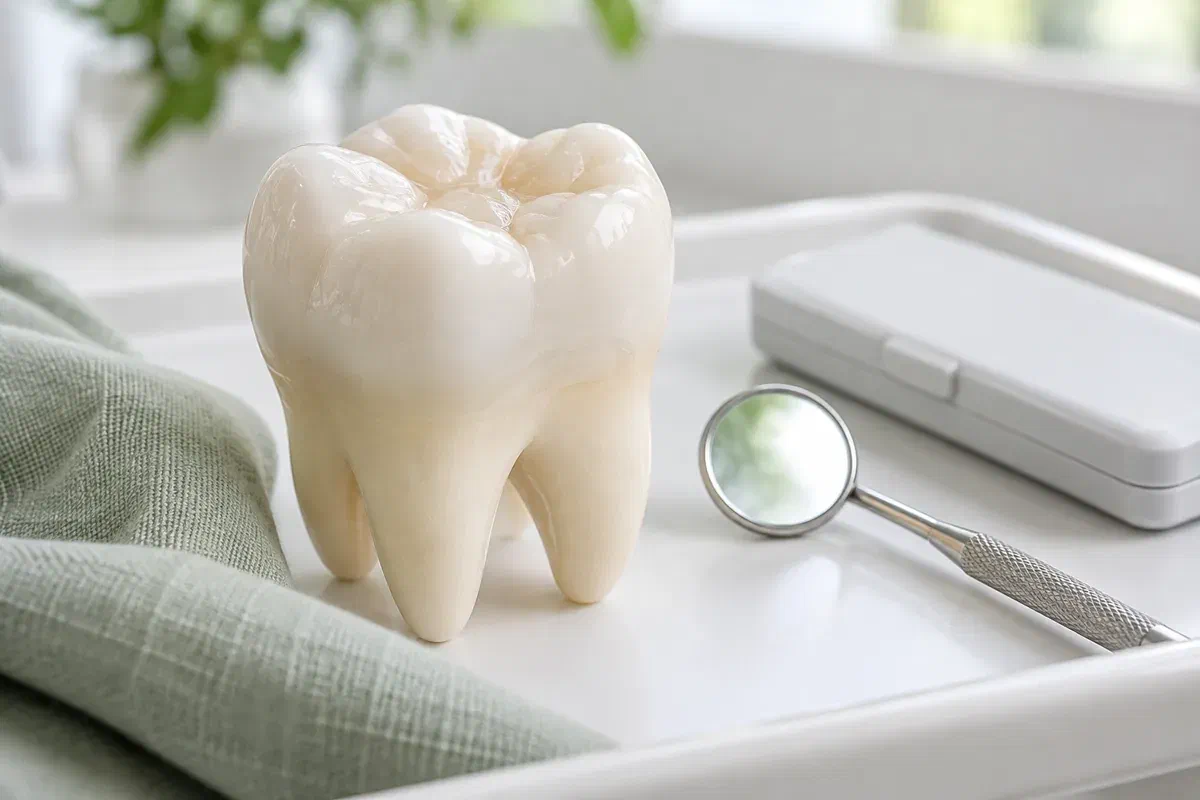
Illustrative opaque molar teaching model with a tooth-coloured repair
What you have noticed

A chip, a stain, or a sore spot?

Different problems can look similar from the outside. Describe the change, when it appeared and how it is affecting your child, so the dentist can investigate the right cause.

Broken edge or rough surface

Note whether a fall, a hard snack or a sports bump came first, and keep any broken piece in water or milk in case it helps. The dentist needs to see how far the break extends. A small-looking chip can sometimes reach closer to the nerve than expected.

Sensitivity, aching or tenderness

Say when it hurts, how long it lasts and whether sleep is affected. Ongoing pain, swelling, a darkening tooth or a sore gum above it may indicate injury or infection affecting the pulp. In those cases a filling may not be the right first step.

Self-consciousness or appointment worries

Let us know if your child is upset about how the tooth looks, or anxious about care. Mention sensory sensitivities, communication needs and past experiences with freezing. Good isolation is required for bonding, so these details also shape material choice and planning.

A tooth that has been knocked out, pushed, or broken with bleeding or pain needs urgent attention. Call us right away, and seek emergency medical care for a head injury or if your child seems unwell.

What a good repair does

Natural colour, with strength where it counts.

A direct tooth-coloured filling is bonded to the tooth and sculpted in place to replace what was lost. On a front tooth, that can restore the outline of an edge. On a back tooth, it can rebuild part of a chewing surface. Looking natural is helpful, but a sound, well-suited repair is the main aim.

White materials have different personalities. Composite resin can be shaded and polished, while glass ionomer materials have other properties, including different strength and moisture tolerance. Ask which one is planned and what limits it has in that position. Front-tooth repairs in particular can chip again with another knock, and no filling is guaranteed to last.

Patient information: AAPD — pediatric restorative dentistry

Built to what is left

The amount and position of the remaining tooth guide the plan. A large break or deep decay may call for a different restoration, or for treatment of the nerve first. This is why two chips that look alike can lead to quite different advice.

A bite that still works

Front-tooth repairs need to fit how the teeth close and how your child bites into food. After placement, the bite is checked. If your child later says the tooth catches or feels odd when biting into an apple, let us know.

Prevention that includes protection

Alongside brushing help, fluoride and limiting frequent sweet drinks, the visit can cover protecting teeth during sports, whether that is hockey or soccer in Burlington or a backyard trampoline. Choose advice that fits your family’s routines. Repairing one tooth does not lower the risk to the others.

Inside the visit

Assess, protect, rebuild, review.

The exact sequence depends on the cause and the material. Your child can be shown a hand signal to request a pause whenever they need one.

  1. Find out what is going on

    The dentist examines the tooth and may recommend X-rays where they would help, especially after an injury. Ask whether a filling is suitable now, what other options exist, and what might happen if it waits. Check whether the tooth is a baby tooth or an adult one.

  2. Make the area comfortable and dry

    Local anaesthetic is used if it is indicated, with a gentle explanation for your child. The tooth is then isolated so moisture does not interfere with bonding. Tell the team if your child appears uneasy, even when they are not saying anything.

  3. Prepare and sculpt the filling

    Any decay or weak edges are prepared according to what was found. The material is layered or placed and set as it requires, then shaped to match the tooth. Bonded white materials depend heavily on a dry field, so conditions on the day can affect the result.

  4. Polish, check and plan ahead

    The dentist checks the outline, surface and bite. Before you leave, ask about eating, numbness and warning signs. After an injury, ask how the tooth will be followed in the coming months, and when this repair should be reviewed.

Looking after it

Gentle for a day. Watchful for longer.

Follow the instructions for the material and any freezing used. Children frequently forget that a numb lip can be bitten without them feeling it.

Care for numb lips and cheeks

Wait to eat as advised until feeling returns. Watch for nibbling or sucking at the numb lip, which is common after front-tooth work. If a sore appears or you are unsure what to do, phone the clinic.

Report bite changes or discomfort

Tell us if the repaired tooth hits first, hurts when biting, or becomes sensitive in a way that is strong, lasting or increasing. Note what triggers it. Please do not encourage your child to keep biting on it to see if it settles.

Brush gently, avoid using teeth as tools

Keep up normal brushing and cleaning between teeth with your help as advised. Discourage biting pencils, nails or packaging. If a piece of the filling chips or an edge feels rough, call us instead of filing it at home.

Patient information: AAPD — local anaesthesia for pediatric dental patients

Possible approaches

Looks matter. Health leads.

Ask how each option affects the number of visits, how long the repair might last and what monitoring will follow.

For a chip or cavity suited to direct repair

Bonded tooth-coloured filling

Composite or another white material may be used when the damage and conditions allow. The dentist can explain how well it is likely to hold up in that spot and what affects bonding. Wanting a natural look is valid, but it cannot decide suitability alone.

For deeper damage or an affected pulp

Nerve treatment or a crown

A break or cavity that reaches the pulp, or a tooth weakened over a wide area, may need more than a filling. A crown, pulp therapy or other care may be discussed. Ask what each is designed to do and whether a specialist referral would be helpful.

For early changes or a tooth still settling

Monitoring and prevention

Some early decay can be managed without drilling, and an injured tooth may be watched before a final decision. Either approach needs a defined plan, specific home care and a review date, so nothing is simply left without explanation.

Questions about visible repairs

Chips, colour, and keeping the smile intact.

Your child’s questions are welcome, including the ones about how the tooth will look. Clear answers often ease the worry.

(905) 876-4488
Can a chipped front tooth be repaired with a white filling?
Often it can, if the break is suitable and the nerve is not affected. The dentist will check the tooth, sometimes take X-rays, and explain whether a bonded repair, monitoring or another treatment is appropriate.
What should I do right after my child chips a tooth?
Rinse gently, apply light pressure if there is bleeding, and save any fragment in milk or water. Call the clinic promptly. A knocked-out adult tooth is an emergency and needs immediate advice; a head injury needs medical assessment.
Will the repair stain or change colour over time?
Over time, white materials can pick up stains or dull slightly, particularly at the edges. Good brushing helps, and the dentist can check the surface at reviews. If appearance changes noticeably, polishing or replacement can be discussed.
Should my child wear a mouthguard for sports after this?
A properly fitted mouthguard is often recommended for contact sports and activities with a risk of falls. Ask the dentist what type suits your child’s age and activity, especially if they have recently had a front-tooth repair.
Is choosing white for a front tooth purely cosmetic?
Appearance matters more on a visible tooth, but suitability still depends on the size of the damage, the bite and moisture control. Share your preference and ask about the strengths and limits of each option.
How will the dentist follow up an injured tooth that was repaired?
Injured teeth are sometimes reviewed over months, because changes in the nerve can appear later. The dentist may check colour, sensitivity and X-rays. Keep the follow-up visits even if your child feels fine.
Burlington kids’ tooth repairs

Let’s check the tooth, then talk about the smile.

Book a visit at our Bronte Street practice to have your child’s chipped or decayed tooth assessed. Let us know what happened, any symptoms, and how your child feels about dental care so we can plan a suitable next step.

Repairs depend on examination findings. Call right away after a dental injury or if pain or swelling develops.

Visit Milton Dental Clinic
Unit 1, 342 Bronte St. S, Milton, ON L9T 5B7
Get directions Clinic hours
Monday–Thursday
11am–7pm
Friday–Sunday
By appointment only

Areas we serve

  • Milton
  • Oakville
  • Mississauga
  • Georgetown
  • Halton Hills
  • Acton
  • Campbellville
  • Brampton
  • Burlington
  • Puslinch
  • Rockwood
  • Erin
  • Caledon
  • Etobicoke
  • Old Milton
  • Bronte Meadows
  • Timberlea
  • Dorset Park
  • Dempsey
  • Clarke
  • Beaty
  • Coates
  • Harrison
  • Scott
  • Willmott
  • Ford
  • Bowes
  • Cobden
  • Walker
  • Mountain View
  • Milton Heights
  • Hawthorne Village
  • Valley View
  • Fallingbrook
  • Nassagaweya
  • Trafalgar
  • Esquesing
  • Nelson
  • Brookville
  • Moffat
  • Glen Williams
  • Norval
  • Limehouse
  • Stewarttown
  • Ashgrove
  • Hornby
  • Silver Creek
  • Speyside
  • Scotch Block
  • North Oakville
  • River Oaks
  • Glen Abbey
  • West Oak Trails
  • Palermo
  • Bronte Creek
  • College Park
  • Joshua Creek
  • Uptown Core
  • Preserve
  • Iroquois Ridge
  • Lisgar
  • Meadowvale
  • Meadowvale Village
  • Churchill Meadows
  • Erin Mills
  • Central Erin Mills
  • Streetsville
  • East Credit
  • Creditview
  • Heartland
  • Sheridan
  • Mount Pleasant
  • Credit Valley
  • Huttonville
  • Churchville
  • Springbrook
  • Northwest Brampton
  • Bram West
  • Fletcher's Meadow
  • Fletcher's Creek South
  • Alton Village
  • Orchard
  • Millcroft
  • Headon Forest
  • Tansley
  • Brant Hills
  • Tyandaga
  • Kilbride
  • Lowville
  • Aberfoyle
  • Morriston
  • Arkell
  • Hillsburgh
  • Freelton
  • Carlisle
  • Waterdown
  • Flamborough
  • Mountsberg

How can we help?

Milton Dental Clinic

Have a question about your smile? Choose the option that works best for you.

For urgent dental concerns, please call.
Messages are reviewed during clinic hours.