

Illustrative child and parent discussing a tooth model with a dental clinician
Children’s Dentistry

Children’s Tooth-Coloured Fillings in Campbellville

An early spot that was being watched can change, and then the plan changes with it. For households in Campbellville, learn when monitoring gives way to a tooth-coloured filling and how visits can be grouped.

From watching to repairing

When a watched spot needs more.

Early enamel changes are sometimes managed with fluoride, better brushing and regular checks instead of drilling. That is a legitimate plan, and many spots stay stable. Occasionally, though, a review shows the surface has broken down or the change has deepened. At that point, the conversation turns to repair.

A dentist then reassesses the tooth from the beginning: how far the decay now reaches, how much sound structure is left, whether it is primary or permanent, and whether a dry field can be kept for placement. Where a direct repair suits it, a tooth-coloured filling may be offered. Sometimes another treatment is more appropriate.

Rural households around Campbellville often like to bundle appointments to save trips. Let us know about your family’s schedule and about how your child handles care. Bring along any notes or photos from earlier reviews if you have them. Even with a filling in place, the habits that kept other spots stable still matter, and they will be part of the plan going forward.

Ask whether a monitored spot needs repair
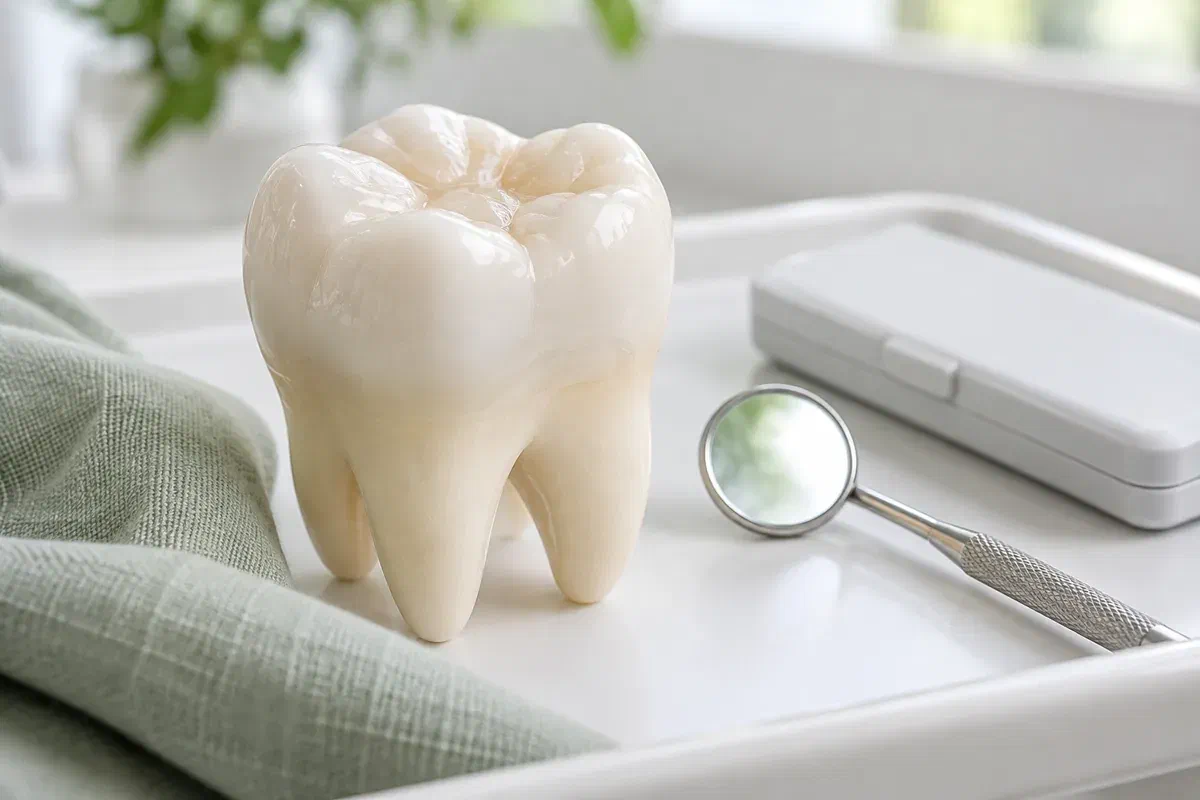
Illustrative opaque molar teaching model with a tooth-coloured repair
Changes to report between reviews

Has the spot looked or felt different lately?

Between planned checks, you are the one who sees the tooth. Tell us about any changes so the dentist can decide whether an earlier visit is needed.

A spot that darkens, softens or catches

Note if a white or brown mark gets darker, feels rough, or starts trapping food. The dentist checks whether the surface has broken. A spot that has changed only slightly to the eye may have progressed more beneath the enamel.

New sensitivity or discomfort

Mention any reaction to sweets, cold or chewing, how long it lingers and whether nights are affected. Spontaneous pain or swelling could mean the decay has reached the pulp. A filling may then not be enough on its own.

How your child is managing care

Share sensory sensitivities, communication needs and how earlier visits went, including any numbing. If this would be your child’s first filling, say so. These details help with planning and with keeping the tooth isolated for the material being considered.

Rapidly growing pain, a swollen face or gum, or a broken tooth should not wait for the next planned check. Phone us promptly, and seek medical care for a child who is becoming unwell.

Why act when it changes

Repair the breakdown before it spreads further.

Once the surface of a tooth breaks down, decay can trap plaque in a way that brushing and fluoride cannot reach. A direct filling removes the damaged area and rebuilds it, shaped right in the mouth. A tooth-coloured result can be a welcome bonus, but the focus is a restoration suited to the tooth.

Not all white materials behave the same. Composite resin and glass ionomer options differ in strength, bonding and how well they manage moisture. Ask which is proposed and why. Fillings can wear, chip or develop new decay at the margins, and none comes with a guarantee of permanence.

Patient information: AAPD — pediatric restorative dentistry

Sized to how much tooth remains

If decay progressed while being monitored, the dentist will check whether there is still enough structure for a filling. When there isn’t, a crown or another restoration may be advised. This is part of why monitoring needs regular, honest reviews.

A surface that chews comfortably

After placement, the filling is shaped and its bite is checked against neighbouring teeth. Should your child mention in the days afterward that the tooth feels tall or sore, let us know. Simple remarks like these are worth passing on, because they can point to a small adjustment.

Lessons for the other spots

If one spot progressed, others may be at risk. Use the visit to review brushing help, fluoride and how often your child has sweet snacks or drinks. Repairing one tooth does nothing to protect the rest.

If a filling is the next step

Reassess, prepare, restore, recheck.

The specifics depend on what the reassessment shows and the material chosen. Agree beforehand on a gesture your child can use when they need a break.

  1. Compare with earlier findings

    The dentist re-examines the tooth and may suggest updated X-rays where clinically indicated, comparing them with earlier records. Ask what has changed, whether a filling is now the right step, what alternatives exist and what waiting longer could mean.

  2. Get comfortable and keep it dry

    If local anaesthetic is indicated, the team explains it in terms your child understands. The tooth is isolated from saliva. Tell the team if your child appears tense, since silence can mean they are coping, or simply overwhelmed.

  3. Remove decay and place the filling

    The affected tooth structure is prepared according to the findings. The material is placed and set as its instructions require. Some white materials are particularly sensitive to moisture, which affects which can be used.

  4. Check the bite and update the plan

    Shape and bite are reviewed. Ask what your child may eat, how long numbness might last and when to call. Find out whether other monitored spots have changed, and when this filling and those areas will be reviewed.

Back home

Supervise the frozen side, then carry on as before.

Follow the instructions for the material and any anaesthetic. Children may not realise a numb cheek or tongue can be bitten and injured.

Keep teeth away from numb tissue

Wait to eat as the team advises. Watch for biting, sucking or rubbing the numb area and redirect gently. Call us if you are unsure how to protect it or if a sore develops.

Notice how chewing feels

Report it if the tooth meets first, hurts when chewing, or develops sensitivity that is strong, persistent or worsening. Describe when it began and what sets it off. Avoid encouraging your child to keep chewing on a sore tooth.

Keep the prevention plan going

Continue the brushing, fluoride and cleaning between teeth that were part of the monitoring plan, with your help as advised. Keep reviews, and call about a broken piece or a lifted edge rather than fixing it at home.

Patient information: AAPD — local anaesthesia for pediatric dental patients

What may come next

Three possibilities after a reassessment.

Ask how each option affects the number of visits, how durable the repair is likely to be and what follow-up it requires.

When the change now suits a direct repair

Tooth-coloured filling

Composite or a comparable material may be proposed depending on how far decay has gone and how well the area can be isolated. You can expect a plain account of what each material offers and where it falls short. A preference for white is welcome, but it cannot decide suitability alone.

When decay has gone further than a filling can handle

Crown or pulp care

If the tooth has been weakened extensively or the pulp is affected, a crown, pulp therapy or another treatment may be discussed. Ask what each option aims to achieve and whether referral to a specialist is appropriate.

While the change remains early

Continue monitoring

Some spots that look different may remain suitable for prevention and close review, particularly if the surface is still intact and your child has no symptoms. If so, ask for specific home steps, a firm recheck date and what signs would bring that date forward, so the area keeps being followed rather than forgotten.

Questions about monitored spots

When watching stops and repair starts.

Children may wonder why a spot that didn’t need fixing before needs fixing now. We are glad to explain it to them.

(905) 876-4488
What changes mean a monitored spot now needs a filling?
Usually a break in the surface, spread of decay on X-rays, new symptoms or a spot that keeps catching food. The dentist compares current findings with earlier ones and explains what has changed before recommending repair.
Did monitoring the spot make things worse?
Monitoring is a recognised approach for some early lesions, and many stay stable. Some progress despite good care. Regular reviews are what allow a change to be caught, and the dentist can explain what was seen at each visit.
Can my child’s filling be booked alongside other family appointments?
Ask when you book. Grouping visits may be possible depending on availability and the treatment involved. For households in Campbellville, planning together can help reduce the number of separate trips.
Does it matter if our home uses well water?
It can. Private wells may not contain fluoride at the levels found in some treated water supplies. Mention your water source so the dentist can tailor fluoride advice for your child.
Does a filling weaken my child’s tooth?
Removing decay takes away damaged structure, and the filling restores the shape. Small and moderate fillings often work well. When a large part of the tooth is involved, a crown may provide better support, and the dentist will explain why.
What should I do if a filling comes out?
Keep the area clean, avoid chewing on that side and call the clinic. Don’t try to glue or replace it yourself. If there is pain or swelling, mention it when you call so the visit can be prioritised.
Campbellville kids’ fillings

If the spot has changed, let’s take another look.

Book a review at our Bronte Street practice to reassess the tooth that has been monitored. Tell us about any changes, symptoms and your child’s past experiences, and we will discuss a suitable next step.

Material and treatment depend on the exam. Call promptly if pain or swelling develops.

Visit Milton Dental Clinic
Unit 1, 342 Bronte St. S, Milton, ON L9T 5B7
Get directions Clinic hours
Monday–Thursday
11am–7pm
Friday–Sunday
By appointment only

Areas we serve

  • Milton
  • Oakville
  • Mississauga
  • Georgetown
  • Halton Hills
  • Acton
  • Campbellville
  • Brampton
  • Burlington
  • Puslinch
  • Rockwood
  • Erin
  • Caledon
  • Etobicoke
  • Old Milton
  • Bronte Meadows
  • Timberlea
  • Dorset Park
  • Dempsey
  • Clarke
  • Beaty
  • Coates
  • Harrison
  • Scott
  • Willmott
  • Ford
  • Bowes
  • Cobden
  • Walker
  • Mountain View
  • Milton Heights
  • Hawthorne Village
  • Valley View
  • Fallingbrook
  • Nassagaweya
  • Trafalgar
  • Esquesing
  • Nelson
  • Brookville
  • Moffat
  • Glen Williams
  • Norval
  • Limehouse
  • Stewarttown
  • Ashgrove
  • Hornby
  • Silver Creek
  • Speyside
  • Scotch Block
  • North Oakville
  • River Oaks
  • Glen Abbey
  • West Oak Trails
  • Palermo
  • Bronte Creek
  • College Park
  • Joshua Creek
  • Uptown Core
  • Preserve
  • Iroquois Ridge
  • Lisgar
  • Meadowvale
  • Meadowvale Village
  • Churchill Meadows
  • Erin Mills
  • Central Erin Mills
  • Streetsville
  • East Credit
  • Creditview
  • Heartland
  • Sheridan
  • Mount Pleasant
  • Credit Valley
  • Huttonville
  • Churchville
  • Springbrook
  • Northwest Brampton
  • Bram West
  • Fletcher's Meadow
  • Fletcher's Creek South
  • Alton Village
  • Orchard
  • Millcroft
  • Headon Forest
  • Tansley
  • Brant Hills
  • Tyandaga
  • Kilbride
  • Lowville
  • Aberfoyle
  • Morriston
  • Arkell
  • Hillsburgh
  • Freelton
  • Carlisle
  • Waterdown
  • Flamborough
  • Mountsberg

How can we help?

Milton Dental Clinic

Have a question about your smile? Choose the option that works best for you.

For urgent dental concerns, please call.
Messages are reviewed during clinic hours.