

Illustrative child and parent discussing a tooth model with a dental clinician
Children’s Dentistry

Children’s Tooth-Coloured Fillings in Mississauga

A hard past visit can make the next filling feel bigger than the tooth. For children from Mississauga, we plan a tooth-coloured repair around how your child copes, with clear steps, pauses and honest explanations.

Planning for a worried child

What if the last visit didn’t go well?

Some children arrive for a filling already braced for the worst, perhaps after a tooth that hurt for days or an appointment that ended in tears. That history deserves attention. Telling us about it beforehand lets the team think about pacing, explanations and breaks, rather than discovering the problem halfway through.

The clinical decision still comes first. The dentist checks where the damage is, how much healthy tooth remains, whether it is primary or permanent, and whether it can be kept dry enough for a tooth-coloured material. A child who finds it hard to stay still or keep their mouth open can affect that last point, so be candid about what you expect.

Families from Mississauga sometimes ask whether the appointment can be split up or shortened. It may be possible, depending on the work needed, and the team can talk through choices. Alongside the repair, we will look at the daily habits that help your child avoid needing the next one.

Plan a filling visit for an anxious child
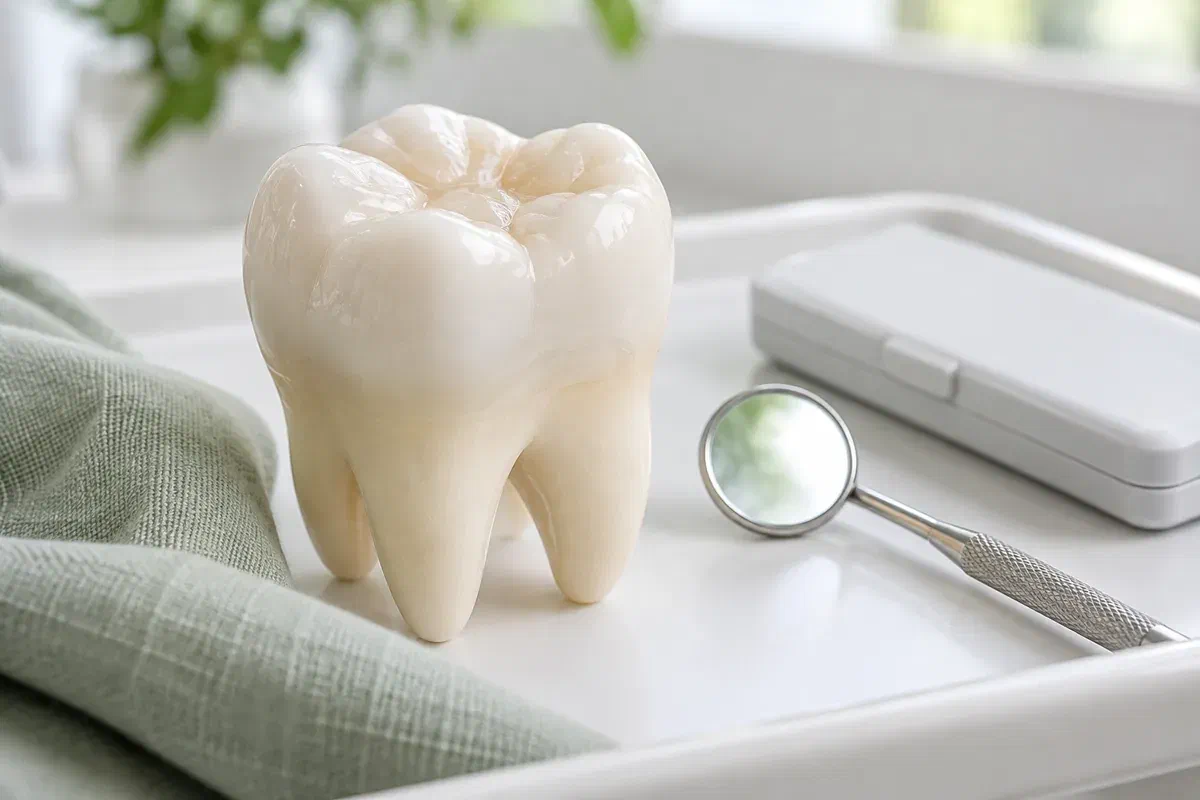
Illustrative opaque molar teaching model with a tooth-coloured repair
Useful things to share

Tell us about the tooth, and about your child.

Both matter. Describe the dental problem you have noticed and the reactions you are worried about, so the appointment can be set up to suit.

The spot that prompted the visit

Mention a visible hole, a broken edge or a place where food packs in after meals. The dentist determines the cause and depth with an exam and, if needed, imaging. Surface size alone cannot tell you whether a simple repair will be enough.

When it hurts and for how long

Describe the triggers and timing, including night waking. Spontaneous pain, swelling or a sudden change in what your child will eat may suggest the pulp is affected. That changes the conversation, because a filling on its own may not be the right treatment.

Fears, sensitivities and past numbing

Share what upset your child before, such as the taste of materials, the feeling of numbness, noise or lying back. Note communication needs or diagnoses that affect care. These details guide planning and also influence how well the tooth can be isolated.

Rising pain, swelling or a broken tooth should not be left until a planned filling date. Call us promptly, and seek medical care if your child is becoming unwell.

What the repair can achieve

A natural-looking fix that suits the tooth.

With a direct filling, the dentist removes the damaged part and rebuilds it with material shaped inside the mouth. Done well, it restores a chewing surface or the side of a tooth so food no longer catches. The white colour is a plus, though suitability for the tooth is what decides the plan.

Several materials can look tooth-coloured. Composite resin and glass ionomer types differ in how they bond, how they handle moisture and how they wear. Ask what is proposed, why it suits your child, and what limitations apply. Fillings can wear or break over time, and none comes with a guarantee.

Patient information: AAPD — pediatric restorative dentistry

Recommended for the tooth in front of us

How large the damage is and where it sits will shape the advice. A tooth that has lost a lot of structure may be better served by a crown or another restoration. Knowing this helps explain why recommendations can differ between children.

Shaped for a comfortable bite

The filling is contoured and checked against neighbouring teeth. Afterwards, listen for comments like “it feels big” or “it hurts on that side.” A child’s words may be simple, but they help the team decide whether an adjustment is needed.

A calmer path for future visits

Each visit that goes reasonably well can make the next one easier. Use this appointment to talk about brushing help, fluoride and sugar frequency, too. Prevention reduces the chance of more repairs, and one filled surface does not protect the rest.

How we pace it

Every step gets announced first.

Steps vary with the diagnosis and material. Before starting, practise a stop signal with your child and ask the team to explain what they will feel.

  1. Talk, look and choose

    First comes a careful exam, with X-rays suggested only where they are clinically useful. Ask whether a filling suits it, what other approaches exist and what might happen without care. Clarify whether it is a baby or adult tooth and how that changes things.

  2. Numbing with explanation

    If local anaesthetic is indicated, the team tells your child what they may feel in words that fit their age. The tooth is isolated to keep it dry. Watch for signs of discomfort and mention them; a child who goes quiet may be overwhelmed rather than relaxed.

  3. Repair the tooth

    The affected area is prepared using the method that matches the findings. The material is placed and set according to its requirements. Some materials need very careful moisture control, so your child’s ability to cooperate on the day can influence which material is suitable.

  4. Finish, check and celebrate effort

    Shape and bite are reviewed. Confirm eating instructions, how long numbness may last and what symptoms warrant a call. Ask whether other teeth need care, how future visits could be planned for your child, and when this filling will be rechecked.

Once you are home

Supervise closely while the freezing lasts.

Follow the advice given for the material and anaesthetic. Many children don’t realise that biting a numb cheek or lip can cause an injury.

Prevent accidental biting

Wait to give food as instructed until sensation returns. A distraction like a show or a book can help keep fingers and teeth away from a numb lip or cheek. Call if you see a sore developing or are unsure how to protect the area.

Notice any discomfort

Report a tooth that seems to hit first, pain when chewing, or sensitivity that is significant, persistent or worsening. Write down when it started and what triggers it. Avoid telling your child to “just chew on it” to make the feeling go away.

Keep cleaning and reviews going

Brush and clean between the teeth as usual, offering help as advised. Keep the review plan, as it helps track the filling and your child’s comfort. If a piece breaks off or an edge feels loose, call us rather than fixing it yourself.

Patient information: AAPD — local anaesthesia for pediatric dental patients

Options to discuss

Different teeth, different answers.

Ask how each choice would affect the length and number of visits, expected durability and follow-up, especially if your child finds appointments hard.

Where a filling suits the damage

Tooth-coloured direct repair

Composite or another white material may be considered depending on the cavity and how dry the tooth can be kept. The dentist can explain the trade-offs between materials. A preference for white is reasonable to share, but it does not decide suitability by itself.

Where the tooth needs more than a filling

Crown, pulp treatment or referral

Extensive damage or pulp involvement may call for different care. A crown, pulp therapy or another approach may be raised after diagnosis. For some children, referral to a pediatric specialist is worth discussing, and you can ask what each step aims to do.

Where filling straight away is not advised

Prevention and close monitoring

Some early decay can be managed without drilling. That requires a specific assessment, practical home steps and a scheduled recheck, rather than a cavity that is left alone without explanation.

When your child is nervous

Honest answers about comfort and coping.

Children often feel better when their own questions are answered directly. Bring theirs, and we will answer them in plain words.

(905) 876-4488
Can I stay in the room during my child’s filling?
Ask the team when you book, especially if you are planning the trip from Mississauga with siblings in tow. Many parents can stay nearby, and your presence may help. The team may suggest how to support your child quietly so they can focus on the dentist’s instructions.
What happens if my child can’t sit still for the treatment?
The team may adjust the pace, offer breaks or stop and plan a different approach. Moisture control and safety matter, so sometimes treatment is rescheduled or referral is discussed. Let us know beforehand what tends to help your child.
Is sedation or treatment under anaesthesia ever considered for fillings?
For some children, especially those with extensive needs or significant anxiety, a referral for sedation or general anaesthesia may be discussed. The dentist will explain whether it is relevant for your child and what it would involve.
How should I explain freezing to a young child?
Keep it simple and calm, such as “the tooth gets sleepy so it can be fixed.” Avoid scary words or promises that nothing will be felt. The team can use child-friendly language too, so share what you plan to say.
Can my child be sore where the freezing went in?
Some children have mild tenderness at the injection site afterwards. Follow the advice given, and call if soreness increases, swelling develops or you notice a sore from biting a numb area.
Do we have to pick a white filling for a nervous child?
No. The choice depends on the tooth, the cavity and whether the material can be placed well during the visit. Your preference matters, and the dentist will explain which options are realistic for your child.
For Mississauga children

A calmer start: assess first, then plan.

Set up a first appointment with us on Bronte Street to talk about your child’s tooth and how they cope with dental care. Share any symptoms, past experiences and worries so we can suggest a next step that suits them.

Material and treatment depend on the exam. Call promptly about pain or swelling.

Visit Milton Dental Clinic
Unit 1, 342 Bronte St. S, Milton, ON L9T 5B7
Get directions Clinic hours
Monday–Thursday
11am–7pm
Friday–Sunday
By appointment only

Areas we serve

  • Milton
  • Oakville
  • Mississauga
  • Georgetown
  • Halton Hills
  • Acton
  • Campbellville
  • Brampton
  • Burlington
  • Puslinch
  • Rockwood
  • Erin
  • Caledon
  • Etobicoke
  • Old Milton
  • Bronte Meadows
  • Timberlea
  • Dorset Park
  • Dempsey
  • Clarke
  • Beaty
  • Coates
  • Harrison
  • Scott
  • Willmott
  • Ford
  • Bowes
  • Cobden
  • Walker
  • Mountain View
  • Milton Heights
  • Hawthorne Village
  • Valley View
  • Fallingbrook
  • Nassagaweya
  • Trafalgar
  • Esquesing
  • Nelson
  • Brookville
  • Moffat
  • Glen Williams
  • Norval
  • Limehouse
  • Stewarttown
  • Ashgrove
  • Hornby
  • Silver Creek
  • Speyside
  • Scotch Block
  • North Oakville
  • River Oaks
  • Glen Abbey
  • West Oak Trails
  • Palermo
  • Bronte Creek
  • College Park
  • Joshua Creek
  • Uptown Core
  • Preserve
  • Iroquois Ridge
  • Lisgar
  • Meadowvale
  • Meadowvale Village
  • Churchill Meadows
  • Erin Mills
  • Central Erin Mills
  • Streetsville
  • East Credit
  • Creditview
  • Heartland
  • Sheridan
  • Mount Pleasant
  • Credit Valley
  • Huttonville
  • Churchville
  • Springbrook
  • Northwest Brampton
  • Bram West
  • Fletcher's Meadow
  • Fletcher's Creek South
  • Alton Village
  • Orchard
  • Millcroft
  • Headon Forest
  • Tansley
  • Brant Hills
  • Tyandaga
  • Kilbride
  • Lowville
  • Aberfoyle
  • Morriston
  • Arkell
  • Hillsburgh
  • Freelton
  • Carlisle
  • Waterdown
  • Flamborough
  • Mountsberg

How can we help?

Milton Dental Clinic

Have a question about your smile? Choose the option that works best for you.

For urgent dental concerns, please call.
Messages are reviewed during clinic hours.