

Illustrative child and parent discussing a tooth model with a dental clinician
Children’s Dentistry

Children’s Tooth-Coloured Fillings in Rockwood

Preteens and teens with a cavity in an adult molar often want their own say. For young people from Rockwood, we explain tooth-coloured fillings directly, involve parents as needed, and plan care that fits busy schedules.

Older kids and permanent teeth

Their tooth, their questions.

By the preteen years, brushing is often unsupervised, snacks happen away from home and sports drinks show up in the gym bag. So a cavity in a permanent molar can come as a surprise to parents and to the young person who owns it. Older kids usually respond best when the dentist talks to them directly and treats their questions seriously.

Permanent teeth are meant to last a lifetime, which makes the repair decision worth taking time over. The dentist looks at where the decay is, how deep it goes, how much healthy tooth remains and whether a dry field is achievable for bonding. When a direct repair suits, a tooth-coloured filling may be one option among several.

Many families from Rockwood juggle school, practices and part-time jobs, so ask about timing that works. Encourage your preteen or teen to share what they have noticed and what worries them. The repair is only one part; habits they manage themselves are what protect the rest of their teeth.

Talk about a filling for your preteen or teen
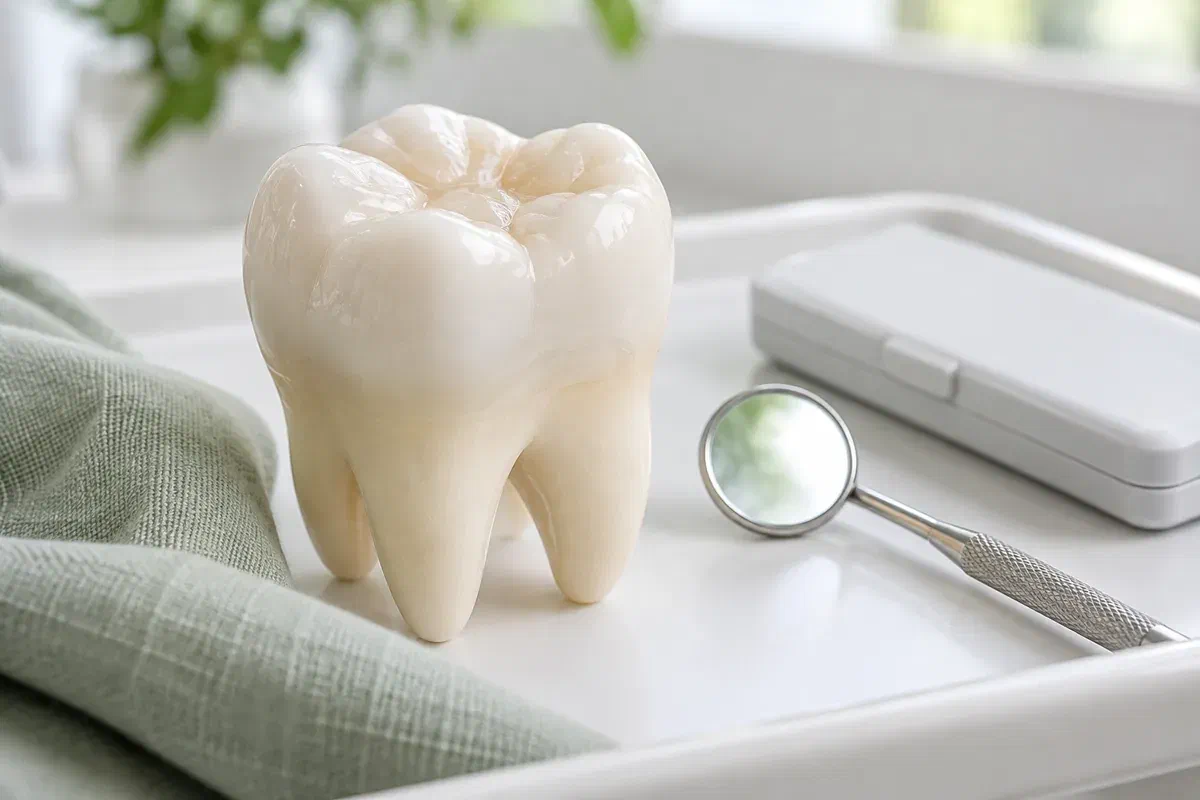
Illustrative opaque molar teaching model with a tooth-coloured repair
What older kids notice

Let them describe it in their own words.

Older kids can often explain symptoms clearly. Encourage them to speak up, and add anything you have observed yourself.

A rough patch or food stuck in a molar

A tongue that keeps finding a rough spot, or food that lodges in the same groove, is worth mentioning. The dentist checks the cause and extent. Decay in permanent molars can spread beneath a small surface opening, so appearances can mislead.

Twinges with cold drinks or sweets

Ask your teen when it hurts, how long the twinge lasts and whether it has woken them. Pain that comes on by itself, swelling or a tooth that throbs may indicate deeper involvement, and a filling may not be enough.

Feelings about treatment

Older kids may hide anxiety, or feel embarrassed about a cavity. Share any concerns, sensitivities and past experiences with numbing. These help the team plan the visit and also affect how well the tooth can be kept isolated.

Severe or escalating pain, swelling or a broken tooth should be seen sooner than a routine visit. Call us promptly, and seek medical attention if your teen is feeling unwell.

Why it matters for an adult tooth

Protect a tooth meant to last for decades.

In a permanent molar, a well-placed direct filling removes decay and rebuilds the chewing surface or side of the tooth. It is shaped in the mouth and blends in with the natural tooth colour. That appearance is welcome to many teens, though the first concern is a restoration suited to the tooth.

Composite resin is commonly used in permanent teeth, and other tooth-coloured materials have different properties. Ask which material is planned and why it suits this tooth. Every filling has a lifespan, and over the years it may need monitoring, repair or replacement. Starting with a good fit and good habits helps.

Patient information: AAPD — pediatric restorative dentistry

Matched to the remaining tooth

When a cavity is moderate and the walls are healthy, a filling can work well. A large cavity may leave the tooth too weak, and an onlay, crown or other restoration may then be discussed. Understanding the reasons helps your teen see why the plan was suggested.

Comfortable for chewing

The filling is contoured and the bite checked. Encourage your teen to report if it feels high, sharp or sore when chewing in the days after. They are best placed to notice, and small adjustments can help.

Prevention they can own

Use the visit to talk about brushing, cleaning between teeth, fluoride and sipping habits like sports drinks or iced coffees. Advice works best when your teen agrees with it. One repaired surface does not protect the others.

What to expect

A step-by-step plan your teen can follow.

Specifics depend on the diagnosis and the material chosen. Your teen can agree on a signal to request a pause whenever they need one.

  1. Exam and discussion

    Your teen’s tooth is examined, with X-rays if they would add clinical information. Together you can discuss whether a filling is suitable, which alternatives exist and what might happen if it waits. Your teen can ask questions directly, and the dentist will explain what is involved.

  2. Freezing and isolation

    If local anaesthetic is indicated, the team explains what your teen will feel. The tooth is isolated to keep it dry. Teens sometimes stay quiet to seem brave, so encourage them to speak up if anything is uncomfortable.

  3. Preparing and filling

    Decay is removed in the way the findings require. The material is placed, often in layers for composite, and hardened or set as its instructions specify. Good moisture control is important, so the conditions in the chair influence the material.

  4. Bite check and next steps

    The dentist checks the shape and how the teeth come together. Your teen should hear about eating, numbness and what to watch for. Ask whether other teeth need care and when this filling should be reviewed.

After the appointment

A numb lip, then a normal day.

Follow the advice for the material and anaesthetic used. Even older kids can bite a numb cheek or lip without realising it.

Be careful with numb areas

Skip meals, gum and hot drinks until sensation comes back fully, following the timing the team suggests. If a sore spot develops from biting, or you have questions, call us for guidance.

Listen to how the tooth feels

Your teen should speak up if the tooth lands before the others, aches as they chew, or stays sensitive in a way that is sharp, lingering or getting worse. A quick note on the timing and triggers helps us. Teens sometimes downplay discomfort, so check in once or twice over the next few days. Chewing through soreness won’t help it settle and may make it worse.

Keep up daily care

Brush, clean between teeth and use fluoride as recommended. Keep review visits, even when life is busy. If the filling chips, feels rough or food starts catching, call us instead of trying to fix it.

Patient information: AAPD — local anaesthesia for pediatric dental patients

Repair options for older kids

Choosing what an adult molar needs.

Ask how each option affects the number of visits, durability over the years and follow-up, and let your teen weigh in.

For damage suited to direct repair

Tooth-coloured filling

Composite resin or a similar material may be recommended depending on cavity size and whether the area can stay dry. Ask about trade-offs and expected wear. A preference for a white repair is understandable, but suitability depends on the tooth.

For a tooth needing more support or deeper care

Onlay, crown or root canal treatment

Large cavities or a nerve that is affected may call for an indirect restoration, root canal treatment or another approach. These options often involve more than one visit, so they can be planned around school. Ask what each step aims to do and whether a specialist referral is appropriate.

For early changes not needing a filling yet

Prevention and monitoring

An early lesion in an adult tooth may respond to fluoride, steadier habits and rechecks instead of drilling. This needs a clear plan with a review date, so your teen knows what to do and when it will be checked.

Teen and preteen questions

Straight answers for older kids.

Older kids often prefer to ask questions themselves. Encourage them to, and we will answer directly.

(905) 876-4488
Is a cavity in an adult tooth more serious than one in a baby tooth?
Not necessarily more serious, but permanent teeth need to last a lifetime, so protecting them carries long-term importance. The dentist will explain how the decay affects this tooth and what repair suits it.
Can my teen attend appointments with less parental involvement?
Ask the clinic about consent and how communication works for your teen’s age. Many families find a balance where the teen leads the conversation and a parent stays informed about the plan.
Will braces affect a tooth-coloured filling?
Braces can make cleaning harder and may affect plans for some teeth. If orthodontic treatment is planned or underway, mention it so the dentist can consider timing and care around the filling.
Are sports drinks or energy drinks a problem for teeth?
Many contain sugar and acids, and sipping them often keeps teeth exposed for long periods. Water is usually best for routine hydration. Ask the team about practical options for your teen’s activities, whether that means hockey practice or a summer job around Rockwood.
Will an adult molar filling need replacing one day?
Possibly. Fillings can wear, chip or develop decay at the edges over time. Good home care and regular reviews help them last, and the dentist will advise if repair or replacement becomes necessary.
Is gum okay once the filling is done?
Wait until numbness has worn off, since it is easy to chew a cheek by accident. After that, sugar-free gum is generally fine unless you are told otherwise for the material used, and it can be a better habit than sipping sweet drinks. Avoid sugary gum, which adds to cavity risk.
Rockwood preteen and teen fillings

Start the conversation with your teen included.

Set up a time with our Bronte Street team to look at the tooth and talk through options. Encourage your preteen or teen to share symptoms and concerns, and tell us about past experiences so we can plan a suitable next step.

Exam findings guide the material and treatment. Please call promptly about pain or swelling.

Visit Milton Dental Clinic
Unit 1, 342 Bronte St. S, Milton, ON L9T 5B7
Get directions Clinic hours
Monday–Thursday
11am–7pm
Friday–Sunday
By appointment only

Areas we serve

  • Milton
  • Oakville
  • Mississauga
  • Georgetown
  • Halton Hills
  • Acton
  • Campbellville
  • Brampton
  • Burlington
  • Puslinch
  • Rockwood
  • Erin
  • Caledon
  • Etobicoke
  • Old Milton
  • Bronte Meadows
  • Timberlea
  • Dorset Park
  • Dempsey
  • Clarke
  • Beaty
  • Coates
  • Harrison
  • Scott
  • Willmott
  • Ford
  • Bowes
  • Cobden
  • Walker
  • Mountain View
  • Milton Heights
  • Hawthorne Village
  • Valley View
  • Fallingbrook
  • Nassagaweya
  • Trafalgar
  • Esquesing
  • Nelson
  • Brookville
  • Moffat
  • Glen Williams
  • Norval
  • Limehouse
  • Stewarttown
  • Ashgrove
  • Hornby
  • Silver Creek
  • Speyside
  • Scotch Block
  • North Oakville
  • River Oaks
  • Glen Abbey
  • West Oak Trails
  • Palermo
  • Bronte Creek
  • College Park
  • Joshua Creek
  • Uptown Core
  • Preserve
  • Iroquois Ridge
  • Lisgar
  • Meadowvale
  • Meadowvale Village
  • Churchill Meadows
  • Erin Mills
  • Central Erin Mills
  • Streetsville
  • East Credit
  • Creditview
  • Heartland
  • Sheridan
  • Mount Pleasant
  • Credit Valley
  • Huttonville
  • Churchville
  • Springbrook
  • Northwest Brampton
  • Bram West
  • Fletcher's Meadow
  • Fletcher's Creek South
  • Alton Village
  • Orchard
  • Millcroft
  • Headon Forest
  • Tansley
  • Brant Hills
  • Tyandaga
  • Kilbride
  • Lowville
  • Aberfoyle
  • Morriston
  • Arkell
  • Hillsburgh
  • Freelton
  • Carlisle
  • Waterdown
  • Flamborough
  • Mountsberg

How can we help?

Milton Dental Clinic

Have a question about your smile? Choose the option that works best for you.

For urgent dental concerns, please call.
Messages are reviewed during clinic hours.