

Illustrative child and parent learning about tooth alignment with a dental model
Children’s Dentistry

Early Orthodontic Assessment in Acton

A tumble off a bike or a hockey stick to the mouth can leave parents wondering about the adult teeth still to come. For children from Acton, an early orthodontic assessment takes that injury history into account while reviewing eruption, spacing and how the bite is forming.

Active kids, growing teeth

An old knock, a new question

Children bump their mouths. A baby front tooth may have darkened after a fall, or been lost to a playground collision, and years later the adult tooth arrives looking a little different or sitting at an angle. It is natural to wonder whether the two are connected.

In an Acton child’s first bite review with us, the dentist hears the injury story first, then looks at how the adult teeth are arriving, how much room remains and how the upper and lower teeth close. We explain what seems related to the injury, what looks like ordinary development and what is still too early to call.

Past trauma does not mean braces are needed, and a straight-looking smile does not rule out a concern worth watching. Some findings benefit from attention during growth; many simply need another look later. You should know why we suggest a particular timing and what the next check is meant to settle.

Ask about teeth after an injury
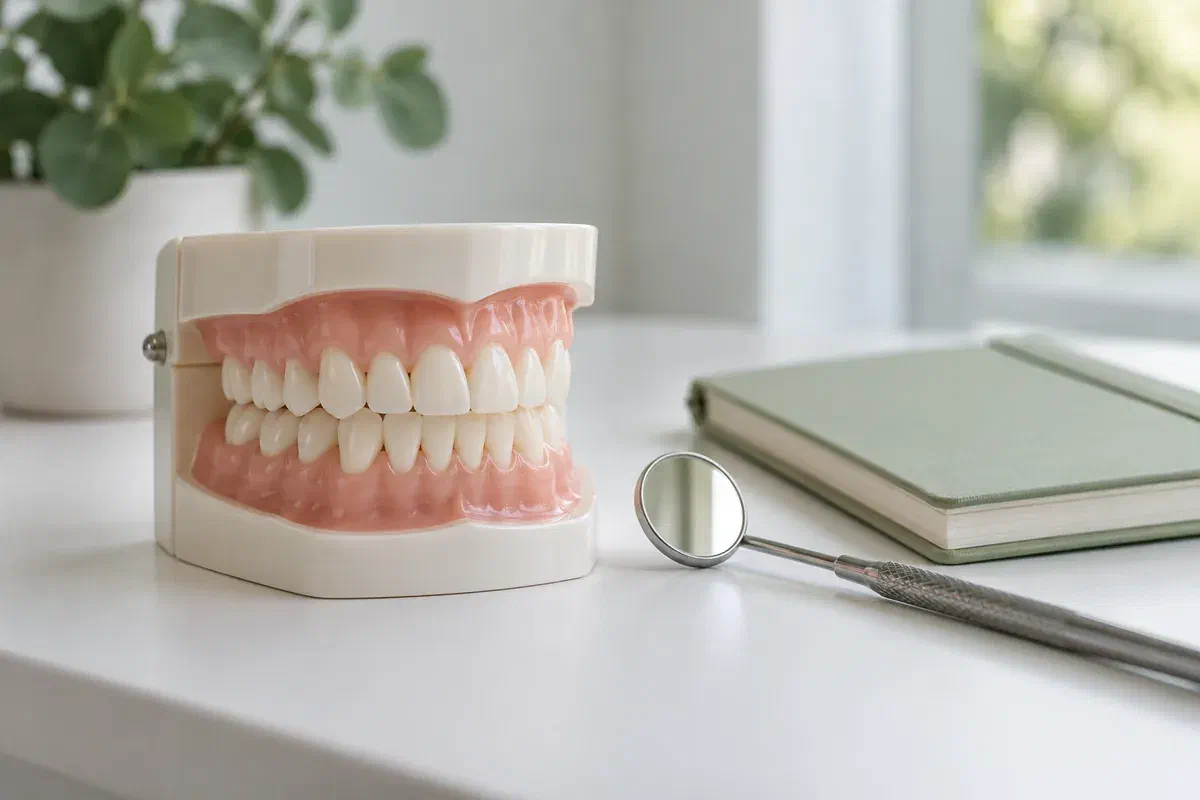
Illustrative upper and lower dental teaching model beside a mirror and notebook
Things worth mentioning

Injuries, habits and anything that looks out of place

Working out whether something is an orthodontic concern is up to us. Your history, a careful examination and only those records the findings justify let the clinician tell a feature to monitor from one to investigate.

A tooth erupting off course, or bunching nearby

An adult tooth that appears rotated, tipped or late compared with its partner on the other side is worth pointing out. Its look is a starting point. The dentist also considers the space available, which baby teeth are left and the general eruption sequence.

Front teeth that overlap oddly or a bite that slips

Describe upper teeth sitting behind lower ones, front teeth that stick out noticeably, or a sideways jaw movement on closing. Note any difficulty biting into food. From there the clinician can consider whether teeth, jaw function or something else is behind it.

The injury history and other early changes

Tell us when and how any injury happened, what treatment followed and whether a baby tooth was lost early. Thumb or finger habits matter too. If you have concerns about snoring or breathing at night, mention them, recognising that a physician may need to look into those.

A fresh injury, pain or swelling is not something to save for an orthodontic review. When you call, describe what has happened and we will arrange the right kind of visit promptly.

Why an early review is useful

Knowing what the injury did, and did not, change

Canadian orthodontists, through their national association, advise that children be assessed by an orthodontist around the age of seven. The goal is to notice developing problems while growth is still happening, not to begin treatment for every child seen. Ask us how our review and that specialist visit relate.

A handful of children are helped by acting during growth; plenty of others do best with observation and a later decision. A general dental review ought to be upfront about its scope and should flag when specialist advice is needed. No one can set out a child’s entire treatment future from appearance.

Patient information: Canadian Association of Orthodontists — assessment and treatment questions

Sorting injury effects from normal variation

Adult front teeth often look large or slightly uneven when they first arrive. The dentist can show you which features are typical for this stage, which may relate to the past injury and which are worth following.

Follow-up that knows what it is looking for

If we suggest waiting, you should hear exactly what will be compared next time, whether a particular tooth, the space beside it or how the front teeth are meeting. A defined purpose makes a review worth the trip.

Time to think through a specialist opinion

An orthodontist can go deeper into the diagnosis, the reasons for one timing over another and the alternatives. Ask what we would send and whether current records can be shared. Make sure the plan makes sense to you before any appliance is fitted.

How the review unfolds

Start with the story, then look closely.

Come with whatever questions you have about growth and tooth position. If your child remembers the injury or has feelings about how their teeth look, they are welcome to talk about it.

  1. Talk through the injury and general history

    We ask about the accident, any treatment afterwards, general health, earlier dental work and habits, plus the timing of lost baby teeth. Records from an emergency visit or another clinic are very helpful if you can get them.

  2. Check the adult teeth and how they meet

    The dentist examines the developing teeth, the spacing and the contact between upper and lower arches, keeping to what this appointment covers. Your child will bite together and open a few times while we describe what we are checking.

  3. Weigh whether imaging would add anything

    After an injury, an X-ray can sometimes help, but only when the findings make it clinically worthwhile. An orthodontic label on the visit does not make records automatic. Ask what a proposed image is meant to show and who should take it.

  4. Settle on the next step

    We explain what we found and why a certain timing suits. For a referral, find out whether we or your family will make the booking and what to watch in the meantime. For monitoring, note the review interval and any sign that should bring you back early.

Looking after things until the next visit

Protect the teeth and keep the plan moving.

An assessment rarely brings an appliance home with it. Follow any particular advice, and keep daily brushing and routine checkups going while the teeth are being watched.

Hold on to the review date

Note when the follow-up or referral is due and why. Sports seasons and school terms fill calendars quickly, so call if you need to move it. A tooth can only be followed if someone looks at it again.

Brush well and ask about protection for sport

New molars and crowded spots need help reaching. Ask us for brushing tips suited to your child’s age, and ask whether a mouthguard makes sense for the sports they play. Planning for alignment works alongside prevention.

Report changes rather than correcting them

Contact us if a tooth darkens, becomes sore, loosens unexpectedly or if chewing gets harder. Never try elastic bands or home kits to straighten teeth. Moving teeth needs a diagnosis, a plan and professional oversight.

Possible directions

Three sensible routes forward

Every recommendation should answer two questions: what is it trying to do now, and what could still be needed later? Treating early is only worthwhile when the timing has a reason behind it.

When the next stage of growth will tell us more

Keeping watch as development continues

We may suggest looking at a tooth or the bite again after a set period. Ask what we expect to learn and which changes at home should prompt an earlier call. Watching carefully is an active decision in its own right.

When the concern needs a specialist’s diagnosis

An opinion from an orthodontist

A specialist can examine the developing problem and explain the approaches that fall within their training. Attending that appointment does not sign your child up for braces. It is a chance to learn the diagnosis, the alternatives, likely stages and the practical side of each.

When a particular concern justifies acting now

Early care aimed at one finding

Sometimes a finding is worth treating before all adult teeth have come in. The proposal should name what it aims to fix and where its limits lie. It cannot promise that braces, extractions or other treatment will never be needed later.

What parents ask after an injury

Knocks, new teeth and bite questions

These general answers can help you prepare. Your child’s examination will shape what applies to them.

(905) 876-4488
Can an injury to a baby tooth affect the adult tooth underneath?
It can sometimes affect the developing tooth, for example its appearance or position, but many injuries leave no lasting change. Tell the dentist what happened and when, so they can look for anything worth following as the adult tooth arrives.
The adult front tooth came in at an angle after an old injury. Is that permanent?
Not necessarily. Some teeth settle as neighbouring teeth erupt, and others need more assessment. The dentist can review the position, the space around it and the bite, then explain whether to watch or seek a specialist opinion.
Should my child wear a mouthguard while we monitor their bite?
For contact sports and activities with a risk of falls, a mouthguard is worth discussing. Ask the dentist what type suits your child’s current mix of baby and adult teeth.
Is age seven a deadline for an orthodontic check?
It is a guide rather than a deadline. Orthodontists suggest a first look around then so developing issues are noticed early. If you have a concern sooner, such as after an injury, mention it rather than waiting for a birthday.
Does a dentist’s review replace seeing an orthodontist?
No. A dentist can identify concerns and suggest next steps, while an orthodontist has additional specialist training in diagnosis and treatment. Ask who is assessing your child and whether a referral would add useful information.
From Acton, what is the best way to handle a dental injury after hours?
Follow our urgent care guidance and seek emergency medical care for facial swelling with breathing or swallowing difficulty. For other urgent problems, call us so we can advise, and consider closer urgent dental care if your child needs to be seen quickly.
Bite reviews for children in Acton

Bring the injury story and your questions.

Phone or write to our Bronte Street practice and tell us about your child’s injury history and what you have noticed since. We will arrange a review, explain how the adult teeth are coming in and say whether an orthodontist should take a closer look.

An assessment is not a commitment to treatment. Any recommendation depends on your child’s findings.

Visit Milton Dental Clinic
Unit 1, 342 Bronte St. S, Milton, ON L9T 5B7
Get directions Clinic hours
Monday–Thursday
11am–7pm
Friday–Sunday
By appointment only

Areas we serve

  • Milton
  • Oakville
  • Mississauga
  • Georgetown
  • Halton Hills
  • Acton
  • Campbellville
  • Brampton
  • Burlington
  • Puslinch
  • Rockwood
  • Erin
  • Caledon
  • Etobicoke
  • Old Milton
  • Bronte Meadows
  • Timberlea
  • Dorset Park
  • Dempsey
  • Clarke
  • Beaty
  • Coates
  • Harrison
  • Scott
  • Willmott
  • Ford
  • Bowes
  • Cobden
  • Walker
  • Mountain View
  • Milton Heights
  • Hawthorne Village
  • Valley View
  • Fallingbrook
  • Nassagaweya
  • Trafalgar
  • Esquesing
  • Nelson
  • Brookville
  • Moffat
  • Glen Williams
  • Norval
  • Limehouse
  • Stewarttown
  • Ashgrove
  • Hornby
  • Silver Creek
  • Speyside
  • Scotch Block
  • North Oakville
  • River Oaks
  • Glen Abbey
  • West Oak Trails
  • Palermo
  • Bronte Creek
  • College Park
  • Joshua Creek
  • Uptown Core
  • Preserve
  • Iroquois Ridge
  • Lisgar
  • Meadowvale
  • Meadowvale Village
  • Churchill Meadows
  • Erin Mills
  • Central Erin Mills
  • Streetsville
  • East Credit
  • Creditview
  • Heartland
  • Sheridan
  • Mount Pleasant
  • Credit Valley
  • Huttonville
  • Churchville
  • Springbrook
  • Northwest Brampton
  • Bram West
  • Fletcher's Meadow
  • Fletcher's Creek South
  • Alton Village
  • Orchard
  • Millcroft
  • Headon Forest
  • Tansley
  • Brant Hills
  • Tyandaga
  • Kilbride
  • Lowville
  • Aberfoyle
  • Morriston
  • Arkell
  • Hillsburgh
  • Freelton
  • Carlisle
  • Waterdown
  • Flamborough
  • Mountsberg

How can we help?

Milton Dental Clinic

Have a question about your smile? Choose the option that works best for you.

For urgent dental concerns, please call.
Messages are reviewed during clinic hours.