

Illustrative child and parent learning about tooth alignment with a dental model
Children’s Dentistry

Early Orthodontic Assessment in Etobicoke

When the drive is longer, each appointment has to earn its place. For children coming from Etobicoke, an early orthodontic assessment is planned so one well-prepared visit covers eruption, spacing and the bite, and ends with a clear answer about what comes next and when.

Fewer trips, better prepared

Plan one thorough visit instead of several short ones.

Travelling from the west end of Toronto means you want to arrive with everything the dentist might need. A short list of what you have noticed, the dates baby teeth came out and any earlier dental or orthodontic notes can turn a first assessment into a much more complete conversation.

At the appointment, we review which adult teeth have erupted, estimate how much space remains for the rest and watch how the bite closes. Then we explain what can be judged today and what has to wait for further growth, so you know whether another visit is genuinely needed and roughly when.

Our aim is not to start early braces by default. Some concerns benefit from being identified during growth; many are better reassessed as more teeth arrive. For families in Etobicoke, knowing the reason for any follow-up, and what it is meant to clarify, makes the trip easier to plan.

Plan your child’s assessment
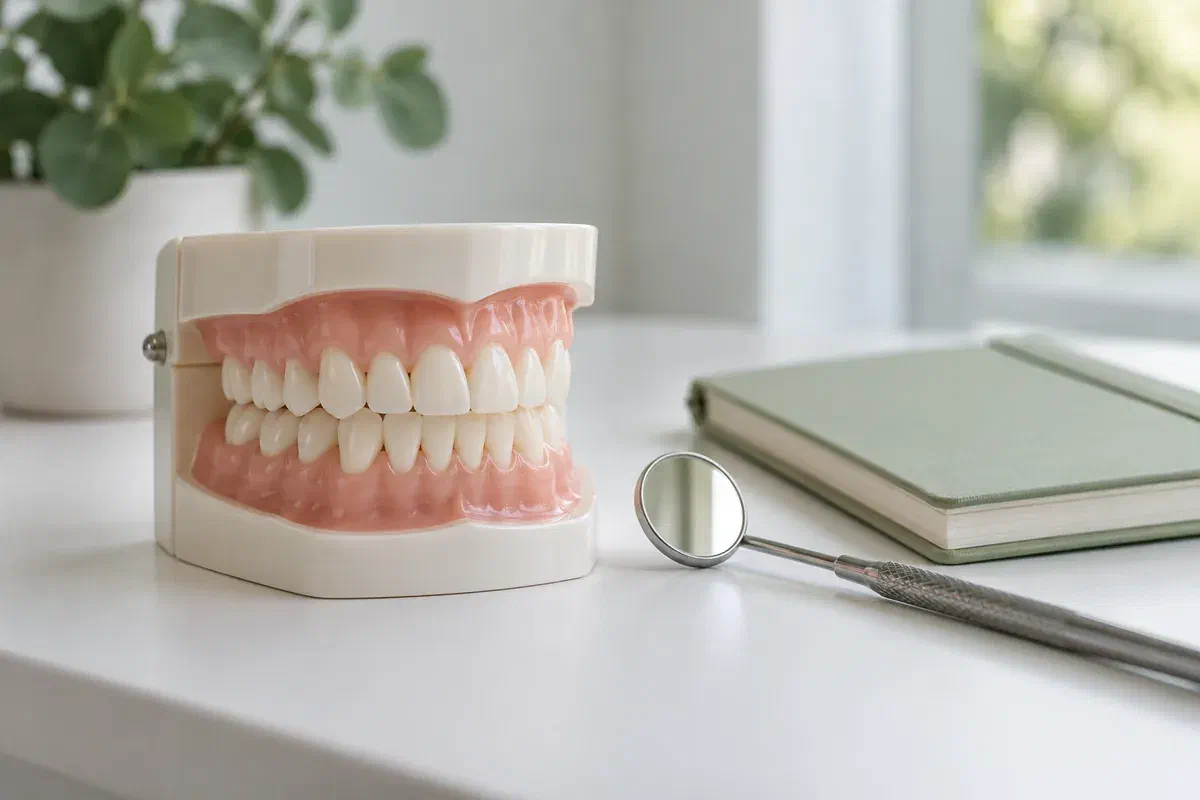
Illustrative upper and lower dental teaching model beside a mirror and notebook
Write it down before you come

A short list makes the visit more useful.

Identifying an orthodontic problem is our role. Your notes, the examination and records only where the findings justify them help us decide whether something should be watched or investigated further.

Crowding, spacing or a tooth arriving off track

Jot down any adult tooth that seems to be coming through in an unusual spot, or a side of the mouth that looks different. A quick photo taken at home can help you describe it. The dentist also weighs space, the remaining baby teeth and the overall eruption pattern.

Teeth that meet unevenly or a jaw that shifts

Note any upper teeth that sit behind the lower ones, or a slide of the jaw as your child bites. Mention trouble chewing. With that detail, the clinician can check whether the teeth, the way the jaw moves or another factor explains what you saw.

Habits, past injuries and baby teeth lost early

Record any thumb or finger sucking, falls that affected the teeth and baby teeth lost earlier than expected. These shape the assessment and the follow-up. Add any sleep or breathing worries, recognising that a physician may need to look at those as well.

An orthodontic review is not the place for pain, swelling or a fresh injury. For urgent problems, it may be quicker to seek care closer to home; call us and we can help you decide.

Why the early check is worth the trip

A plan you can schedule around

Assessment by an orthodontist by roughly age seven is the recommendation of the Canadian Association of Orthodontists. It is meant to pick up developing concerns early, not to start every seven-year-old on treatment. Ask how a dental review here relates to that specialist assessment for your child.

Some children benefit from treatment while they are growing; others are better observed and reconsidered later. A general dental review should be honest about its scope and about when a specialist should be involved. Appearance alone cannot tell anyone what a child’s full treatment course will be.

Patient information: Canadian Association of Orthodontists — assessment and treatment questions

A snapshot of development today

Knowing which teeth are primary and which are permanent helps an uneven smile make sense. The dentist can point to the findings that matter and those likely to change naturally, which is more reliable than comparing with other children.

Follow-ups that are actually needed

If monitoring is suggested, ask what will be checked and why that interval was chosen. When the purpose is clear, you can decide whether a review can be combined with a routine checkup to save a separate journey.

Time to plan around a referral

A specialist visit can provide a fuller discussion of diagnosis, timing and alternatives. Ask what information will be shared and whether today’s records can be sent along. Understand any proposal before agreeing to an appliance or treatment.

How we use the time

Covering the essentials in one sitting

Use the appointment to ask about growth and tooth position. If your child has their own questions, encourage them to ask while you are both here.

  1. Go through your notes and the history

    We review health changes, earlier dental work, injuries, habits and when baby teeth were lost. Your list of observations and any previous orthodontic opinion help us focus. Bring records or contact details for past clinicians if you have them.

  2. Examine the teeth and the bite

    The dentist looks at the developing teeth, spacing and how the arches meet, within what this appointment covers. Your child will open, close and bite together a few times, and we explain what each check is for.

  3. Decide on records while you are here

    If the findings justify imaging or other records, we can discuss whether they make sense at this visit or should be left for a specialist. Ask what question each record would answer. They are not automatic just because the visit is orthodontic.

  4. Leave with a dated plan

    We explain the findings and the reasoning behind any timing. If referral is suggested, confirm who arranges it and what to do meanwhile. If we are monitoring, note the interval and the changes that should prompt an earlier call.

Back home

Keeping things on track from a distance

An assessment alone does not usually add an appliance routine. Follow the specific advice you receive, and continue everyday brushing and regular checkups while development is reviewed.

Book the next step before you forget

Record when the review or referral is due and its purpose. If the date becomes difficult, call to reschedule rather than letting it lapse. A developing tooth only gets followed if someone checks it again.

Keep brushing around new teeth

Erupting molars and crowded spots are tricky for children to reach. Ask for brushing guidance and keep helping at a level suited to their age. Orthodontic planning does not replace cavity prevention or routine care.

Call about changes instead of correcting them

Phone us about new chewing problems, an unexpected lost tooth or anything you were asked to watch. A quick call can tell you whether the trip is needed. Never use elastics or online devices to move teeth at home.

What the assessment may suggest

Three directions, planned with travel in mind

Ask what any recommendation aims to achieve now and what might still be needed later. Acting early is only useful when there is a reason for that timing.

When further growth will clarify the picture

Monitoring at a set interval

The dentist may suggest reviewing eruption and the bite after a defined period. Ask what they expect to see, whether it can coincide with a routine visit and when to call sooner. Monitoring is an active choice, not a delay.

When diagnosis or timing needs a specialist

Referral to an orthodontist

A specialist can assess the concern and discuss approaches within their expertise. Referral does not commit you to braces. Ask whether a specialist nearer to you is an option, and what information we can send ahead.

When a specific finding merits action

Early treatment for a particular concern

Some findings may justify treatment before all adult teeth arrive. The recommendation should explain its goal, its limits and how many visits it is likely to involve. Early care does not guarantee later treatment will be unnecessary.

Planning questions

Getting the most from a longer trip

These answers can help you prepare. Your child’s own findings will decide the details.

(905) 876-4488
What should we bring to make the first assessment as complete as possible?
A list of your observations, the approximate dates baby teeth were lost, details of any injuries or habits and any previous dental or orthodontic records. Contact details for earlier clinicians help if records need to be requested.
Coming from Etobicoke, can a monitoring review be combined with a cleaning?
Often it can, when the timing suits. Tell the team you would like to combine visits when booking so enough time is set aside for both the routine care and the orthodontic review.
If my child is referred, does the orthodontist have to be near your clinic?
No. You can ask about specialists closer to home. The important thing is that records and findings are shared so the specialist has the context they need. Let us know where you would prefer to be referred.
Is a photo from home useful for showing a change?
It can help you describe what you noticed, such as a tooth coming in at an angle. It does not replace an examination, but it gives the dentist useful context about how something has changed over time.
Does age seven mean my child should start treatment then?
No. The guidance is about identifying developing concerns, and many children are simply monitored. A smaller number may have a specific issue where earlier attention is discussed, with the reasons explained.
Will early treatment mean no braces later?
It cannot guarantee that. Early treatment targets a particular goal, and further care may still be needed as development continues. Ask what the proposal can achieve and how later needs will be checked.
From Etobicoke to our practice

Make the journey worthwhile.

Call our Bronte Street practice before you book so we can plan a visit that covers what you need. Share your observations and any earlier records, and we will arrange an assessment, explain the findings clearly and tell you whether a specialist opinion would help.

Assessment does not mean starting treatment. Any next step depends on your child’s findings.

Visit Milton Dental Clinic
Unit 1, 342 Bronte St. S, Milton, ON L9T 5B7
Get directions Clinic hours
Monday–Thursday
11am–7pm
Friday–Sunday
By appointment only

Areas we serve

  • Milton
  • Oakville
  • Mississauga
  • Georgetown
  • Halton Hills
  • Acton
  • Campbellville
  • Brampton
  • Burlington
  • Puslinch
  • Rockwood
  • Erin
  • Caledon
  • Etobicoke
  • Old Milton
  • Bronte Meadows
  • Timberlea
  • Dorset Park
  • Dempsey
  • Clarke
  • Beaty
  • Coates
  • Harrison
  • Scott
  • Willmott
  • Ford
  • Bowes
  • Cobden
  • Walker
  • Mountain View
  • Milton Heights
  • Hawthorne Village
  • Valley View
  • Fallingbrook
  • Nassagaweya
  • Trafalgar
  • Esquesing
  • Nelson
  • Brookville
  • Moffat
  • Glen Williams
  • Norval
  • Limehouse
  • Stewarttown
  • Ashgrove
  • Hornby
  • Silver Creek
  • Speyside
  • Scotch Block
  • North Oakville
  • River Oaks
  • Glen Abbey
  • West Oak Trails
  • Palermo
  • Bronte Creek
  • College Park
  • Joshua Creek
  • Uptown Core
  • Preserve
  • Iroquois Ridge
  • Lisgar
  • Meadowvale
  • Meadowvale Village
  • Churchill Meadows
  • Erin Mills
  • Central Erin Mills
  • Streetsville
  • East Credit
  • Creditview
  • Heartland
  • Sheridan
  • Mount Pleasant
  • Credit Valley
  • Huttonville
  • Churchville
  • Springbrook
  • Northwest Brampton
  • Bram West
  • Fletcher's Meadow
  • Fletcher's Creek South
  • Alton Village
  • Orchard
  • Millcroft
  • Headon Forest
  • Tansley
  • Brant Hills
  • Tyandaga
  • Kilbride
  • Lowville
  • Aberfoyle
  • Morriston
  • Arkell
  • Hillsburgh
  • Freelton
  • Carlisle
  • Waterdown
  • Flamborough
  • Mountsberg

How can we help?

Milton Dental Clinic

Have a question about your smile? Choose the option that works best for you.

For urgent dental concerns, please call.
Messages are reviewed during clinic hours.