

Illustrative child and parent learning about tooth alignment with a dental model
Children’s Dentistry

Early Orthodontic Assessment in Halton Hills

The thumb habit lasted longer than you hoped, and now the front teeth do not quite touch. For children across Halton Hills, an early orthodontic assessment looks at how habits, eruption and spacing are shaping the bite, and explains whether to watch, record or refer.

When a habit and a bite meet

Front teeth that no longer close together

Thumb and finger sucking are a normal comfort for young children, and most outgrow them. When the habit carries on as adult teeth arrive, some parents notice the upper front teeth tipping forward or a small opening between top and bottom teeth when the child bites. That is a reasonable thing to ask about.

For a child from Georgetown, Acton, Glen Williams or elsewhere in Halton Hills, the review starts with the habit history and then moves to the teeth. The dentist notes which adult teeth have come through, how much room is left and how the front and back teeth make contact.

Noticing a habit-related change does not automatically mean an appliance. Sometimes the bite improves once the habit stops; sometimes it needs more time to judge, or a specialist’s view. You should hear the reasoning behind any suggested timing and what a later check would look for.

Talk to us about habits and the bite
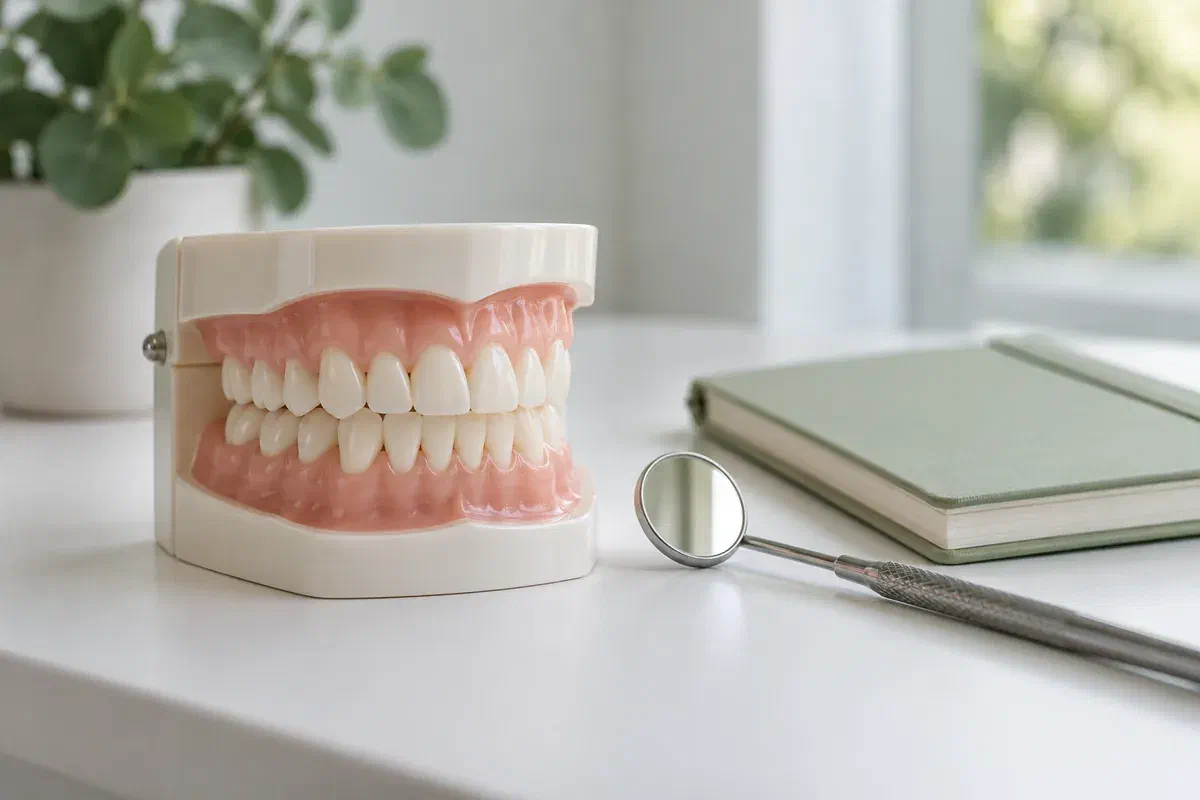
Illustrative upper and lower dental teaching model beside a mirror and notebook
Changes parents mention

Habits are only part of the picture.

Pinning down an orthodontic issue is our job. Your history, a careful examination and records only if findings call for them let us distinguish a feature to keep watching from one that needs investigating.

Crowded, spaced or wandering adult teeth

Point out a permanent tooth emerging somewhere unexpected or one side developing differently. The look of it is a clue, not an answer. Available room, which baby teeth are still holding on and the general eruption order all count.

An open front bite or teeth that cross

Tell us if the front teeth stay apart when your child bites, if some upper teeth sit inside the lower ones, or if the jaw shifts on closing. Mention biting or chewing difficulty. The dentist can then consider whether teeth, jaw movement or habit is the main factor.

How long the habit lasted, and other history

Share roughly how often and for how long your child sucked a thumb, finger or soother, along with any dental injuries or early tooth loss. If mouth breathing or sleep concerns come up, mention them, since they may also need medical assessment.

This review is not meant for pain, swelling or a new injury. Tell us about those when you call, and we will arrange an appropriate visit.

Why look before the habit is fully gone

Early information helps you decide calmly.

Canada’s association of orthodontic specialists suggests that a child be seen by an orthodontist by age seven. The idea is to notice developing concerns, including some linked to habits, while growth is under way. It does not imply that most children need early treatment. Ask how our review fits with that recommendation.

For some children, a step taken during growth is helpful. Many others can be watched, especially while a habit is fading. A dental assessment should be clear about what it can tell you and when an orthodontist should be involved. Nobody can map a future treatment course from appearance alone.

Patient information: Canadian Association of Orthodontists — assessment and treatment questions

Seeing how the habit has affected the teeth

The dentist can show you which changes relate to the habit and which reflect normal development. Knowing which teeth are primary and which are permanent also helps you understand what may shift naturally.

Monitoring with a clear purpose

If the plan is to wait, perhaps while the habit stops, ask what will be compared at the next visit. The review might focus on the front-tooth opening, spacing or eruption. Knowing the goal makes the next appointment meaningful.

A considered referral, if needed

An orthodontist can explain the diagnosis in more depth, along with options and the reasons for one timing over another. Ask what will be shared and whether existing records help. Take the time you need before agreeing to any appliance.

What the visit involves

From habit history to a plan

Bring your questions about growth and tooth position. Children are sometimes self-conscious about a habit, so we keep the conversation matter-of-fact and kind.

  1. Hear the history

    We ask about general health, earlier dental care, injuries and when baby teeth came out, as well as the habit itself. Explain any chewing difficulty or bite change. Previous orthodontic advice or records are useful if you have them.

  2. Look at the teeth and the way they close

    The dentist examines the developing teeth, spacing and contact between upper and lower teeth, within the scope of this visit. We will ask your child to bite gently and open again, explaining each step in a relaxed way.

  3. Consider whether records would help

    Imaging or other records are recommended only when the findings justify them. They are not routine just because the topic is orthodontics. Ask what a proposed record is meant to show and whether a specialist should handle it.

  4. Agree on monitoring, referral or a treatment discussion

    We explain what we found and why a particular timing makes sense. If referral is advised, confirm who arranges it. If monitoring, note when to return and what changes should bring you in sooner.

In the meantime

Support the habit change and keep the follow-up.

An assessment on its own rarely introduces an appliance. Follow any specific advice and carry on with brushing and the usual dental visits as development is followed.

Keep the review or referral date

Note when the next appointment is due and what it is for. If you need to change it, call rather than assuming the concern has resolved. A bite can only be followed if it is examined again.

Encourage, rather than pressure, habit change

Ask the dentist or your child’s doctor for age-appropriate ways to support stopping a habit. Gentle encouragement usually works better than scolding. Meanwhile, keep helping with brushing around newly erupting teeth.

Tell us about changes without trying to fix them

Contact the clinician about new chewing problems, unexpected tooth loss or changes you were asked to watch. Avoid rubber bands or online devices to move teeth. Tooth movement requires diagnosis, planning and professional supervision.

What may come next

Your child’s findings decide the path.

Ask what any recommendation aims to change now and what could still be needed later. Early action is useful only when there is a reason for that timing.

When time and habit change may clarify things

Watching while the habit stops

The dentist may suggest checking the front bite and eruption after a set interval. Ask what they expect to see and when you should return earlier. Planned observation is an active clinical decision.

When the diagnosis or timing needs a specialist

Seeing an orthodontist

A specialist can assess the concern and explain approaches within their expertise. Referral does not mean braces are starting. It gives you a chance to understand the diagnosis, alternatives, stages and practical requirements.

When a finding merits early intervention

Treatment for a specific concern

Some findings may justify treatment before all permanent teeth arrive. The recommendation should explain its goal and limits. Early treatment does not guarantee that later orthodontics, extractions or other care will be avoided.

Habit and bite questions

What parents ask about thumbs, soothers and teeth

Every child is different, so treat these as general pointers. The examination shapes the advice that applies to yours.

(905) 876-4488
Can a thumb or finger habit change how the teeth come in?
It can, particularly if it continues as adult teeth erupt. Effects vary with how often and how long the habit lasts. The dentist can look at your child’s bite and explain whether any change is likely to be related.
Will the front bite close on its own once the habit stops?
Sometimes the bite improves after a habit ends, but not always. The dentist may suggest a review after a period without the habit to see what has changed and whether further assessment is needed.
Does a soother affect the teeth in the same way?
Prolonged soother use can also influence how front teeth develop. Mention when your child stopped, or whether they still use one, so the clinician can take it into account.
Should my child be assessed before every baby tooth has fallen out?
Yes, an assessment can be useful while baby and adult teeth share the mouth. That stage reveals a lot about eruption and how the bite is forming. Ask whether the findings suggest a specialist assessment now.
Is a dentist’s review the same as treatment by an orthodontist?
No. A dentist can identify developing concerns and suggest next steps, while an orthodontist has additional specialist training. Ask who is assessing your child and whether a referral is recommended.
We live in Halton Hills. Can we coordinate visits for more than one child?
Often, yes. Let the team know when booking if you would like siblings seen on the same day, and mention which child needs an orthodontic review so enough time is allowed.
Early bite reviews for Halton Hills children

Habits, gaps and growing teeth, explained

Reach our Bronte Street practice by phone or online to describe your child’s habit history and anything you have noticed about their bite. We will book a review, go through the findings with you and let you know if an orthodontist’s opinion would be worthwhile.

Assessment is not a commitment to treatment. Recommendations depend on your child’s findings.

Visit Milton Dental Clinic
Unit 1, 342 Bronte St. S, Milton, ON L9T 5B7
Get directions Clinic hours
Monday–Thursday
11am–7pm
Friday–Sunday
By appointment only

Areas we serve

  • Milton
  • Oakville
  • Mississauga
  • Georgetown
  • Halton Hills
  • Acton
  • Campbellville
  • Brampton
  • Burlington
  • Puslinch
  • Rockwood
  • Erin
  • Caledon
  • Etobicoke
  • Old Milton
  • Bronte Meadows
  • Timberlea
  • Dorset Park
  • Dempsey
  • Clarke
  • Beaty
  • Coates
  • Harrison
  • Scott
  • Willmott
  • Ford
  • Bowes
  • Cobden
  • Walker
  • Mountain View
  • Milton Heights
  • Hawthorne Village
  • Valley View
  • Fallingbrook
  • Nassagaweya
  • Trafalgar
  • Esquesing
  • Nelson
  • Brookville
  • Moffat
  • Glen Williams
  • Norval
  • Limehouse
  • Stewarttown
  • Ashgrove
  • Hornby
  • Silver Creek
  • Speyside
  • Scotch Block
  • North Oakville
  • River Oaks
  • Glen Abbey
  • West Oak Trails
  • Palermo
  • Bronte Creek
  • College Park
  • Joshua Creek
  • Uptown Core
  • Preserve
  • Iroquois Ridge
  • Lisgar
  • Meadowvale
  • Meadowvale Village
  • Churchill Meadows
  • Erin Mills
  • Central Erin Mills
  • Streetsville
  • East Credit
  • Creditview
  • Heartland
  • Sheridan
  • Mount Pleasant
  • Credit Valley
  • Huttonville
  • Churchville
  • Springbrook
  • Northwest Brampton
  • Bram West
  • Fletcher's Meadow
  • Fletcher's Creek South
  • Alton Village
  • Orchard
  • Millcroft
  • Headon Forest
  • Tansley
  • Brant Hills
  • Tyandaga
  • Kilbride
  • Lowville
  • Aberfoyle
  • Morriston
  • Arkell
  • Hillsburgh
  • Freelton
  • Carlisle
  • Waterdown
  • Flamborough
  • Mountsberg

How can we help?

Milton Dental Clinic

Have a question about your smile? Choose the option that works best for you.

For urgent dental concerns, please call.
Messages are reviewed during clinic hours.