

Illustrative child and parent learning about tooth alignment with a dental model
Children’s Dentistry

Early Orthodontic Assessment in Oakville

Your child is turning seven, and you have heard that is the age for an orthodontic check. For families coming from Oakville, an early assessment sorts out what that advice really means, reviewing eruption, spacing and the bite before anyone talks about treatment.

The age-seven question

Does a seventh birthday mean it is time for braces?

Usually it does not. Seven is a checkpoint, chosen because by then the first adult molars and front teeth have often started to come in. That mix gives a clinician enough to see how the bite is shaping up, even though many baby teeth are still in place.

For a child from Oakville, the first visit with us is mostly about looking and explaining. We note the adult teeth already through, the room available for those still to come and how the top and bottom teeth close. Then we tell you what we can judge now and what we cannot yet.

Plenty of children leave with nothing more than a plan to recheck later. Others are referred so a specialist can weigh in. Either way, you should understand the reasoning behind the timing and what the next appointment is intended to clear up, rather than feeling pushed toward early braces.

Book a check around age seven
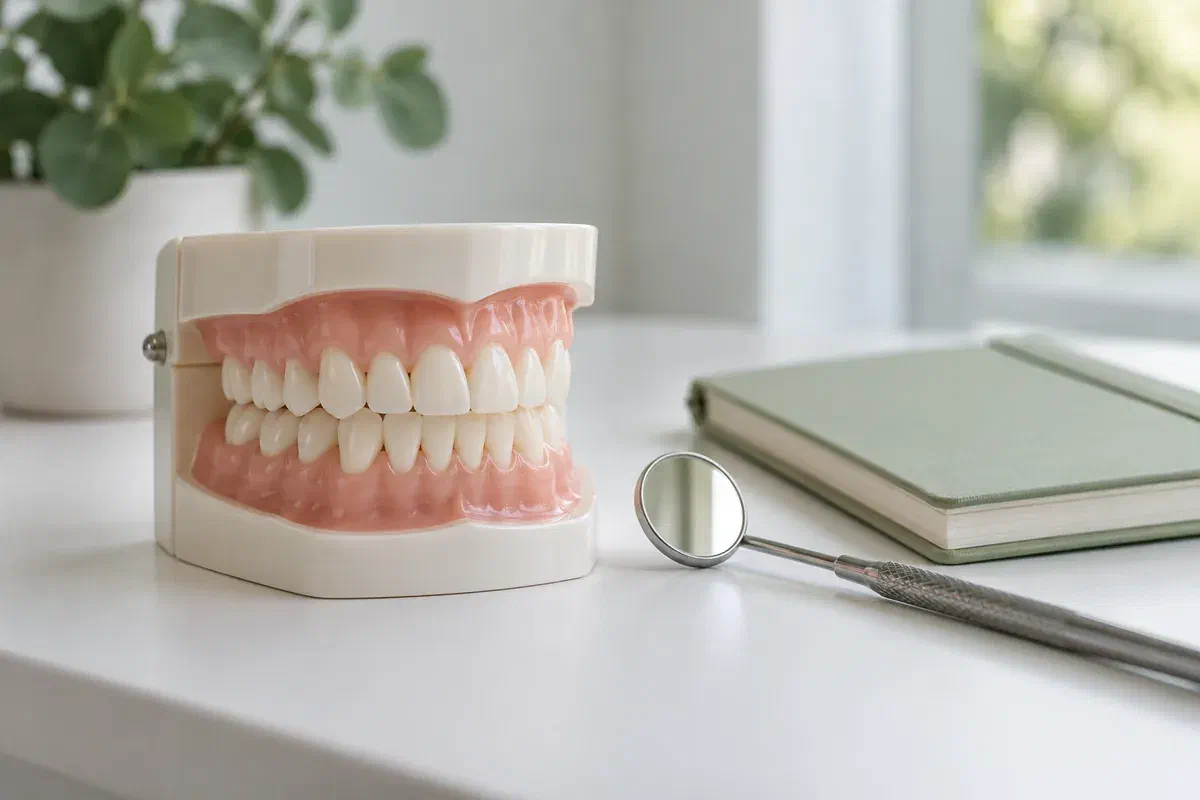
Illustrative upper and lower dental teaching model beside a mirror and notebook
Beyond the birthday

Specific signs can matter more than age.

You are not expected to recognise an orthodontic issue. What you tell us, what the examination shows and any records the findings genuinely call for together sort out a feature to watch from one that needs more investigation.

Crowding, gaps or adult teeth arriving off course

Mention an adult tooth that seems to be breaking through in an unexpected spot, or one side developing out of step with the other. Looks alone do not settle the question. Remaining baby teeth, space in the arch and the eruption sequence all need to be considered.

Teeth that cross over or a jaw that shifts

Tell us if some upper teeth sit inside the lower ones, or if the jaw seems to slide when your child closes. Note any trouble biting into food. The clinician can then work out whether tooth position, jaw movement or another issue is behind it.

Habits, mouth injuries and baby teeth lost too soon

Thumb or finger sucking, a past fall onto the teeth and baby teeth that came out unusually early are all worth sharing. They affect what we look at. If snoring or sleep and breathing worries are on your mind, raise those too, since a doctor may need to assess them.

An orthodontic assessment is not the right visit for pain, swelling or a recent injury. Tell us about those symptoms when you call so we can arrange suitable care.

What you gain from an early look

Why age seven is a sensible point to ask questions

Canadian orthodontists, through their national association, recommend a specialist assessment by about age seven. The aim is early identification of developing concerns, and most children checked at that age do not need treatment yet. Ask how a dental review with us fits with that specialist visit.

An intervention during growth helps some children; for others, waiting and reassessing is the better choice. A general dental review should be upfront about what it covers and when to involve a specialist. Predicting a child’s whole treatment course from appearance is simply not possible.

Patient information: Canadian Association of Orthodontists — assessment and treatment questions

A map of the teeth present now

Knowing which teeth are temporary and which are permanent can make an uneven smile far less puzzling. Ask the dentist to point out what matters and what is likely to change naturally. That beats comparing your child with friends in the same class.

Monitoring that has a target

When observation is the plan, you should know what will be looked at next time, whether that is an erupting tooth, spacing or the bite. A review with a clear goal and timeframe is easier to keep than a vague suggestion to come back sometime.

A referral you can think through

An orthodontist can offer a deeper discussion of diagnosis, timing and alternatives. Ask what information will be sent and whether recent records can be shared. Give yourself time to understand any proposal before agreeing to an appliance or a course of treatment.

Step by step

What your child can expect in the chair

The appointment is a chance to ask about growth and where the teeth are heading. If your child has their own concerns, even different ones from yours, let them share those.

  1. Talk through history and what you have seen

    We ask about health, past dental work, injuries, habits and when baby teeth were lost. Describe any chewing trouble or bite changes. If someone has already given an orthodontic opinion, bring whatever you have so the conversation starts from that point.

  2. Examine tooth development and the bite

    The clinician checks the developing teeth, spacing and how the arches meet, within the limits of this visit. Your child might be asked to open, close or bite together. We explain each check so they know what we are looking at and why.

  3. Decide whether extra records are justified

    X-rays or other records are suggested only when the findings warrant them, not automatically because the visit has orthodontic in its name. Ask what question a record would answer and whether it should be taken or reviewed by a specialist.

  4. Choose watching, referral or a treatment discussion

    We explain the findings and the reasoning behind the suggested timing. With a referral, confirm who books it and what to do meanwhile. With monitoring, jot down the review interval and what would be worth a call before then.

Until the next check

Small habits that keep the plan on track

An assessment by itself rarely adds an appliance to look after. Follow any particular instructions you are given, and keep everyday brushing and checkups going while development is being reviewed.

Hold on to the agreed follow-up

Note the date and purpose of the next review or referral. If it becomes hard to arrange, call instead of assuming the concern has settled. Watching a developing tooth only works if someone looks at it again.

Brush carefully around new arrivals

Fresh molars and tight spaces are difficult for young children to clean. Ask us for tips and keep giving the hands-on help that suits their age. Planning for alignment works alongside prevention and cavity checks, never instead of them.

Let us know about changes, without correcting them yourself

Contact the team about new chewing difficulty, an unexpected lost tooth or a change we asked you to keep an eye on. Avoid elastic bands or devices sold online for moving teeth. Moving a tooth safely requires diagnosis, planning and professional supervision.

After the assessment

Monitor, refer or treat: how the choice is made

Ask what any recommendation is meant to accomplish now and what might still be required later. Acting early is useful only when there is a clear reason for that timing.

When later development will clarify things

Observation through the next stage of growth

The dentist may propose checking eruption and the bite again after a set interval. Ask what they expect to learn and what should bring you back sooner. Choosing to monitor is an active clinical decision rather than a lost opportunity.

When a fuller diagnosis or timing talk is needed

An orthodontist’s opinion

A specialist can assess the concern and explain the approaches within their expertise. Seeing one does not commit your child to braces. You come away with the diagnosis, the alternatives, the likely stages and a sense of the practical demands.

When a specific finding justifies acting

Early treatment for a defined issue

Some findings may warrant treatment before the full set of adult teeth arrives. The recommendation should explain exactly what it aims to do and where its limits lie. Early care does not guarantee that later orthodontics, extractions or other treatment will be unnecessary.

Common questions at age seven

What parents ask before that first bite check

Mixed teeth make timing confusing. These answers give general guidance, and your child’s findings will shape the specifics.

(905) 876-4488
Why is seven the age orthodontists mention, rather than five or ten?
By around seven, many children have their first adult molars and some adult front teeth, which shows how the bite is developing. Earlier, there is less to assess. Later, some concerns may be harder to manage. It is a guide, not a deadline.
My child is only five but their bite looks odd. Is that too young?
No. If you have noticed the jaw shifting, teeth crossing over or difficulty chewing, mention it now rather than waiting for a birthday. Age-based guidance never replaces a look at a specific concern, and the dentist can suggest sensible timing.
What if my child is already nine or ten and has never had an assessment?
It is not too late to ask. The dentist can still review the developing teeth and bite and talk through whether a specialist opinion would be helpful now. Bring any concerns and history so the conversation reflects where your child is today.
Will the first visit include X-rays?
Not automatically. Imaging is recommended when the findings make it clinically worthwhile. If records are suggested, ask what they are meant to show and whether a specialist will take or review them instead.
Is a dentist’s bite review enough, or do we also need an orthodontist?
It depends on the findings. A dentist can identify developing concerns and suggest next steps, while an orthodontist brings specialist training in diagnosis and treatment planning. Ask whether referral is recommended for your child and what it would add.
We are coming from Oakville. Can the follow-up line up with a regular checkup?
Often it can. When the timing suits, ask the team to pair a monitoring review with your child’s routine visit so you make fewer separate trips. Mention the orthodontic follow-up when booking so enough time is set aside for it.
Planning a visit from Oakville

Get a clear answer about the age-seven check.

Reach out to our Bronte Street practice to talk about your child’s teeth and how they are coming together. Share anything you have noticed and any advice from before, and we will arrange a visit and tell you if a specialist view could be useful.

An assessment does not commit your child to treatment. Any recommendation or referral depends on what we find.

Visit Milton Dental Clinic
Unit 1, 342 Bronte St. S, Milton, ON L9T 5B7
Get directions Clinic hours
Monday–Thursday
11am–7pm
Friday–Sunday
By appointment only

Areas we serve

  • Milton
  • Oakville
  • Mississauga
  • Georgetown
  • Halton Hills
  • Acton
  • Campbellville
  • Brampton
  • Burlington
  • Puslinch
  • Rockwood
  • Erin
  • Caledon
  • Etobicoke
  • Old Milton
  • Bronte Meadows
  • Timberlea
  • Dorset Park
  • Dempsey
  • Clarke
  • Beaty
  • Coates
  • Harrison
  • Scott
  • Willmott
  • Ford
  • Bowes
  • Cobden
  • Walker
  • Mountain View
  • Milton Heights
  • Hawthorne Village
  • Valley View
  • Fallingbrook
  • Nassagaweya
  • Trafalgar
  • Esquesing
  • Nelson
  • Brookville
  • Moffat
  • Glen Williams
  • Norval
  • Limehouse
  • Stewarttown
  • Ashgrove
  • Hornby
  • Silver Creek
  • Speyside
  • Scotch Block
  • North Oakville
  • River Oaks
  • Glen Abbey
  • West Oak Trails
  • Palermo
  • Bronte Creek
  • College Park
  • Joshua Creek
  • Uptown Core
  • Preserve
  • Iroquois Ridge
  • Lisgar
  • Meadowvale
  • Meadowvale Village
  • Churchill Meadows
  • Erin Mills
  • Central Erin Mills
  • Streetsville
  • East Credit
  • Creditview
  • Heartland
  • Sheridan
  • Mount Pleasant
  • Credit Valley
  • Huttonville
  • Churchville
  • Springbrook
  • Northwest Brampton
  • Bram West
  • Fletcher's Meadow
  • Fletcher's Creek South
  • Alton Village
  • Orchard
  • Millcroft
  • Headon Forest
  • Tansley
  • Brant Hills
  • Tyandaga
  • Kilbride
  • Lowville
  • Aberfoyle
  • Morriston
  • Arkell
  • Hillsburgh
  • Freelton
  • Carlisle
  • Waterdown
  • Flamborough
  • Mountsberg

How can we help?

Milton Dental Clinic

Have a question about your smile? Choose the option that works best for you.

For urgent dental concerns, please call.
Messages are reviewed during clinic hours.