

Illustrative teenager and parent discussing a clear aligner with a dental clinician
Children’s Dentistry

Invisalign for Teens in Brampton

A friend’s aligners finished in a year, so why not your teen’s? Every bite is different. For teens from Brampton, we start with a full assessment and explain suitability, realistic timing, daily wear, and the retainer habits that follow.

Every plan is personal

Your teen’s friend had aligners. That tells you very little.

Teenagers compare notes. One classmate wore trays for months, another barely mentioned them, and a third switched to braces halfway through. Those stories are real, but they say more about each classmate’s bite and habits than about what your own teen might need.

Invisalign treatment moves teeth using a custom series of removable clear aligners. Suitability is decided by examining the teeth, bite, gums, and stage of growth, and by thinking honestly about whether your teen can keep the trays in for the hours required. The brand on its own says nothing about individual fit.

When you come in from Brampton, we look at your teen specifically. We can assess the bite, explain what aligners may and may not achieve, and suggest a specialist opinion when that is the better step. You should leave understanding the commitment as well as the goal, without feeling rushed toward a start date.

Find out what your teen’s bite needs
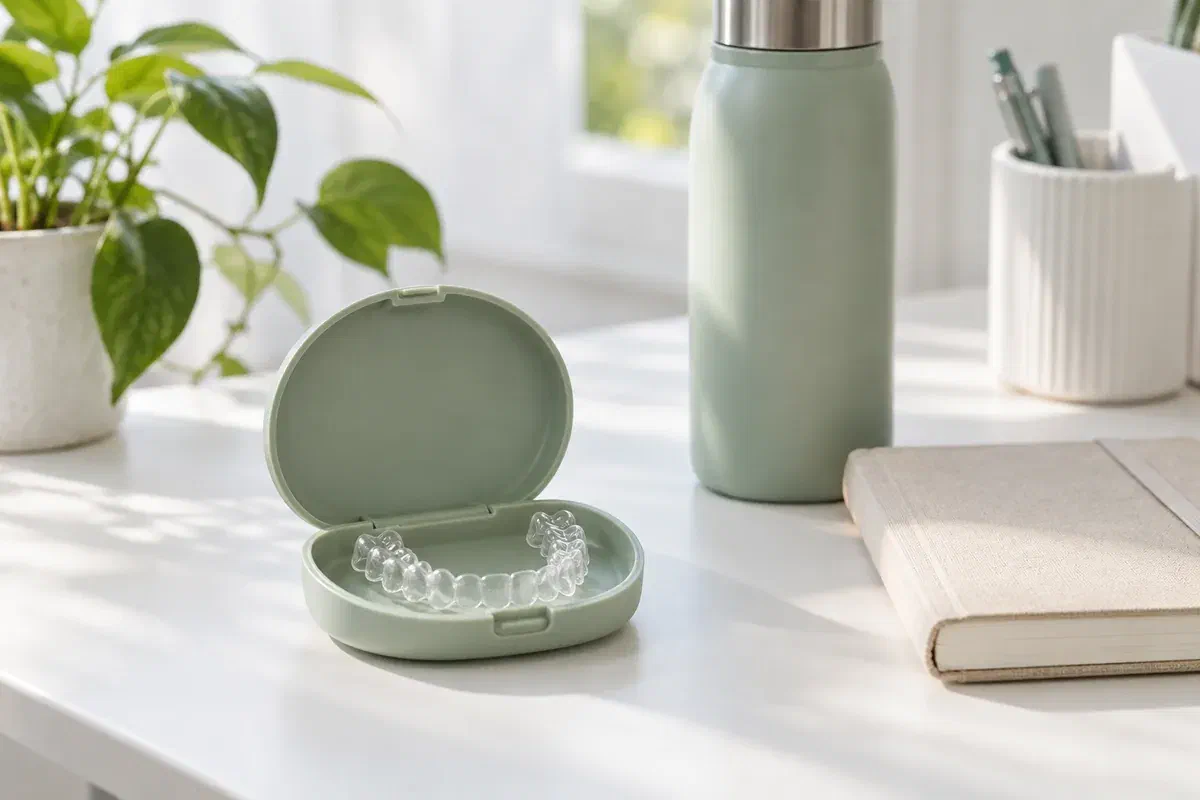
Illustrative clear aligner in a protective case beside a school notebook
Individual factors

What makes one teen’s treatment different from another’s

The details of the bite and the shape of your teen’s week both matter. Share what they want to improve and what might make daily wear hard to sustain.

The particular bite in front of us

Two teens with similar-looking crowding can have very different bites underneath. How the jaws relate, which teeth are still emerging, and other findings change the options. Ask what aligners would aim to correct and when braces or an orthodontist might serve better.

Habits, schedule, and follow-through

Consider meals, sport, music, jobs, and nights away. Trays that can come out also have to go back in, every time. Plan the routine with your teen directly, since they are the one who will carry it out each day.

Oral health at the outset

Tell us about decay, bleeding gums, earlier injuries, and work in progress. Some findings should be dealt with before orthodontic movement. Routine exams and cleanings still matter during treatment and are separate from aligner check-ins.

If your teen wore braces or aligners before, bring what records you have. A fresh assessment comes before any old tray is reused or an earlier sequence restarted.

Why aligners appeal

A discreet option, if the routine holds

Clear trays are often less obvious than fixed braces, although attachments and other features can show. They are taken out for meals and cleaning as directed. For the right teen that can be a good fit, but aligners are neither effort-free nor appropriate for every bite.

Expected results, likely duration, and the limits of treatment should be explained for your teen alone, not borrowed from someone else’s experience. Movement sometimes departs from the plan, and extra trays or reassessment may be needed. Ask how progress is assessed and how changes would be explained to you.

Patient information: American Association of Orthodontists — clear aligners

Open questions about appearance

Your teen can ask how trays and attachments really look and how speech may feel in the first days. Promising invisibility is unhelpful. Concerns about class and friends are worth discussing with practical detail.

Teeth that are easier to clean

Trays come out, so brushing and flossing can be done as instructed. The aligners need their own cleaning as well. Ask for a routine that holds up at school and at home, including after lunch away from a sink.

Checkpoints along the way

At reviews, the clinician looks at fit, movement, gum health, and any trouble with wear. Your teen can share what has truly been happening. Honest reports help the plan; hidden gaps in wear work against it.

Getting started

A plan built around one teen

Ask who will design and oversee treatment, which records are needed, and when a referral would make sense. A consultation should set out the choices without binding your family to any.

  1. Gather history and examine the bite

    The clinician considers dental and medical history, oral health, and alignment. Photos, scans, or X-rays may be suggested when needed. Talk about your teen’s goals and which findings need specialist input.

  2. Explain the proposal in plain terms

    Ask about the intended movements, attachments or other procedures, estimated length, and alternatives. Confirm the review schedule, retention plan, and what the fee includes. A digital model can help with explanation; it is not a guarantee.

  3. Teach safe handling and wear

    If you proceed, your teen learns how aligners should fit and how to put them in and take them out. Invisalign is usually worn twenty to twenty-two hours each day, guided by the treating clinician. Move to the next tray only when told, and know whom to call.

  4. Monitor progress and plan the finish

    The team reviews progress and adjusts the course if necessary. Keep mentioning missed wear, discomfort, or fit changes. Before active treatment ends, agree on retainer wear, future visits, and the steps to take if a retainer goes missing or breaks.

Living with trays

Simple steps, done every day

Treatment keeps going between appointments. A sensible plan covers meals, cleaning, storage, and how your teen asks for help when something isn’t right.

Case first, always

Put aligners in their case whenever they come out. Trays wrapped in a napkin are easily thrown away, and pets can damage them. Contact the treating clinician soon if one is lost, cracked, or misshapen, and ask what to wear until it is sorted out.

Out for food, clean before back in

Remove the trays to eat and for any drink other than plain water, as instructed. Clean teeth and aligners before reinserting. Hot water and household cleaners are not suitable, and it is worth asking how to manage lunch at school.

Mention soreness and fit early

New trays can feel tight, but marked pain, an ongoing sore spot, or an aligner that does not sit down properly should be checked. Never cut or push it into place. Continue regular dental visits and follow retainer instructions afterwards.

Patient information: Invisalign — retainers after treatment

Possible approaches

There is more than one way to straighten teeth.

Ask about each suitable option’s benefits, limitations, and responsibilities. Appearance counts, but the choice should rest on more than looks.

When the movements and the routine are suitable

Clear aligners, monitored closely

Following assessment, aligners may be appropriate. They depend on consistent wear, safe handling, cleaning, and review. Ask how emerging teeth or changes in progress would be handled and whether added features are expected.

When another method better fits the findings

Braces or a specialist plan

Fixed braces or another approach may be advised for certain needs. Braces come with their own hygiene, food, and appointment considerations. A specialist opinion can help your family weigh realistic options rather than comparing stories from friends.

When health or development needs attention first

Laying groundwork, or waiting with a reason

The clinician may recommend completing dental care, improving brushing, or monitoring growth before starting. Ask why waiting is suggested and when to return. Any pause should have a clear reason and a planned reassessment.

What Brampton teens and parents ask

Comparisons, timelines, and the small stuff

School, snacks, sport, and who looks after what are all fair to discuss at the consultation. Your teen can ask questions of their own.

(905) 876-4488
Why might my teen’s treatment take longer than a friend’s did?
Treatment length depends on the bite, the movements needed, how the teeth respond, and how consistently trays are worn. A friend’s timeline is not a reliable guide. Ask the clinician for an estimate and how it might change.
Can my teen use a friend’s leftover aligners or retainer?
No. Aligners and retainers are made for one person’s teeth and plan. Using someone else’s could be uncomfortable and unhelpful. Speak with the treating clinician about any concerns instead.
What if my teen loses an aligner tray during lunch at school?
Call the treating clinician promptly and explain which tray is missing and when it was last worn. They can advise on going back a tray or arranging a replacement. Don’t skip forward or wait until the next review to mention it.
Do clear aligners stain or discolour?
Trays can pick up stains if worn with drinks other than water or not cleaned as directed. Remove them before eating or drinking anything besides plain water, and clean them using the recommended method.
Can teen aligners fix a bite problem, or only crooked teeth?
It depends on the bite and the movements needed. Some bite concerns may be addressed with aligners, while others may need braces or a specialist plan. Ask the clinician to explain what is realistic for your teen.
Does my teen have to wear a retainer for years after treatment?
Retainer wear is typically long term, since teeth can drift after treatment ends. Ask what retainer is recommended, how often to wear it over time, and how replacement and follow-up work.
Clear aligners for teens from Brampton

Get an answer about your teen, not someone else’s.

Contact our Bronte Street practice to request an orthodontic assessment. We can discuss suitability, daily wear, realistic timing, review visits, and whether a specialist opinion would help your family decide.

Whether aligners are suitable, who supervises care, and any referral are discussed after an assessment. Each teen’s result and timeline will vary.

Visit Milton Dental Clinic
Unit 1, 342 Bronte St. S, Milton, ON L9T 5B7
Get directions Clinic hours
Monday–Thursday
11am–7pm
Friday–Sunday
By appointment only

Areas we serve

  • Milton
  • Oakville
  • Mississauga
  • Georgetown
  • Halton Hills
  • Acton
  • Campbellville
  • Brampton
  • Burlington
  • Puslinch
  • Rockwood
  • Erin
  • Caledon
  • Etobicoke
  • Old Milton
  • Bronte Meadows
  • Timberlea
  • Dorset Park
  • Dempsey
  • Clarke
  • Beaty
  • Coates
  • Harrison
  • Scott
  • Willmott
  • Ford
  • Bowes
  • Cobden
  • Walker
  • Mountain View
  • Milton Heights
  • Hawthorne Village
  • Valley View
  • Fallingbrook
  • Nassagaweya
  • Trafalgar
  • Esquesing
  • Nelson
  • Brookville
  • Moffat
  • Glen Williams
  • Norval
  • Limehouse
  • Stewarttown
  • Ashgrove
  • Hornby
  • Silver Creek
  • Speyside
  • Scotch Block
  • North Oakville
  • River Oaks
  • Glen Abbey
  • West Oak Trails
  • Palermo
  • Bronte Creek
  • College Park
  • Joshua Creek
  • Uptown Core
  • Preserve
  • Iroquois Ridge
  • Lisgar
  • Meadowvale
  • Meadowvale Village
  • Churchill Meadows
  • Erin Mills
  • Central Erin Mills
  • Streetsville
  • East Credit
  • Creditview
  • Heartland
  • Sheridan
  • Mount Pleasant
  • Credit Valley
  • Huttonville
  • Churchville
  • Springbrook
  • Northwest Brampton
  • Bram West
  • Fletcher's Meadow
  • Fletcher's Creek South
  • Alton Village
  • Orchard
  • Millcroft
  • Headon Forest
  • Tansley
  • Brant Hills
  • Tyandaga
  • Kilbride
  • Lowville
  • Aberfoyle
  • Morriston
  • Arkell
  • Hillsburgh
  • Freelton
  • Carlisle
  • Waterdown
  • Flamborough
  • Mountsberg

How can we help?

Milton Dental Clinic

Have a question about your smile? Choose the option that works best for you.

For urgent dental concerns, please call.
Messages are reviewed during clinic hours.