

Illustrative teenager and parent discussing a clear aligner with a dental clinician
Children’s Dentistry

Invisalign for Teens in Burlington

Practices, tournaments, sports drinks, and a mouthguard in the gym bag: for an active teen, clear aligners have to fit a full calendar. Families from Burlington can talk with us about bite assessment, suitability, and what consistent wear asks.

For busy, active teens

A gym bag, a water bottle, and an aligner case

Picture a weeknight: school ends, practice starts, dinner happens in the car. A teen who lives like that can still do well with clear aligners, but only if the plan accounts for those hours. Talking through the real schedule early saves frustration later, for your teen and for you.

Invisalign relies on a sequence of removable clear trays, each moving teeth a little further. Suitability rests on an examination of the bite, the teeth and gums, and ongoing development, plus a realistic look at whether the trays will stay in for most of the day. The name on the box cannot tell you whether it is right for your teen.

If you are coming from Burlington, the first visit is about understanding, not signing up. We can assess, describe what aligners may accomplish, and point you toward an orthodontist when a specialist view would help. Your teen should be as clear on the daily responsibilities as on the hoped-for result.

Talk through aligners for an active teen
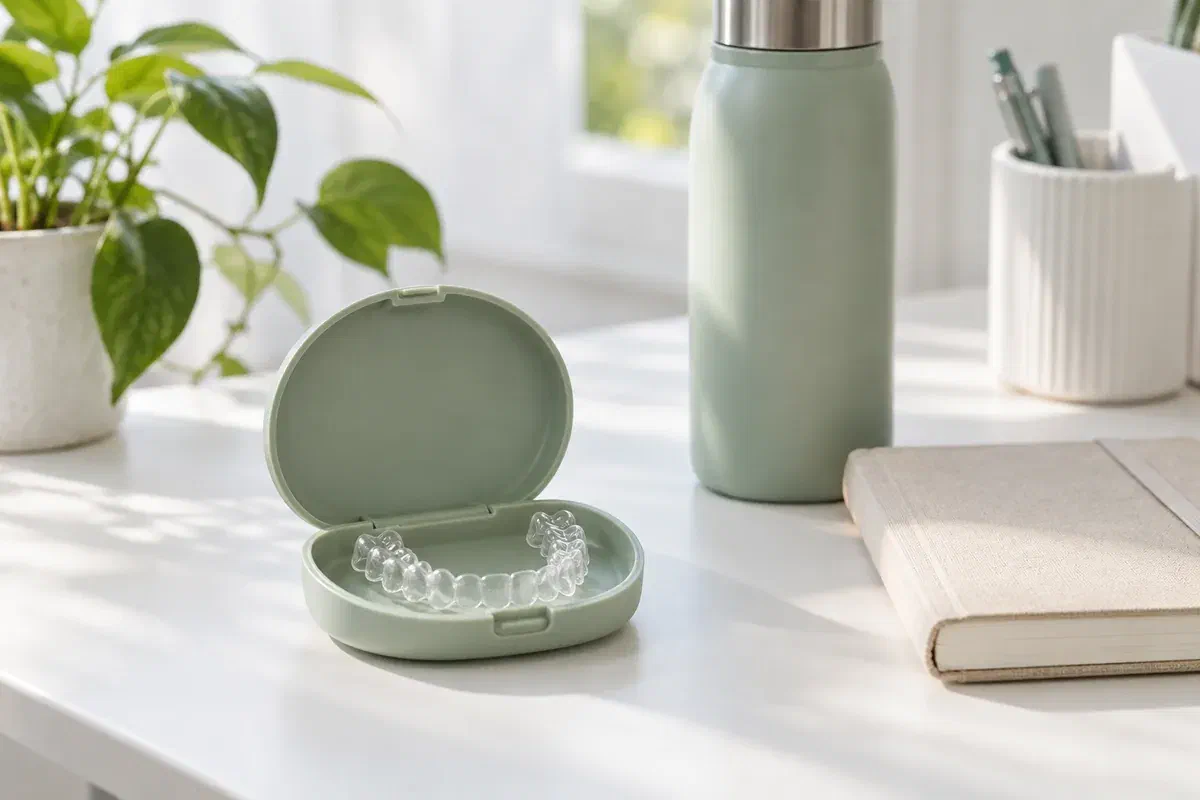
Illustrative clear aligner in a protective case beside a school notebook
Worth raising early

Three things to sort out before treatment

A thorough orthodontic conversation looks at the full bite and at what your teen’s typical week involves. Say what they want to change and what might make wear tricky.

The way the teeth fit together

Crooked front teeth are the visible part. Bite alignment, teeth that have not yet erupted, and other findings influence which appliance makes sense. Ask what aligners could correct and whether braces or a specialist assessment might suit your teen better.

Fitting wear around training and games

List the practices, games, travel tournaments, lessons, and late evenings. Every time the trays come out, they need to go back in soon. Let your teen help design the routine so the hours belong to them, not just to a parent’s reminders.

Tooth and gum health

Tell us about cavities, gums that bleed, past knocks to the teeth, and dental work underway. Some issues need care before tooth movement starts. Checkups and cleanings continue throughout, alongside the aligner reviews.

Mention any earlier orthodontic treatment or retainers. An assessment is needed before an old tray is worn again or an unfinished sequence is restarted.

Upsides, with conditions

Removable is useful. It is also a responsibility.

Clear trays are usually less eye-catching than many fixed appliances, although attachments or other features may still be visible. They come out for meals and brushing as instructed, which some teens find easier to live with. That does not make treatment automatic or suitable for every bite.

The expected outcome, length, and limitations of treatment should be explained for your teen’s situation. Teeth do not always move exactly as predicted, and more trays or further review may be needed. Ask how progress will be checked and how any revision would be talked through with your family.

Patient information: American Association of Orthodontists — clear aligners

Straight answers on appearance

Your teen can ask how the trays and attachments look and how talking may feel at first. Saying treatment is invisible is not accurate. Practical answers about team photos, class, and social settings are more helpful.

A simpler cleaning routine

Taking the aligners out lets teeth be brushed and flossed as directed, and the trays get cleaned separately. Ask for a routine that works after practice and at school, including what to do when a sink is not close by.

Scheduled checkpoints

Each review lets the clinician assess fit, movement, gum health, and any trouble with wear. Your teen can be upfront about what has gone on. Accurate information supports good decisions, while hiding missed hours undermines them.

How the process works

From first scan to final review

Ask who will create and supervise the plan, which records are needed, and when referral fits. A consultation should explain options without pushing your family toward one.

  1. Assessment and goal-setting

    The clinician reviews dental and medical history, oral health, and alignment. Records such as photos, scans, or radiographs may be recommended where appropriate. Talk about what your teen hopes to change and whether any finding needs a specialist.

  2. A walk-through of the proposal

    Ask about planned tooth movements, attachments or extra procedures, estimated time, and alternatives. Confirm how often reviews happen, what retention looks like, and what the fee includes. Digital previews help, but they are not a guarantee.

  3. Hands-on practice with the aligners

    Once treatment starts, your teen is shown how each tray should fit and how to insert and remove it. Invisalign is generally worn twenty to twenty-two hours a day, following the treating clinician’s instructions. Swap trays only as directed and know who to call about problems.

  4. Ongoing reviews, then retention

    Progress is evaluated and the plan adjusted where needed. Keep mentioning missed wear, soreness, or changes in fit. Before the active stage wraps up, confirm the retainer, ongoing appointments, and what to do if a retainer is damaged or stops fitting.

On the go

Keeping the routine going on full days

Treatment continues between reviews, including on the busiest days. Plan for meals, cleaning, storage, and how your teen can get help when something goes wrong.

A case in every bag

Keep the trays in their protective case whenever they are out, including in the locker room. Aligners wrapped in a tissue tend to vanish. Contact the treating clinician promptly if one is lost, broken, or bent, and ask which tray to wear.

Water only with trays in

Remove aligners for meals and any drink other than plain water, as instructed. Sports drinks are a common slip. Clean teeth and trays before putting them back, avoid hot water and household cleaners, and ask how to manage food between games.

Speak up about fit and comfort

Some pressure is expected with tooth movement, but significant pain, a sore patch that persists, or a tray that will not seat needs advice. Do not cut or force it. Keep up regular dental visits and the retainer schedule after treatment.

Patient information: Invisalign — retainers after treatment

Weighing the choices

Match the appliance to the bite, then to the lifestyle.

Ask about the benefits, limitations, and obligations of every suitable option. How it looks matters, but appearance should not be the only deciding factor.

When the movements and schedule allow it

Supervised aligner treatment

Assessment may show aligners are appropriate. The plan relies on consistent wear, safe handling, cleaning, and regular review. Ask how eruption changes or slower progress would be handled and whether additional features might be needed.

When the findings call for something different

Braces or a specialist-designed plan

Fixed braces or another method may be better for some needs. Braces have their own hygiene, food, and visit demands, and sports protection matters with them too. A specialist can help your family compare realistic options.

When health, growth, or readiness needs attention

Preparation, or a review at a set time

The clinician may suggest finishing dental work, improving brushing, or monitoring development first. Ask why waiting is recommended and when to return. Any delay should have a reason and a clear reassessment plan.

Questions from sporty teens and their parents

Game days, gear, and everything in between

School, snacks, sport, and shared responsibility are all good things to discuss at the consultation. Your teen is welcome to ask questions directly.

(905) 876-4488
Should aligners come out during a game or practice?
That depends on the sport and the clinician’s advice. Ask whether trays should be removed and stored during activity, what mouthguard to use, and how to make up the routine afterwards without falling short on daily wear.
Can my teen wear a regular mouthguard over aligners?
Do not assume so. Ask the treating clinician what protection is appropriate during treatment, since fit can change as teeth move. A guard that fits poorly may not protect well.
What if a tray cracks in a gym bag before a tournament weekend?
Contact the treating clinician as soon as you can and explain which tray broke and when it was last worn. They can advise whether to go back to a previous tray or wait for a replacement. Don’t skip ahead without guidance.
Is it okay to sip a sports drink with the aligners in?
The usual instruction is to remove trays for anything other than plain water. Sugary or acidic drinks can raise concerns for teeth. Ask how to manage hydration, cleaning, and wear time during training.
My teen often forgets the trays after practice. What should we do?
Tell the treating clinician honestly. They can check fit and progress and suggest a way forward. A set spot in the bag for the case and a routine for putting trays back after activity can help.
Does a retainer need protecting during sport as well?
Ask the clinician how to handle the retainer during activity and what protection to use. Retainers need care to avoid damage or loss, and a broken one should be reported promptly so teeth do not shift.
Aligners for Burlington teens

Bring the schedule along to the consultation.

Get in touch with our Bronte Street practice to arrange an orthodontic assessment. We can talk about suitability, daily wear, sports, review appointments, and whether a specialist opinion would help your family choose.

Suitability, supervision, and any referral are discussed following an assessment. Results and timing vary for each teen.

Visit Milton Dental Clinic
Unit 1, 342 Bronte St. S, Milton, ON L9T 5B7
Get directions Clinic hours
Monday–Thursday
11am–7pm
Friday–Sunday
By appointment only

Areas we serve

  • Milton
  • Oakville
  • Mississauga
  • Georgetown
  • Halton Hills
  • Acton
  • Campbellville
  • Brampton
  • Burlington
  • Puslinch
  • Rockwood
  • Erin
  • Caledon
  • Etobicoke
  • Old Milton
  • Bronte Meadows
  • Timberlea
  • Dorset Park
  • Dempsey
  • Clarke
  • Beaty
  • Coates
  • Harrison
  • Scott
  • Willmott
  • Ford
  • Bowes
  • Cobden
  • Walker
  • Mountain View
  • Milton Heights
  • Hawthorne Village
  • Valley View
  • Fallingbrook
  • Nassagaweya
  • Trafalgar
  • Esquesing
  • Nelson
  • Brookville
  • Moffat
  • Glen Williams
  • Norval
  • Limehouse
  • Stewarttown
  • Ashgrove
  • Hornby
  • Silver Creek
  • Speyside
  • Scotch Block
  • North Oakville
  • River Oaks
  • Glen Abbey
  • West Oak Trails
  • Palermo
  • Bronte Creek
  • College Park
  • Joshua Creek
  • Uptown Core
  • Preserve
  • Iroquois Ridge
  • Lisgar
  • Meadowvale
  • Meadowvale Village
  • Churchill Meadows
  • Erin Mills
  • Central Erin Mills
  • Streetsville
  • East Credit
  • Creditview
  • Heartland
  • Sheridan
  • Mount Pleasant
  • Credit Valley
  • Huttonville
  • Churchville
  • Springbrook
  • Northwest Brampton
  • Bram West
  • Fletcher's Meadow
  • Fletcher's Creek South
  • Alton Village
  • Orchard
  • Millcroft
  • Headon Forest
  • Tansley
  • Brant Hills
  • Tyandaga
  • Kilbride
  • Lowville
  • Aberfoyle
  • Morriston
  • Arkell
  • Hillsburgh
  • Freelton
  • Carlisle
  • Waterdown
  • Flamborough
  • Mountsberg

How can we help?

Milton Dental Clinic

Have a question about your smile? Choose the option that works best for you.

For urgent dental concerns, please call.
Messages are reviewed during clinic hours.